✅ Where it excels
Pollen/dust-mite allergies, pet dander. Children's rooms for allergy sufferers. Offices on busy roads (PM2.5). Patient rooms (viral load reduction). A proper HEPA H13 Air Purifier dramatically reduces inhaled particles.
Shelves packed with "Air Purifiers" shouting buzzwords: HEPA, Ioniser, UV-C, Plasma, Photocatalysis. Some of these are real technologies. Some are pure marketing. And a €300 unit does something entirely different from your VMC system.
Let's sort it out: which device does what, which myths need to die, and when an Air Purifier is your ally - or false security.
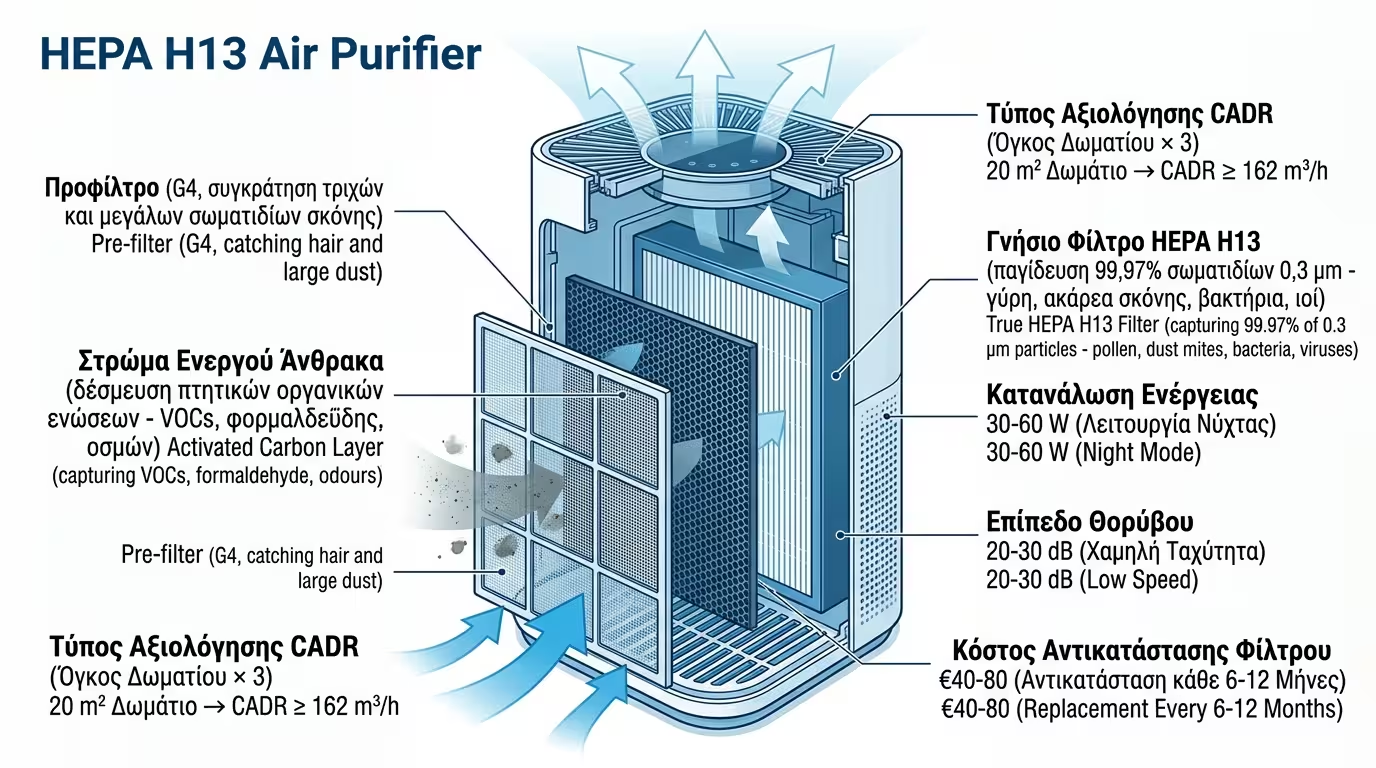
HEPA stands for High Efficiency Particulate Air. A genuine HEPA H13 captures 99.97% of particles at 0.3 μm (MPPS - Most Penetrating Particle Size). At this size, pollen, dust mites, bacteria, mould spores and viruses all "stick" to the filter's micro-fibres.
Pollen/dust-mite allergies, pet dander. Children's rooms for allergy sufferers. Offices on busy roads (PM2.5). Patient rooms (viral load reduction). A proper HEPA H13 Air Purifier dramatically reduces inhaled particles.
Gases! CO₂, VOCs, formaldehyde, cooking odours. For gases you need Activated Carbon (a separate filter). Serious purifiers combine HEPA + Carbon.
Look for the CADR (Clean Air Delivery Rate) in m³/h. Multiply the room volume × 3 = the minimum CADR you need. E.g. 20 m² × 2.7 m = 54 m³ → CADR ≥ 162 m³/h.
HEPA filter replacement every 6-12 months: €40-80. Consumption: 30-60 W (Night mode) - less than a light bulb. Noise: 20-30 dB on low speed.
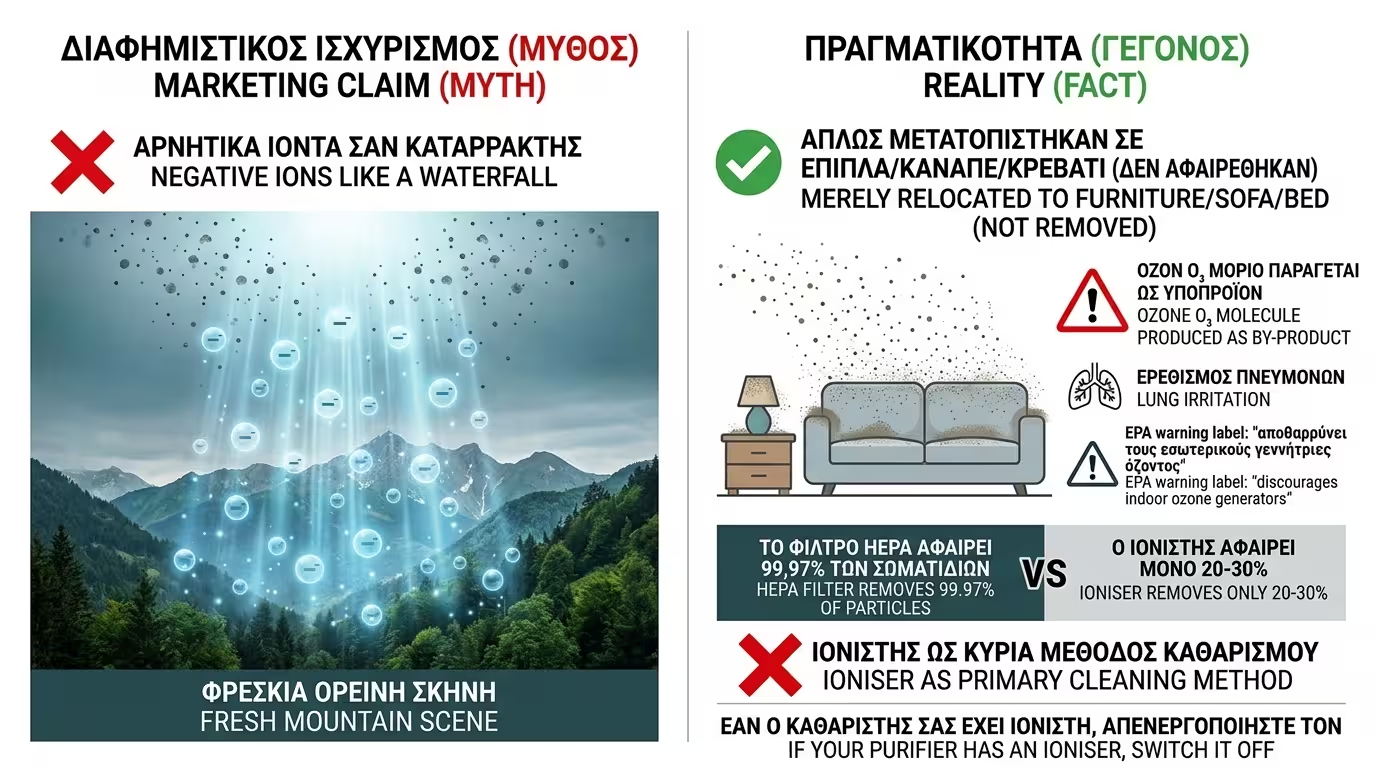
"Produces negative ions - like being near a waterfall!" This tagline sells millions of units. What does an ioniser actually do?
Negative ions "stick" to airborne particles, making them heavy so they fall onto floors and walls. The air "appears" cleaner. Problem: the particles haven't disappeared - they've just moved to your furniture, sofa and bed.
Many ionisers produce Ozone (O₃) as a by-product. Indoor ozone irritates the lungs, worsens asthma and causes headaches. The EPA explicitly discourages ion/ozone generators in enclosed spaces.
Studies show ionisation removes less than 20-30% of particles in real-world conditions - versus 99.97% for a HEPA filter. It does nothing for gases (CO₂, VOCs).
Avoid ionisers as a primary cleaning method. If your Air Purifier has a "bonus ioniser", switch it off - it adds nothing meaningful, just ozone.
Ultraviolet radiation at 254 nm (UV-C) kills bacteria and inactivates viruses - this is true and well-documented. However, effectiveness depends on contact time and radiation intensity.
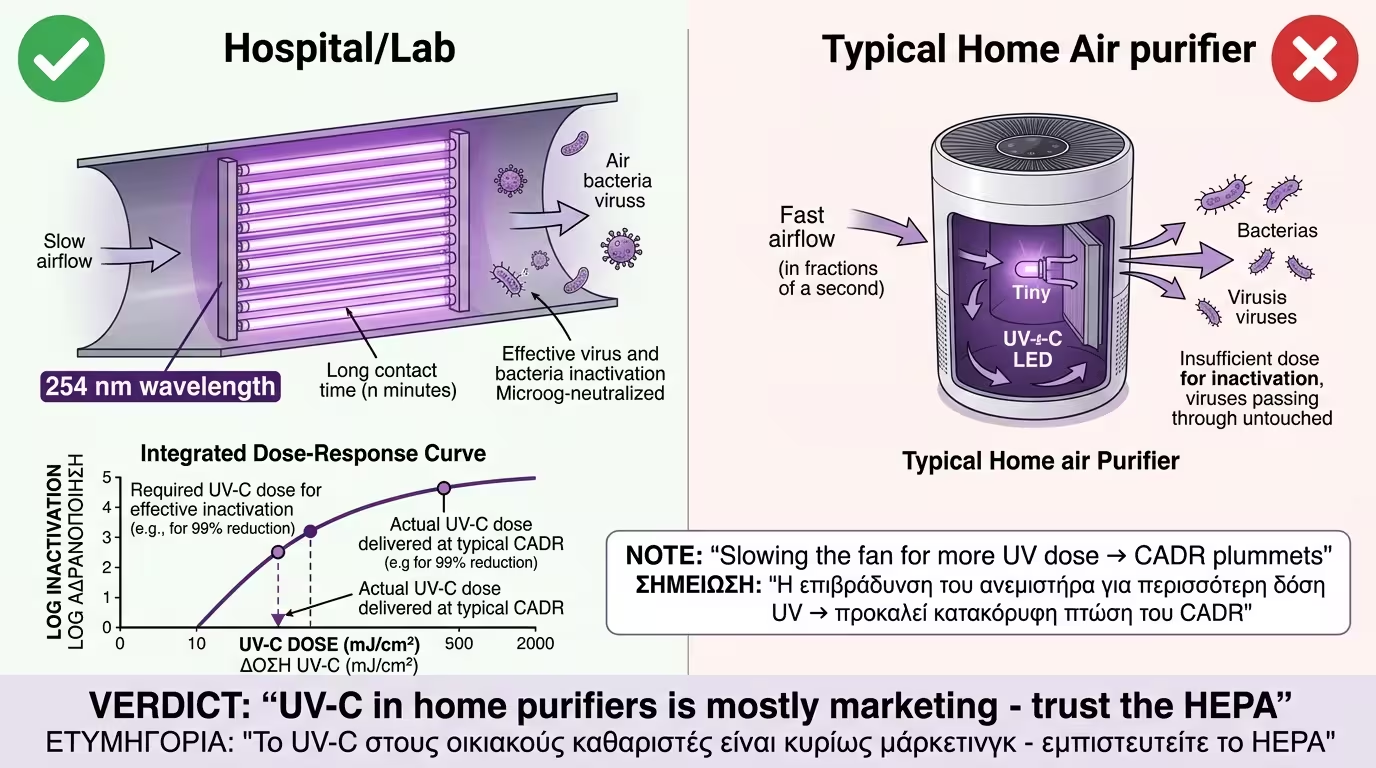
Air in an Air Purifier passes the UV-C lamp in fractions of a second. In that time, microbes don't have time to be "cooked". You'd need ten times the intensity - which doesn't fit in a household device.
In hospitals and laboratories: large ducts with slow airflow and powerful UV-C lamps. On surfaces: UV-C robots disinfect empty rooms (e.g. ICU wards). Contact time there is minutes, not milliseconds.
The small UV-C lamp doesn't have time to inactivate viruses/bacteria at airspeeds that produce acceptable CADR. Slow the fan for "more UV dose" and the CADR plummets.
In a home Air Purifier, UV-C may have small supplementary value - but should never be the primary method. Its presence is mostly marketing. Trust the HEPA.
The most common myth: "I bought an Air Purifier, so I don't need ventilation." Wrong. They do completely different things - you may need both, but one doesn't replace the other.
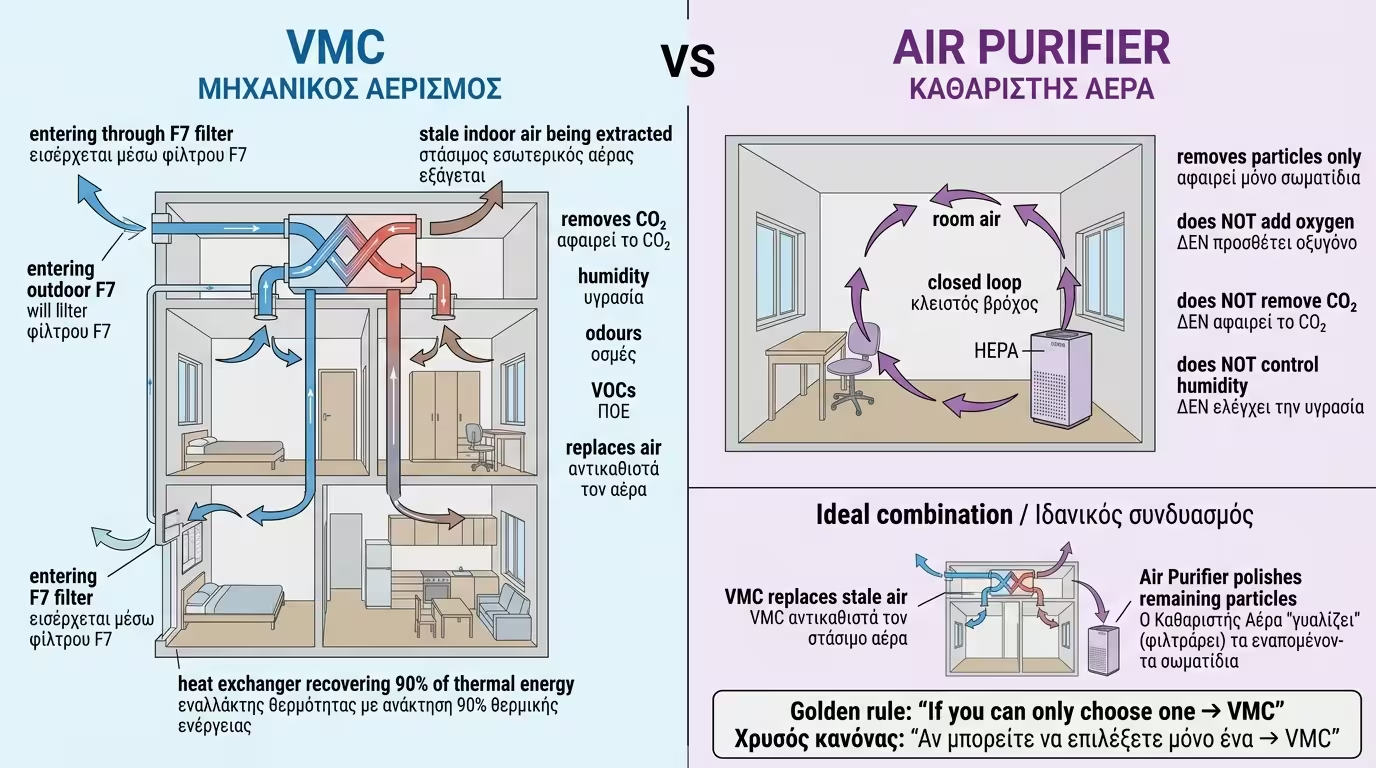
Brings outdoor air indoors (with heat recovery). Removes CO₂, humidity, odours and VOCs. Filters the incoming air (F7). Replaces the air - it doesn't recirculate.
Sucks in the same room air, filters it (HEPA) and blows it back. No fresh oxygen. No CO₂ removal. No humidity control. Removes particles only (and VOCs if it has active carbon).
VMC (24/7 ventilation with recovery) + HEPA Air Purifier in the child's room or allergy sufferer's bedroom = ultimate air quality. VMC replaces stale air; the Purifier polishes the last remaining particles.
If you must choose only one: pick VMC. Fresh air cannot be replaced by any filter. If you already have VMC and want "extra" protection, then an Air Purifier is an excellent complement.
🧹 HEPA = the only reliable method for particle filtration. Ionisers = marketing + ozone. UV-C = works only in specific conditions. And nothing replaces fresh air: VMC first, Air Purifier second.
Return to category.
Go to categoryReturn to the central guide.
Go to guide