🤫 Absolute silence
The fans are in the attic. Inside bedrooms you hear literally nothing - just an imperceptible whisper of air at the diffusers (< 25 dB). Ideal for light sleepers or offices requiring silence.
If you are building a house from scratch, you can hide ducts everywhere. But what if you just bought an old apartment, have a serious mould problem in the bedroom, but don't want to tear down ceilings for ductwork?
The goal is one: fresh, filtered air without losing heat. How we achieve it depends on how deep we want (or can) "dig" into our home. The industry has catered for both scenarios - let's compare them.
There is one single, large machine (the central unit), hidden in the attic, plant room or utility cupboard. From it run two duct networks inside false ceilings: one "extracts" stale air (bathrooms, kitchen) and one "supplies" fresh air (bedrooms, living room).
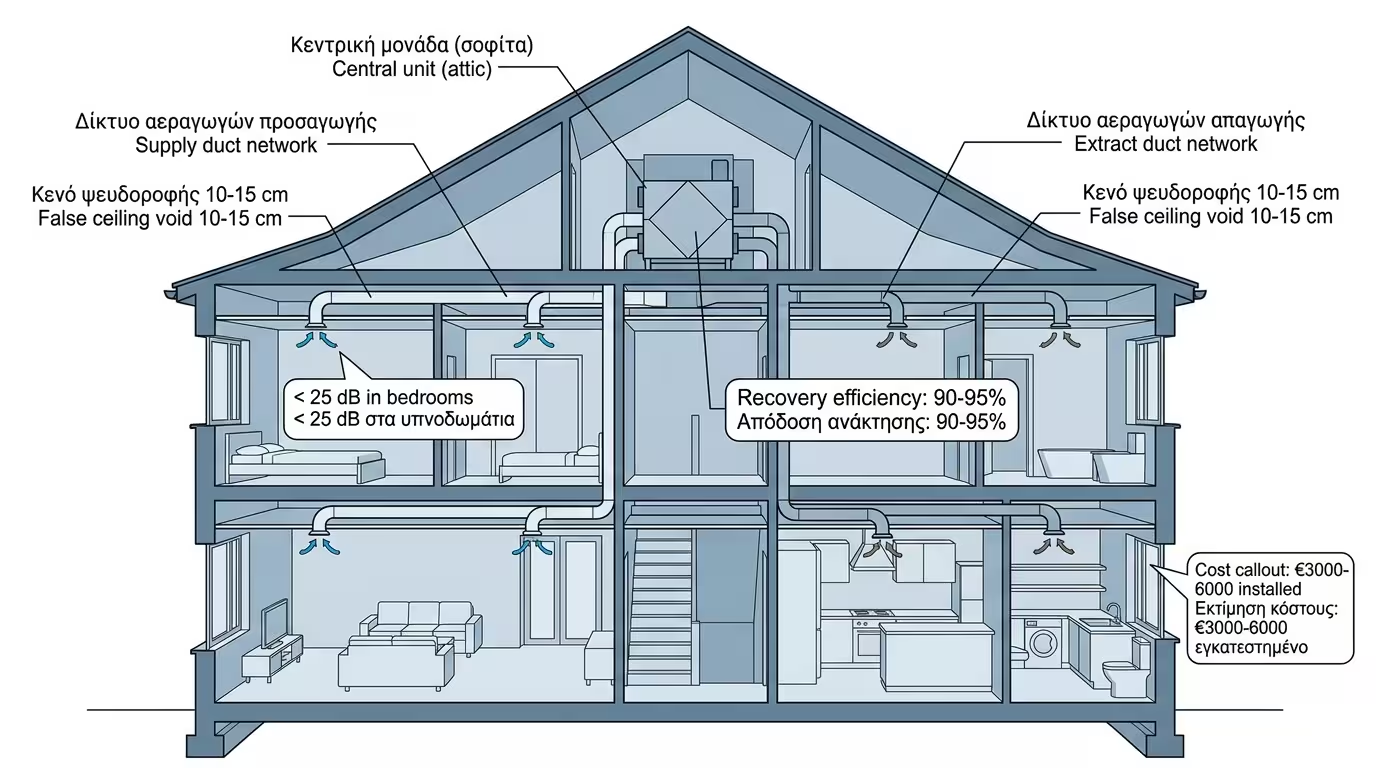
The fans are in the attic. Inside bedrooms you hear literally nothing - just an imperceptible whisper of air at the diffusers (< 25 dB). Ideal for light sleepers or offices requiring silence.
The large exchangers achieve 90-95% heat recovery. Counter-flow exchangers with large surface area (~5-8 m²) exploit every watt. In a 120 m² house in Northern Greece, savings reach 1,200 kWh/year.
No going room to room. Change two filters (supply/extract) at the central machine 1-2 times/year (cost ~€10) and wash the exchanger once annually. All maintenance at one point.
Requires false ceilings for ductwork (10-15 cm height - "steals" headroom). Suitable only for new builds or major renovations. Installation cost: €3,000-6,000 (unit + ducts + labour).
No central machine, no ducts! We drill one round hole (Ø 10-16 cm) with a core drill in the external wall. Inside goes a plastic cylinder with a small fan and a ceramic heat exchanger (looks like a honeycomb). Done - no plasterboard, no false ceiling!
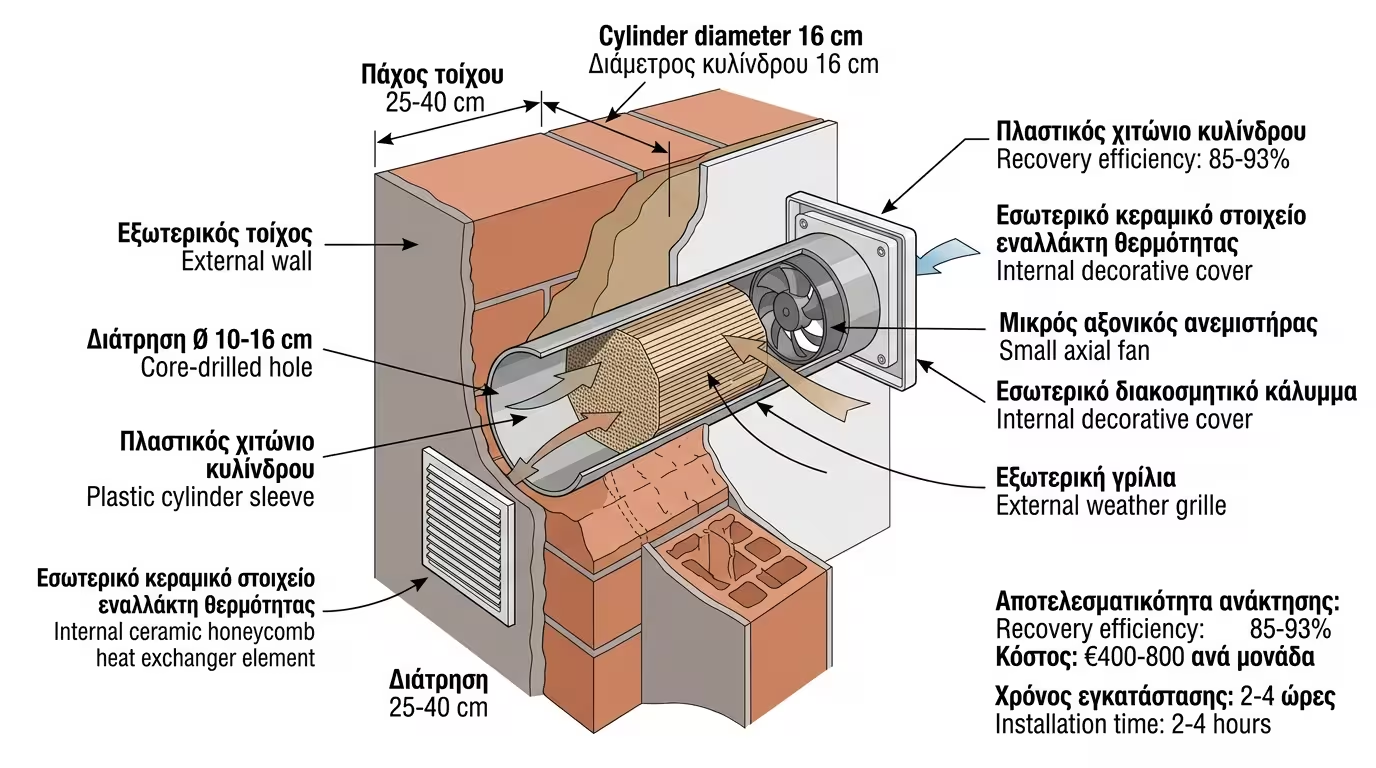
One hole in the wall, one power socket and you're ready. A specialist completes installation in 2-4 hours per unit. No ceiling work, no lost headroom, no disruptive building work.
You can install a unit in just the child's room that has a humidity problem, without paying for the whole house. Cost per unit: €400-800 (+ €100-200 installation). Ideal for partial-scope renovations.
The fan sits inside the room's wall. At high speed, there is a gentle hum (30-38 dB) - like a laptop fan. At low speed (night mode) it drops to 22-28 dB.
For optimal performance, units should be installed in pairs: when one extracts (exhaust), the other supplies (intake) - in opposite rooms. This balances pressures and renews all the air in the home. Solo units work but are less efficient.
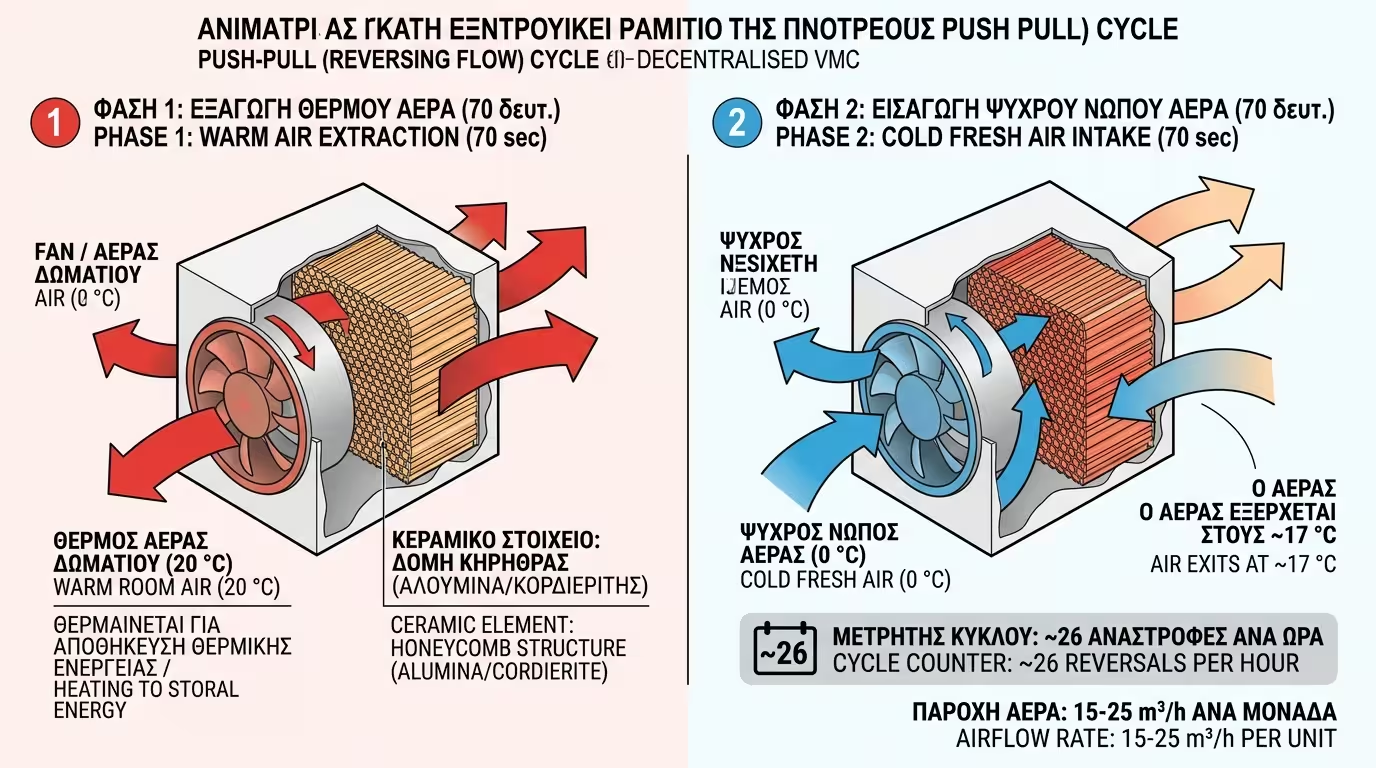
Decentralised units use an ingenious reversing-flow technique (push-pull) to achieve heat recovery without ductwork - solely through a ceramic element inside a Ø 16 cm cylinder.
The fan runs "in reverse" and extracts the warm room air (20 °C) for 70 seconds. As the air passes through the ceramic material, it heats it up - storing the thermal energy.
After 70 sec, the fan automatically reverses! Now it draws in freezing fresh air (0 °C) from outside. The air passes through the hot ceramic, picks up the heat and enters the room at ~17 °C - filtered!
Made of alumina or cordierite (honeycomb structure), it has enormous heat capacity in a small size. Recovery efficiency: 85-93%. Wash in the sink once/year - lasts forever.
The 70+70 sec cycle means ~26 switches/hour. Each switch transfers ~15-25 m³/h of air (model-dependent). For a 15 m² bedroom, one unit covers 0.5-1 ACH - sufficient for 2 people during sleep.
Building your dream home now? Central VMC is the absolute must: luxury, total silence, maximum economy. Living in a 15-year-old flat and the wall is turning black? Wall-mounted decentralised units are the "deus ex machina" - clean air in one morning's work.
Central VMC without second thought. The structure is open, ducts are hidden during the plasterboard phase. Installation cost: €3,000-6,000 (unit + ducts + labour). Silence, 95% recovery, 15-20 year lifespan.
Wall-mounted decentralised units. Install 2-4 units in pairs (total cost €800-3,200). One pair per zone (bedroom + living room). No false ceiling, no disruptive works.
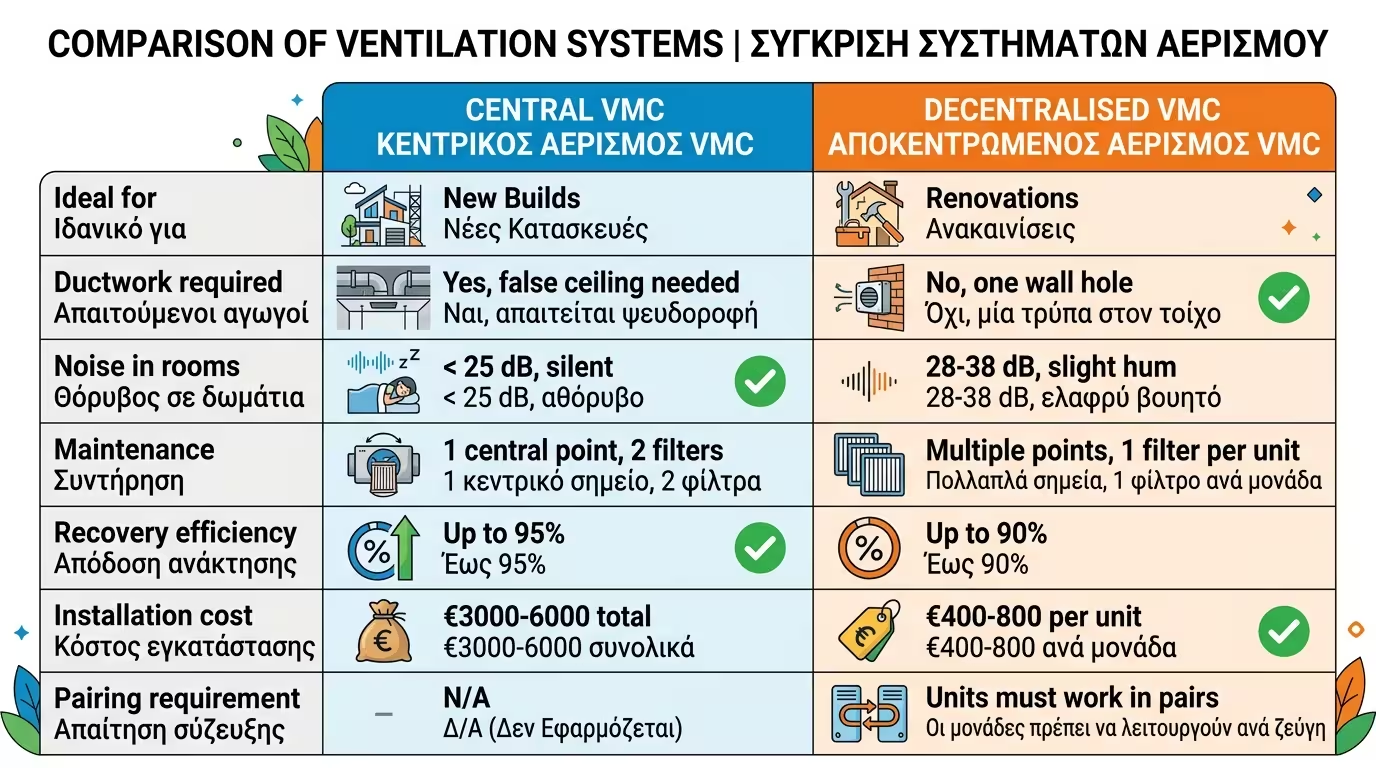
Recovery efficiency: Central ≤ 95% vs Decentralised ≤ 90%. Noise: Central < 25 dB vs Decentralised 28-38 dB. Ductwork: Central ✓ vs Decentralised ✗. Cost/room: Central higher upfront, Decentralised lower per unit but adds up.
In some renovations, the hybrid solution works perfectly: central VMC in the zone with false ceiling (kitchen/living room) + wall units in bedrooms without false ceiling. Each room gets the solution that fits it.
🏗️ New build → Central VMC (silence + 95% recovery). Renovation → Wall units (one hole, clean air in hours). The right choice depends on the building scenario - not the brand.
Return to category.
Go to categoryReturn to the central guide.
Go to guide