Mixing Boxes & Energy Savings: The smart trick that slashes HVAC
costs
Imagine a huge glass office building in winter. Outside it is 0 °C. The
Central Air Handling Unit (AHU) must take this freezing air, heat it to
22 °C and send it inside. The energy required to do this for thousands
of cubic metres is simply astronomical.
How do we solve this problem without letting the employees suffocate
from lack of oxygen? The answer is the Mixing Box - the "conductor"
that blends outdoor air with return air, dramatically reducing HVAC costs.
In summer, if the outdoor temperature is 38 °C and you continuously draw in
this scorching air to cool it to 20 °C, the chiller runs at 100% non-stop
- the electricity bill becomes catastrophic. But the air already circulating
inside the building is at a comfortable 24 °C - why throw it all away?
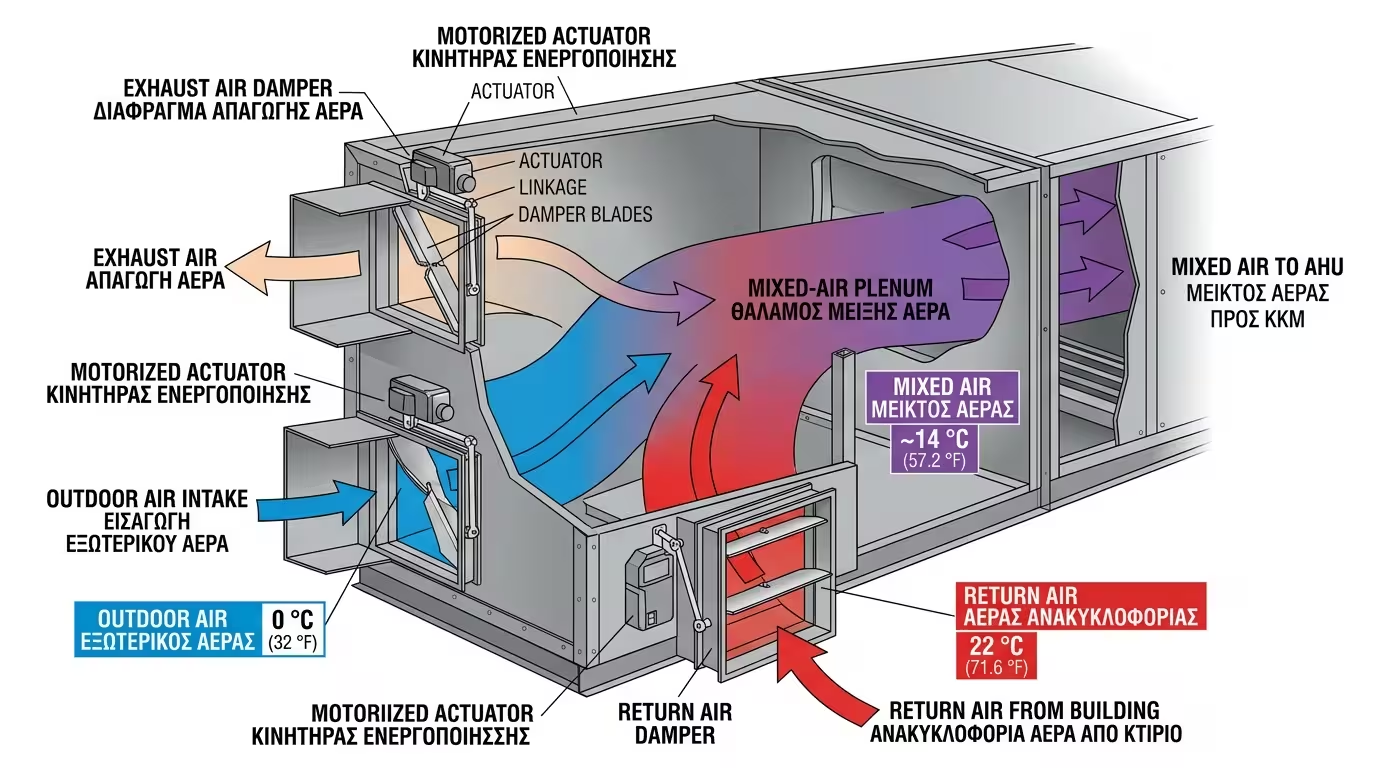
1. Anatomy of the Mixing Box - The 3 Dampers
The mixing box is a large metal chamber at the AHU's "entrance." It
receives air from two sources and is controlled by three motorised dampers that receive commands from the BMS (Building Management System) controller.
These three dampers adjust the balance between energy cost and indoor air
quality in real time.
🌍 Outdoor Air Damper (Fresh Air)
Opens towards the exterior to introduce fresh, clean air - but at whatever temperature prevails outside (hot in summer, freezing
in winter). The minimum open position is dictated by ASHRAE standards
and can never be fully closed while the unit operates; otherwise, occupants
would breathe only recirculated, "stale" air.
🔄 Return Air Damper
Brings back air that has already circulated inside the
building. This air is near the ideal temperature (e.g. 24 °C), but is
"dirty" - loaded with CO₂ from occupants' breathing and
particulate matter. The higher the return percentage, the lower the energy
cost - but there is a strict upper limit on recirculation.
🚪 Exhaust Air Damper
A "door" that expels excess, dirty air to the atmosphere.
It works in inverse phase with the Return Damper: when outdoor air increases,
exhaust increases equally, so the building pressure stays slightly positive (preventing uncontrolled infiltration through cracks and gaps).
⚙️ The role of the BMS
The BMS controller receives data from temperature, CO₂ and enthalpy sensors and adjusts each damper position every second. In modern installations,
BACnet or Modbus protocols are used for remote control,
logging and optimisation of the mixing ratios.
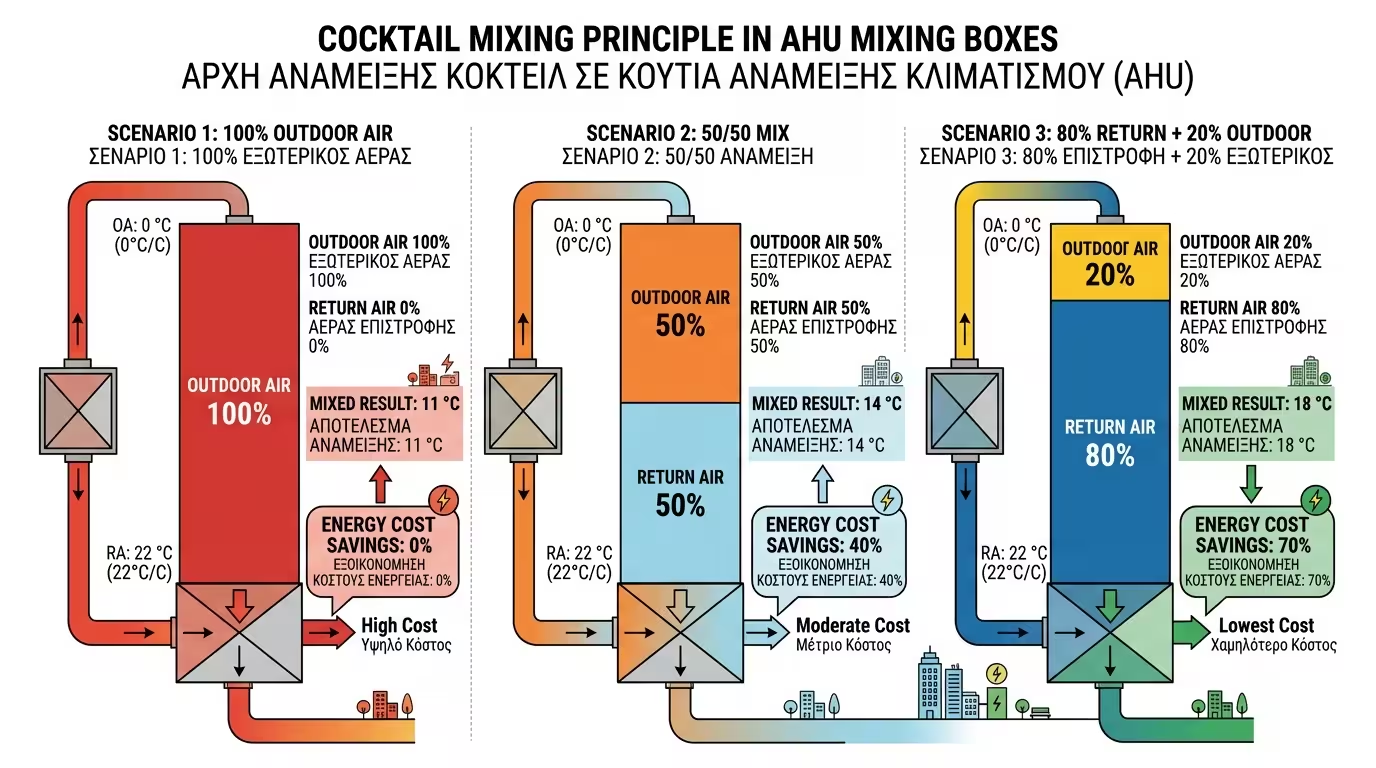
2. How the Mixing "Magic" Works - The Air Cocktail
Instead of drawing 100% hot outdoor air (38 °C), the AHU creates a
smart "cocktail": it keeps 80% of the return air
(already cool at 24 °C) and introduces only 20% outdoor air. The
mixture temperature drops to ~26 °C instead of 38 °C. The cooling load
saving reaches
60-70%.
🔢 The hard numbers
In summer with outdoor temperature 38 °C and return at 24 °C, the
80/20 ratio gives a mean mixture temperature of ≈ 26.8 °C. The chiller now has to cool the air by just 6-7 °C (from 26.8 →
20 °C), instead of 18 °C (from 38 → 20 °C). The chiller consumes
less than 40% of the energy it would need with 100% outdoor
air.
❄️ Winter savings
In winter the phenomenon reverses: the return air is warm (22 °C) while the outdoor air is freezing (0 °C). Mixing 80% return + 20% outdoor
air gives a mixture at ~17.6 °C - the heating coil needs minimal energy
to reach 22 °C instead of heating the air by a full 22 degrees.
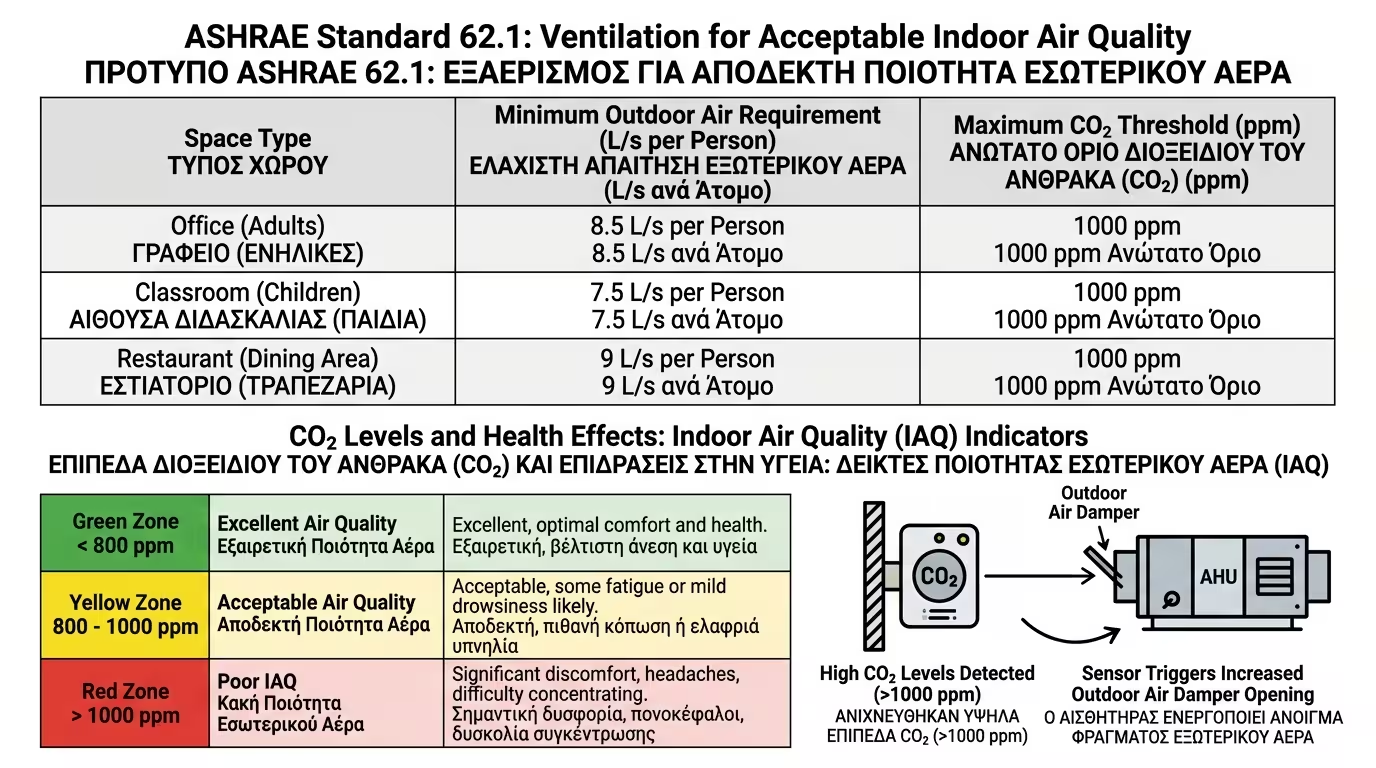
📊 Dynamic ratio changes
The outdoor/return ratio is not fixed. If more
people enter the building (e.g. a conference), the CO₂ sensor
detects a rise above 800 ppm. The BMS automatically opens more
outdoor air (e.g. 40%) - sacrificing a little energy for the sake of
health. Once the crowd disperses, the damper closes
back down.
🌡️ Mixture thermometry
The calculation formula is simple: Tmix = (% OA × TOA) + (% RA × TRA). Example: 20% × 38 °C + 80% × 24 °C = 7.6 + 19.2 =
26.8 °C. This formula underpins every HVAC
engineering study for large buildings and is automatically embedded
in BMS algorithms.
3. The ASHRAE Rule - Why not 100% return air?
If recirculation saves so much money, why not shut the outdoor air off
entirely? ASHRAE (American Society of Heating, Refrigerating and
Air-Conditioning Engineers) sets the global standards. Standard 62.1 mandates a minimum
of 10 litres/second/person of outdoor air in offices.
The outdoor air damper never closes below this minimum.
🫁 What happens without fresh air
If you continuously recirculate the same air in an office building:
oxygen drops, CO₂ skyrockets above 1,500 ppm (drowsiness,
headaches, productivity loss). Airborne viruses and germs multiply unchecked
- something the COVID-19 pandemic highlighted dramatically, proving that
clean outdoor air is a matter of public health.
📏 The ASHRAE 62.1 numbers
For a typical office: 2.5 l/s per m² of floor area +
10 l/s per occupant. In a 40 m² meeting room with
20 people, this means 300 l/s (1,080 m³/h) minimum outdoor
air. The mixing box ensures this quantity enters
always - even when the temptation to save electricity
says "shut everything off."
🇪🇺 European standards (EN 16798)
In Europe, EN 16798-1 defines 4 indoor air quality categories
(I–IV). Category II (typical office) requires 7 l/s/person + 0.7 l/s/m². Greek buildings fall under this standard, although in
practice many designers follow the stricter ASHRAE standards as best practice.
🔐 The safety interlock
The minimum outdoor air position is hard-coded in the
BMS firmware. Even if a technician attempts to override it, the controller
raises an alarm and refuses to close the damper below
15-20% - protecting people from themselves.
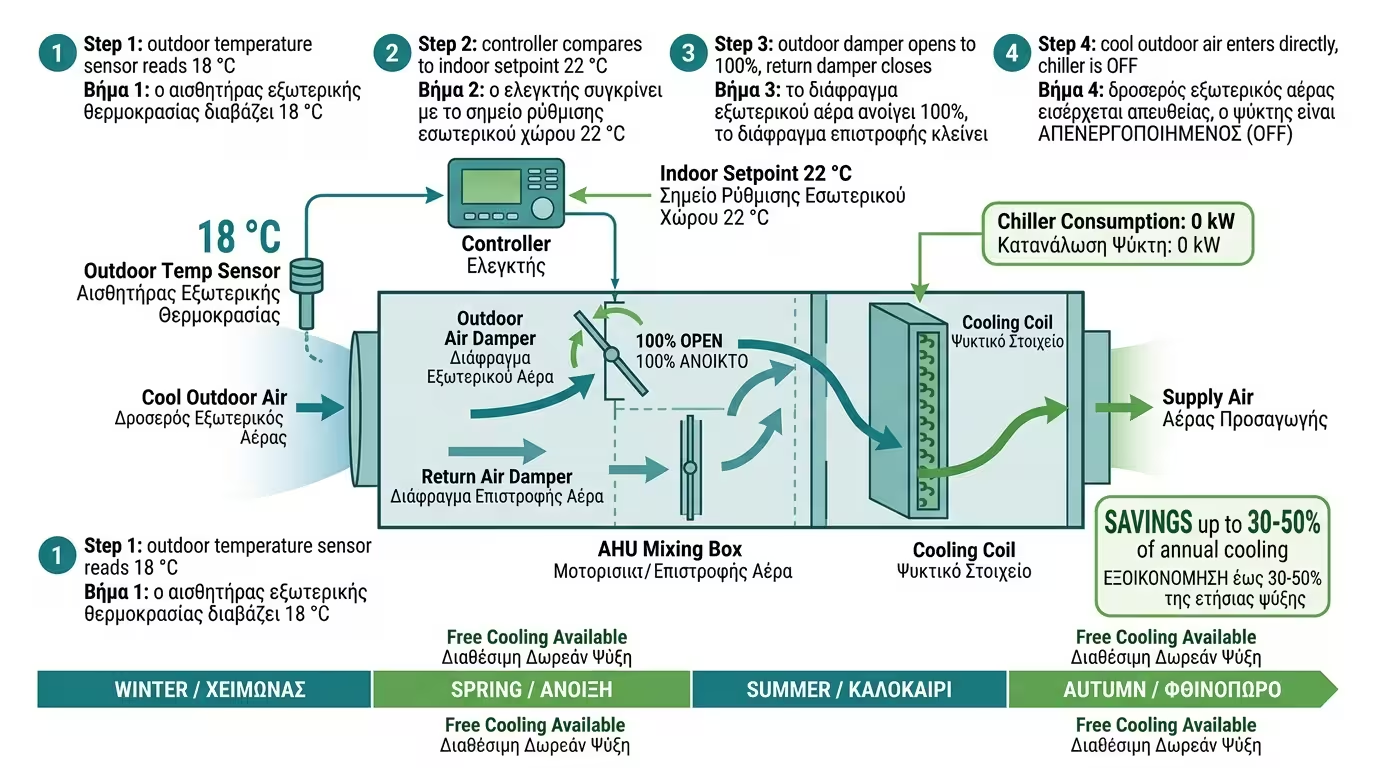
4. Free Cooling (Economizer Mode)
Imagine a spring day: the building interior is overheating (from
computers and people), but outside the temperature is just 18 °C. The AHU's "brain" detects this via enthalpy or temperature sensors
and activates the Economizer mode.
🆓 How it works
The BMS shuts down the expensive chiller entirely! It
opens the Outdoor Air damper to 100% and closes the Return
to 0%. The unit voraciously draws in the external coolness, filters it
and sends it straight into the building.
💰 The savings
You cool an entire building using only the minimal energy of the
fans, with no refrigeration equipment running. In climates like
Greece's, the Economizer mode can operate for
800-1,200 hours annually (mainly autumn, spring, early
summer mornings), saving thousands of euros in electricity.
🌡️ When it deactivates
Once the outdoor temperature (or enthalpy) exceeds the
return air value (e.g. 24 °C), the Economizer deactivates automatically
- because now it is cheaper to recirculate the already cool building air
than bring in the outdoor heat. The BMS returns to the 80/20 mix.
📈 Enthalpy vs Dry-Bulb Control
More advanced controllers look not only at temperature but also at
the enthalpy (temperature + humidity) of the outdoor
air. In humid climates (typical Greek humidity 60-80%), even at 20 °C
the dehumidification energy may exceed the gain - the
Enthalpy Economizer is more precise and efficient.
⚡ The Mixing Box is the AHU's "conductor." It decides every second how
much outdoor air should enter the building - keeping people healthy
without blowing up the budget.