🟢 Pre-filters G3 – G4
The first line of defence. Thin synthetic cotton-like material. What they catch: pet hair, lint, insects, sand and coarse dust (PM10). These are the filters you wash in your wall-mounted A/C every two weeks.
We all want to breathe air free of exhaust fumes, pollen and viruses. The obvious logic says "fit the densest filter everywhere". But in engineering, that logic is the recipe for burning out your HVAC system within a week.
Let's decode the filter codes (G4, M5, F7, HEPA) and understand why your home can't become an operating theatre.
An air filter works exactly like a kitchen sieve. Large holes keep the pasta but let water through. Microscopic holes (like a coffee filter) require far more pressure to push air through.
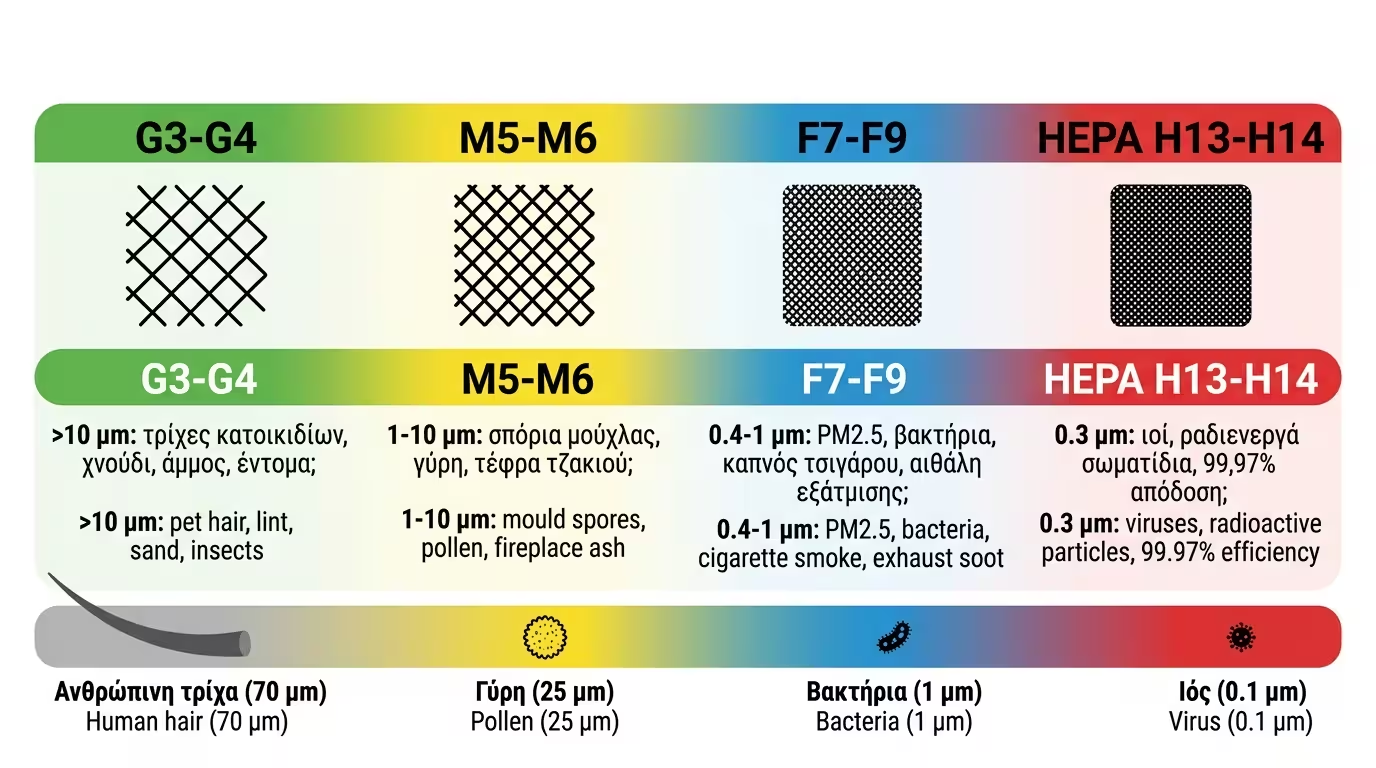
The first line of defence. Thin synthetic cotton-like material. What they catch: pet hair, lint, insects, sand and coarse dust (PM10). These are the filters you wash in your wall-mounted A/C every two weeks.
Denser material. What they catch: fine dust, mould spores, fireplace ash and larger pollen particles - a lifesaver for allergy sufferers in spring. Commonly used in central air handling units (AHU).
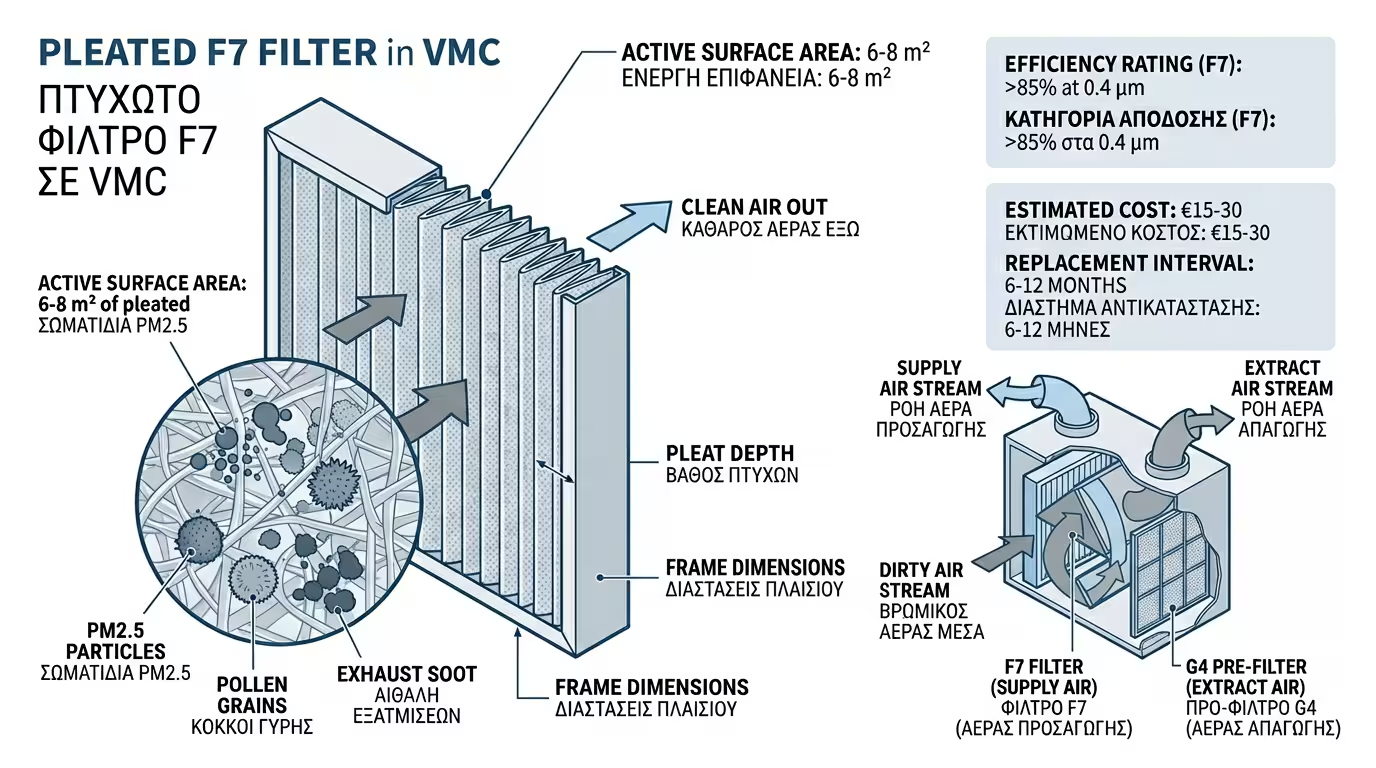
The class that truly protects your lungs. Often in a "zig-zag" (pleated) form. They capture invisible PM2.5 particles, heavy metals, cigarette smoke, exhaust soot and most bacteria.
The "Holy Grail". Extremely dense paper/synthetic media. Captures 99.97% of 0.3 μm particles - trapping viruses, radioactive particles and nano-dust. Only for specialist applications (Air Purifiers, hospitals).
If you remember only one thing from this article: your VMC (Mechanical Ventilation) system should have an F7-class filter on the incoming supply air.
PM2.5 (fine exhaust particles), pollen, mould spores, bacteria, cigarette smoke and soot. It traps over 85% of 0.4 μm particles - sufficient for safe air even in a city centre.
Pleated F7 filters increase the active surface area without raising resistance. 1 m² of filter can contain 6-8 m² of pleated membrane - air passes easily while particles cannot escape.
Every 6-12 months (depending on local pollution). Heavy-traffic city? Every 6 months. Rural area? Every 12. Cost: €15-30 per filter. Never wash them - they never regain their original capacity.
Inside the central VMC unit, on the supply air stream . Many units have two slots: F7 on the fresh air intake, G4 on the extract - protecting the heat exchanger from both sides.
Imagine breathing through a thin surgical mask - easy. Now try through a folded wool blanket. You can't! This resistance to airflow is called Pressure Drop - and it increases dramatically with each step up the filter scale.
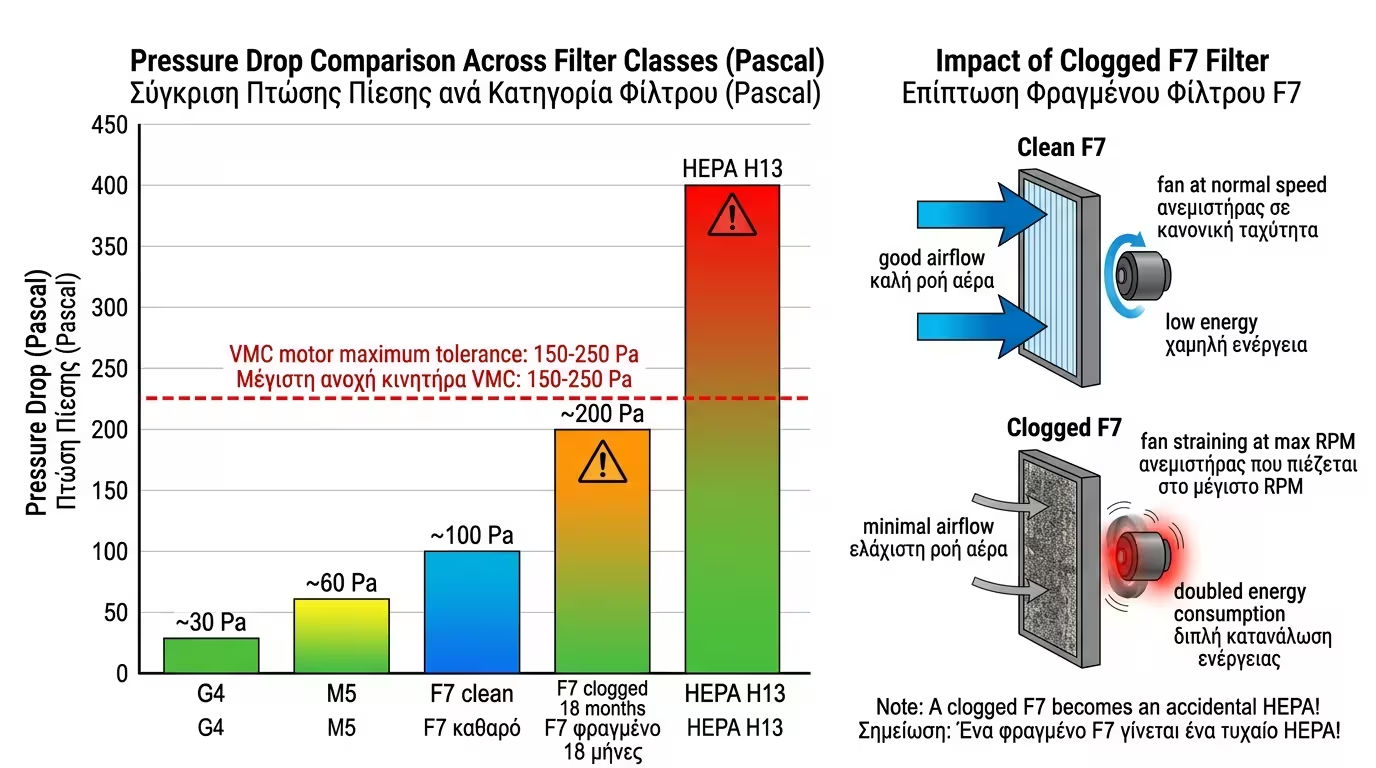
Each filter creates resistance measured in Pascal (Pa). A G4 → ~30 Pa. An F7 → ~100-150 Pa. A HEPA → 300-500+ Pa. VMC/A/C motors are designed for max resistance of 150-250 Pa.
A dirty F7 left unchanged for 18 months effectively turns into a HEPA! Pressure drop doubles, the fan strains, airflow drops to zero and electricity consumption spikes.
Many VMC units have a differential pressure sensor or timer. When the "Filter Change" light comes on, don't ignore it - replace immediately. You'll gain energy efficiency, quiet operation and healthy air.
Modern VMC with EC motors (electronically commutated) automatically increase speed as the filter clogs - but power consumption rises too. A fresh filter = 30-50% lower energy use.
Many people buy HEPA material and stick it over their A/C or extractor fan filters. This is a massive, destructive mistake - here's why.
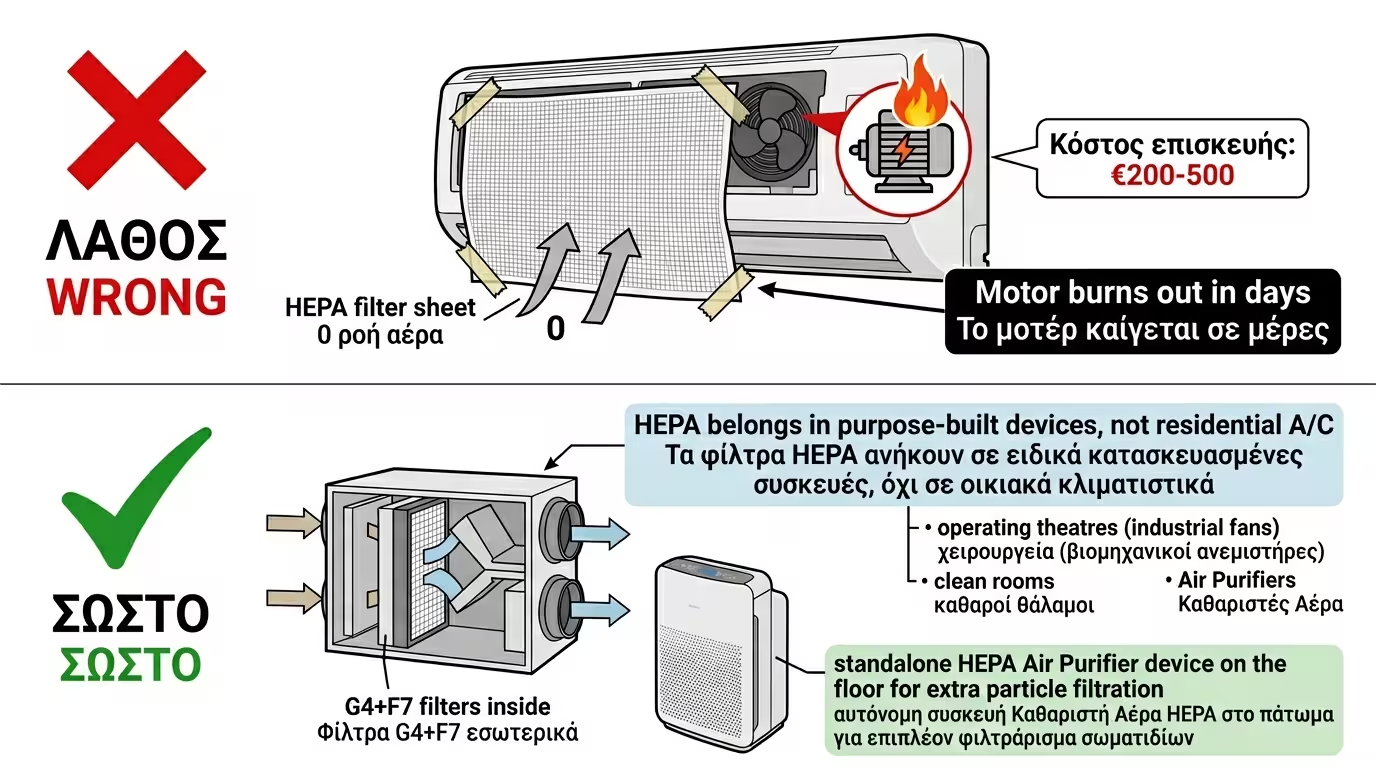
Residential A/C and VMC units have small, delicate fans designed for G4 or F7 filters. Fit a HEPA and airflow drops to zero - no cooling, no heating, no air circulation at all.
The fan runs at full speed trying to overcome the resistance. It overheats and within days (or hours) burns out completely. Repair costs €200-500 - far more than the right filter.
Exclusively in: operating theatres (industrial fans), clean rooms (massive motors) and standalone Air Purifiers - devices designed from scratch to work with this exact filter.
The ideal combination: G4 pre-filter + F7 in the VMC (coarse + fine particles). If you want HEPA, buy an Air Purifier - a standalone device that doesn't affect your HVAC system.
🔧 No need for an operating theatre. G4 + F7 = 100% healthy air without choking your equipment. Replace filters every 6-12 months - a clogged F7 becomes an accidental HEPA and suffocates the system!
Return to category.
Go to categoryReturn to the central guide.
Go to guide