The Limits of Natural Ventilation: Why Modern Homes "Suffocate" Without Mechanical Ventilation

For millennia, ventilation was a given: buildings were full of cracks, gaps and crude window frames. Air moved freely. No design was needed. That era is over.

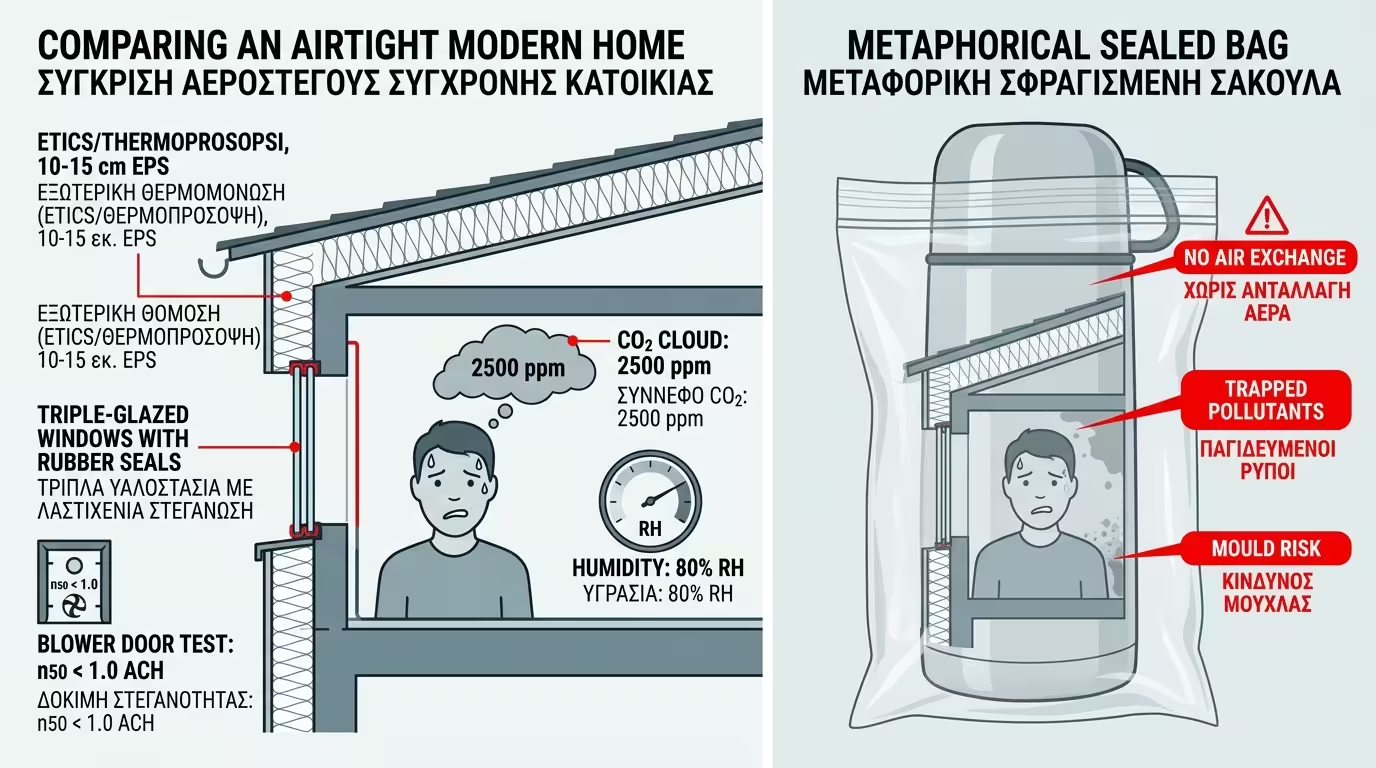
Modern homes - especially after an energy upgrade (external wall insulation, new windows, roof sealing) - are designed to be completely airtight. This saves enormous energy on heating and cooling, but creates a new, serious problem: air neither enters nor exits. The house becomes like a sealed plastic bag.

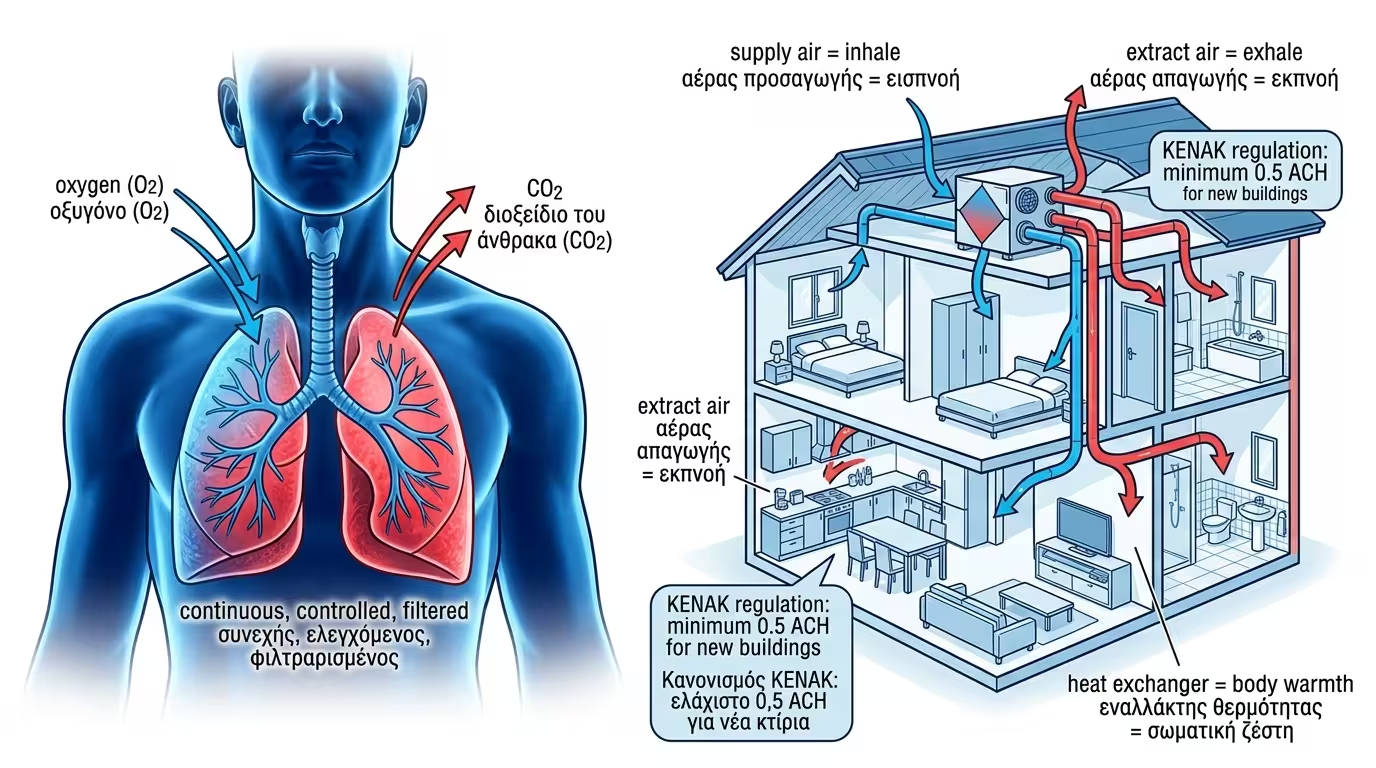
This article explains why mechanical ventilation is not a luxury in modern buildings - it is literally essential, like lungs for the house.

1. The Airtightness Trap: The Thermos House

Modern energy legislation (KENAK in Greece, EPBD in Europe) requires buildings to be virtually airtight. Thermally broken aluminium frames, triple glazing, EPS/XPS wall insulation and the sealing of every leak point eliminate uncontrolled air movement. This is excellent for heating. But disastrous for air quality.

Airtight house - thermos, KENAK regulation, sealed like a plastic bag

🏠 Before vs after

An old 1980s house with timber windows and zero insulation changes air 4-6 times/hour without anyone opening a window (uncontrolled infiltration). The same house after external insulation + new frames changes air just 0.2-0.5 times/hour. This means the air remains stagnant for hours.
🧪 The Blower Door test

The airtightness indicator n50 measures how many times the air changes in one hour under an artificial 50 Pascal pressure. A Passivhaus targets n50 < 0.6. A typical renovated home ranges at n50 = 2-4. Old houses may reach n50 > 10.

📋 The KENAK regulation

The Greek KENAK (Building Energy Performance Regulation) requires minimum thermal insulation in every new building or major renovation. This means a warmer home, but if mechanical ventilation is not specified, it also means dirtier air.

💡 The benefits (if done correctly!)

Airtightness combined with mechanical ventilation + heat recovery (VMC) delivers the best of both worlds: energy savings of 30-50%, healthy air quality, minimal mould and full temperature/humidity control.

2. The "Invisible" Enemies Inside the Home

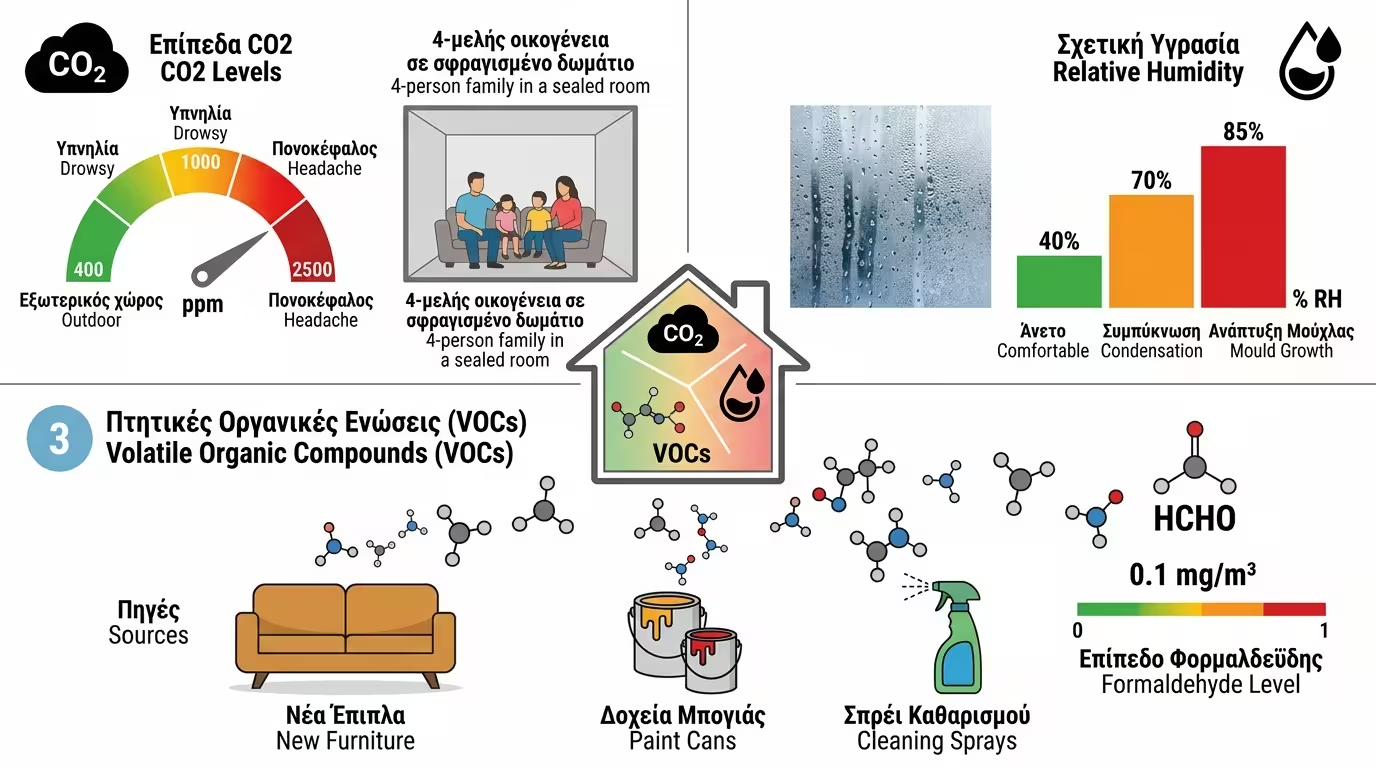
In a home without adequate ventilation, three "invisible enemies" accumulate silently within a few hours: CO₂, humidity and volatile organic compounds (VOCs).

CO₂, humidity, VOCs - trapped pollutants in airtight home without ventilation

🌡️ Carbon Dioxide (CO₂)

Every adult exhales about 20 litres of CO₂/hour. In a closed bedroom, levels can reach 2,500-4,000 ppm in one night (the healthy limit is <1,000 ppm). Result: headaches, inability to concentrate, poor sleep and fatigue with no apparent cause.

💧 Humidity & mould

Bathing, cooking, laundry, breathing, plants - a 4-person household produces 10-15 litres of water/day as vapour! Without ventilation, the moisture gets trapped, cold walls (thermal bridges) collect condensation, and mould develops within 24-48 hours.

🧪 VOCs & formaldehyde

Furniture, carpets, paints and even cleaning products emit Volatile Organic Compounds (VOCs). Formaldehyde (IARC Group 1 carcinogen) is present in many melamine and MDF products. Without ventilation, concentrations "build up" silently.

🦠 Biological pollutants

Mould spores, dust mites, pet allergens and hair - they all float in the air and worsen allergy and asthma symptoms. In a sealed home, these pollutants never leave on their own.

3. "Let Me Open a Window": Why It Is No Longer Enough

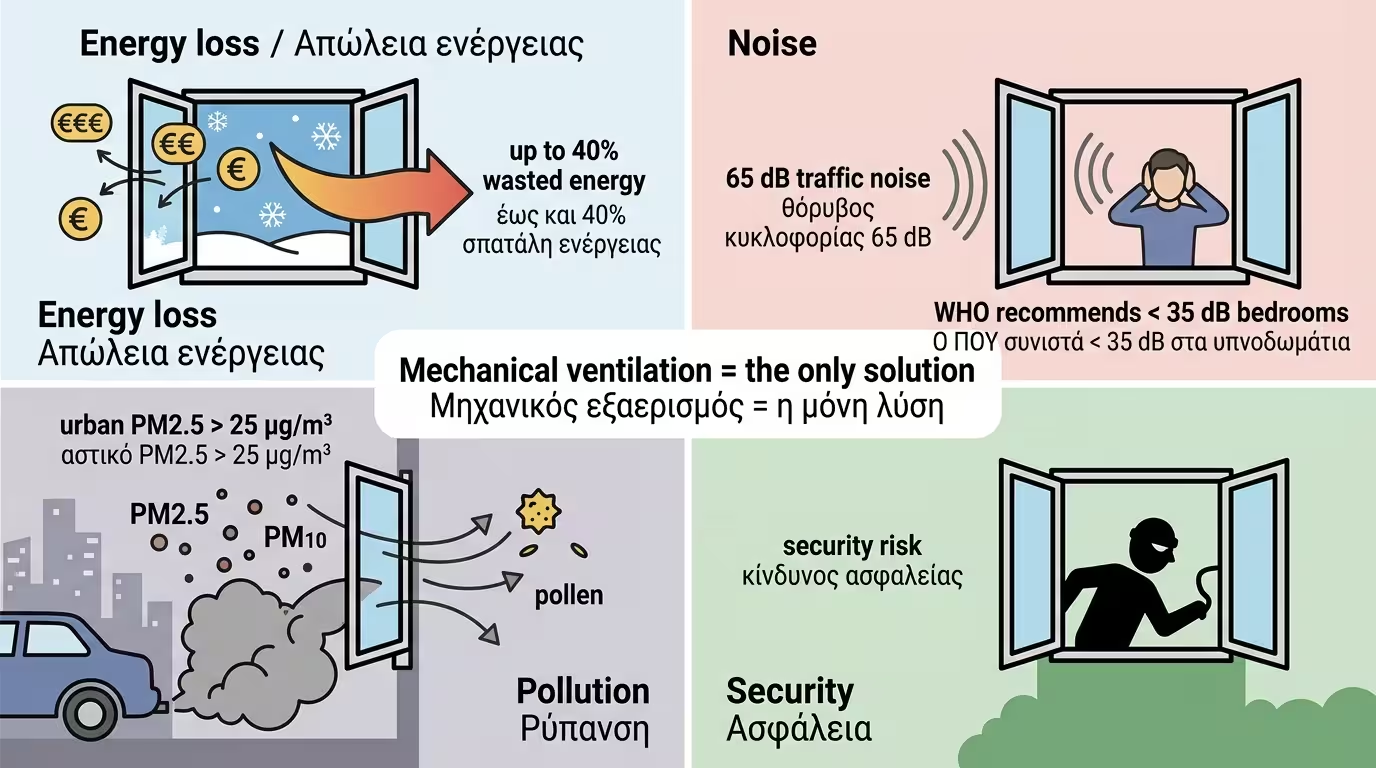
Window limits - energy, noise, city pollution, natural ventilation

Natural ventilation (5 minutes, 3 times a day) is an excellent practice - but in an airtight home it is not enough for the hours between ventilation bursts. There are also practical obstacles that make natural ventilation impossible or undesirable.

🌡️ Extreme temperatures

In the Greek climate (temperatures down to -5°C in winter in northern Greece, up to +42°C in summer), opening windows means enormous energy waste. Hot or cold air enters uncontrolled, the boiler or Heat Pump works overtime, and the bill skyrockets.

🏙️ Noise & pollution

If you live on a busy main road, open windows bring in traffic noise (65-85 dB), PM2.5 and PM10 particulates (brake dust, exhaust), pollen and urban dust. In effect, you are polluting your indoor air by opening windows.

🌙 Night-time (bedrooms)

Nobody gets up every 3 hours at night to ventilate. In a closed 12 m² room with 2 adults, CO₂ levels exceed 2,500 ppm in 2-3 hours. Sleep becomes shallow, non-restorative, and you wake up tired. The solution? Continuous mechanical ventilation.

🔒 Security

On ground floors or low levels, open windows at night are an invitation to burglars. In areas with mosquitoes (many Greek lowland regions in summer), ventilation without a screen is practically impossible. Mechanical ventilation eliminates these problems too.

4. The Solution: The House Needs "Lungs" (Mechanical Ventilation)

The answer is not "close less" or "leave gaps". The correct solution is controlled mechanical ventilation - a system that delivers exactly the fresh air you need, while recovering the heat (or cool) from the outgoing air.

House-lungs - mechanical ventilation mandatory in insulated homes

🔄 VMC: The "lungs" of the house

A Mechanical Ventilation with Heat Recovery (VMC - HRV/ERV) system introduces fresh air, filters it, warms it (or cools it) using the heat from the exhaust air, and delivers it to every room. Recovery reaches 85-95% on top-tier units.

📋 The standards require it

The European EPBD (Energy Performance of Buildings Directive) and the updated Greek KENAK promote "Nearly Zero Energy Buildings" (nZEB). In these buildings, mechanical ventilation is mandatory - the nZEB target cannot be met with open windows.

💶 Is the investment worthwhile?

A residential VMC costs €2,500-6,000 (unit + ductwork + installation). The energy savings (85-95% recovery) reduce the heating bill by 25-40%. Payback occurs in 3-6 years, while property value increases noticeably.

🏗️ When to plan it

Ideally, mechanical ventilation is designed alongside insulation. During renovation, it is critical to plan before floors and false ceilings are closed up. Alternatively, decentralised systems (room-by-room VMC units) can be installed easily without ductwork.

🏠 Insulate properly, seal completely, but DON'T forget the "lungs". Every airtight home needs mechanical ventilation - otherwise the energy savings come at the expense of your health.

Related Articles

Preview