Sick Building Syndrome (SBS) & CO₂ Levels: The Invisible Enemy

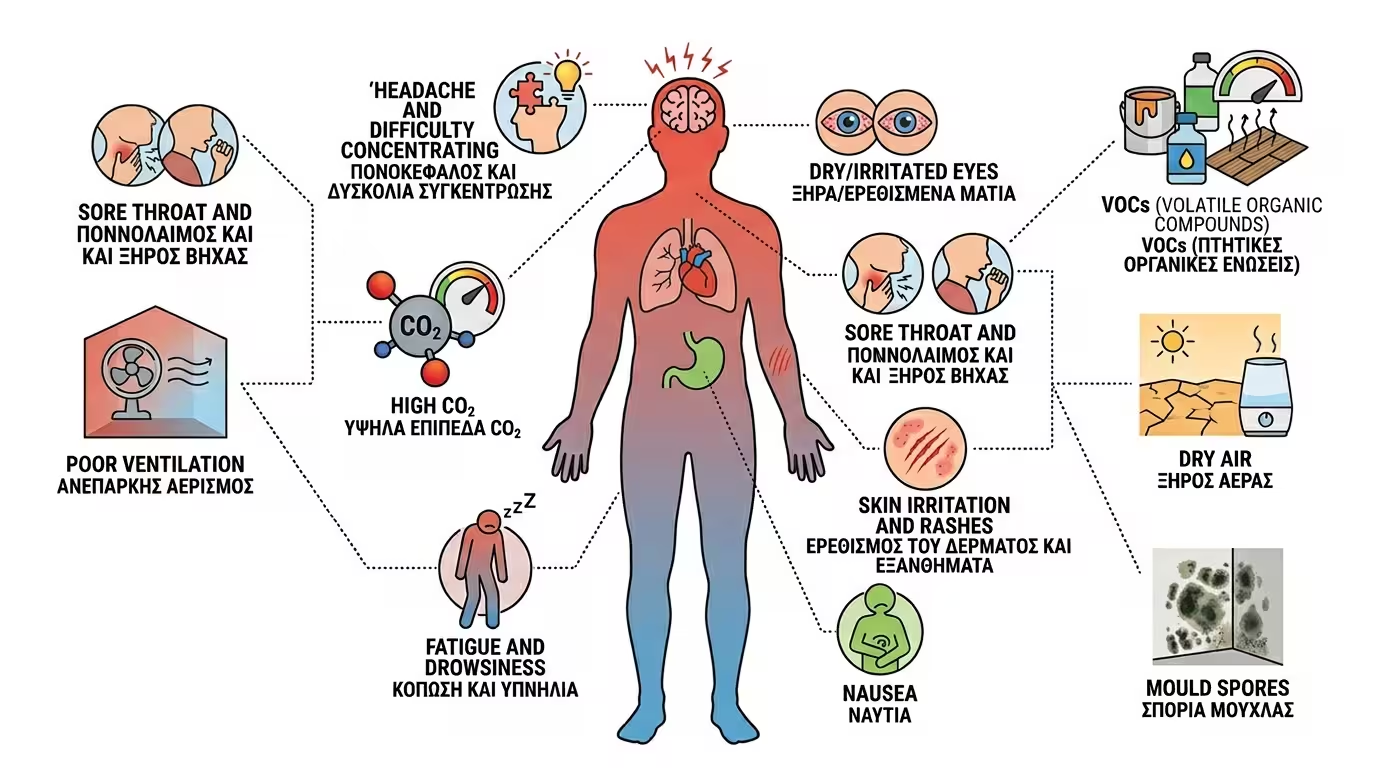
Feeling unexplained fatigue at the office? Stinging eyes, dry throat, a persistent mild headache - but the moment you step outside, everything vanishes? You weren't sick. The building was sick.

The World Health Organisation (WHO) recognises this phenomenon as Sick Building Syndrome (SBS) - and the number-one culprit is a gas we produce ourselves: Carbon Dioxide (CO₂).

1. The Closed Bedroom Nightmare

Every time we inhale, we take in Oxygen (O₂). Every time we exhale, we release Carbon Dioxide (CO₂). In an old house (that "leaked" through cracks), the air refreshed itself. In modern, airtight homes, closing the bedroom door turns the room into a sealed gas chamber.

Sick Building Syndrome symptoms - headache, fatigue, stinging eyes in closed room

😴 During the night

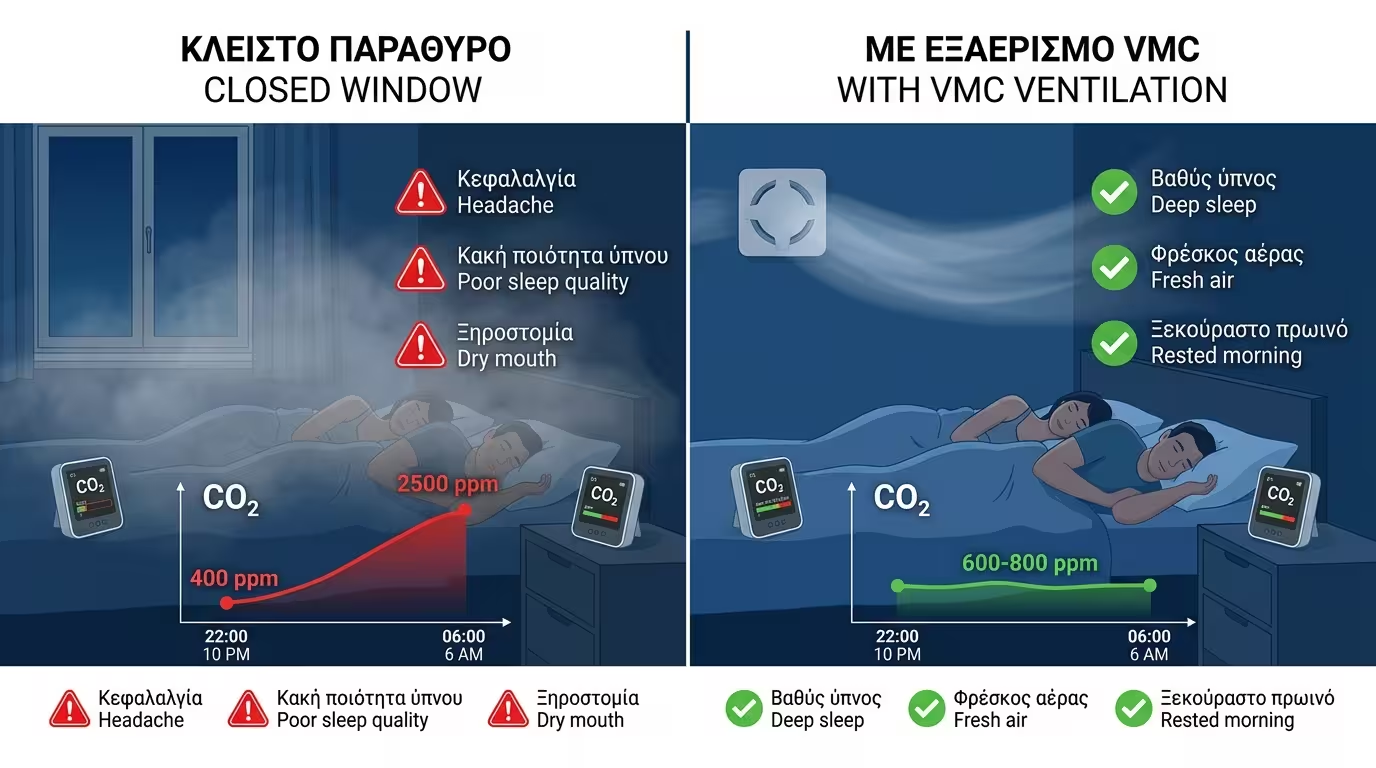
Two people in an average bedroom (15 m²) emit so much CO₂ over 8 hours of sleep that levels can reach 2,500 ppm by morning - 6 times the outdoor baseline of 400 ppm. The brain "starves" for oxygen; sleep becomes shallow and restless.
🏢 In the office

In a meeting room with 10 people and no proper ventilation, CO₂ levels exceed 2,000 ppm within 45 minutes. Concentration drops by 30-50%, yet nobody understands why, since there's no obvious smell.

🏫 At school

Children doze off in classrooms during winter for exactly this reason. Measurements in Greek schools show levels of 1,500-3,000 ppm in closed classrooms - pupils' brains are literally functioning in a state of hypoxia.

💡 Why we don't notice

CO₂ at these concentrations is odourless and invisible. The "stuffy" smell comes from VOCs and body odour, not CO₂ itself. Without measurement, you simply cannot know that the atmosphere is slowly "poisoning" you.

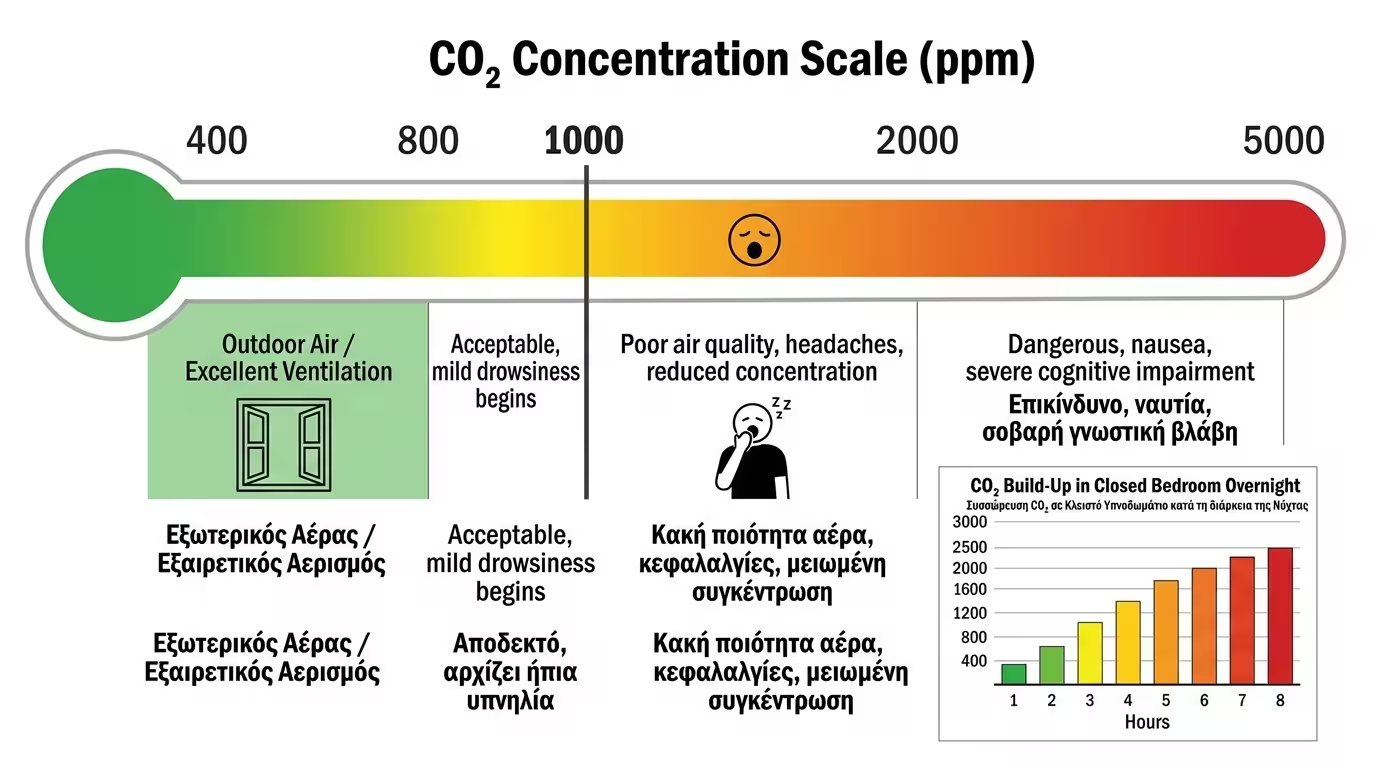
2. The CO₂ Scale (What's the Limit?)

CO₂ scale - 400-800 ppm ideal, 1000 ppm alert, 2000+ ppm SBS danger zone

CO₂ is measured in ppm (parts per million). Each zone represents a different health state - from crystal-clean air to serious symptoms.

🟢 400 ppm - Clean outdoor air

Fresh outdoor air (mountains, parks). This is the baseline reference. You never go below this indoors - only with all windows open do you approach it.

🟢 400-800 ppm - Ideal zone

The perfectly healthy state inside a well-ventilated home. Brain at 100%, deep sleep, zero symptoms. The goal of every properly designed ventilation system.

🟡 1,000 ppm - Alert threshold

Problems begin here. The air starts to smell "stuffy". Concentration drops noticeably, drowsiness increases. ASHRAE standards set 1,000 ppm as the absolute upper limit for occupied spaces.

🔴 1,500-2,500+ ppm - SBS zone

Full Sick Building Syndrome manifests: headaches, drowsiness, discomfort, increased heart rate. In a sealed bedroom without ventilation, 2,500 ppm is not an exception - it's the norm during winter.

3. How a Bedroom "Suffocates" in 8 Hours

An adult exhales ~200 mL CO₂ per minute (12 L per hour). Two people in a 15 m² × 2.7 m room = 40 m³ of air. With zero air changes, CO₂ starts at 400 ppm, hits 1,000 ppm in 90 minutes, and exceeds 2,500 ppm by morning.

Sealed bedroom at night - CO₂ rises to 2500 ppm, shallow sleep

🛏️ Sleep cycles disrupted

Above 1,500 ppm, the brain enters a stress state: heart rate rises, sleep becomes shallow, and REM cycles are interrupted. Result: you wake with that trademark "heavy" head, believing you slept a full 8 hours.

🪟 The "open window" workaround

In winter this means heat loss, road noise, mosquitoes (in summer), and disarmed roller shutters and alarms. Natural ventilation through windows is the most inefficient and insecure solution - especially in urban areas.

🔬 The only real solution: VMC

Mechanical Ventilation with Heat Recovery (VMC) delivers fresh air 24/7 without losing energy. It keeps CO₂ below 600-800 ppm in every room, regardless of how many windows are sealed shut.

📊 Measurement = Knowledge

Without a CO₂ sensor, you're just guessing. With a sensor (€30-50), you see in real time whether the air is safe. It's the first step before deciding if you need mechanical ventilation.

4. CO₂ Sensors: Your Home's "Canary"

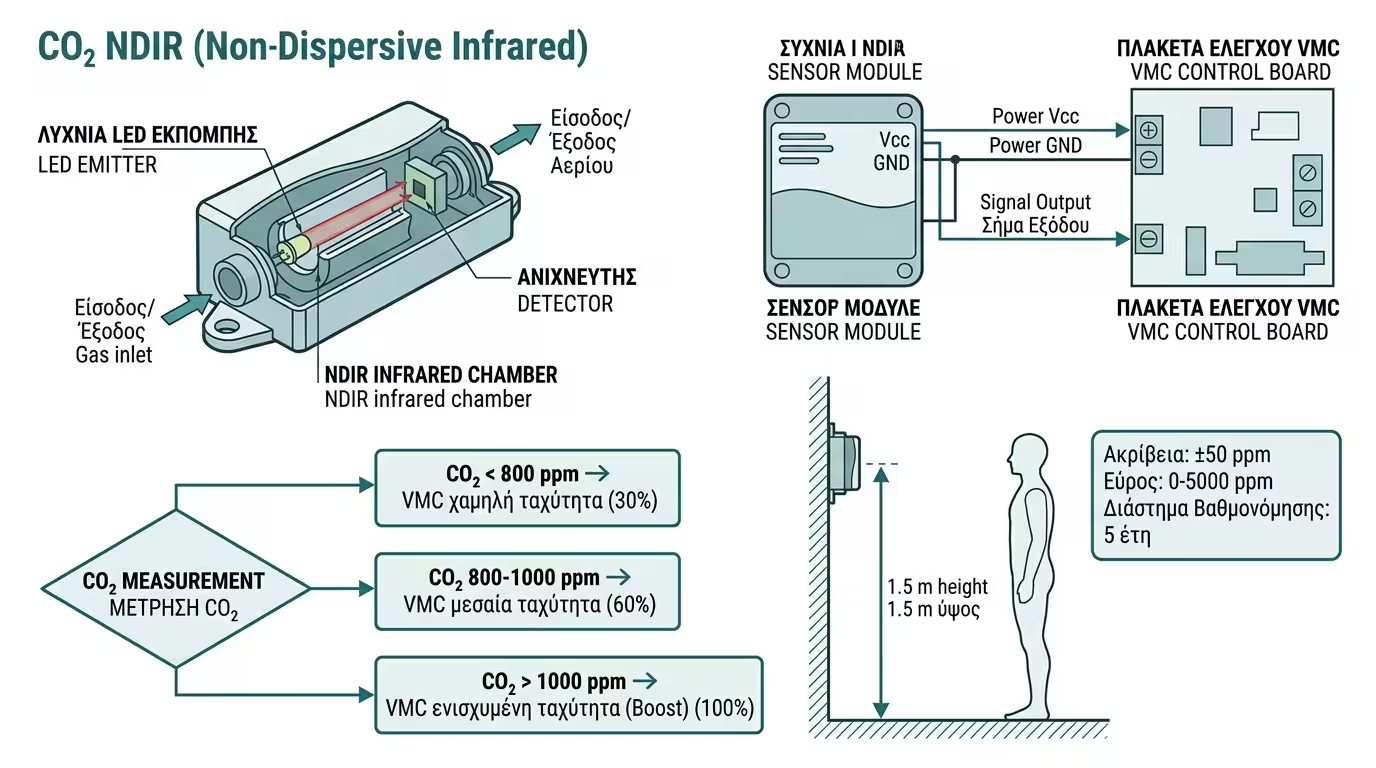
In the past, miners lowered a canary into the shaft - if it fainted, they knew oxygen was depleted. Today the canary's role is played by NDIR-type CO₂ sensors (Non-Dispersive Infrared) - small, precise devices that measure air quality in real time.

NDIR CO₂ sensor - 1000 ppm alert, VMC connection, automatic ventilation

📱 In a basic home

The sensor lights a red LED or sends a phone notification when you pass 1,000-1,200 ppm: "Open a window now!". It costs €30-50 and shows a real-time value plus a history graph.

🤖 In a VMC-equipped home

The magic: the sensor talks directly to the VMC unit. CO₂ rising? The VMC automatically increases fan speed, extracts the CO₂ and introduces fresh air. Within minutes, levels drop to 600 ppm - without you lifting a finger.

🔧 NDIR technology

NDIR sensors use infrared radiation to measure CO₂ concentration. They are extremely accurate (± 30 ppm), require no calibration, and have a lifespan of 10+ years. Avoid cheap eMOS sensors - they lose accuracy within months.

📍 Where to place them

Ideally at breathing height (1.2-1.5 m), away from windows or doors (false readings). The most critical space: the bedroom, followed by the home office or study. One sensor per critical room is sufficient.

🫁 Sick Building Syndrome is not a myth - it's a measurable reality. A CO₂ sensor costing €30-50 is your first line of defence. If it reads above 1,000 ppm, the solution isn't an "open window" - it's mechanical ventilation (VMC) with heat recovery.

Related Articles

Preview