What is Heat Recovery Ventilation (VMC / HRV)? Your home's "respiratory system"

Modern homes with external insulation and energy-efficient windows are airtight: they risk mould, trapped CO₂ and volatile pollutants. If we open the windows in winter, clean air enters but we lose all the heat we paid dearly to produce. How do we solve this dilemma?

The answer is Heat Recovery Ventilation (VMC / HRV) - a central system that ventilates your home 24/7 with windows closed, recovering over 90% of the thermal energy. A suitcase-sized device in the attic or ceiling works silently so you can breathe clean air with zero energy penalty.

1. What the VMC Unit Does - Two Simultaneous Jobs

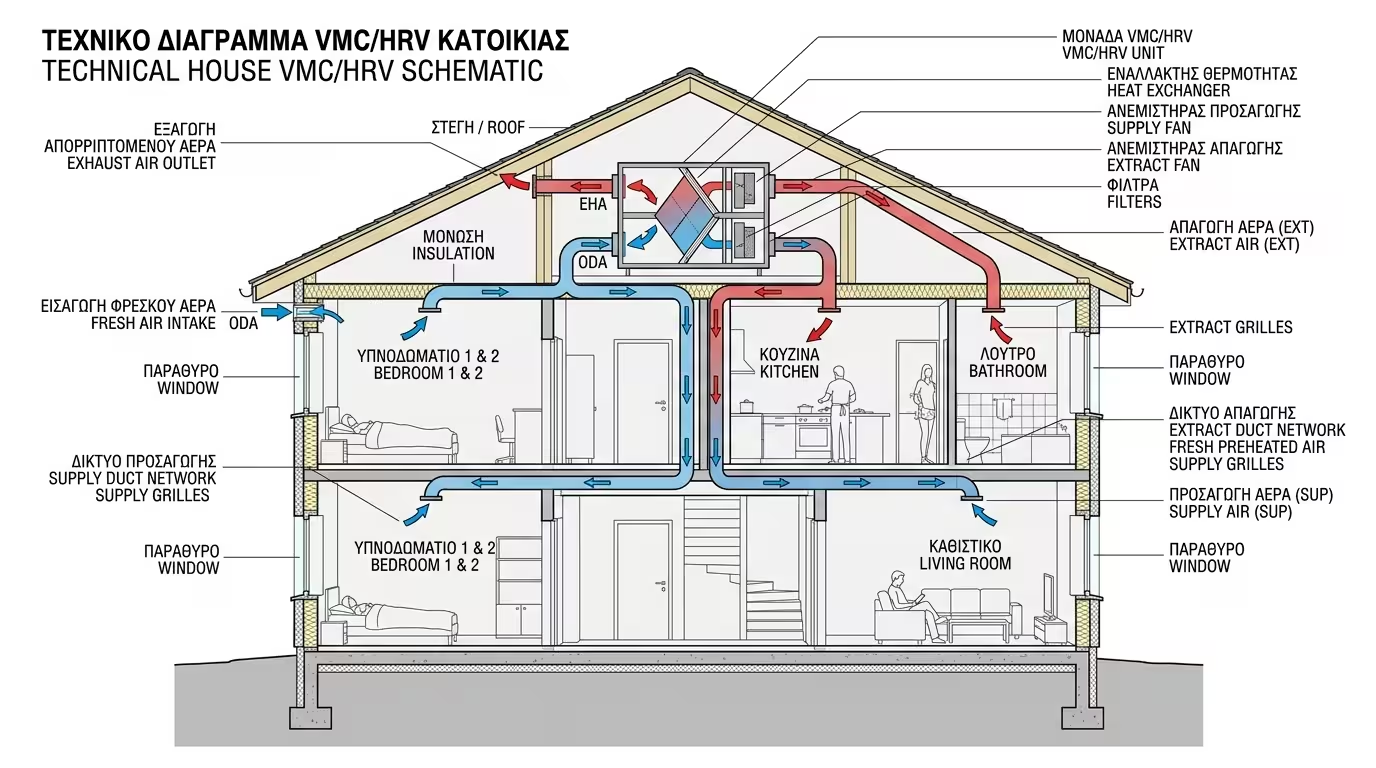
Heat Recovery Ventilation (internationally known as VMC - Ventilation Mécanique Contrôlée or HRV - Heat Recovery Ventilation) performs two tasks simultaneously: it extracts the dirty, humid air from bathrooms, kitchen and WC, and introduces fresh, filtered air into bedrooms and the living room.

VMC/HRV unit - supply of fresh air, extraction of stale air, attic installation

🌬️ Extraction (Exhaust)

Dedicated ceiling grilles in the bathroom, kitchen and WC continuously extract the warm, humid air - the one that smells, contains too much CO₂ and causes mould. Through ductwork, the air is led to the VMC unit and then expelled to the atmosphere.
🍃 Supply (Fresh Air)

Simultaneously, the unit draws in fresh air from an external louvre, passes it through filters (G4/F7 for dust, pollen, PM2.5) and sends it via ductwork to bedrooms and living room. Windows remain closed - no noise, no dust, no exhaust fumes.

🏠 Installation & size

The VMC unit is typically installed in the attic, ceiling void or utility cupboard. It measures about 60×60×40 cm (large suitcase size). Ducts (Ø 125-160 mm) run inside the false ceiling or walls, invisible to the user.

🔊 Operating noise

Modern VMC units operate at 25-35 dB(A) - quieter than a fridge. EC motors (brushless) ensure silent, continuous 24/7 operation. Typical consumption: 30-80 W - less than a light bulb.

2. The Heart of the System: The Heat Exchanger

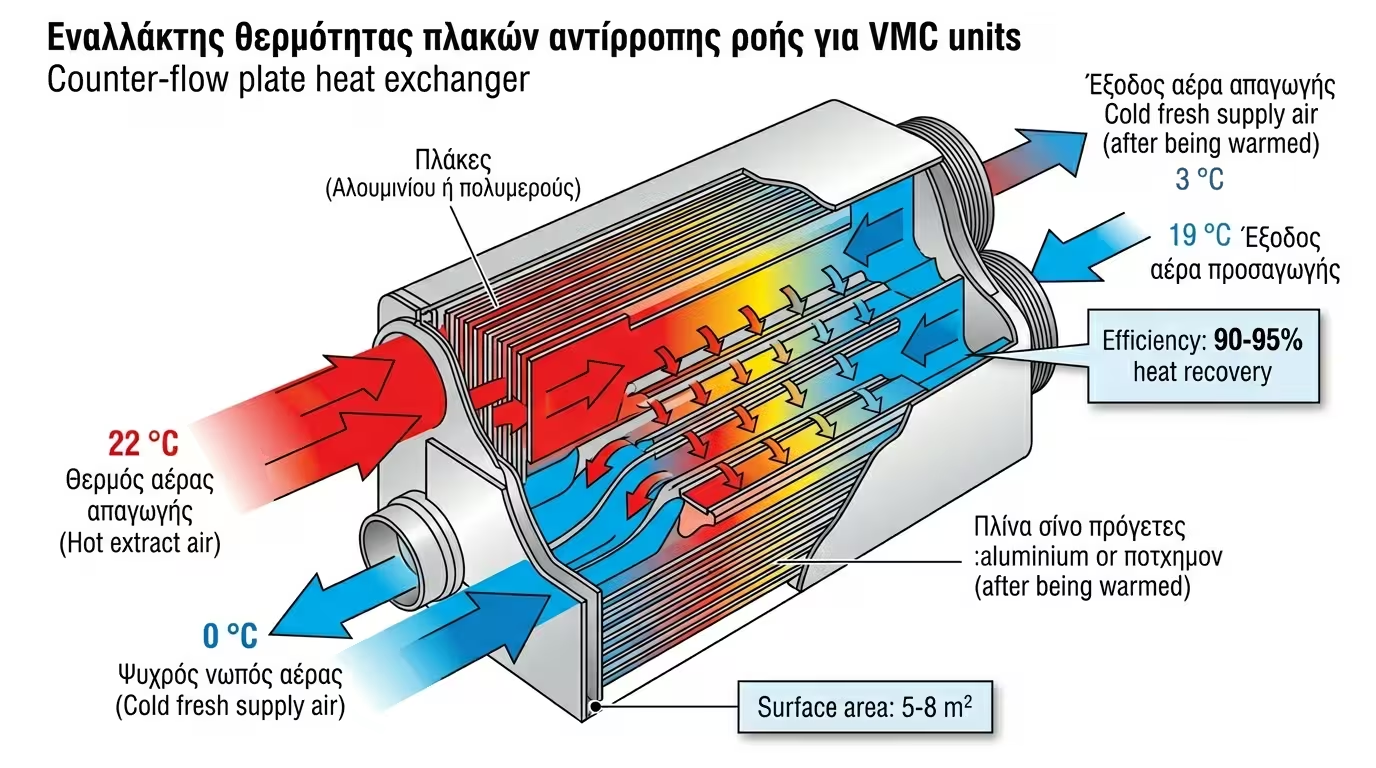
Inside the VMC unit, the two air streams (dirty→out and clean→in) pass through the Heat Exchanger - a "labyrinth" of hundreds of extremely thin plastic or aluminium plates. Golden Rule: the two streams cross but never mix - only heat transfers.

VMC heat exchanger - labyrinth of thin plates, crossing air streams

🔬 Counter-flow vs Cross-flow

Counter-flow exchangers achieve 90-95% efficiency because the streams move in opposite directions, maximising heat transfer. Cross-flow exchangers are cheaper but only reach 70-80%.

🧱 Construction materials

Polystyrene (PS): lightweight, moisture-resistant, low cost. Aluminium: high thermal conductivity, easy to clean. Ceramic: high efficiency, resistant to high temperatures (for industrial applications). Residential VMC units predominantly use polystyrene.

❄️ Frost protection

At outdoor temperatures below -5 °C, moisture in the exhaust air can freeze inside the exchanger. Modern units feature automatic frost protection: an electric pre-heater element (150-300 W) or bypass damper that prevents ice formation.

🔧 Maintenance

The exchanger needs washing 1-2 times/year (remove, wash in the sink). Filters are replaced every 3-6 months (G4 costs ~€5). This minimal maintenance ensures 15-20 years of trouble-free operation.

3. The Winter Example - How You Save Money

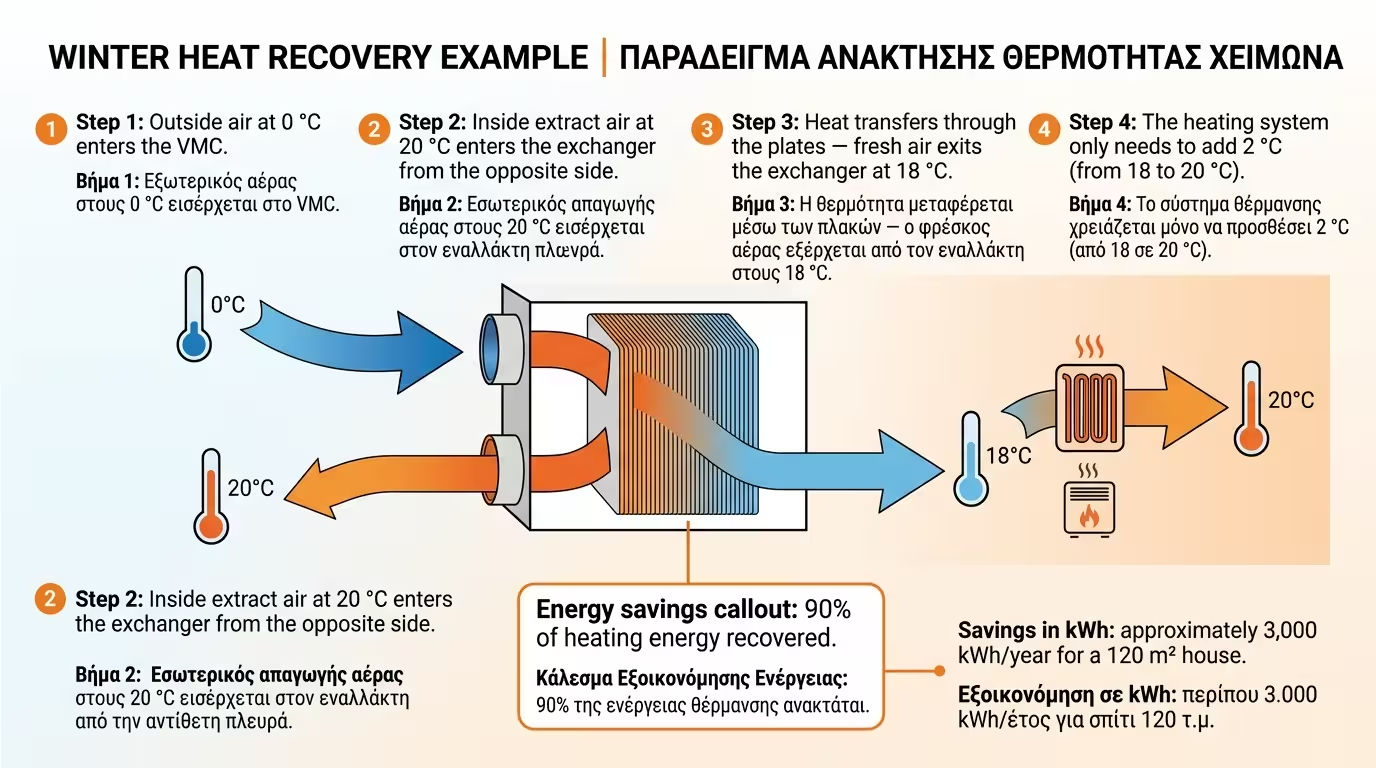
Winter VMC example - 0 °C outside, 20 °C inside, 18 °C after recovery, energy savings

Let's look at the numbers. Deep winter: living room at 20 °C, outside at 0 °C. Inside the exchanger, the warm stale air "gives" its heat to the freezing fresh air. Result: the fresh air enters the living room at 18 °C instead of 0 °C! The heat pump only has to heat by 2 °C instead of 20 °C - 90% savings.

🔢 The numbers

The stale air (20 °C) exits to the atmosphere almost freezing (2 °C) - having left 90% of its thermal energy in the exchanger. The fresh air (0 °C) absorbs this heat and enters the home at 18 °C. The heating system only needs to cover 2 degrees instead of 20.

☀️ Summer operation

The same phenomenon works in reverse in summer: the hot outdoor air (38 °C) passes through the exchanger and "leaves" its heat to the cool outgoing air (24 °C). The fresh air enters the home at ~27 °C instead of 38 °C, keeping the heatwave outside and the air-conditioning coolness inside.

💶 Annual savings

In a 120 m² house in Northern Greece (3,300 HDD), a VMC with 90% recovery saves 800-1,200 kWh/year in heating. At €0.20/kWh, that means €160-240/year - and the unit costs €1,500-3,000, payback in 6-12 years from energy alone.

📊 Recovery efficiency (%)

Modern machines achieve 85-95% sensible heat recovery efficiency (according to EN 308 or PHI certification). The Passive House Institute (PHI) certification is the "gold standard" - PHI-labelled units guarantee real-world efficiency of ≥ 75% (measured, not theoretical).

4. The 3 Invaluable Benefits & Summary

Heat Recovery Ventilation is not a "heating" system - it won't heat your home on its own. It is the system that protects your heating while caring for the health of your lungs and walls. In new, insulated homes, it is no longer a luxury but an absolute necessity.

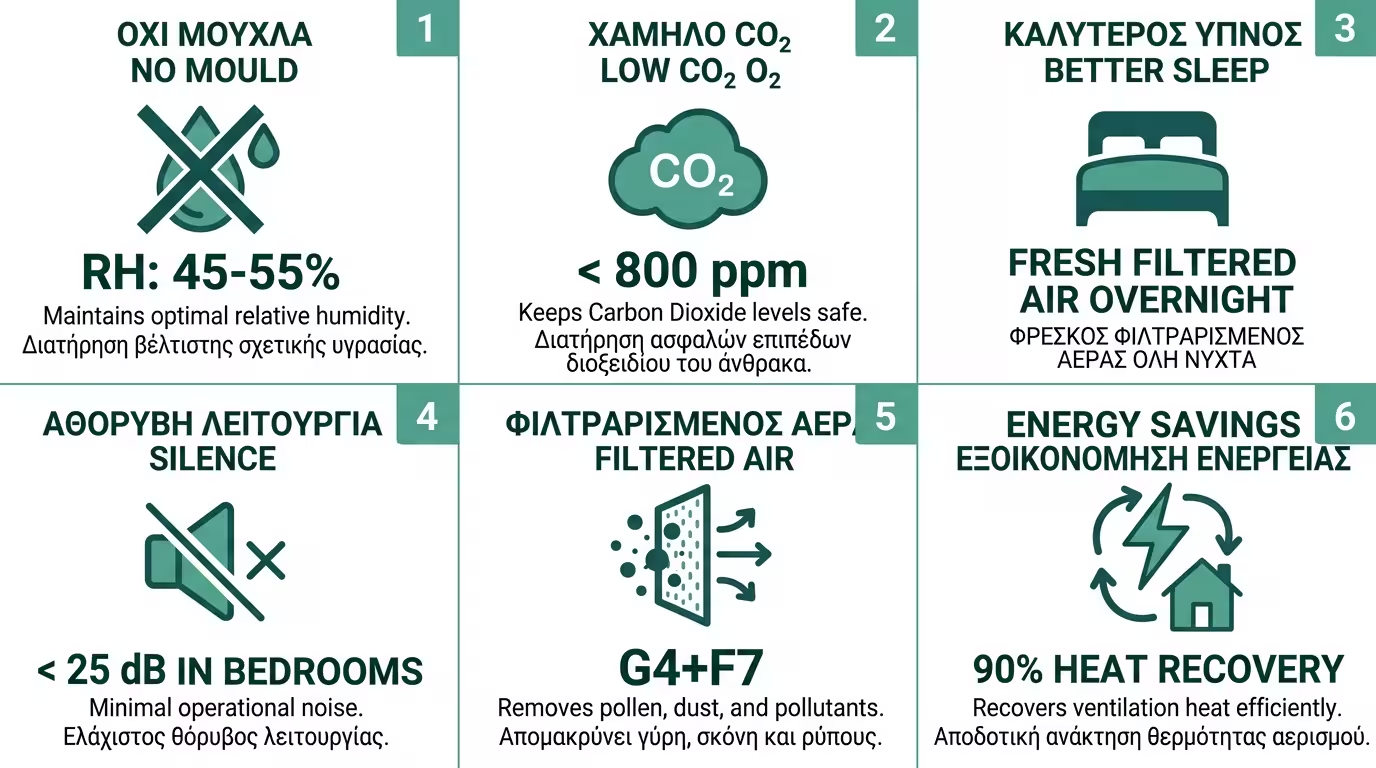
VMC benefits - zero mould, perfect sleep without CO₂, silence and air filtration

🍄 1. Zero Mould

Humidity from bathrooms and cooking is continuously extracted - relative humidity stays below 60% year-round. Mould on walls becomes a thing of the past. No dehumidifiers needed, no blackened walls, no musty smell.

😴 2. Perfect Sleep (Zero CO₂)

You wake up refreshed, without a "heavy" head. The bedroom is supplied with clean oxygen all night, even with hermetically sealed doors and windows. CO₂ levels stay below 800 ppm - unlike the 2,500 ppm of a closed, unventilated room.

🤫 3. Silence & Cleanliness

You don't hear street noise, and no dust or exhaust fumes enter the home. Windows stay closed and air passes through the machine's F7 filters, blocking 95% of PM2.5, pollen and smoke. Ideal for allergy and asthma sufferers.

📜 KENAK & regulations

The Greek KENAK requires a minimum of 0.5 ACH (air changes per hour) mechanical ventilation in new buildings. In airtight homes rated A+/A++, installing VMC with heat recovery is essentially mandatory to ensure air quality without energy waste.

🌬️ Heat Recovery is the "lungs" of the modern home: fresh air 24/7, zero mould, perfect sleep - without losing a single degree of heat.

Related Articles

Preview