What Is a Central Air Handling Unit (AHU)? Anatomy of the "Mechanical Monster"

If you ever find your way into the plant room of a hospital, hotel or shopping centre, you will come face to face with a metal box the size of a shipping container. This is the Central Air Handling Unit - known as the AHU (or ΚΚΜ in Greek). It is the system that literally "breathes" for the entire building.

The AHU is not a simple air-conditioning unit. It is a complex air-processing system that filters, heats, cools, humidifies or dehumidifies enormous volumes of air - thousands of cubic metres per hour - 24 hours a day.

In this guide we will break down every section of an AHU, so that even if you are not an engineer, you will understand what each component does and why it is there.

1. Mixing Section & Dampers: How the Air Is "Blended"

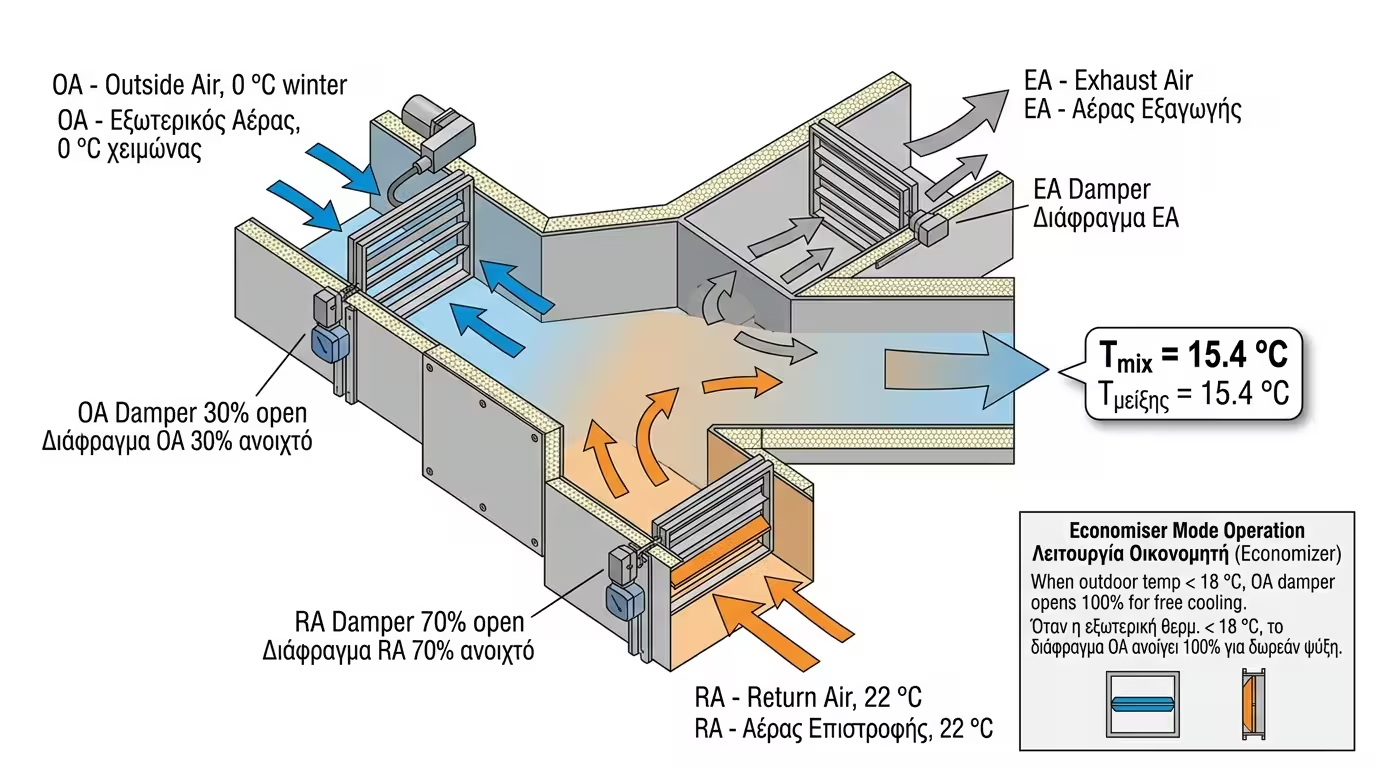
The AHU does not use exclusively fresh (outside) air. If it did, it would spend enormous energy heating or cooling the air from scratch every time. Instead, it blends fresh air (OA) with return air (RA) - the air that has already been conditioned and comes back from the rooms.

AHU mixing section - dampers, fresh outside air and return air

🔲 The three damper sets

Mixing is controlled by three sets of movable metal blades: outside air (OA), return air (RA) and exhaust air (EA). An automation system adjusts how far each opens in real time. If the outside air is at the ideal temperature (e.g. 22°C), the dampers open 100% fresh air (Free Cooling/Economizer).
💡 Energy savings

Economizer mode: In winter, if the outside air is e.g. 5°C and we want 22°C, we blend 70% return air (22°C) + 30% fresh (5°C) → mix ~17°C. Only a small amount of heating is needed instead of warming everything from 5°C! Savings reach 40-60%.

📋 Regulatory minimum

Standards ASHRAE 62.1 and EN 16798 specify a minimum fresh-air quantity per person (e.g. 10 l/s/person in offices). This means the dampers never close completely - there is always a minimum "window" of fresh air open.

⚙️ Actuators

Each damper set has an electric or pneumatic actuator receiving commands from the BMS (Building Management System). The automation adjusts the mixing ratios every second, based on temperature, humidity and CO₂ levels in the served spaces.

2. Filters: The Building's "Shield" Against Pollution

The air - both from outside (dust, pollen, PM2.5) and return air (fibres, particles) - must be filtered before it enters the heating/cooling coils. Without filters, the coils clog within weeks and the air reaching the rooms is full of pollutants.

AHU filters - G4 panel, F7 pocket filter, HEPA H13 for hospitals

🧹 Grade G (Coarse) - Pre-filter

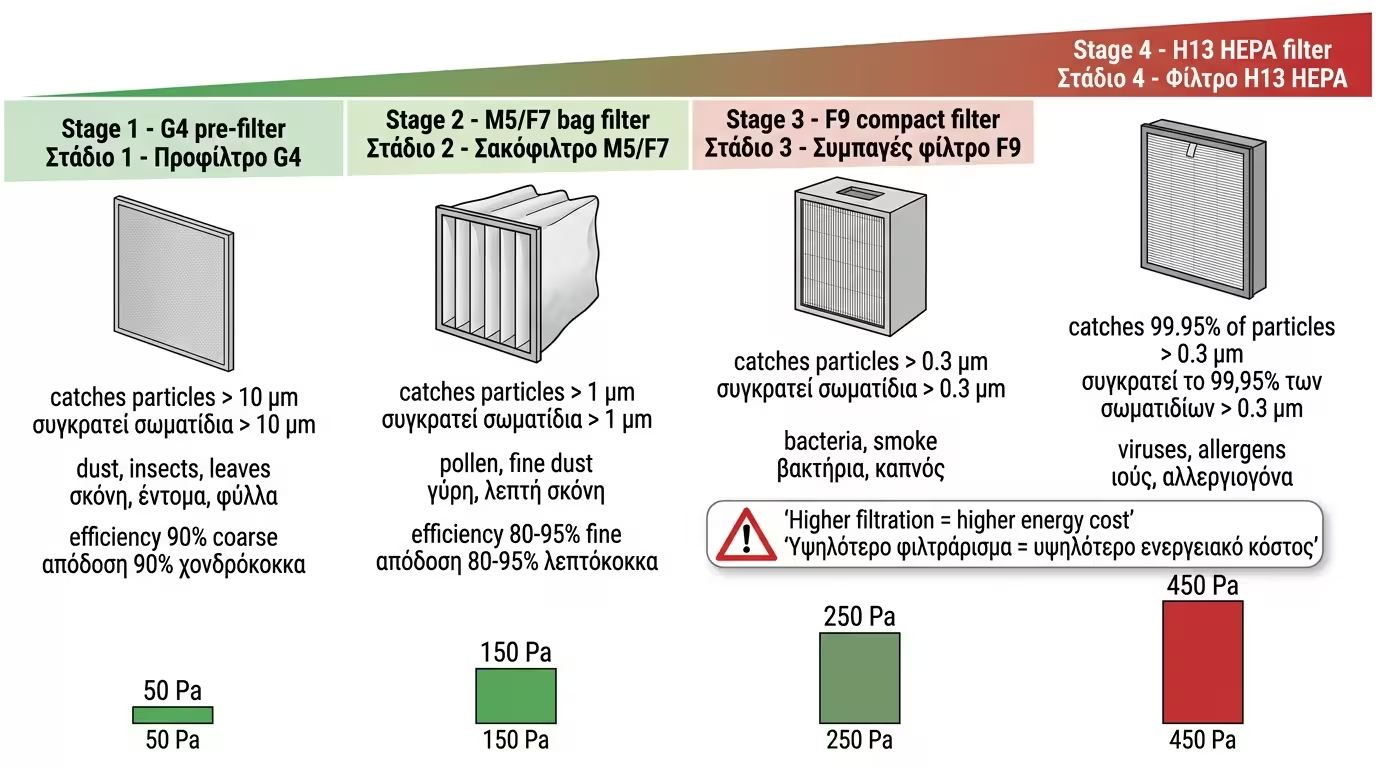
G3-G4 (ISO Coarse) filters are the first in line. They catch large particles: dust, hair, fibres, insects. Changed every 1-3 months. They are cheap (panel or roll format) and protect the more expensive filters behind them.

🛡️ Grade M-F (Fine) - Pocket filter

M5-F9 (ISO ePM10 / ePM2.5 / ePM1) filters are the main filters. Pocket (bag) filters offer a huge filtration surface area in a small depth. An F7 catches pollen, PM10 particles and some PM2.5. Changed every 6-12 months.

🏥 Grade H (HEPA)

In hospitals, operating theatres, pharmaceutical plants and cleanrooms, H13-H14 (HEPA) filters are installed. They capture 99.95% (H13) or 99.995% (H14) of all particles down to 0.3 μm - viruses, bacteria, mould spores. Their cost is high, but in these spaces they are non-negotiable.

📊 Pressure drop (ΔP)

Every filter creates resistance (pressure drop) in the airflow. A clean G4 drops ~50 Pa, an F7 drops ~100-120 Pa, a HEPA drops 250-450 Pa. The fan must overcome this total drop. This is why HEPA is not used everywhere - the electricity bill would skyrocket.

3. Heating & Cooling Coils: The "Heart" of the AHU

AHU water coils - heating, cooling, condensate drip tray

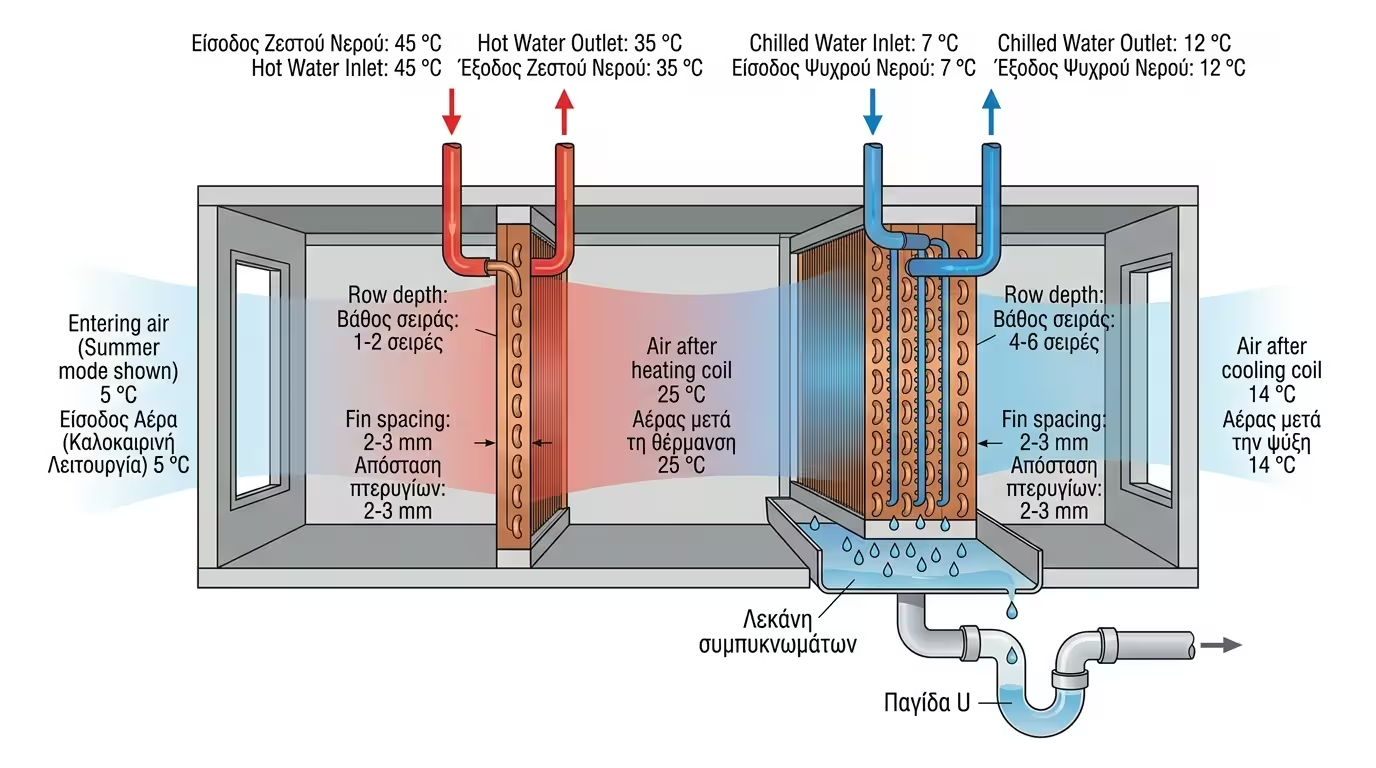
After filtering, the air passes through metal "radiators" (coils) - copper tubes with aluminium fins - that heat or cool the air to the desired temperature.

🔥 Heating coil

Hot water (45-80°C, depending on the source - boiler or heat pump) circulates through the tubes. The air passes between the fins and is heated. In hospital AHUs, there may be a second heating coil after the humidifier (reheat coil).

❄️ Cooling coil (cooling & dehumidification)

Chilled water (6-7°C) from the chiller circulates in the cooling coil. As the warm, humid air touches the icy tubes, it is cooled AND dehumidified simultaneously (condensation). This is why beneath every cooling coil there is a condensate drip tray.

📐 Control: Three-way valve

The water flow through the coil is controlled by a three-way (or two-way) valve with an actuator. The BMS opens or closes the valve so the air exits at exactly the target temperature (setpoint, e.g. 18°C supply).

⚡ Electric heating (alternative)

In smaller AHUs or where there is no central boiler plant, heating is done with electric resistance heaters instead of hot water. Simpler installation, but more expensive to run in large buildings.

4. Supply & Exhaust Fans: The "Lungs" of the AHU

Without the fan, the AHU is just a metal box. The fan pushes the air through filters, coils, ductwork and diffusers - overcoming the total pressure drop of the system.

AHU fans - plug fan, EC inverter, energy savings

🔄 Two fans

A typical AHU has two fans: the supply fan that pushes clean, conditioned air to the rooms, and the return/exhaust fan that pulls the "dirty" air back to the unit or expels it outside.

⚡ EC Inverter: The revolution

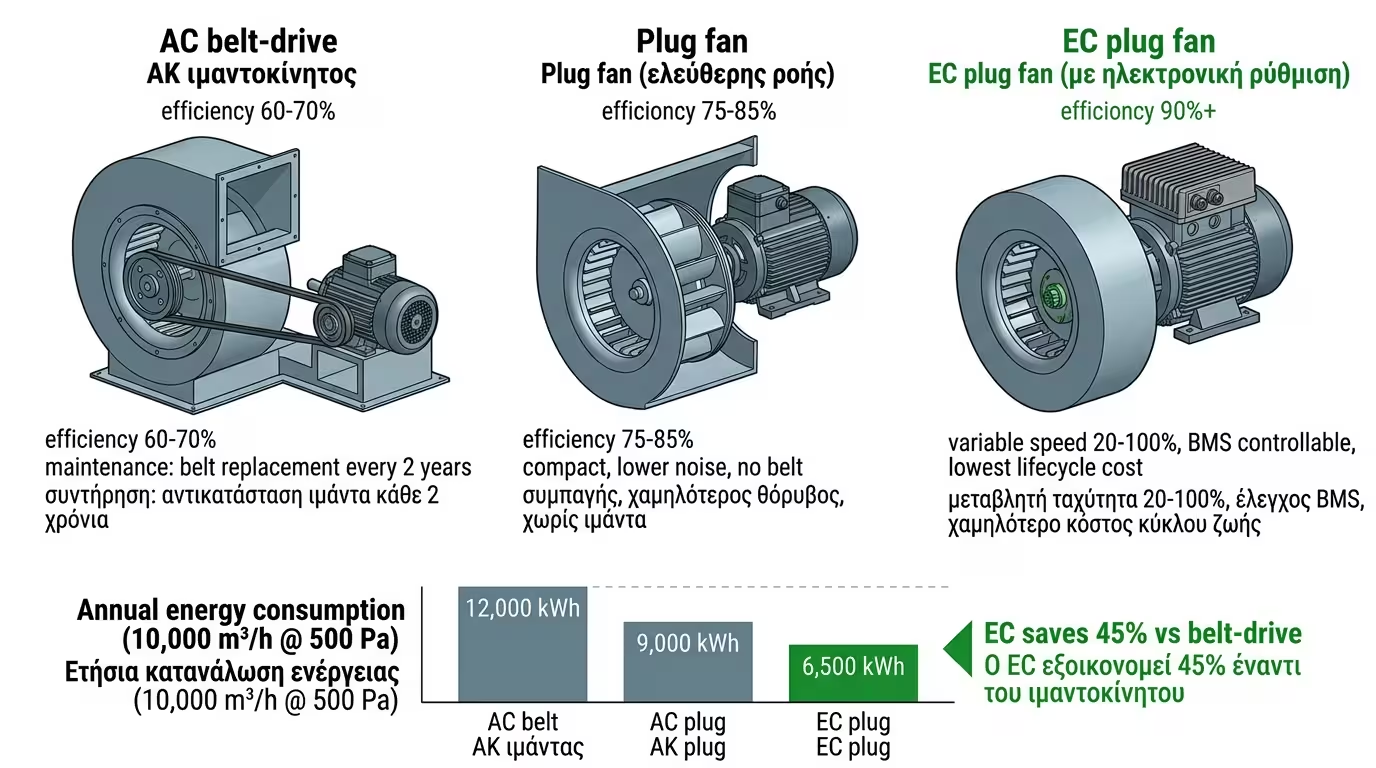
Modern EC (Electronically Commutated) fans with inverter drives adjust their speed proportionally - from 20% to 100%. If the rooms need less air, the fan runs slower. Savings: 50-70% compared to traditional fixed-speed motors.

🔧 Plug fan vs belt-driven

Traditional units used belt-driven fans - noisier, requiring belt maintenance. Modern units use plug fans (no belts, direct drive), which are quieter, more efficient and have no wearing parts.

📊 The SFP number

SFP (Specific Fan Power) measures how many Watts the fan consumes per m³/s of air. ErP standard (EU): SFP < 1,600 W/(m³/s) for new AHUs. A well-designed EC fan achieves 800-1,200 W/(m³/s) - half the consumption!

🏗️ The AHU is not a machine - it is a complete air-processing system. Every section (mixing, filters, coils, fans) plays a critical role in the health, comfort and energy efficiency of the entire building.

Related Articles

Preview