VAV vs CAV: Building HVAC Systems - Total autonomy for every room
Imagine a huge glass office building. The central Air Handling Unit
(AHU) on the rooftop sends chilled air to every floor. Office 1 (south side) is overheating at 28 °C - sunlight, computers, 5 workers. Office 2 (north side) is empty, shaded, at 19 °C.
If the AHU sends the same volume of chilled air everywhere, Office 2
turns into an igloo! How can
a single central machine deliver different temperatures to
50 offices simultaneously? The answer lies in the battle: CAV versus VAV. For decades, buildings were air-conditioned in a wasteful way -
modern technology, however, changed everything.
1. CAV Systems (Constant Air Volume)
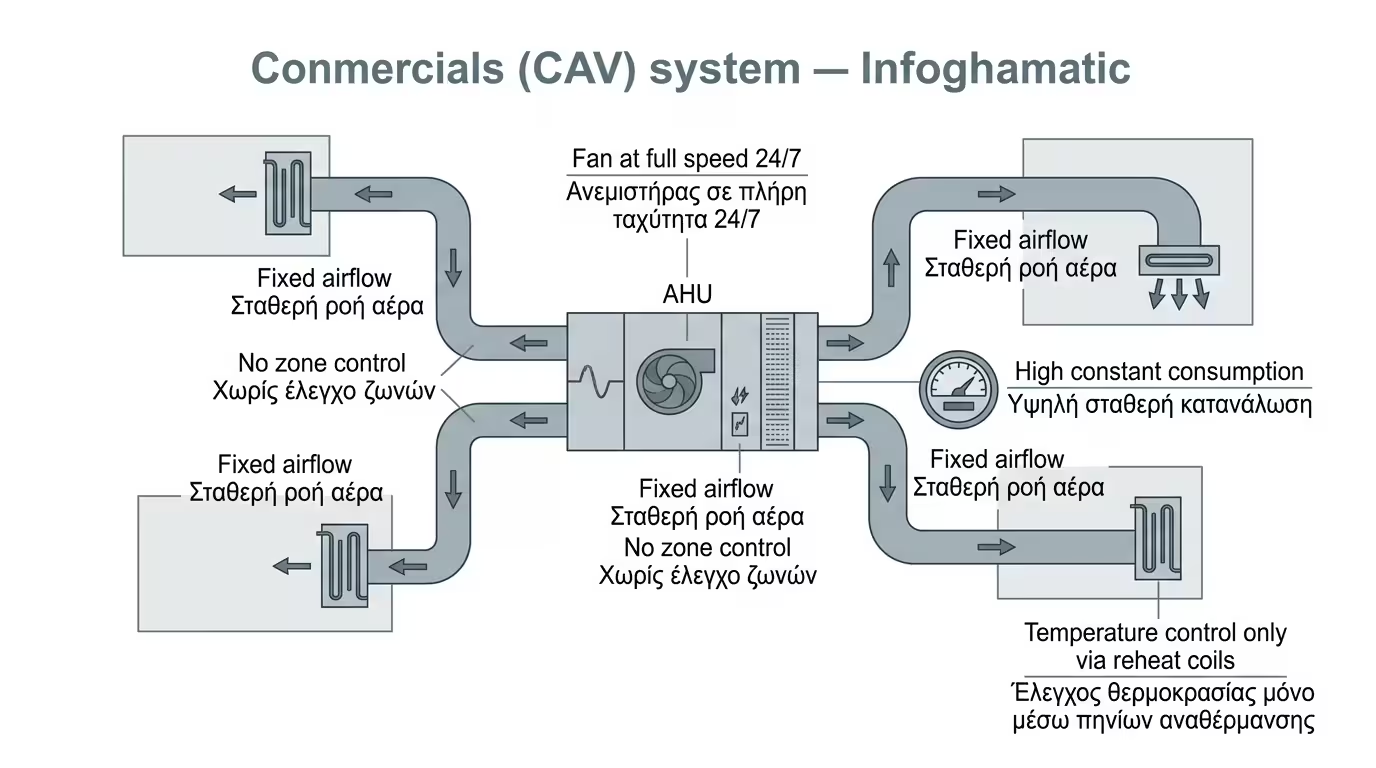
In a CAV system, the central unit continuously delivers
a fixed volume of air through the ductwork. The fan runs
permanently at 100%. The only way to adjust the temperature is to change the supply air temperature at the source - the AHU sends colder or warmer air to the entire building simultaneously.
🏭 The CAV philosophy
Think of it as central heating without thermostatic valves: you turn on the heating (or cooling) and every room gets exactly
the same. The fan produces e.g. 10,000 m³/h constantly
- regardless of whether a room needs cooling or not. Result: zero zone autonomy.
❌ The major drawback
No per-room adjustment. In Office 1 (28 °C) people sweat, in Office 2 (19 °C) they shiver - and no one can do
anything about it. Complaints like "it's freezing here / it's boiling
there" are the number-one plague of CAV buildings.
💡 Where it is still used
In single, large open spaces with uniform loads: cinemas,
indoor gyms, industrial warehouses, supermarkets. Where all positions have virtually identical thermal needs, CAV remains the simplest and
cheapest solution.
⚡ Energy waste
The fan runs always at maximum - even if the building
is half-empty. Power consumption remains constant 24/7. In a 5,000 m²
office building, the CAV fan can waste
30,000-50,000 kWh/year more compared to VAV.
2. VAV Systems (Variable Air Volume): The Revolution
The philosophy is completely reversed: the AHU delivers air at a fixed, chilled temperature
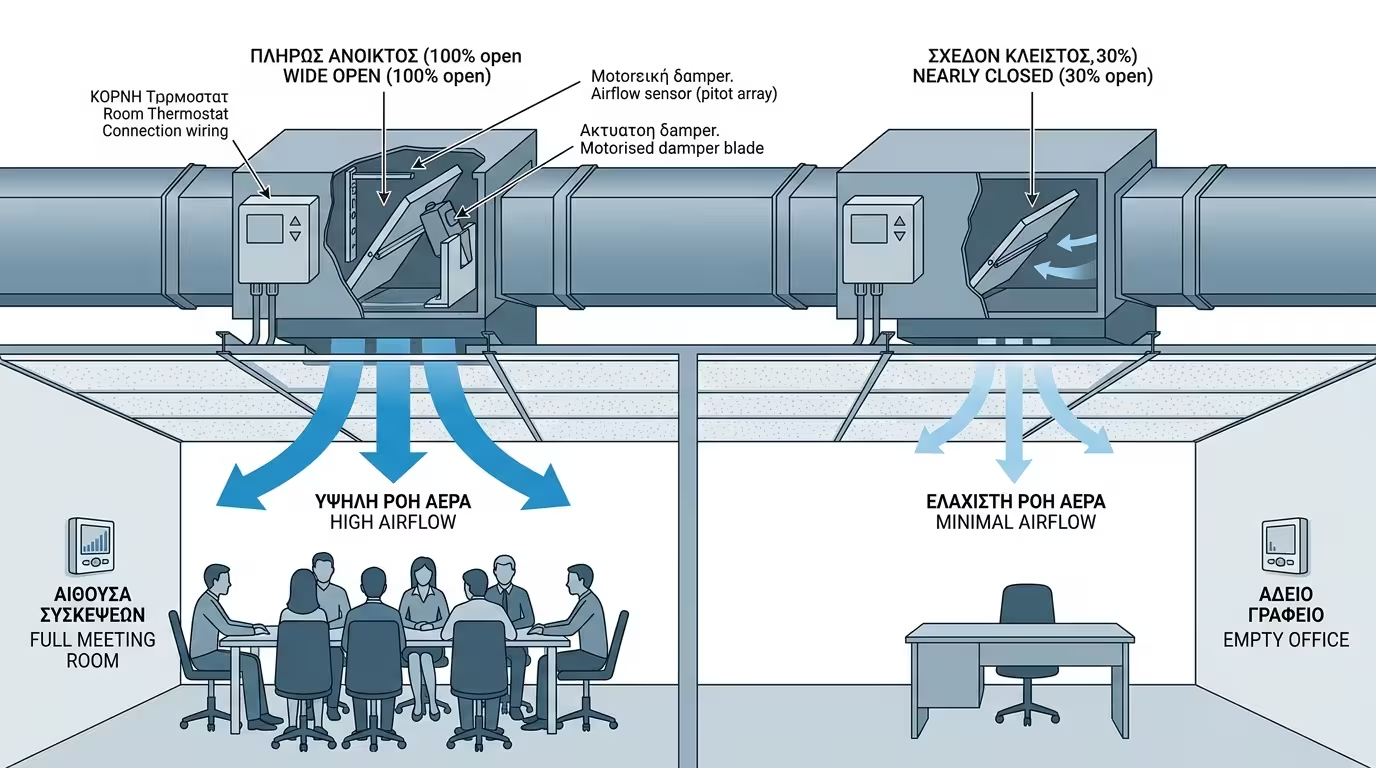
(13-14 °C). What changes continuously is the volume of air reaching each office through the VAV Box - a metal device
above the false ceiling of each zone with a motorised damper that works
like an air "tap."
🎛️ How the VAV Box works
On each office wall sits a thermostat (preset 24 °C).
If the temperature reaches 28 °C: "Open 100%!" - a massive volume
of chilled air (14 °C) floods in and cools instantly. Once it hits 24
°C: "Close" - the damper closes to 10-20%
(ASHRAE minimum outdoor air).
🏢 Total autonomy
Every office, meeting room or corridor has its own VAV Box and thermostat. It adjusts its temperature completely independently
from the adjacent room. In a 50-zone building,
50 independent air "taps" operate simultaneously.
🔥 VAV with reheat
For higher budgets, each VAV Box can incorporate an electric resistance or hot water coil (reheat coil). If an office needs heating while the AHU sends cold air,
the reheat warms it locally - without affecting anyone
else.
📈 VAV Box typologies
Single-duct VAV: one duct (cooling) + optional reheat.
Fan-powered VAV: built-in small fan for mixing plenum
air - ideal for interior zones without windows.
Dual-duct VAV: two ducts (hot + cold) - maximum flexibility,
higher cost.
3. The Inverter (VFD): Saving the ductwork & the electricity bill
What happens when afternoon comes, employees leave, and 40 out of 50
VAV Boxes close? If the huge AHU fan continued at 100%, the pressure
would skyrocket - the ducts would whistle or
"burst". That is why VAV systems are inseparably linked to Inverter fans (VFD - Variable Frequency Drive).
📊 Duct static pressure sensor
Inside the main duct, a static pressure sensor is installed
(setpoint e.g. 250 Pa). When VAV Boxes close, pressure rises above 250
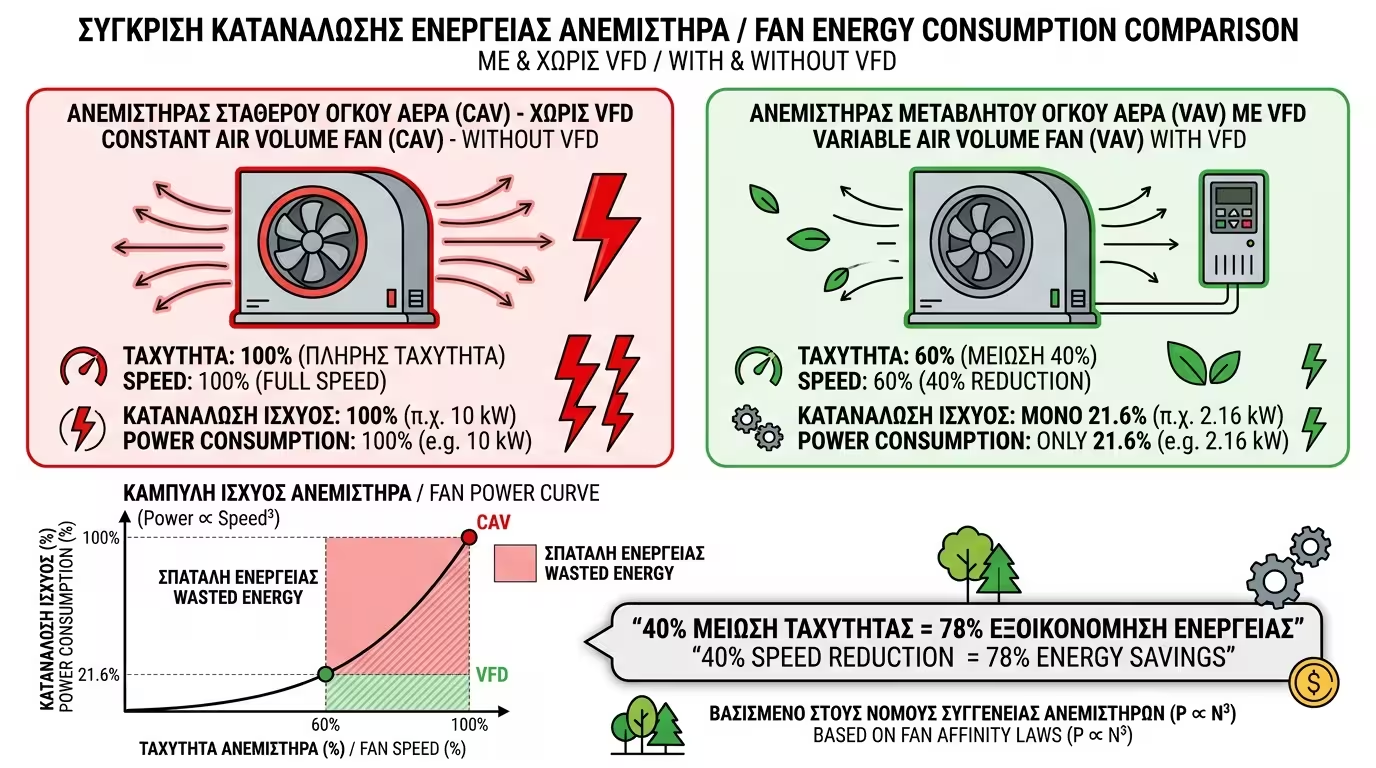
Pa. The BMS commands the Inverter: "reduce speed!" The fan drops to e.g.
30%.
⚡ The cube law (Fan Affinity Laws)
Energy consumption changes with the cube of the speed: if you reduce speed to 50%, consumption drops to 12.5% (0.5³ = 0.125). This means a VAV fan at half load consumes just 1/8 of the electricity of a CAV fan!
🔇 Noise & reliability
At partial speed the fan operates almost silently.
Ducts don't whistle, diffusers don't hum. Meanwhile, mechanical
stress (friction, heat) decreases dramatically, extending the fan's lifespan by 40-60%.
💶 ROI (Return on Investment)
A VFD costs €800-2,000 depending on power rating. In
a 3,000 m² office building, annual savings can exceed €5,000-8,000 in electricity. Payback occurs in 3-8 months - one
of the fastest returns in the HVAC industry.
4. CAV vs VAV: The Final Comparison
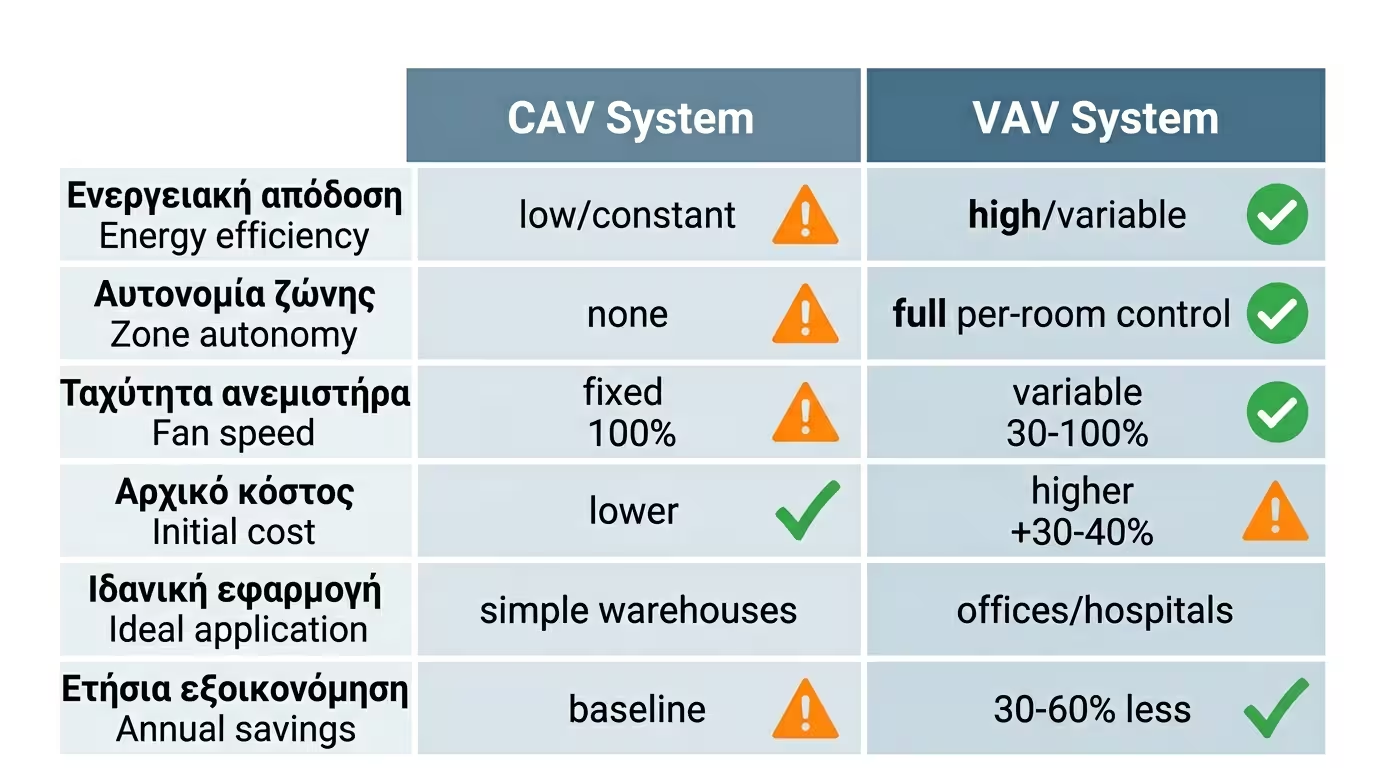
If you are designing HVAC for a space with many rooms and varying
thermal loads, VAV is the undisputed king. The
initial installation cost is higher (due to boxes, thermostats and
Inverter), but the payback from electricity savings and
increased productivity is incomparable.
📋 Selection criteria
CAV: single open space, uniform loads, low budget. VAV:
multiple rooms, varying loads, office buildings, hotels, hospitals. Under
the Greek
KENAK (Building Energy Performance Regulation),
adopting VAV earns points towards higher energy ratings (class
A/A+).
💰 Installation cost
A CAV system costs approximately €25-40/m² installed.
A VAV system rises to
€50-80/m² (VAV boxes, thermostats, VFD, DDC controllers).
The difference is recovered in 2-4 years through reduced
operating expenses.
🏥 Special case: hospitals
In hospitals, CAV is often used in critical areas (operating
theatres, ICU) where ventilation must be constant and strictly controlled, while VAV is used in offices, semi-public areas and examination
rooms - creating a hybrid system.
📊 Savings in numbers
In a typical office building, switching from CAV to VAV reduces fan consumption by 50-70% and total HVAC consumption by 20-30%. Over a
15-year lifecycle, savings can exceed €100,000 for a
5,000 m² building.
🏢 VAV is the "king" of modern building HVAC. Every room has its own air
"tap" - no one freezes, no one sweats, and bills drop dramatically
thanks to the Inverter.