🪵 Formaldehyde in furniture
The most well-known and dangerous VOC. Found in huge quantities in the adhesives of chipboard, MDF and plywood. A new wardrobe "leaks" formaldehyde into your air for months or even years after purchase.
We all love the "new" smell - the freshly-painted living room, the new sofa, the MDF bookcase. But that smell is far from innocent. It's chemical gases (VOCs) slowly evaporating from solid materials and being inhaled daily.
According to the EPA, indoor air can be 2-5 times more polluted than air on a busy road. Let's explore where the pollutants hide and how to eliminate them.
VOCs (Volatile Organic Compounds) don't enter through the window. We carry them home in boxes. They are chemicals that, while in solid or liquid form, evaporate at room temperature - a process called off-gassing.
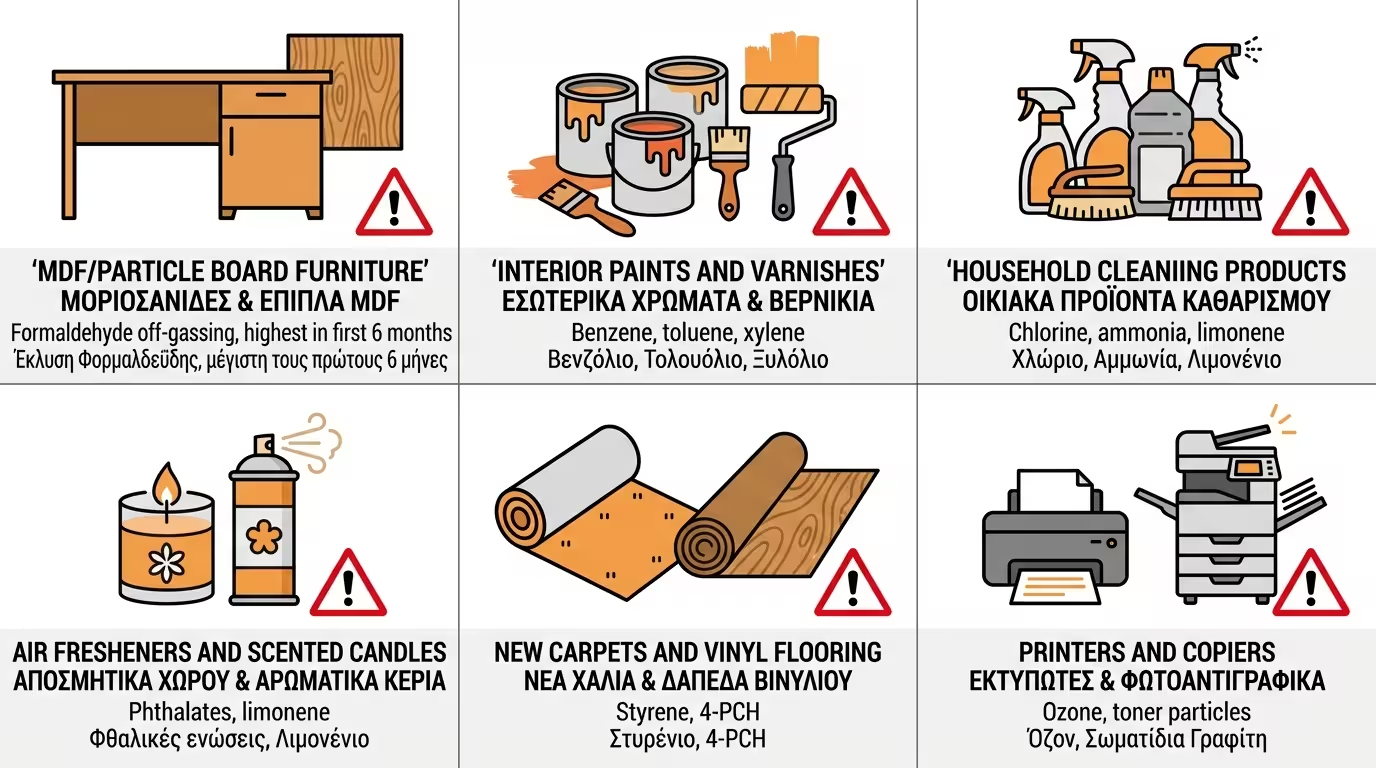
The most well-known and dangerous VOC. Found in huge quantities in the adhesives of chipboard, MDF and plywood. A new wardrobe "leaks" formaldehyde into your air for months or even years after purchase.
Synthetic materials, floor-laying adhesives and plastic carpet backings emit a cocktail of chemicals including toluene, xylene and styrene - substances that irritate the lungs even in small doses.
The reason you feel dizzy painting a room: solvents (VOCs) evaporate as the wall dries. Conventional paints emit 200-800 μg/m³ in the first week - far exceeding the WHO guideline of 500 μg/m³ max.
Bleach, heavy-duty cleaners, and synthetic air fresheners - arguably the worst offenders. What you perceive as "ocean breeze" is a heavy chemical assault of synthetic aerosols filling your lungs.
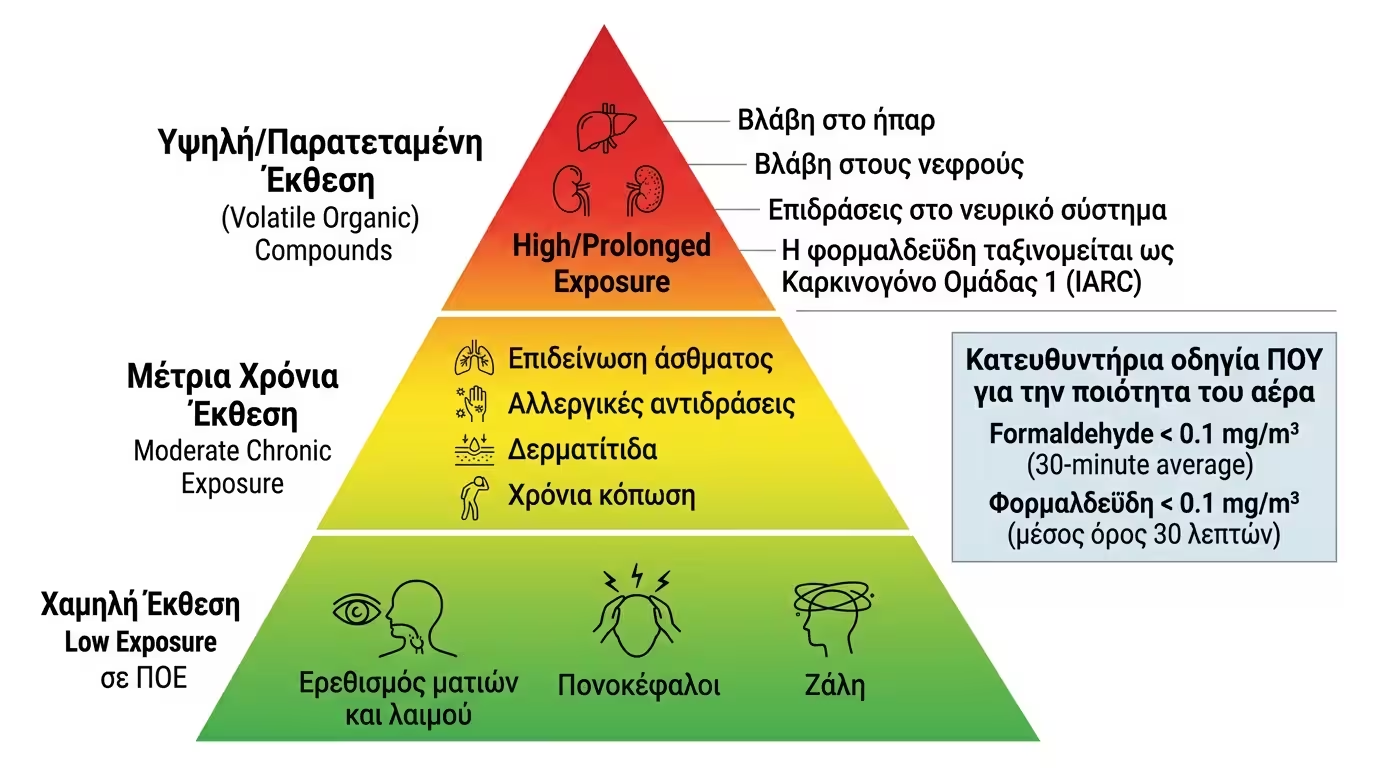
Our bodies are not designed to filter industrial adhesives. Prolonged exposure in a sealed home without ventilation directly contributes to Sick Building Syndrome (SBS) - and to far more serious issues.
Irritation of eyes, nose and throat. Headaches, dizziness, nausea and unexplained fatigue - even after a full night's sleep. Symptoms resemble the "start of a cold" but won't go away unless you ventilate.
Worsening or triggering of asthma (especially in young children), chronic allergies, rhinitis. Formaldehyde and benzene at high concentrations are proven carcinogens (Group 1 - IARC).
Infants and young children breathe 2-3 times faster than adults, inhaling proportionally far more chemicals. Children's rooms (often filled with new MDF furniture) are the most polluted spaces in a home.
TVOC (Total VOC) sensors cost €40-80 and display the total concentration in μg/m³. Above 500 μg/m³ (WHO guideline), you should act immediately - ventilate or deploy activated carbon.
We can't go back to caves, but we can take 3 targeted measures to minimise the risk - always starting at the source.
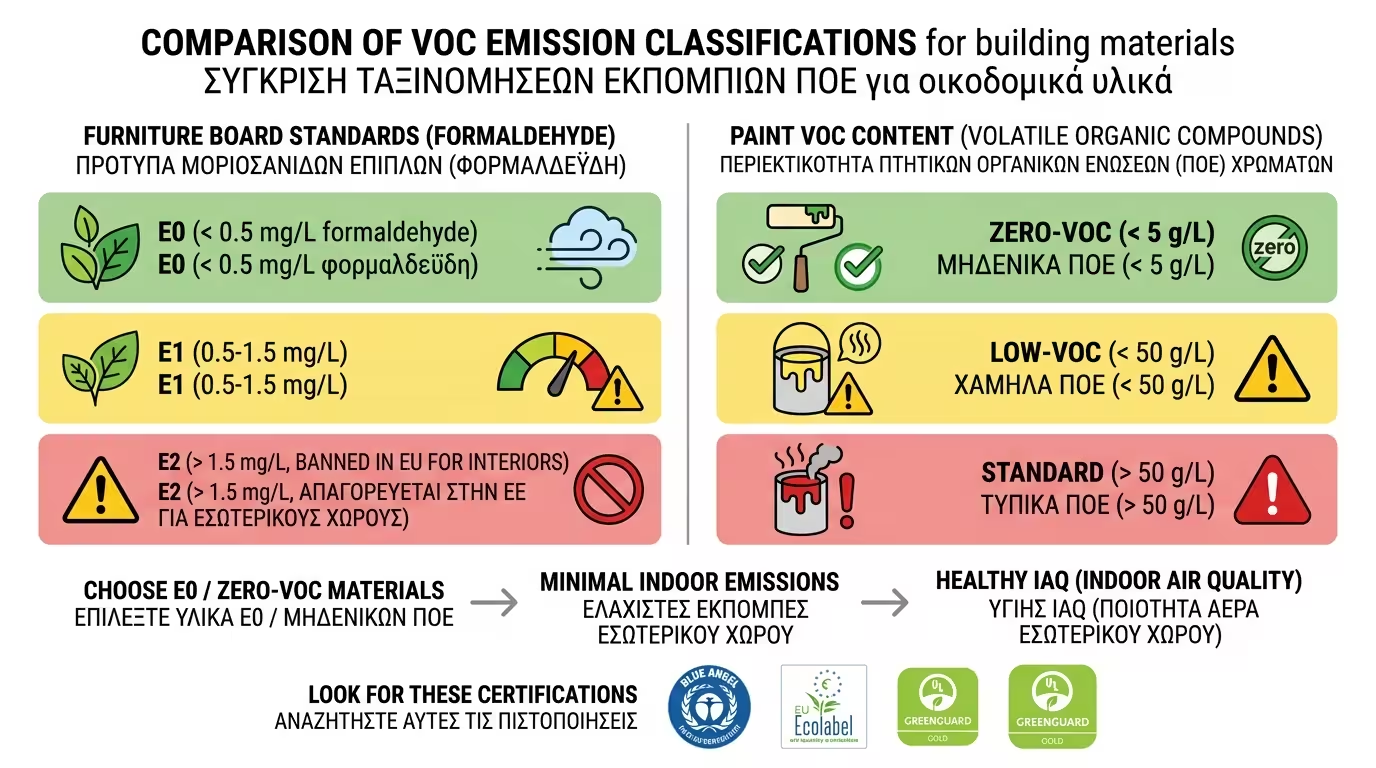
The best defence: don't bring them in. Demand Zero-VOC or Low-VOC paints (all major brands offer them). For MDF furniture, look for E0 or E1 certification (minimal formaldehyde emission). Discard synthetic air fresheners.
If you just brought in a new sofa or laid laminate, the home needs vigorous ventilation. Mechanical Ventilation (VMC) removes chemicals 24/7. Alternatively, open opposite windows for at least 2-3 hours/day during the first weeks.
If the home is unoccupied (e.g. after renovation), turn the heating up to 28-30 °C for several hours with windows slightly open. The heat dramatically accelerates off-gassing, "squeezing" the chemicals out before you even move in.
Prefer solid wood over chipboard/MDF. For flooring, choose ceramic tiles or solid wood with natural oils instead of polyurethane varnish. For sealants, opt for solvent-free silicone.
If you're considering an Air Purifier for VOCs, be very careful: the HEPA filter does NOT catch gases. It only captures solid particles (dust, pollen). VOCs are gas molecules - only Activated Carbon can adsorb them.
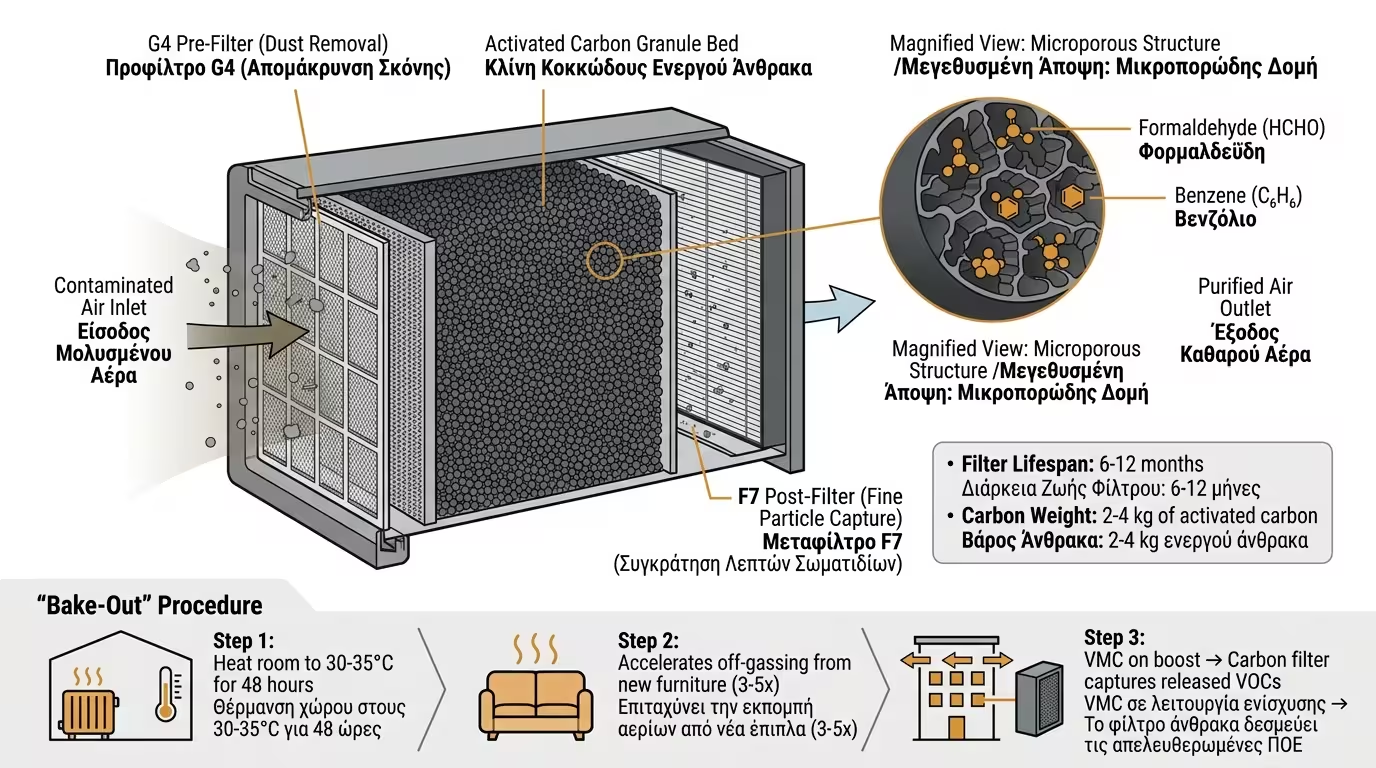
Activated carbon is extremely porous - 1 gram has an internal surface area of 1,000-3,000 m² (the size of a football pitch!). VOC molecules "stick" to the pores through adsorption and are permanently trapped.
Many cheap purifiers advertise a "Carbon Filter", but it's merely a thin black sponge with minimal carbon dust. It "saturates" in 3 days and becomes useless. Serious purifiers use filters with 1-3 kg of pellets.
Activated carbon filters cannot be washed - they have a finite capacity. In home Air Purifiers, replace every 6-12 months. In VMC systems with a Carbon Box, every 12-18 months. Cost: €30-60 per filter.
NASA's Clean Air Study proved that plants like Peace Lily, Dracaena and Snake Plant absorb formaldehyde and benzene. They don't replace ventilation, but they complement a holistic IAQ strategy.
🧪 The "new" smell isn't cleanliness - it's chemistry. Read the labels (Zero-VOC, E0/E1), ventilate vigorously after purchases, and the only filter for VOCs is heavy Activated Carbon - not HEPA.
Return to category.
Go to categoryReturn to the central guide.
Go to guide