❌ The Wrong Setting
The installer sets a fixed output of 55 °C. Even on a mild 12 °C day, the compressor runs at full power, COP plummets and your bill soars.
The equipment is in, the pipes are connected. The installer is ready to press ON and leave. Wait! A heat pump on factory settings will burn electricity needlessly.
The process of tuning it to your home is called Commissioning . Let's look at the 5 settings that MUST be done.
This is the No.1 setting most installers "forget". The heat pump shouldn't send constant hot water all winter - it must adapt to the weather.
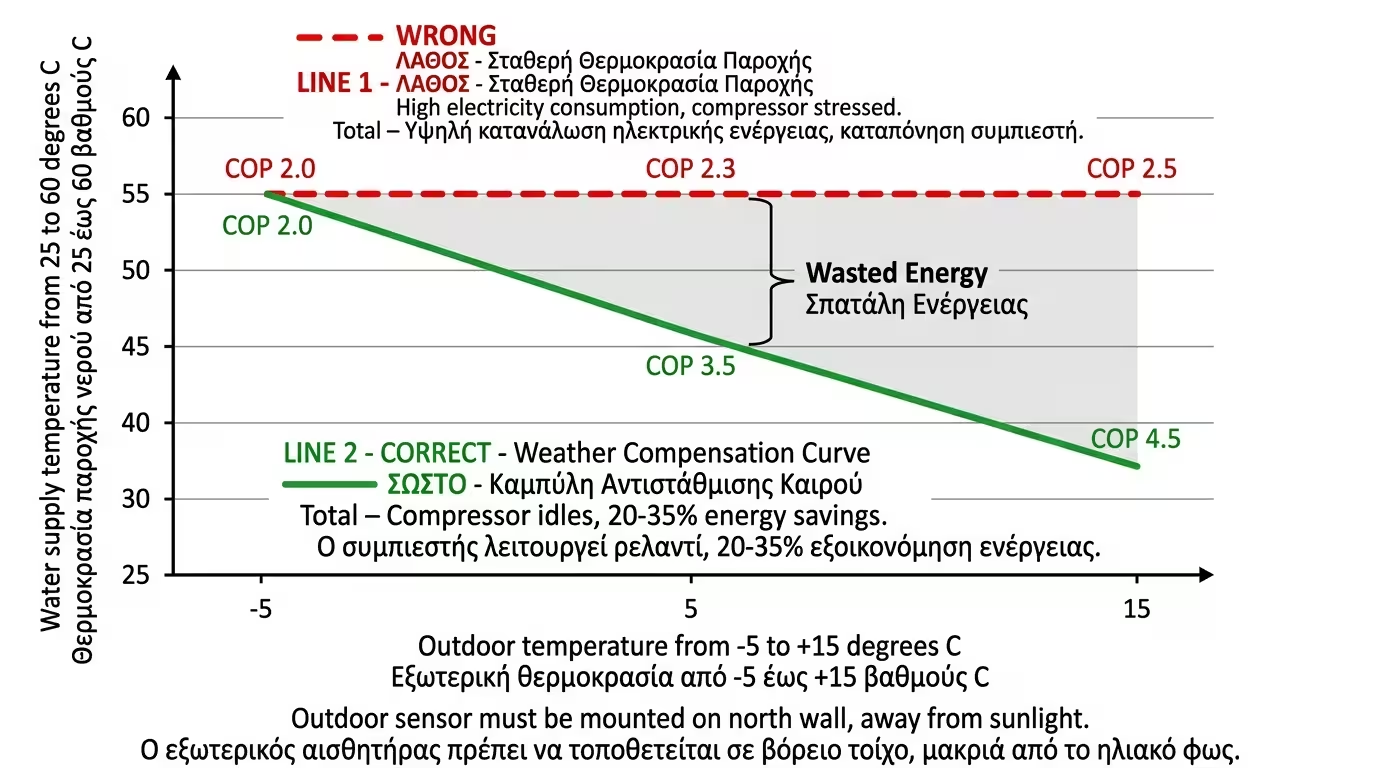
The installer sets a fixed output of 55 °C. Even on a mild 12 °C day, the compressor runs at full power, COP plummets and your bill soars.
The installer programs a curve: "At -2 °C outside → send 55 °C water. At 10 °C outside → send just 40 °C." The compressor idles, COP soars. Savings: 20-35%.
The slope depends on emitter type: underfloor (gentle slope, 25-35 °C range) vs radiators (steep slope, 40-55 °C range) and building insulation. Every home needs its own curve.
For the curve to work, an outdoor temperature sensor must be mounted on the north wall (away from sun). Without it, the heat pump doesn't "know" what's happening outside.
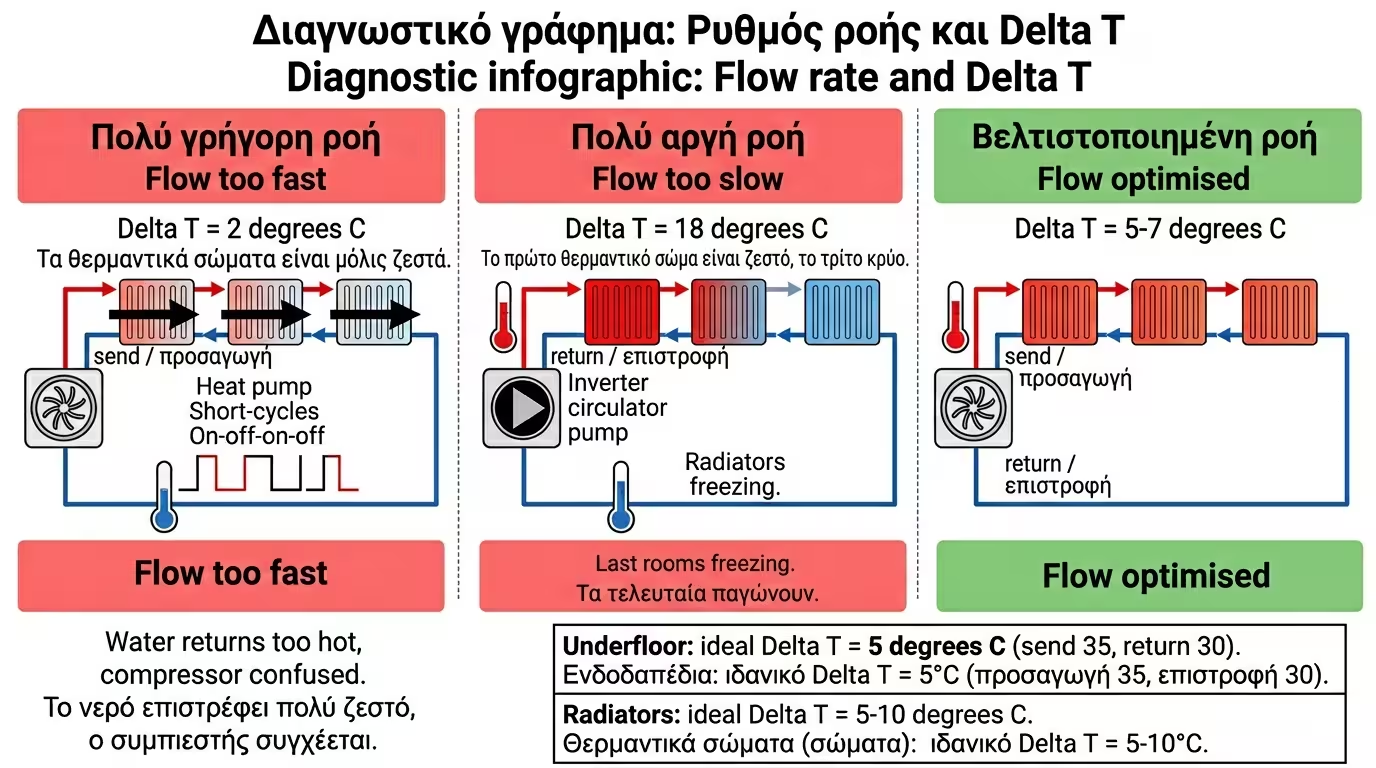
The heat pump has an internal circulator that pushes water. How fast should it push?
If water flows too fast, it doesn't have time to release its heat. It returns hot to the unit, which gets confused and short-cycles. Result: compressor wear.
If it flows too slowly, the last rooms stay cold . The water dumps all its heat into the first radiators and arrives cold at the end.
Underfloor: ΔT = 5 °C (sends 35 °C, returns 30 °C). Radiators: ΔT = 5-10 °C. The installer adjusts the inverter circulator to hit these values.
Contact thermometers on the flow and return pipes. If ΔT is 15+ °C, flow is too low. If <3 °C , it's too high. Getting this right is the "breathing" of the system.
These systems are powerful. Without proper limits, they can cause damage.
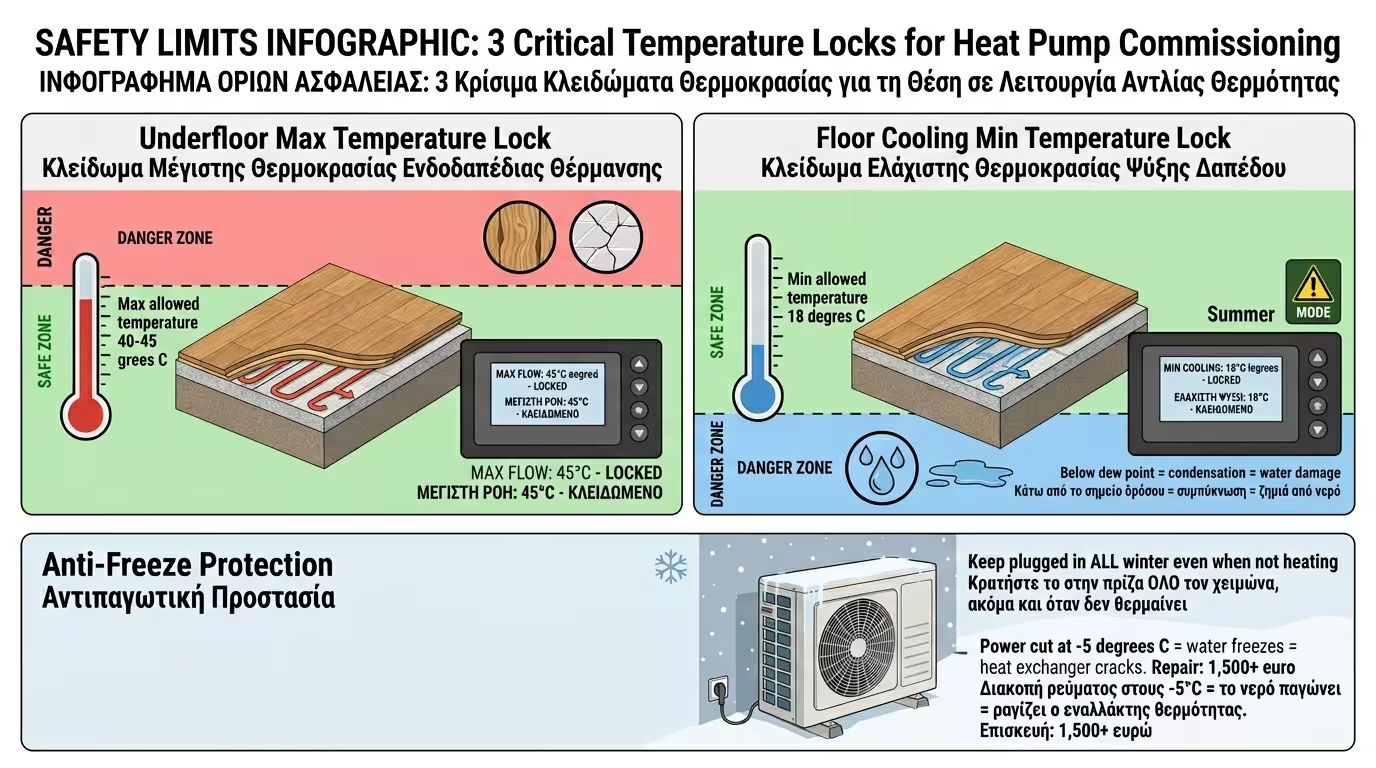
With underfloor + timber, water must NEVER exceed 40-45 °C. Above that, wood warps and tiles crack. The installer must digitally lock the maximum flow temperature.
In summer, sending 7 °C water to the floor causes condensation (puddles). The cooling minimum must be locked at 18 °C (dew point + 2 °C safety margin).
The heat pump must stay plugged in all winter, even when not heating. If power is cut and temperatures hit -5 °C, internal water freezes and cracks the heat exchanger. Repair cost: €1,500+.
At night (23:00-07:00), the installer must program "Night Mode". Fan and compressor drop speed, reducing dB to the minimum. Saves your sleep - and the peace with your neighbours.
Many complain the heat pump "uses too much power". Often the problem isn't heating - it's the hot water.
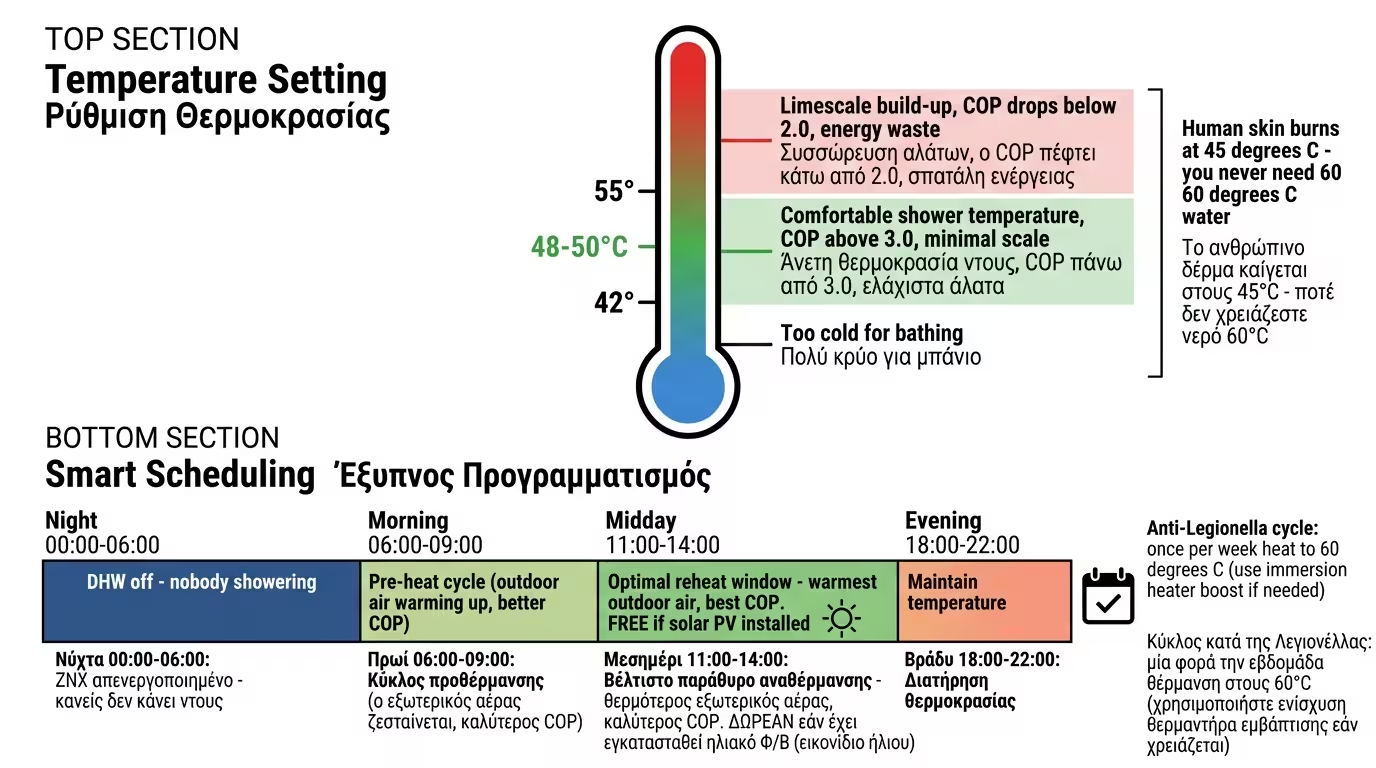
You don't need 60 °C water to shower (skin burns at 45 °C). Set the cylinder to 48-50 °C. The heat pump reaches this easily, saving massive energy. Bonus: above 55 °C, limescale builds up rapidly.
The cylinder doesn't need to be 50 °C at 4:00 AM . Schedule heating for midday: outdoor air is warmer, COP is higher. With solar PV, you reheat for free!
Once a week, the heat pump must heat the cylinder to 60 °C (using the immersion heater if needed) to kill Legionella bacteria. This cycle must be programmed - don't disable it!
Installation is 50% plumbing, 50% electronics. Commissioning takes 1-2 hours. Don't let the installer leave without explaining the curve, ΔT, limits and DHW settings. It's the difference between an €80 and €250/month bill!
🔑 If your installer says "I left it on auto, it'll figure itself out", prepare for inflated bills. Demand a thorough Commissioning!
Return to category.
Go to categoryReturn to the central guide.
Go to guide