1️⃣ Turn off heating
DO NOT bleed radiators with the circulator running - it will stir the air around the circuit. Turn off the thermostat and wait 10 minutes for the water to settle.
Water inside a heating circuit obeys the laws of physics: hot water rises, cold water sinks, air floats to the top and solid debris settles at the bottom.
By simply feeling the radiator that is underperforming, you can pinpoint the exact culprit - before calling a plumber and paying for a visit.
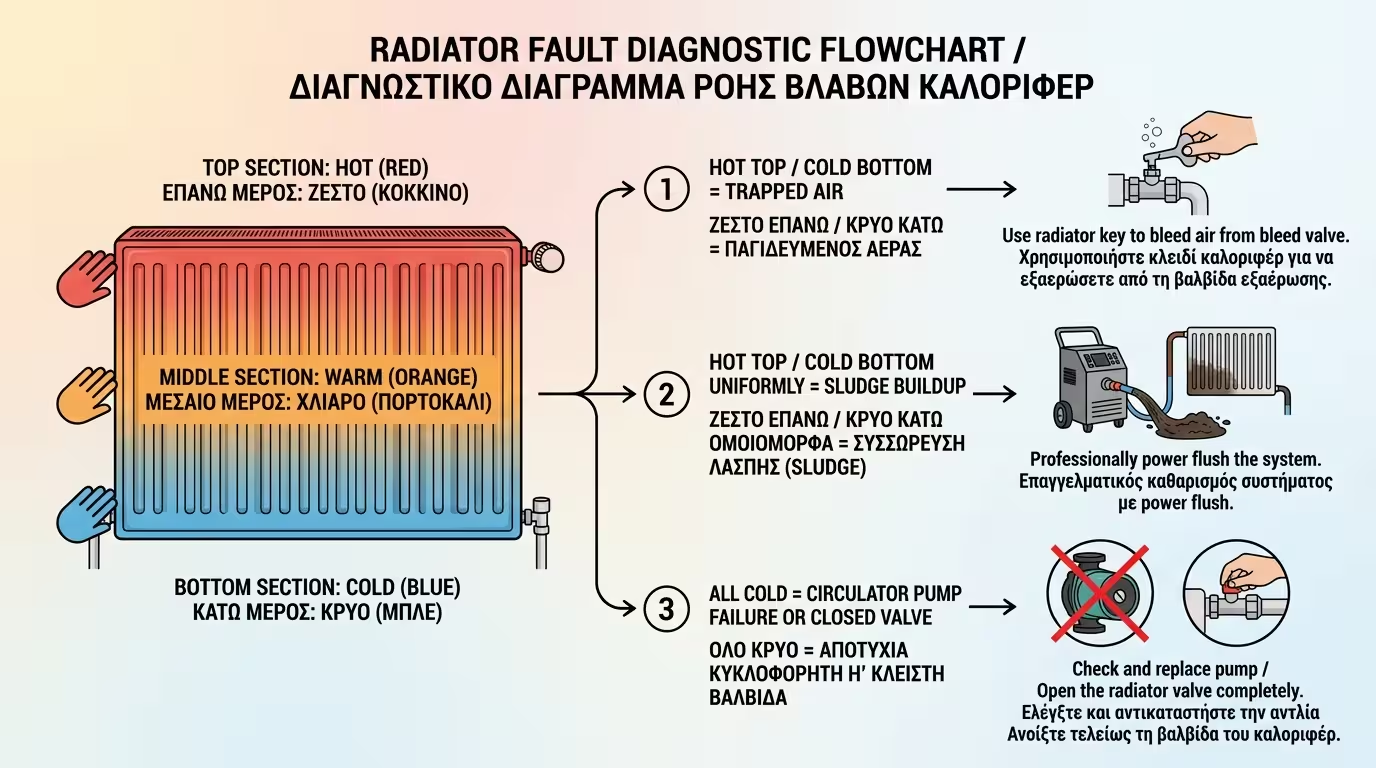
If you touch the bottom of the radiator and it's burning hot, but the top (or one upper corner) is ice-cold, trapped air is to blame.
Air is lighter than water. It gets trapped at the highest point of the radiator, creating an invisible "plug". The hot water cannot rise to the top, so it only circulates in the bottom half. This is often accompanied by a gurgling or trickling noise inside the pipe.
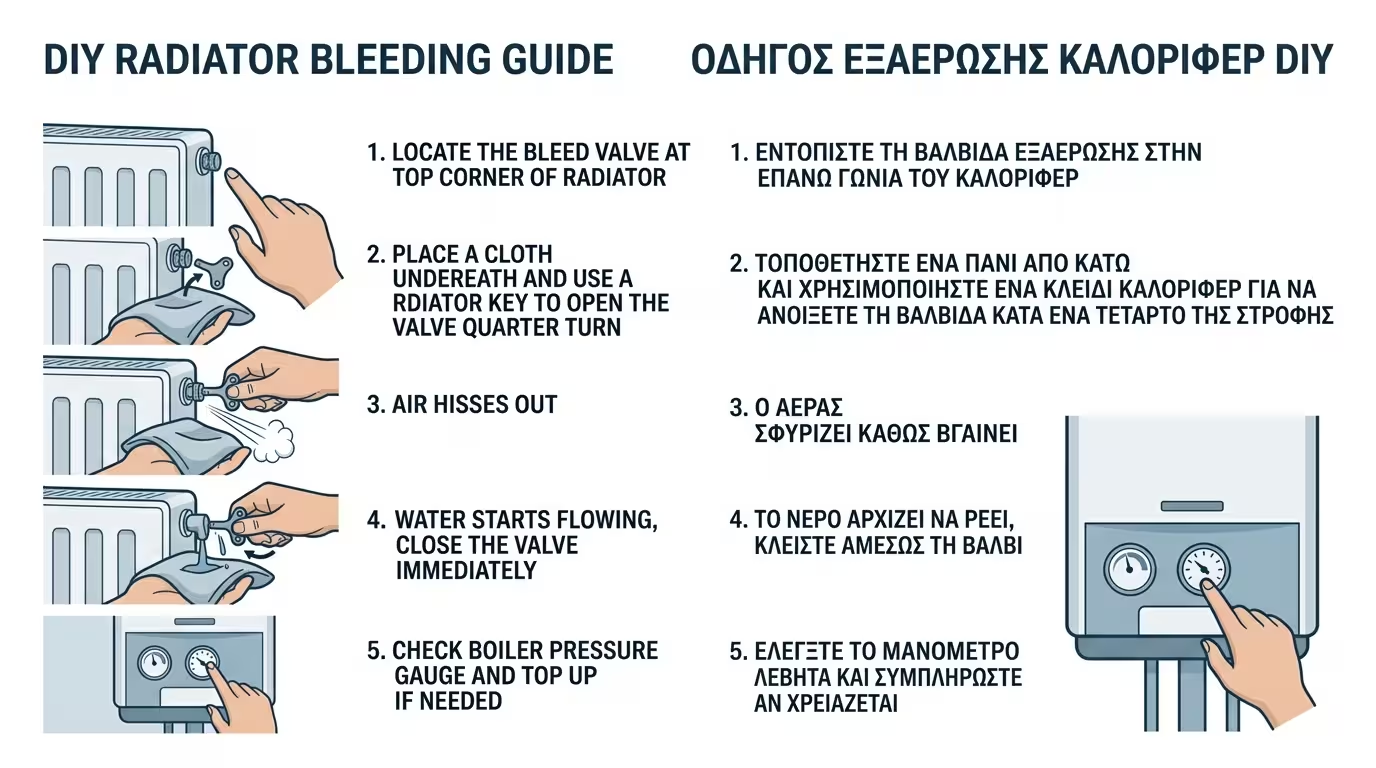
DO NOT bleed radiators with the circulator running - it will stir the air around the circuit. Turn off the thermostat and wait 10 minutes for the water to settle.
Grab the radiator bleed key (or a flat screwdriver if the valve has a slot) and a cloth. Go to the bleed valve - it's on the upper corner , opposite the control valve.
Turn very slowly (half to one turn is enough). You'll hear air escaping: "psst". Once it stops and clean water runs out (no bubbles), tighten the valve firmly.
Go to the boiler/heat pump. Since you released air, the pressure has dropped. Open the filling valve (underneath) and top up until the gauge reads 1.5 bar again.
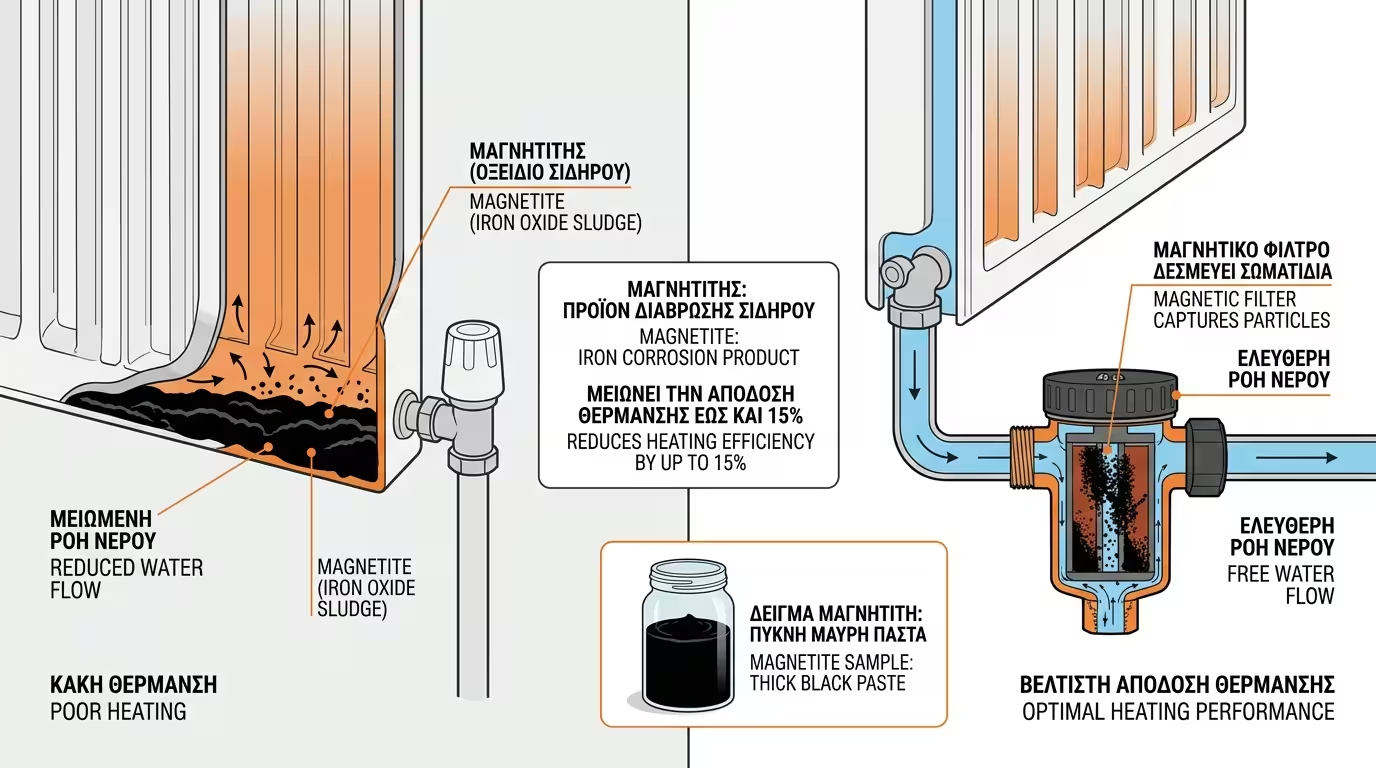
If the radiator is burning hot at the top but the bottom (especially the centre of the base) is completely ice-cold, forget bleeding. There's no air - there's sludge.
Internal rust (magnetite, Fe₃O₄) is heavy. As we learned in the Power Flushing article, it settles at the bottom of the radiator like clay. Hot water enters from above, hits the sludge barrier below, cannot complete its loop and exits immediately without heating the lower half of the radiator at all.
You cannot fix this yourself. A professional Power Flushing machine is needed to break the petrified sludge and clean the entire circuit before the debris destroys the circulator pump.
Sludge doesn't leave on its own. Over time it petrifies and completely blocks the radiators. The circulator strains, draws excess power and eventually burns out - replacement cost €200-400.
Full circuit clean: €300-600 depending on the number of radiators. Circulator + valve replacement if seized: €300-800 extra. Prevention always wins.
If the living-room radiators (near the boiler) are "boiling" but the back bedroom remains lukewarm (with neither air nor sludge), you have a hydraulic balancing problem.
Water is "lazy": it always takes the path of least resistance. If all radiators are wide open, water loops through the nearest ones and never reaches the distant ones with enough force.
The plumber must slightly throttle the nearest radiators by partially closing the lockshield valve (small cap valve on the bottom of the radiator). This way, the water encounters resistance at the living room, is forced to continue its journey through the pipes and finally reaches the back bedroom, heating the entire house evenly.
If after 2 hours all radiators are equally lukewarm, the problem is central. The circulator may have seized or be running on too low a speed, causing water to move so slowly it cools down before it even reaches the rooms.
Check if the central Y-strainer is completely clogged with debris. Unscrew the mesh, clean the solids, screw back. Cost: €0.
Make sure the boiler/heat pump is set to the correct temperature. If the dial is at minimum, the radiators will never get adequately hot - regardless of the circuit.
Your hand is the best thermometer. Before you panic, feel the radiator and follow the table:
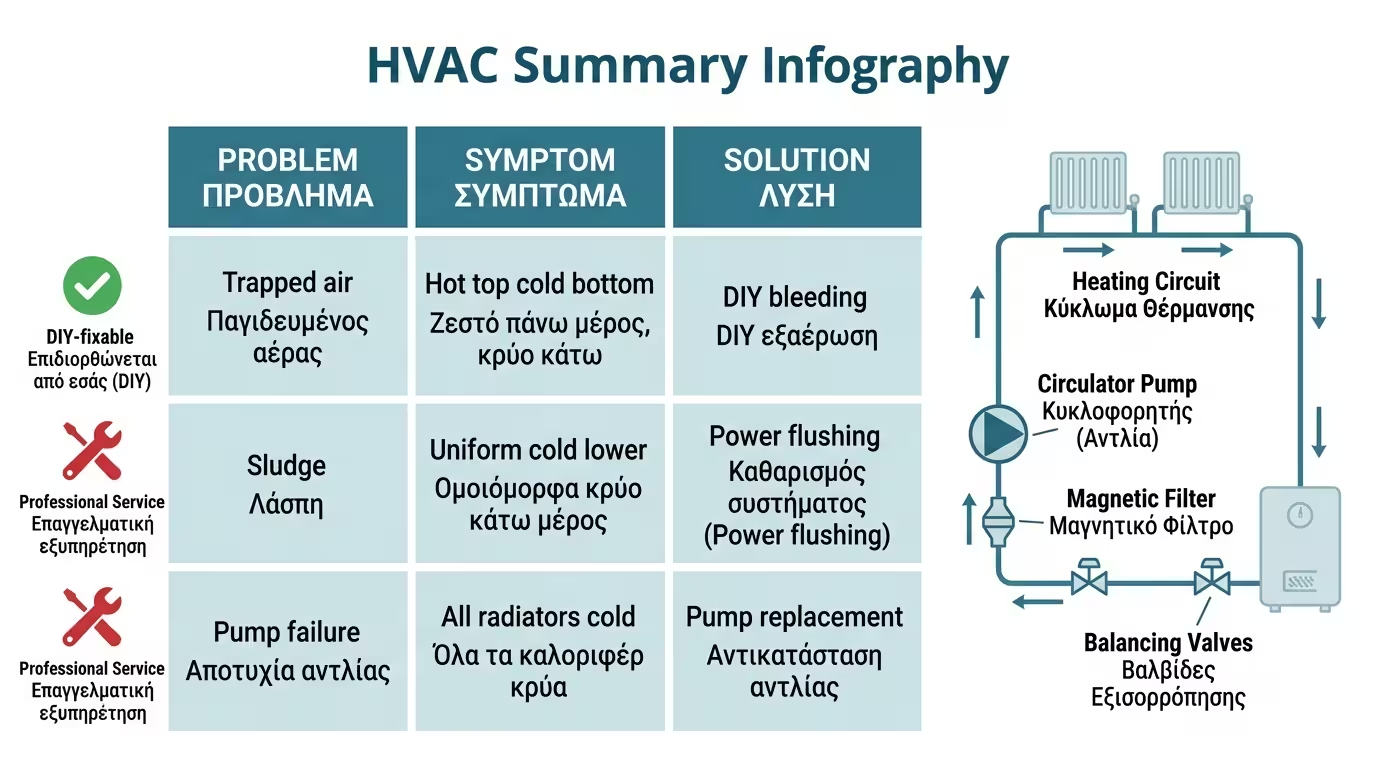
Air. Grab the bleed key. Free, 2 minutes, DIY. Don't forget to top up the pressure at the boiler.
Sludge (magnetite). Call a technician for Power Flushing. Not DIY. Cost: €300-600.
Balancing. The plumber throttles the near radiators so water reaches everywhere. Cost: €50-100.
Circulator/strainer. Check temperature settings, clean the Y-strainer, check that the circulator is spinning properly.
🔑 Correct diagnosis saves you from pointless expenses. Feel first - decide after.
Return to category.
Go to categoryReturn to the central guide.
Go to guide