🚪 The Corridor as "Tunnel"
The narrow hallway becomes the main trunk duct. A false ceiling there drops it to 2.30 m - nobody notices in a passageway. Branch ducts punch through the wall and blow into the rooms.
In luxury hotels you feel cool air but see no plastic air conditioner on the wall. That's Ducted Central AC - and you can bring it to your home during renovation.
The fear: the engineer will drop the entire ceiling. The truth: smart solutions exist that hide the AC without sacrificing precious headroom!
This is the golden rule of renovation: never lower the ceiling in the main rooms. Place the unit and ducts in secondary spaces only.
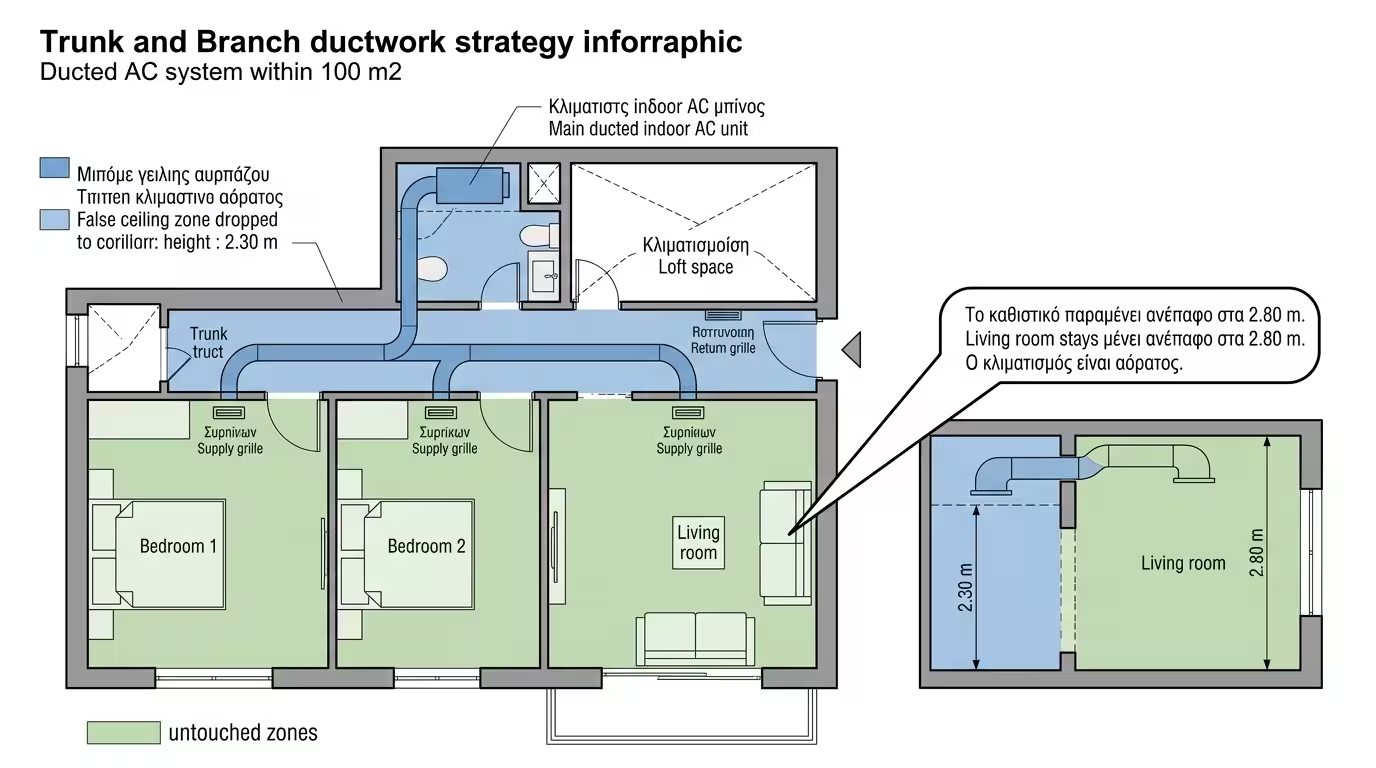
The narrow hallway becomes the main trunk duct. A false ceiling there drops it to 2.30 m - nobody notices in a passageway. Branch ducts punch through the wall and blow into the rooms.
Bathrooms already have lower ceilings (due to plumbing). The loft above the bathroom is ideal for concealing the indoor unit. Insulation + acoustic lining = zero noise in the adjacent bedroom.
Built-in wardrobes reach 2.20 m. The space above them (20-40 cm) can host a concealed duct run with no visible point. Supply grilles emerge in the adjacent bulkhead.
Your living room stays untouched at 2.80 m! False ceiling exists only in "hidden" spots. No visitor realises ductwork runs behind the wall - they see only an elegant slot diffuser.
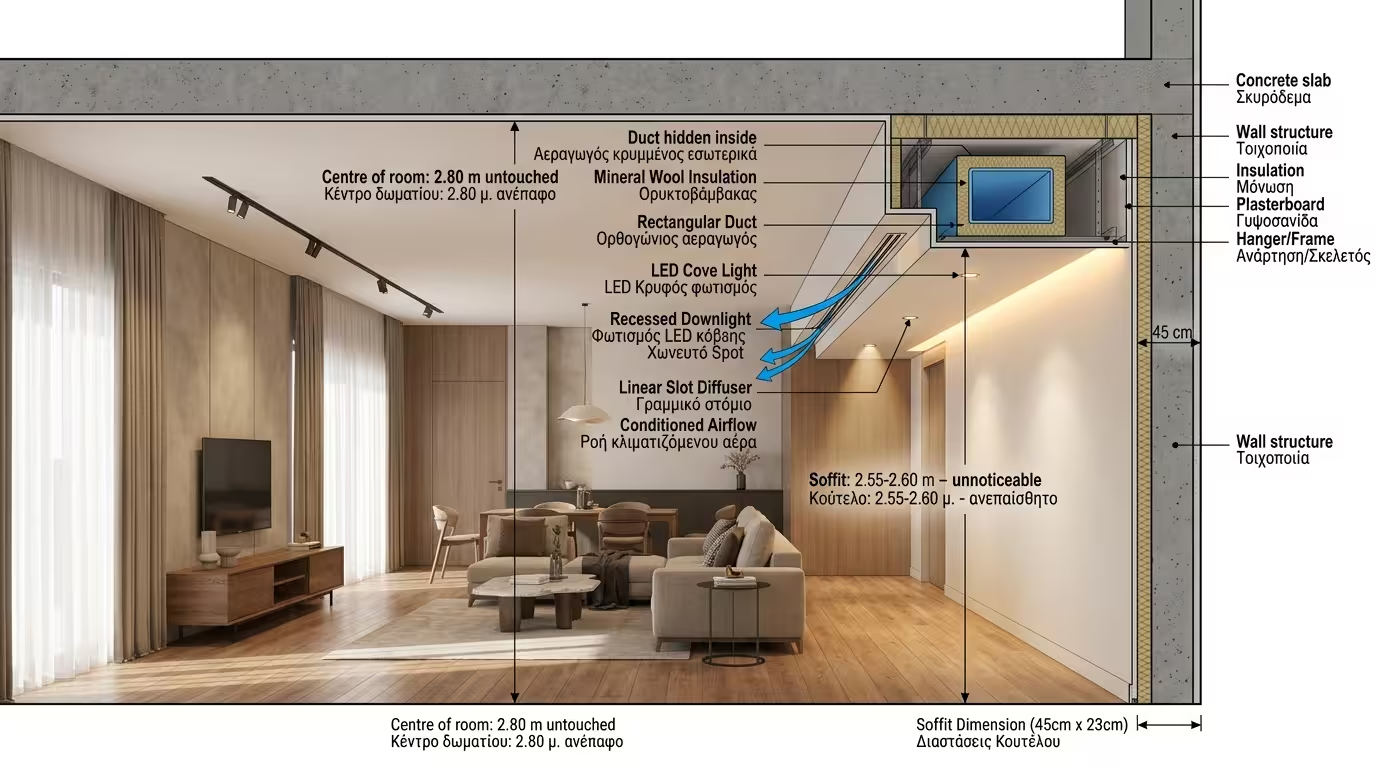
If the home is open-plan (huge living-kitchen with no corridors), the solution is an architectural soffit - a false ceiling only around the perimeter.
Instead of dropping the entire ceiling, we build an architectural box around the walls only, 40-50 cm wide and 20-25 cm deep. Ducts run inside. The centre of the living room remains high and open.
The underside of the soffit is perfect for LED strip lighting (indirect cove lighting) or recessed downlights. A mechanical "obstacle" becomes an architectural masterpiece.
Inside the soffit, acoustic insulation (typically 25 mm mineral wool) wraps the ducts. This eliminates airflow noise - critical especially in bedrooms.
The soffit is painted the same colour as the ceiling. Grilles are integrated into the shadow gap. The finished room looks like a designer interior - no one guesses a full HVAC system hides behind it.
Manufacturers know the old-building challenge. That's why they created slim ducted units that fit even in very tight loft spaces.
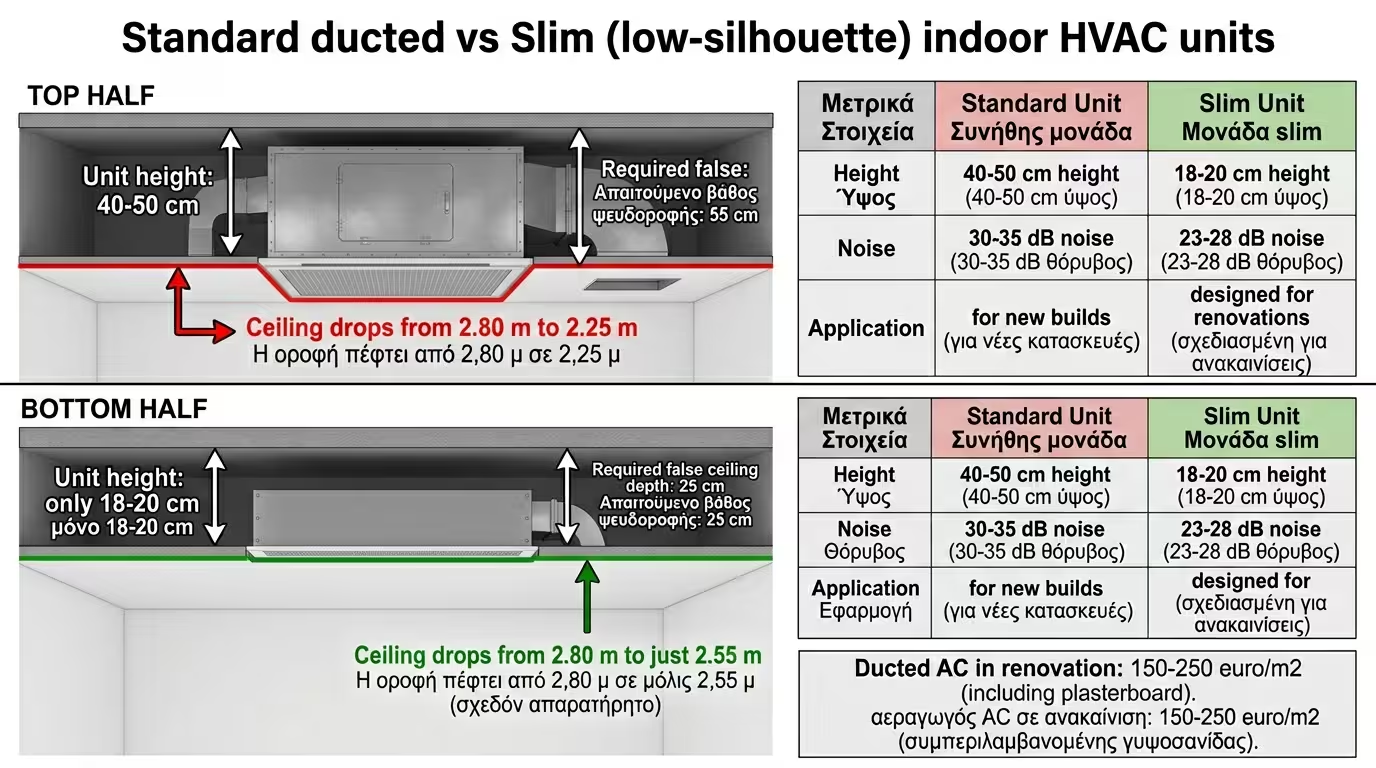
While a standard commercial unit needs 40-50 cm of height, slim units are just 18-20 cm. This means you need a false ceiling of only 25 cm instead of 55 cm.
Modern slim units operate at 23-28 dB(A) - virtually silent. Ideal for placement above bedrooms. They pair with flexible ducts for easier routing through tight spots.
Multi-split ducted: 1 outdoor unit + multiple slim indoor units. VRV/VRF: For larger homes (150+ m²) with independent zone control. Both deliver heating + cooling from the same ductwork.
Ducted AC in a renovation costs €150-250/m² (mechanical + plasterboard). In a 100 m² home that's €15,000-25,000. More expensive than splits, but delivers silent, invisible, uniform temperature.
Concealed AC needs visible points only at the grilles: where air enters and exits. In modern renovations, forget those square aluminium louvres!
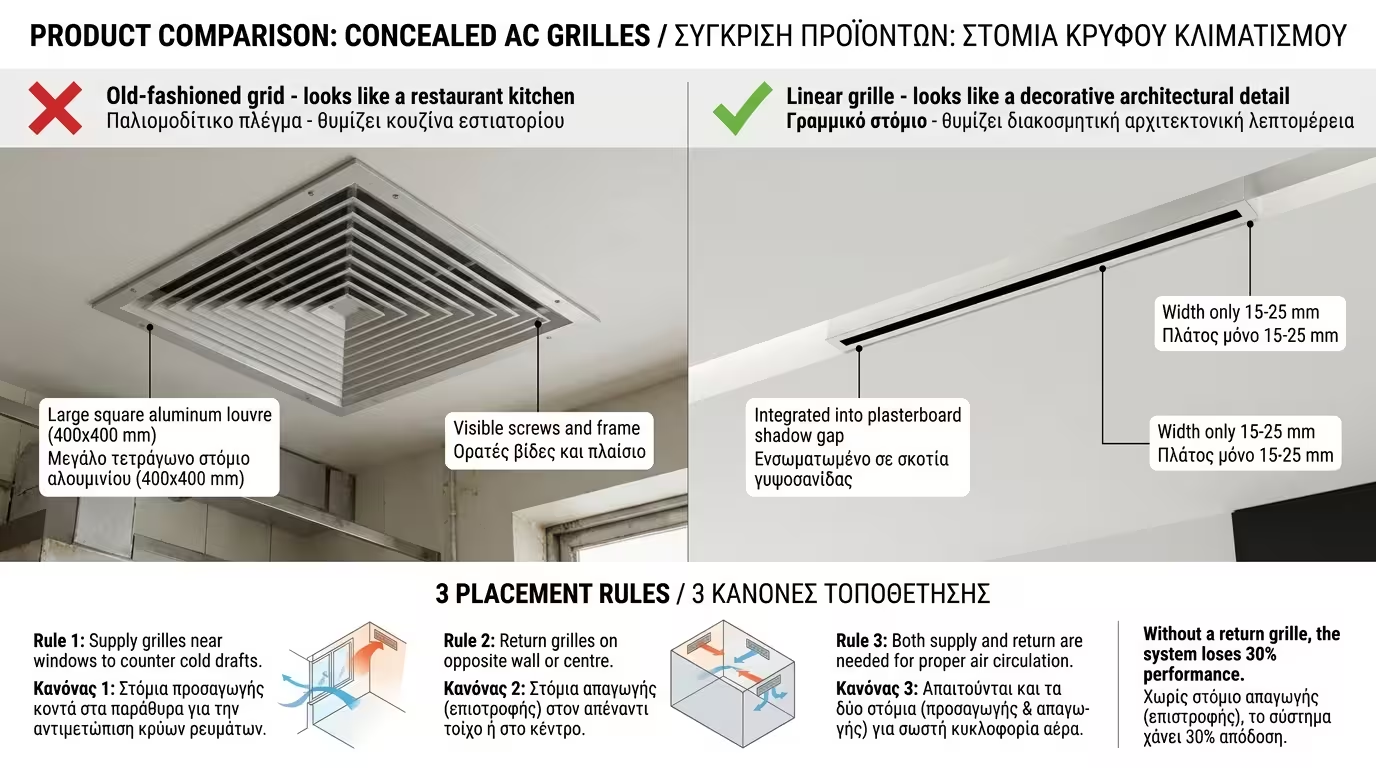
Ultra-thin, elegant "slots" (slot diffusers) painted to match the wall or in matt black. They integrate so seamlessly into the plasterboard they look like a decorative shadow gap.
Supply: Grilles that blow cool/warm air. Return: Grilles that draw air back to the unit. You need both - without a return, air doesn't circulate properly and performance drops.
Supply grilles go near windows (to counter cold drafts). Return grilles go on the opposite wall or in the centre. This layout creates uniform circulation with no "dead zones".
Ducted AC is not off-limits in old buildings. It requires close collaboration between the mechanical engineer and architect. With strategic placement in secondary spaces, slim units and linear grilles, you enjoy silent, invisible, hotel-grade comfort without losing a single centimetre of ceiling height in your living room.
🔑 Key: The mechanical engineer must be involved BEFORE the plasterer. If ducts are designed after the plasterboard, you lose 90% of the "hidden" options.
Return to category.
Go to categoryReturn to the central guide.
Go to guide