💧 The water plug
The water inside the "U" creates a natural seal. Sewer gases (methane, hydrogen sulphide) cannot pass through. The physics is simple: gas above, water below = sealed drain. Works perfectly as long as water is present.
Every air conditioner, fan coil or heat pump (in cooling mode) produces water from air moisture. That water must drain to the sewer. Without a proper "trap", your home will smell like a septic tank come winter.
Why do traditional traps dry out? How do Dry Traps solve the problem permanently? Let's find out.
Every sink, bathtub and shower in your home has a U-shaped trap. It holds a small amount of water permanently - this "plug" prevents foul sewer gases from rising up.
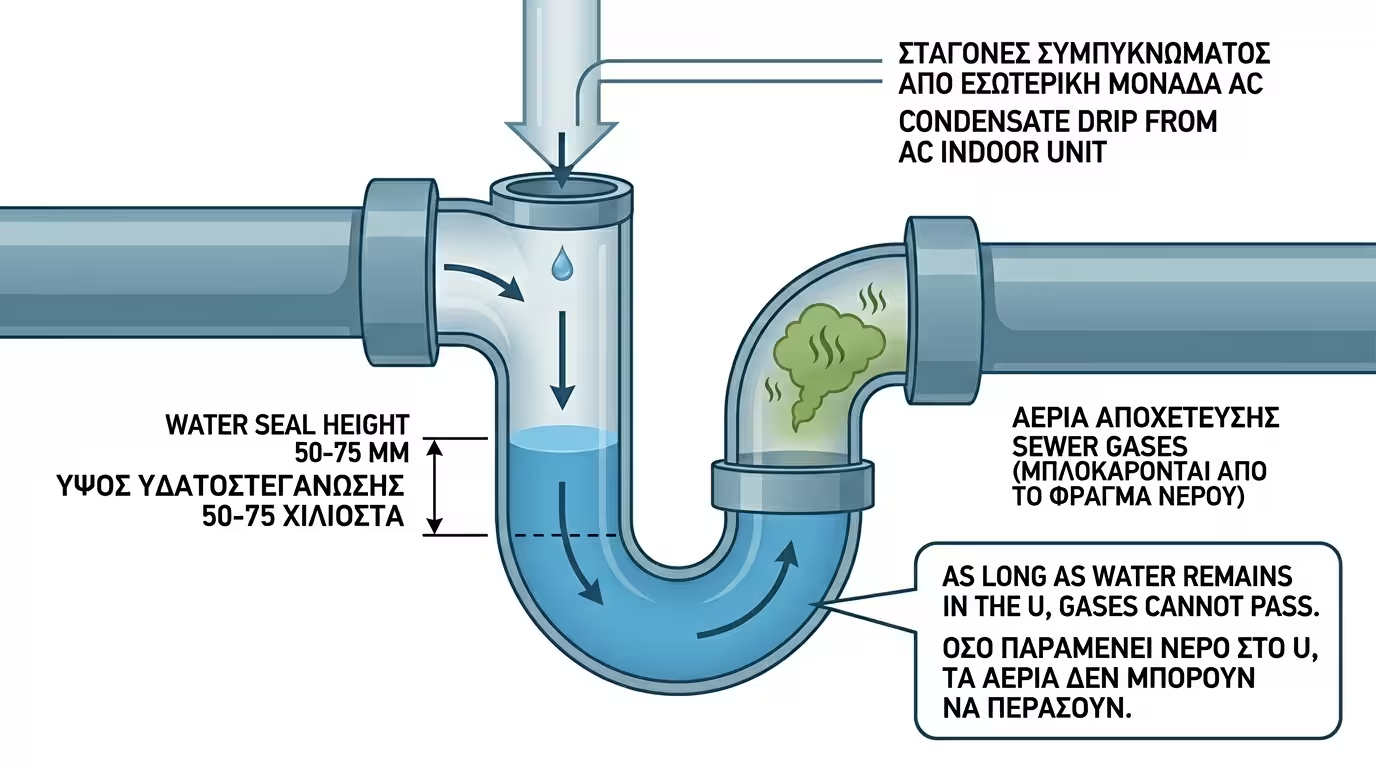
The water inside the "U" creates a natural seal. Sewer gases (methane, hydrogen sulphide) cannot pass through. The physics is simple: gas above, water below = sealed drain. Works perfectly as long as water is present.
The installer connects the AC condensate drain to the main waste pipe and fits a matching U-trap. During summer, when the unit produces water continuously, the trap fills automatically - perfect operation, zero odours.
The trap must be placed before the main waste stack. If fitted after, gases find a "bypass" and reach the room via the condensate tube. The sequence is critical.
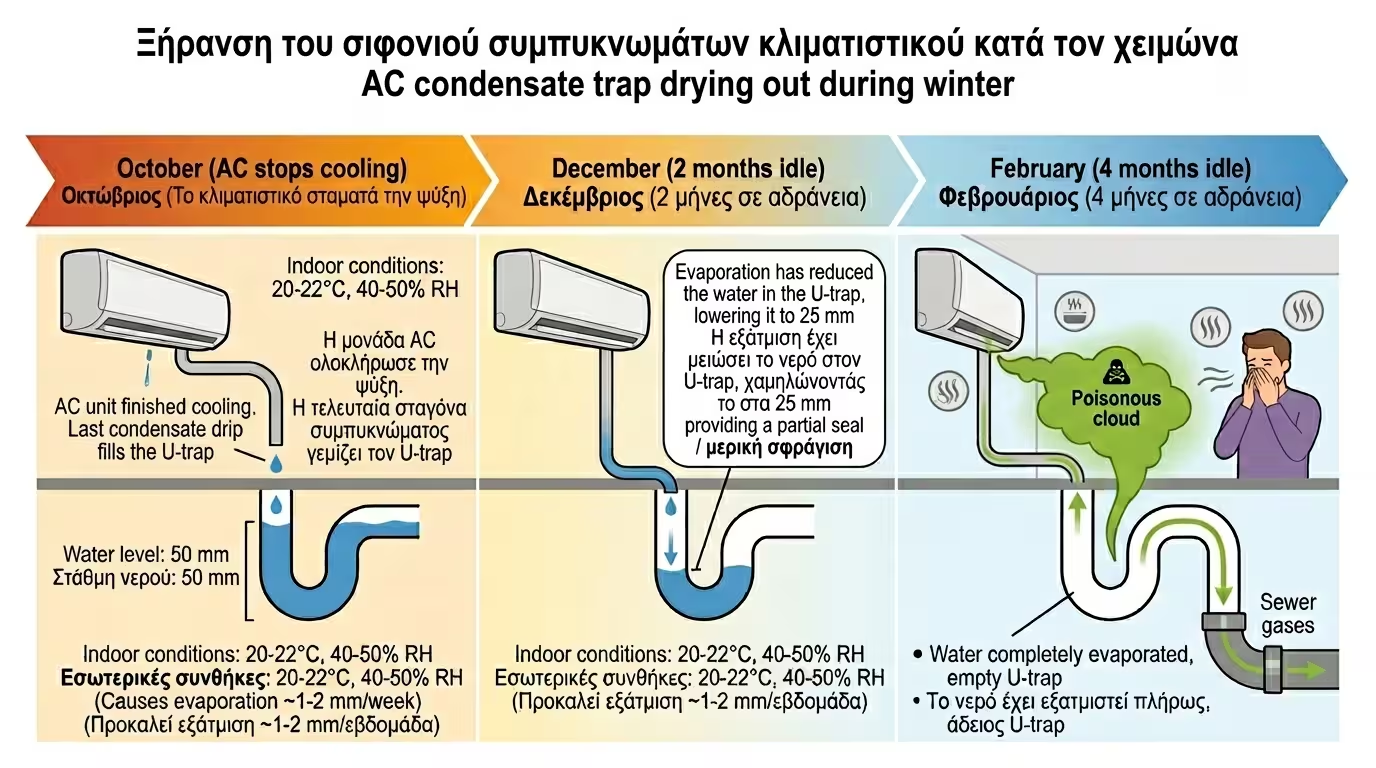
Its operation relies 100% on water. If flow stops, evaporation slowly empties the "plug". This is exactly what happens in winter - and that is where the nightmare begins.
In winter, the indoor unit runs in heating mode and produces zero condensate. The drain tube remains dry for months. Gradually, the water in the trap evaporates completely.
The warmth of winter air (or proximity to the warm unit) accelerates evaporation. In 4-8 weeks without flow, the water plug vanishes. The tube becomes an open "highway" to the sewer.
If your home is left empty in winter (holiday home), the traps dry out even faster. After 3-4 months without water, the smell can hit even an unoccupied property.
The problem applies to every indoor unit connected to a drain: split, cassette, ducted, fan coil. Ducted units, hidden in the ceiling, channel the smell into multiple rooms at once via ductwork.
Sinks and showers are used daily - the trap refills. The AC produces no water in winter, so nobody "refills" its trap. That is why the smell appears only in rooms with air conditioning.
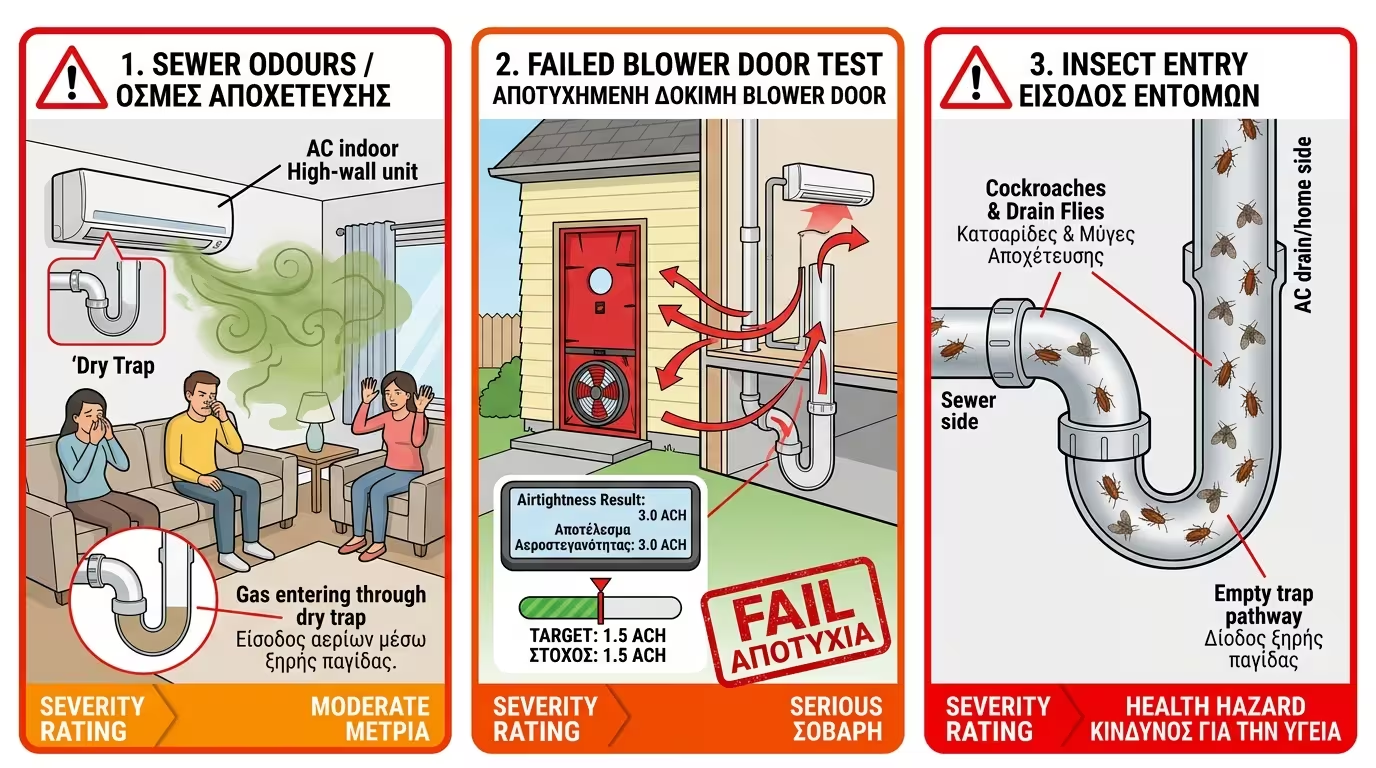
Once the water seal is gone, the drain tube becomes an open "highway" connecting your living room to the sewer . The consequences fall into two categories - both deeply unpleasant.
Methane, hydrogen sulphide and toxic gases rise through the tube, pass through the indoor unit and diffuse into the room. You think the unit is "broken" - in reality, the street sewer is venting through the AC.
Even if the tube exits to the balcony, freezing outdoor air finds an open passage and enters the home. In airtight modern buildings, one empty trap is enough to destroy the airtightness of an entire wall.
Sewer gases are not just unpleasant - they are toxic. Hydrogen sulphide (H₂S) at high concentrations causes headaches, dizziness and respiratory problems. In bedrooms, exposure during sleep can go completely unnoticed.
Many technicians fail to check the trap. They look for "mould" on filters, "smell" in the drain pan - but the problem is behind the wall. Always ask whether the drain and trap condition have been checked.
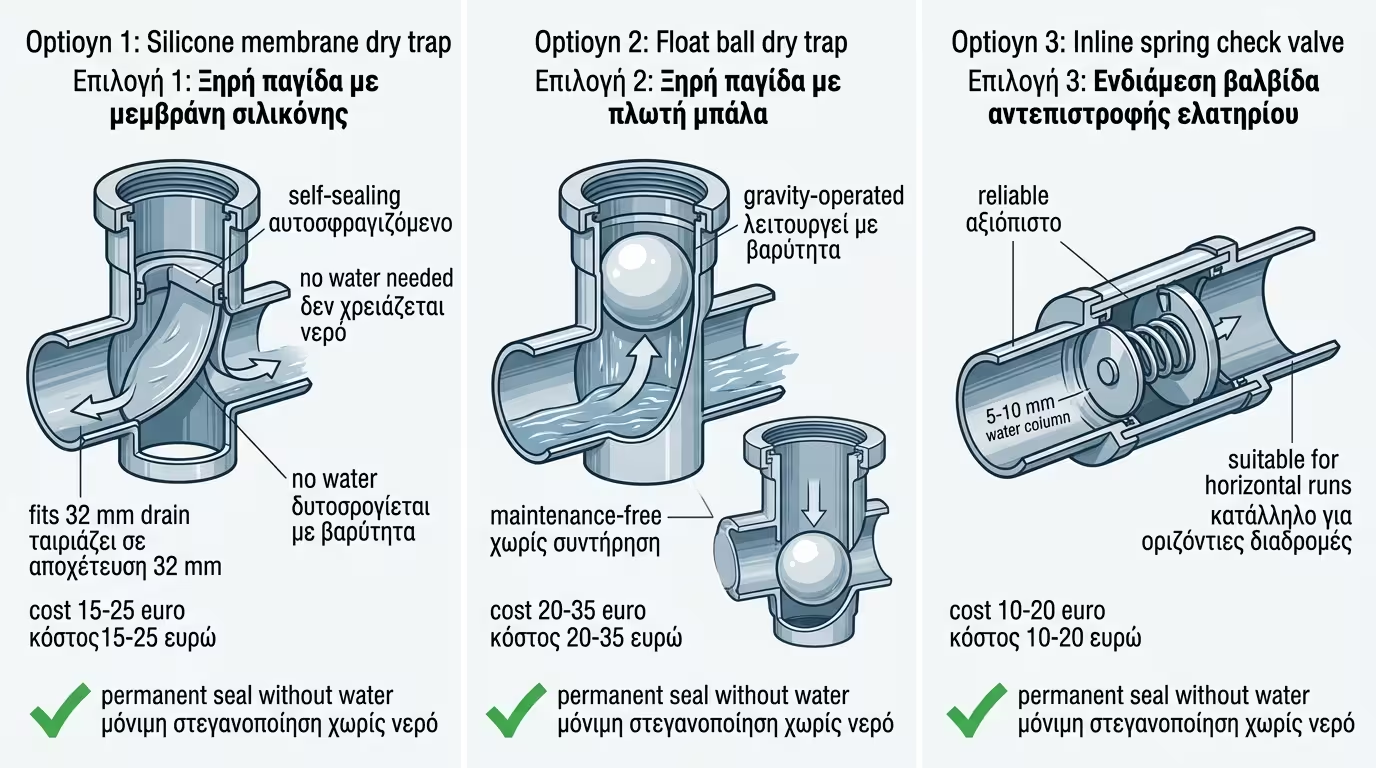
Modern HVAC engineering has solved this problem permanently by eliminating the need for water altogether. Instead of a "U", a special fitting is installed: the Dry Trap (also called a Condensate Anti-Siphon Valve).
Inside there is no water, but a mechanism: a silicone membrane, lightweight ball or spring. When the AC produces water, its weight pushes the membrane open and water drains normally. When flow stops, the membrane seals airtight.
Even if not a single drop falls for 3 years, the mechanical seal does not evaporate! No odour, no bacteria, no air draught gets through. The solution is 100% reliable in every season.
A dry trap costs €15-30. For a home with 4 indoor units: just €60-120 total. Its absence costs far more in technician call-outs, "mystery smell" investigations and frustrated occupants.
Fitted exactly where the old trap used to be or replaces a section of pipe. No wall demolition needed - in most cases it fits in-line on the existing drain in 10 minutes.
🔑 In a renovation or new build, the cost of a dry trap is negligible, yet its absence is the #1 cause of sewer odours in modern, airtight homes. Insist on dry traps on every indoor unit connected to a drain.
Return to category.
Go to categoryReturn to the central guide.
Go to guide