Boiler / Heat Pump Low Pressure Error: The DIY Recovery Guide

You wake up on a cold January morning. The house is freezing. You go to the boiler room and see the display flashing: Error / Low Water Pressure. The unit has "locked out" and refuses to start.

Before you panic and start searching for an engineer, you should know this is probably the easiest fault to fix yourself in just 10 seconds! You don't need any tools - just your hands and your eyes. Let's see how to restore heating and when this error hides a darker secret.

1. First Aid: How to Refill the System Yourself

The heating circuit is a "closed" system. The water recirculates continuously and theoretically never escapes. For it to flow correctly, it must be under pressure - ideally 1.2 – 1.5 bar (when cold).

If pressure drops below 0.8 or 0.5 bar, the controller detects it. To protect the circulator from running "dry" (without water) and burning out, it shuts everything down and throws the error.

Pressure gauge – boiler, filling valve, reset, fault

🔍 Steps 1-2: Gauge & valve

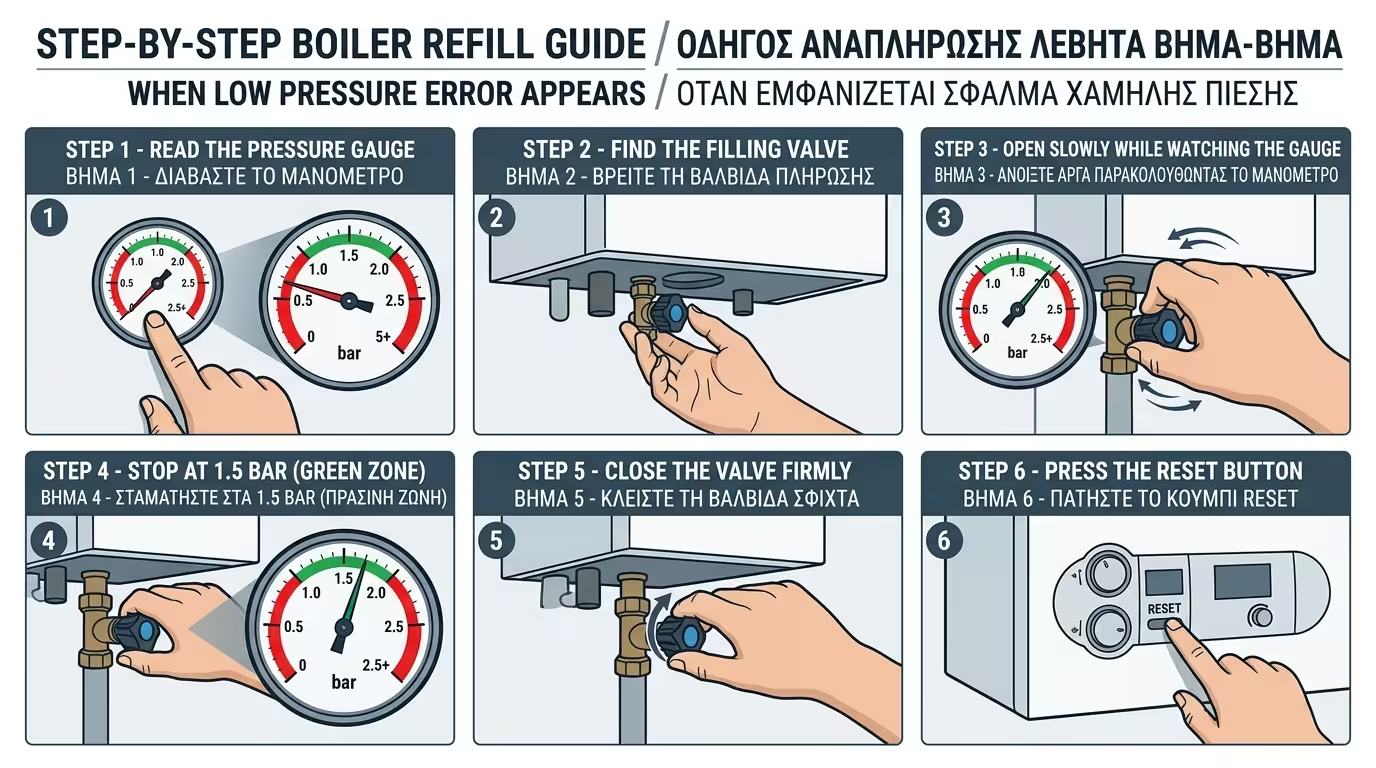
Find the round pressure gauge on the boiler front (or underneath it). You'll see the needle has dropped to "0" or into the red zone. On more modern units, pressure is shown digitally on the display (e.g. 0.4 bar). Just below the boiler (or on the heat pump's hydraulic connections) there's a pipe that connects your domestic water supply to the heating circuit - that's where the filling valve sits (black, blue or red handle) or the auto-fill device (brass, bell-shaped fitting).
💧 Steps 3-4: Open very slowly

Turn the valve very slowly anti-clockwise. You'll hear mains water (domestic supply) rushing into the heating pipes. Watch the gauge: the needle will start rising gradually. No need to rush - slow and steady is always the safest approach.

🛑 Step 5: Stop at 1.5 bar

Once the needle reaches 1.5 bar, close the valve tightly! Warning: if you forget and pressure hits 3.0 bar, the safety valve will open and flood the floor.

🔄 Step 6: Reset

Once pressure is restored, the error on the display usually clears automatically. If not, press the "Reset" button on your boiler. The unit will fire up and the house will warm up within minutes! That's it - problem solved.

2. Why Did Pressure Drop? (The 3 Suspects)

Expansion vessel – safety valve, pressure, blow-off

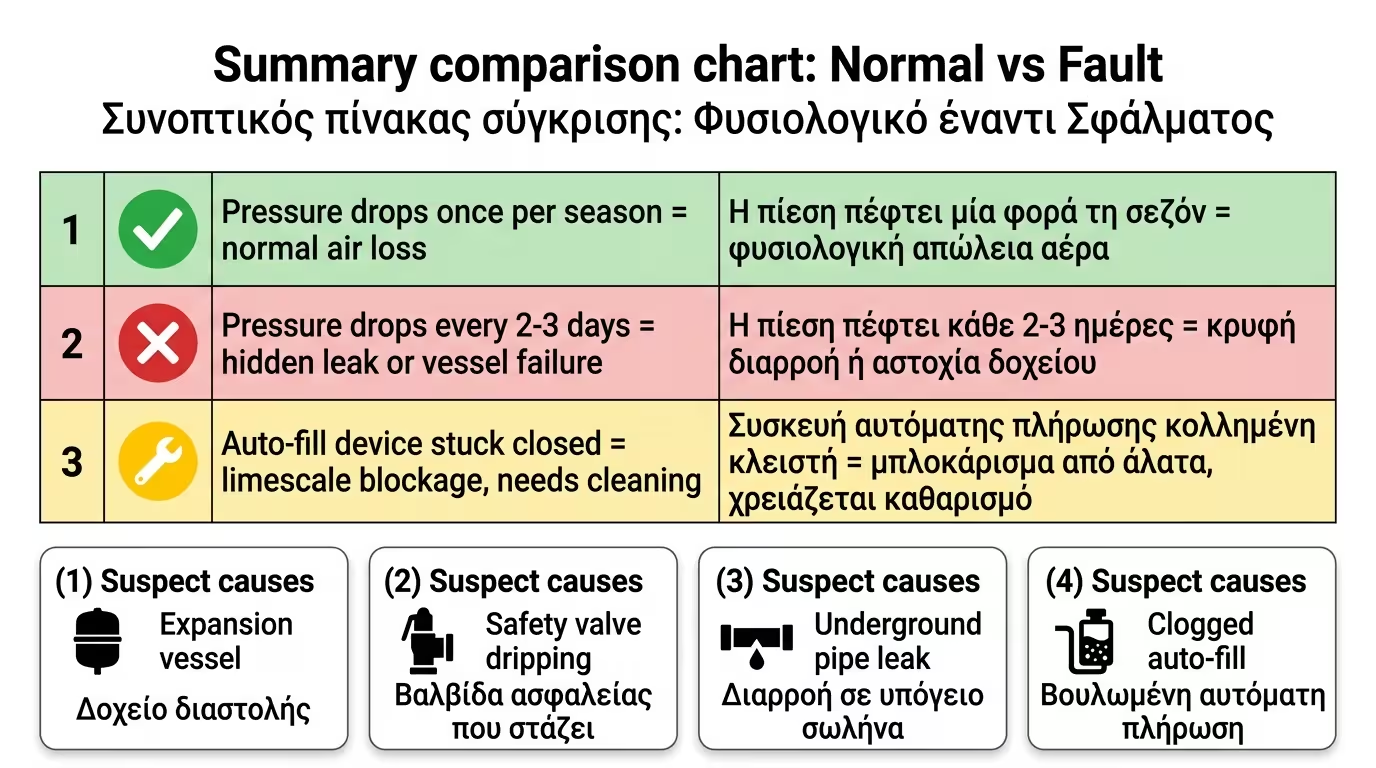
If pressure drops once a year (e.g. at the start of the season) it's completely normal - a tiny bit of air escaping through the automatic vents is enough for a 0.2 bar drop. But if you refill today and after 3 days (or 1 week) the error returns again, then you have a problem. You're losing water somewhere.

1️⃣ Expansion vessel

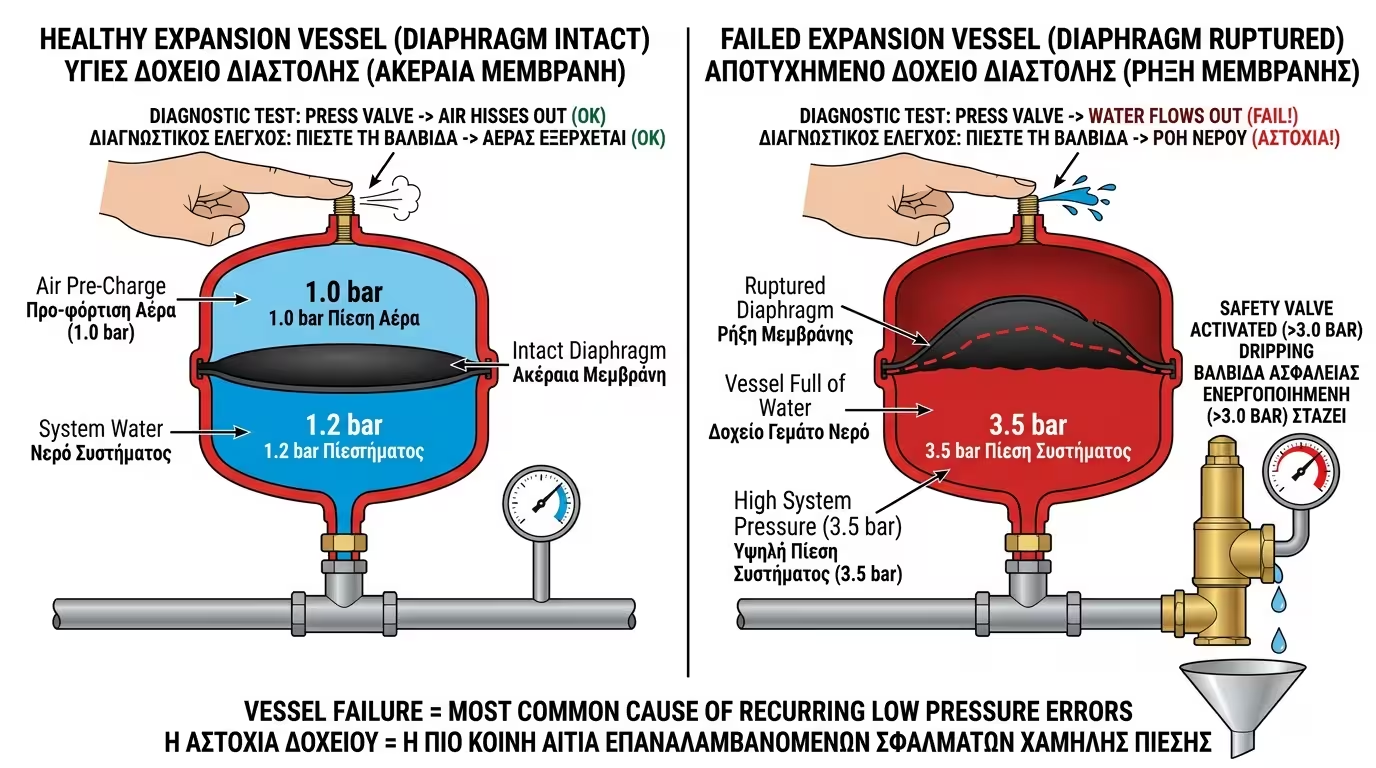
As we learned earlier, the vessel absorbs water expansion. If it has ruptured or lost its air charge, the following chain reaction occurs: heating ON → water heats up → pressure rockets to 3 bar → safety valve opens → "excess" water dumps on the floor. Heating OFF → water cools, contracts → but the dumped water is gone → pressure drops to zero! A technician needs to re-charge or replace the vessel.

2️⃣ Hidden leak

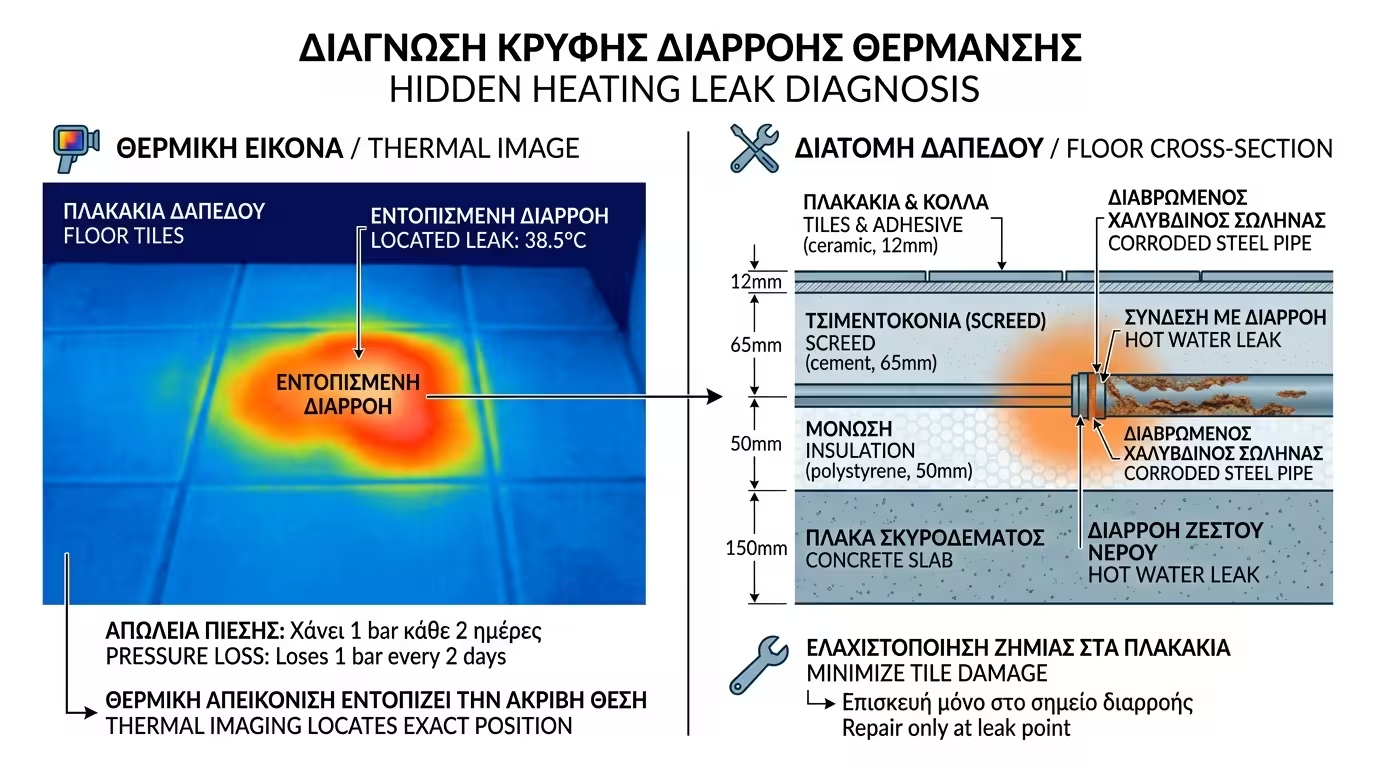
Vessel OK, valve isn't dripping, radiators dry, yet you lose 1 bar every 2 days? An old steel pipe under the tiles or screed has corroded through. Water silently soaks the ground. You need a specialist with a thermal camera to pinpoint the exact spot, or inject a chemical sealant into the circuit.

3️⃣ Faulty auto-fill

If you have an auto-fill device (that brass, bell-shaped fitting that theoretically adds water on its own when pressure drops), it may have accumulated limescale and "stuck" closed. The system lost a normal bit of water through venting, but the auto-fill never opened to top it up. It simply needs cleaning or replacement.

📊 Normal vs Fault

Topping up 1-2 times per winter? Don't worry. Every 2 days? Shut the mains and call a plumber - your house is flooding silently!

If the vessel is fine, the valve isn't dripping, the radiators are dry, yet you lose 1 bar every 2 days , the water is escaping… underground. An old steel pipe running under the tiles or screed has corroded through. The water silently soaks the ground beneath - you see no damp, but the boiler pressure keeps falling.

This is where it gets difficult: either call a specialist with a thermal camera to pinpoint the exact spot (so you only need to break one tile), or inject a chemical sealant liquid into the circuit that circulates and plugs the micro-holes from the inside.

Hidden leak – steel pipe, thermal camera, wet floor

3. Summary & Prevention

The low-pressure error is the most common and most "innocent" shutdown of a boiler or heat pump. Learn where the filling valve is and how to read the gauge. It's your first line of defence against the cold.

If you need to top up 1-2 times per winter, don't worry - it's normal. But if you become a "boiler attendant" and refill every other day, something is seriously wrong. You likely have a hidden leak under the floor or a failed expansion vessel. Don't ignore it - call an engineer before the installation is damaged beyond repair.

Summary – pressure, refill, leak, auto-fill, limescale
⚠️ Every time you add fresh water, you're also adding limescale to the circuit. Frequent refills slowly destroy the boiler's internals!

Related Articles

Retrofitting, Installation & Troubleshooting

Return to category.

Go to category

Preview