🚪 Departure scenario
Everyone leaves for work and school in the morning. As soon as the last phone exits the invisible perimeter (e.g. 1 km radius), the thermostat automatically drops to 17 °C (Eco Mode). No button was pressed!
Many people buy a cheap €30 thermostat labelled "Wi-Fi", connect it to the internet and think they have a "Smart Thermostat." Wrong. A basic Wi-Fi thermostat is merely a remote control with a longer range.
Truly "Smart" thermostats - Nest, Tado°, Netatmo - contain Machine Learning algorithms. They don't wait for commands. They make decisions. Let's find out whether they're worth the 200+ euros.
This is the number-one reason to buy a smart thermostat. Geofencing uses your phone's GPS - and the phones of every family member - to know when the house is empty.
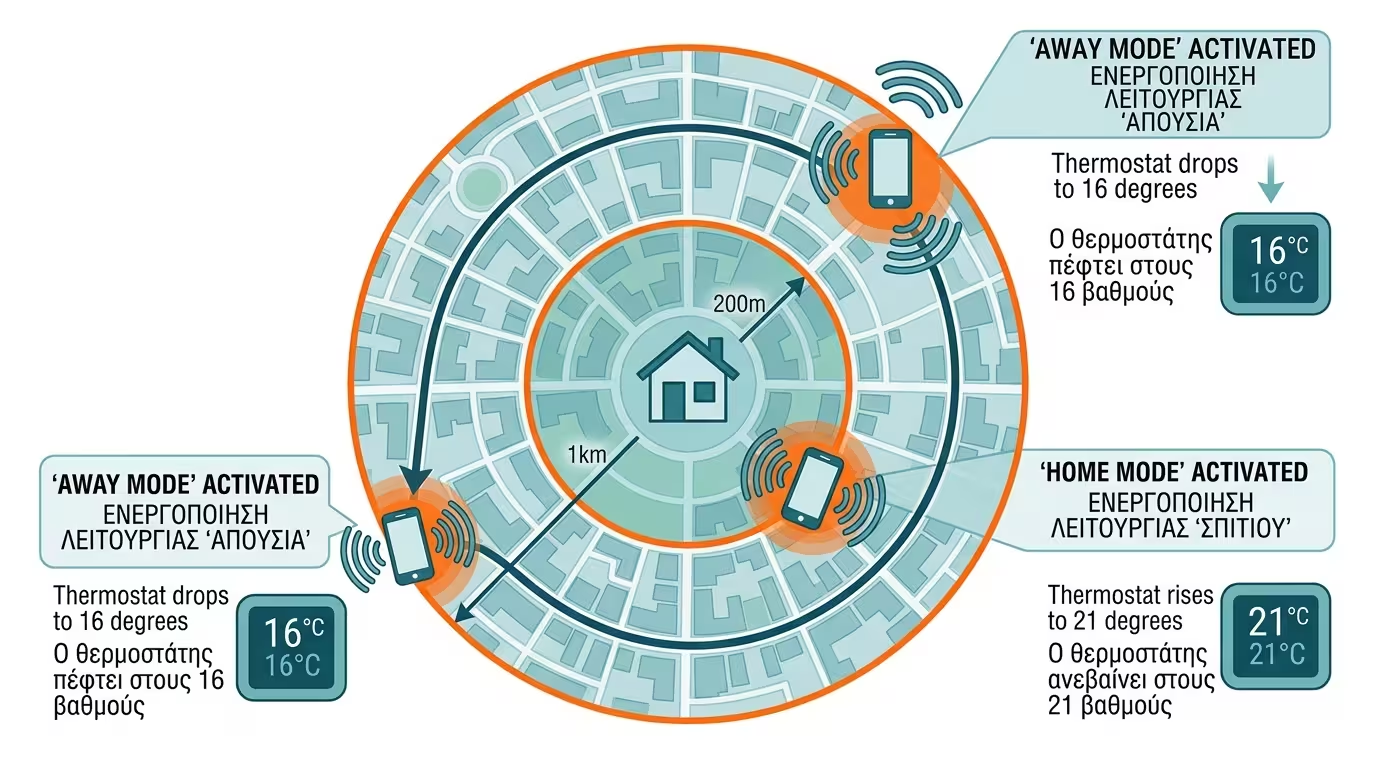
Everyone leaves for work and school in the morning. As soon as the last phone exits the invisible perimeter (e.g. 1 km radius), the thermostat automatically drops to 17 °C (Eco Mode). No button was pressed!
You're heading home. The moment your GPS "breaks" the perimeter, the thermostat says: "George is returning. The house needs 40 minutes to go from 17 °C to 21 °C. Firing the boiler NOW." You open the door - the house is already warm.
Every family member installs the app. The thermostat keeps Eco Mode only if EVERYONE has left. If one child stays home, heating stays on. Zero manual intervention, zero forgetting.
On average, Geofencing cuts 15-25% off heating bills by eliminating the hours the house heats up while nobody is home. For a family of four with irregular schedules, payback takes 1-2 winters.
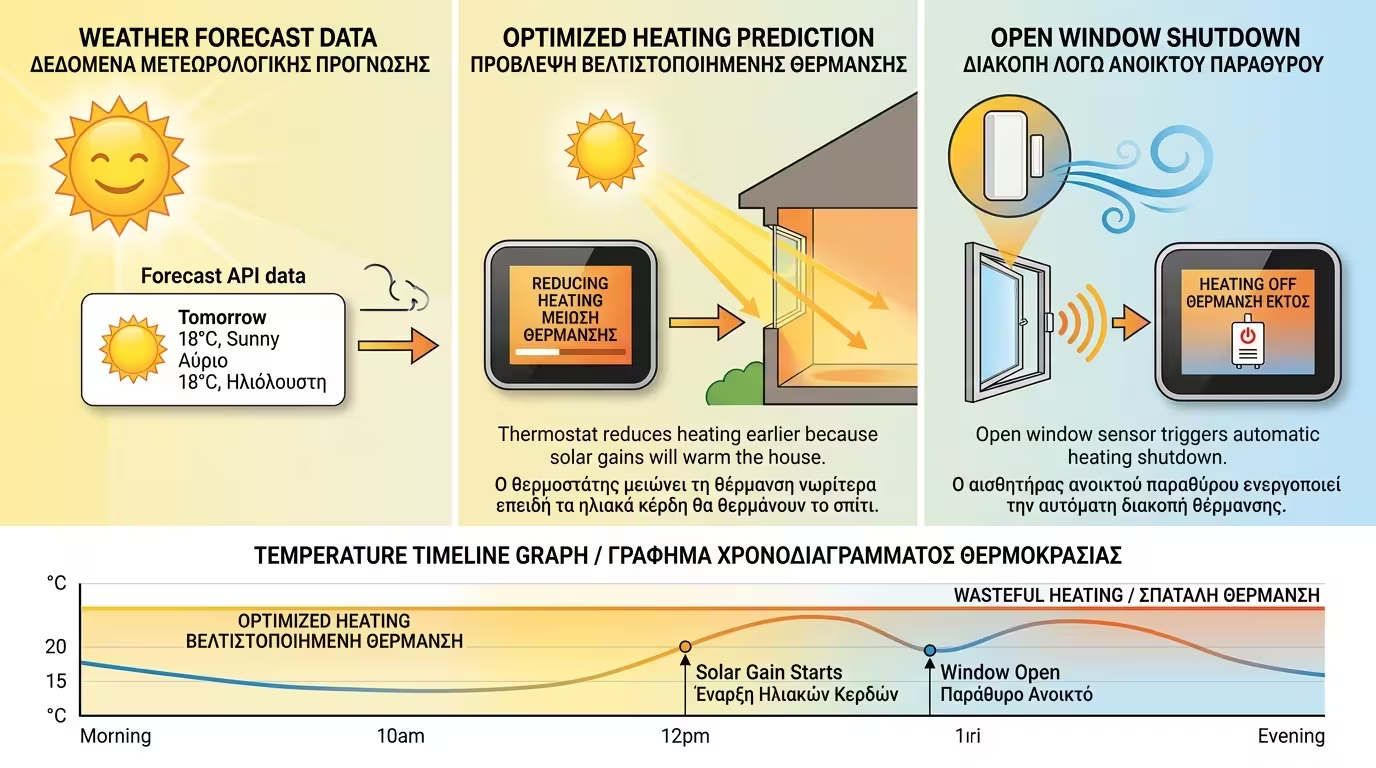
Basic thermostats only "read" the living room temperature. Smart thermostats are permanently connected to online weather stations.
If the Nest "sees" that tomorrow morning will be sunny with sunlight hitting your windows, it switches off heating 30 minutes early, letting free solar energy do the rest. This micro-saving adds up significantly over 180 days of the heating season.
If the temperature drops sharply (e.g. -3 °C in 5 minutes), the thermostat realises someone opened a window. It immediately shuts down the boiler so you don't "heat the street." Once the window closes and temperature stabilises, it resumes normal operation.
After 2-3 weeks of use, the algorithm "learns" how fast your house cools down, how much radiator power it needs, and how far in advance the boiler must fire to hit 21 °C by 07:00. The thermostat gets smarter over time.
Every month the app sends you an Energy Report: how many hours the boiler ran, how many hours were in Eco Mode, how much you saved compared to the previous month. This digital awareness makes every user more careful.
European homes differ from American ones in wiring. Typically, only 2 wires come out of the wall (live + switched return, ON/OFF). Smart thermostats need permanent power - hence the "bridge" approach.
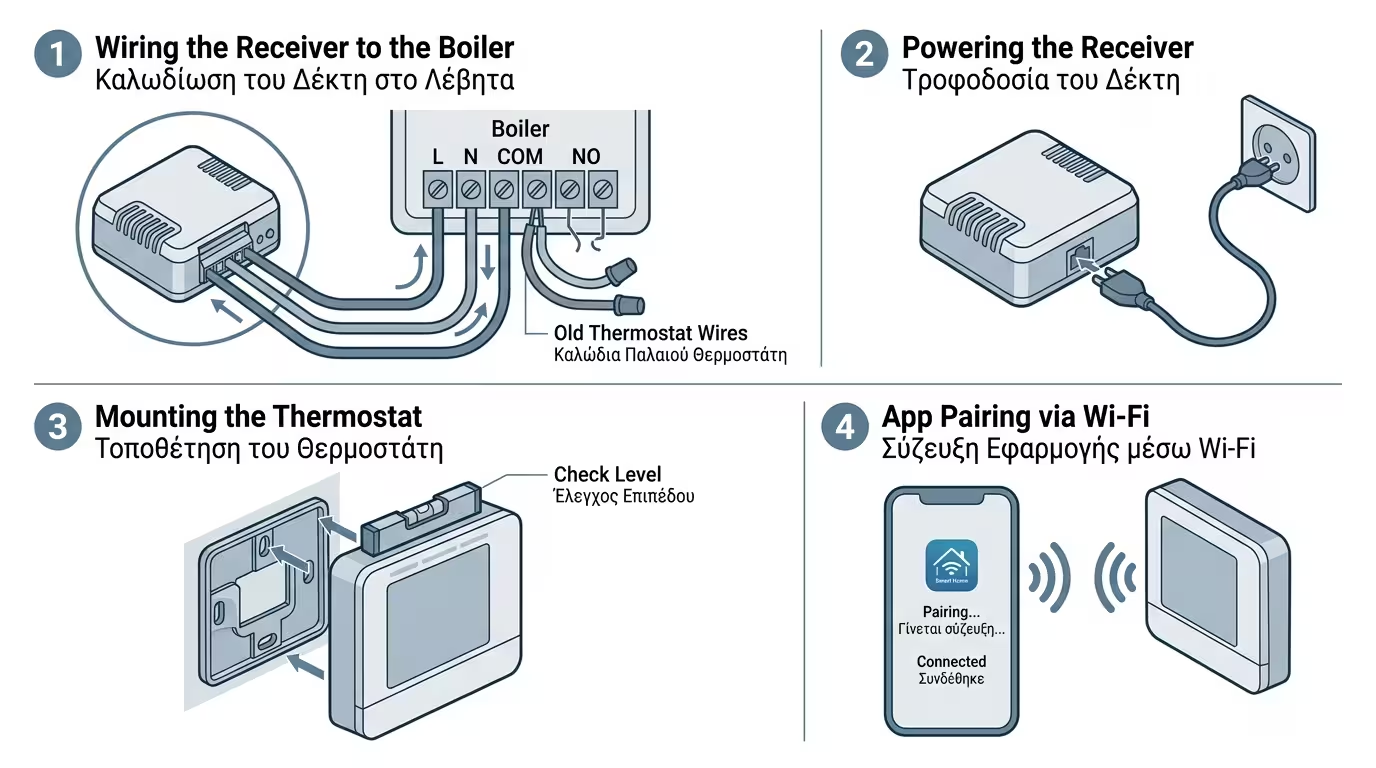
The small box connects by cable next to the boiler (on the balcony or in the boiler room), draws power from there, and communicates wirelessly with the display in the living room.
It runs on AA batteries (lasting 1-2 years) and can be placed anywhere you like - even wirelessly on the coffee table. No wall chasing required.
If the gas boiler supports OpenTherm, the thermostat doesn't just switch ON/OFF but modulates the flame proportionally. This means even greater savings and zero overshoot.
Thermostat + receiver cost €150-250 (depending on brand). Installation takes 30-60 minutes by an electrician/plumber. If you already have a wall thermostat, the swap is plug-and-play.
The answer depends 100% on your lifestyle, not on the technology. The smart thermostat's purpose is to eliminate "dead hours" - those when the boiler runs while nobody is home.
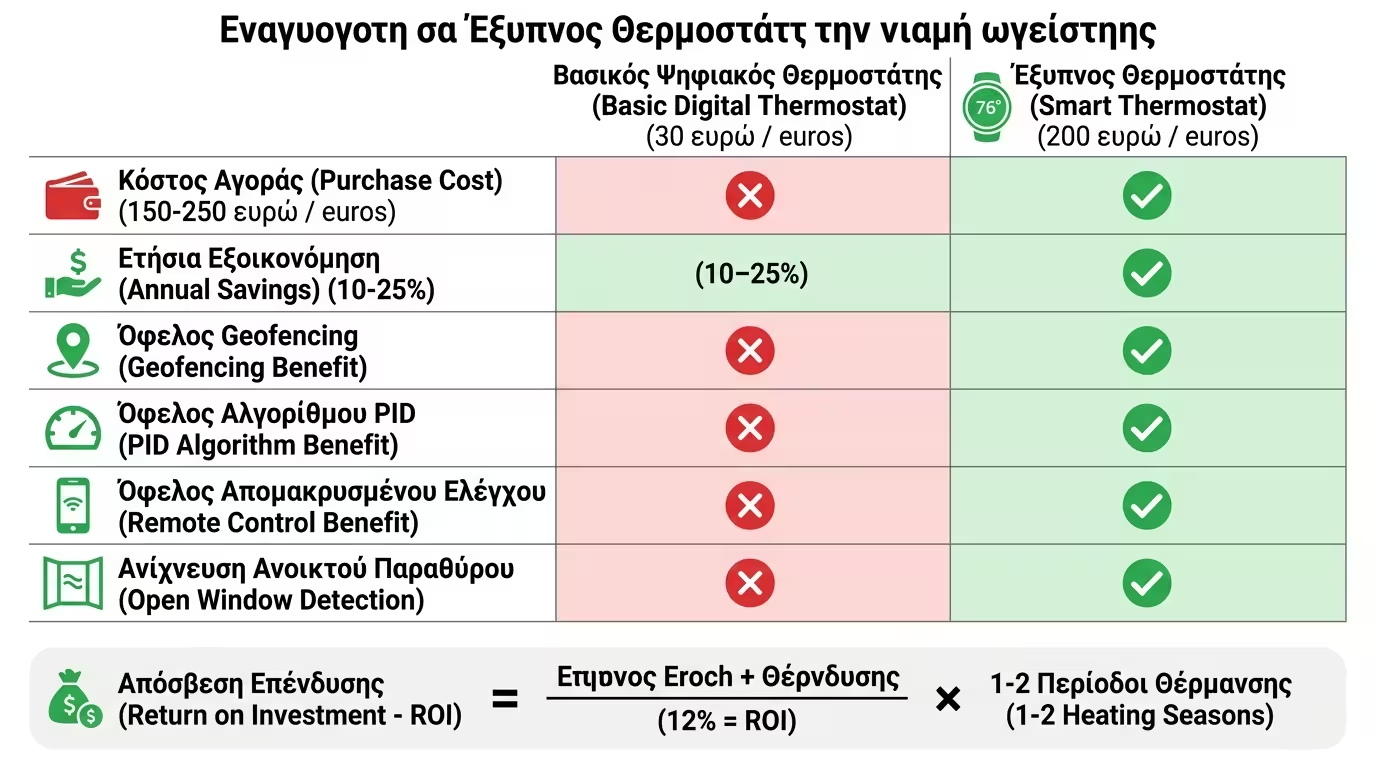
Your life is unpredictable: shift work, sudden departures, kids at tutoring at random hours. Geofencing will immediately cut the hours you heat an empty house - payback within the first winter.
You're retired or permanently work from home (the house needs heating 24/7). A good basic PID thermostat is all you need - and costs far less.
Tado°: the best European choice, excellent compatibility with Greek/European systems (2-wire, OpenTherm). Nest: beautiful design, powerful Machine Learning. Netatmo: affordable, works seamlessly, doesn't require cloud for basic operation.
If you're replacing an old mechanical (bimetallic) thermostat with a smart one, the benefit is double: PID accuracy + Geofencing. If you already have a digital PID, the gain comes solely from the presence automation.
📱 If your schedule is "messy," a smart thermostat will save far more money than it costs. If you're home 24/7, keep the €200 and invest it in insulation.
Return to category.
Go to categoryReturn to the central guide.
Go to guide