❄️ Winter (full load)
At -5 °C and fully booked, the boiler runs at 100% capacity. It's justified - but this scenario represents only 5-10 days per year.
When heating demands are enormous, common sense says: "Buy one huge boiler." But in modern mechanical engineering, that's one of the biggest mistakes.
The solution lies in teamwork and the "Conductor" that coordinates it: the Cascade Controller. Let's see how several small machines decisively outperform a single giant - and how the controller makes them play in perfect harmony.
Imagine a hotel that needs 100 kW of heating at the peak of winter, with -5 °C outside and every room occupied. The owner buys a single enormous 100 kW boiler.
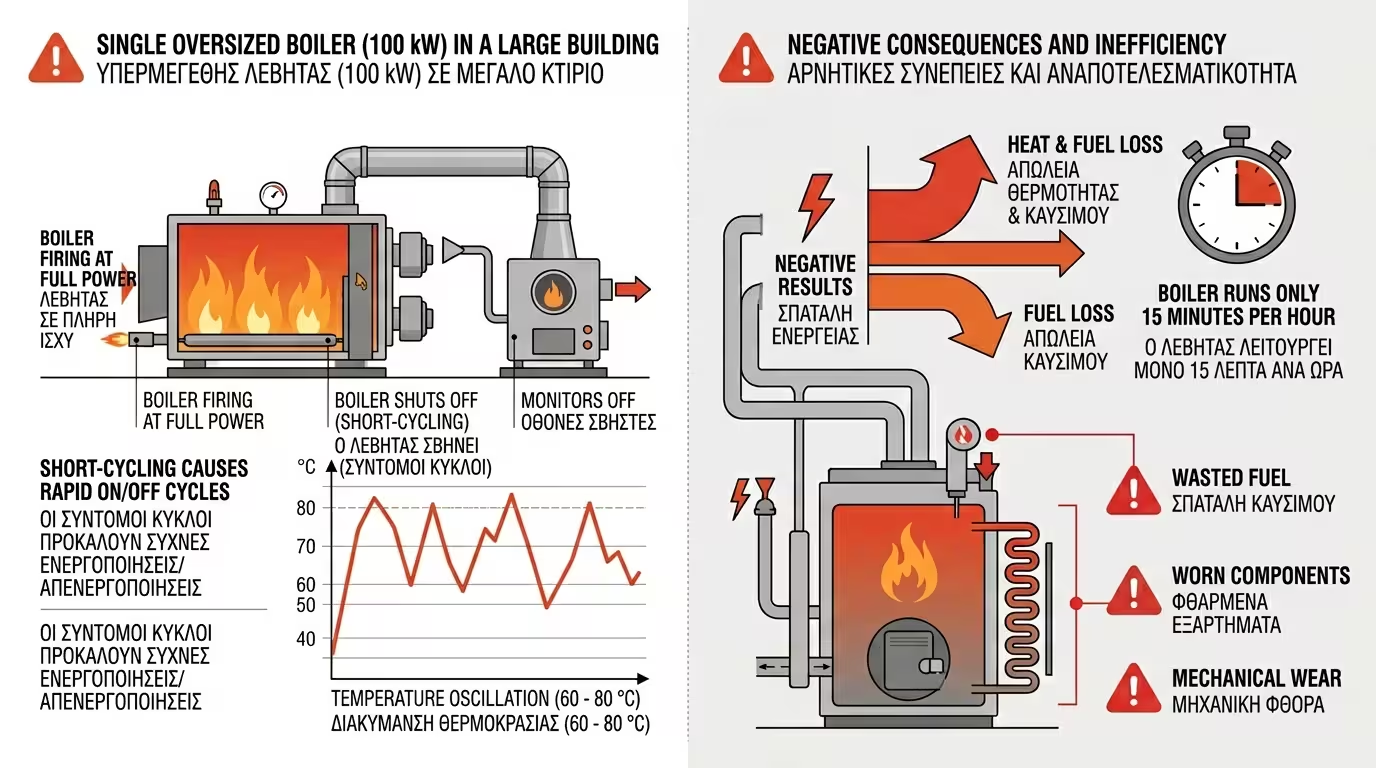
At -5 °C and fully booked, the boiler runs at 100% capacity. It's justified - but this scenario represents only 5-10 days per year.
Building demand drops to 10 kW. The massive 100 kW boiler simply cannot operate at such a low output. It fires up, overheats immediately, shuts down within a minute, and restarts shortly after.
This constant on-off cycling is called Short-Cycling. Every start-up wastes fuel (like restarting a car engine at every traffic light), wears out ignition components, and drastically shortens the boiler's lifespan.
The waste isn't just in fuel. Every on/off cycle creates thermal shock in the heat exchanger. Within 5-7 years, the oversized boiler will need expensive repairs that far exceed the cost difference of a proper system design.
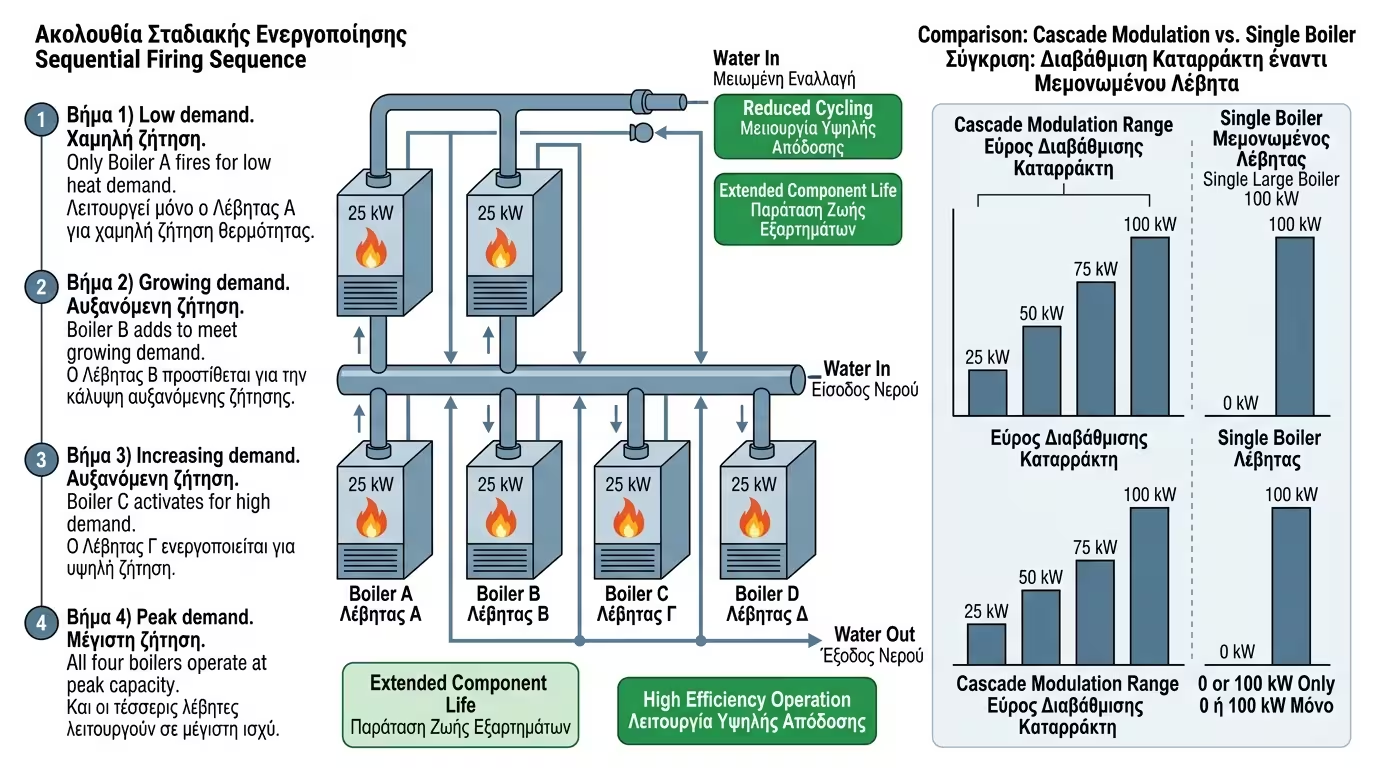
Instead of one 100 kW beast, engineers install four smaller boilers (or heat pumps) of 25 kW each, connected to the same pipework. A Cascade Controller takes command of the entire array.
The Cascade Controller is a central computer - often built into the lead boiler (the "Master"). It takes absolute control of all other appliances (the "Slaves").
On a mild November day (10 kW demand), the controller fires only Boiler #1 at low speed. The other three stay off. Energy savings are enormous.
When a cold snap hits, the controller fires Boilers #1, #2 and #3 at moderate load, keeping #4 in reserve. The system matches the building's needs with pinpoint precision.
Each boiler operates near its rated load instead of at 10% of a giant's capacity. This means zero fuel waste, maximum efficiency, and minimal on/off cycles.
If Boiler #1 is always the first to fire, within 5 years it would be worn out while #4 remains brand-new. The Cascade Controller solves this with a built-in timer.
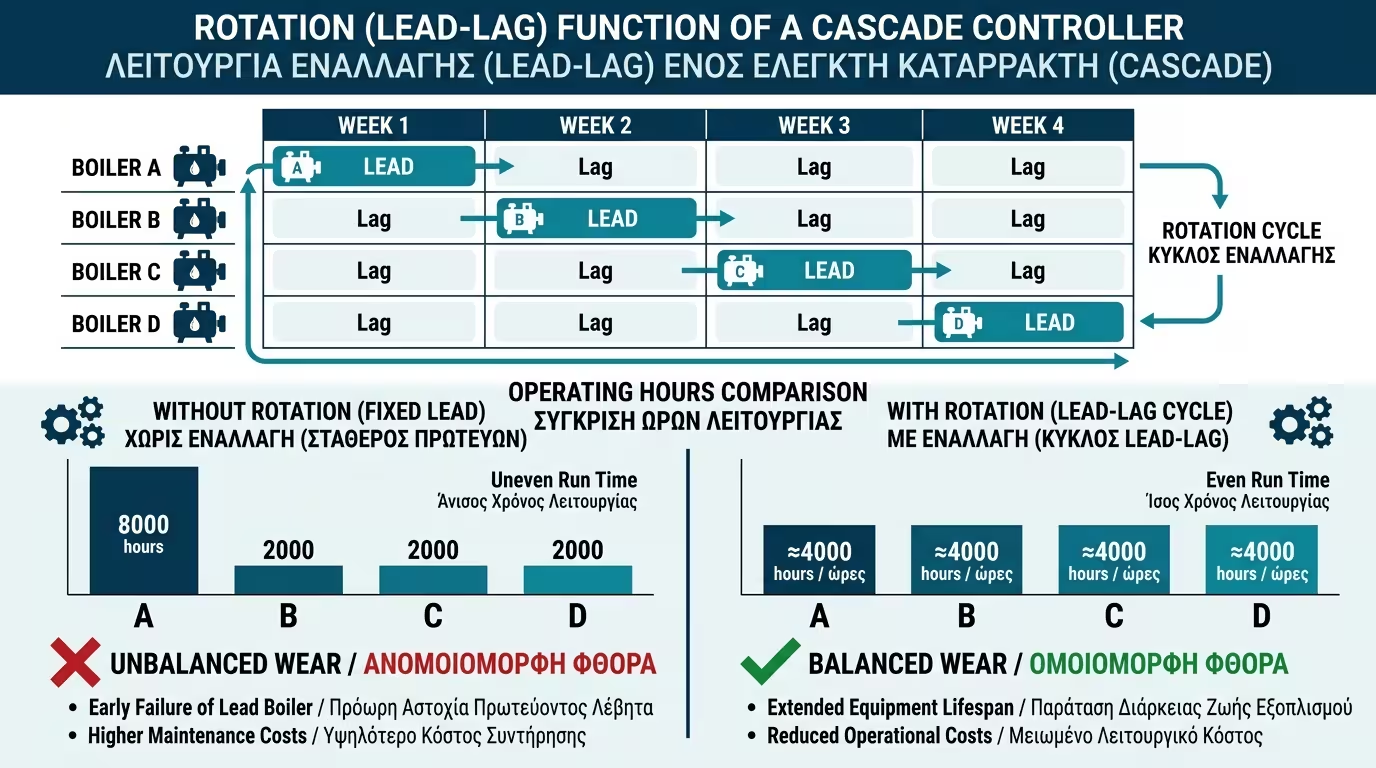
Every week (or after a set number of running hours), the controller changes the start-up sequence. Week one, #1 leads. Week two, #2 takes the lead - and so on.
This way, all machines age simultaneously and equally. None is overloaded. The entire system's service life is maximised.
Many modern controllers log running hours for each appliance individually. If one "runs ahead," the controller automatically moves another to the front of the queue - regardless of the calendar.
In a 4-boiler cascade, every boiler ends up with nearly identical running hours. Services are scheduled together, spare parts are bought in bulk - cutting maintenance costs by 20-30%.
In hospitals, hotels and large buildings, losing heating or hot water is simply not acceptable. With a single large boiler, one breakdown means everyone freezes.
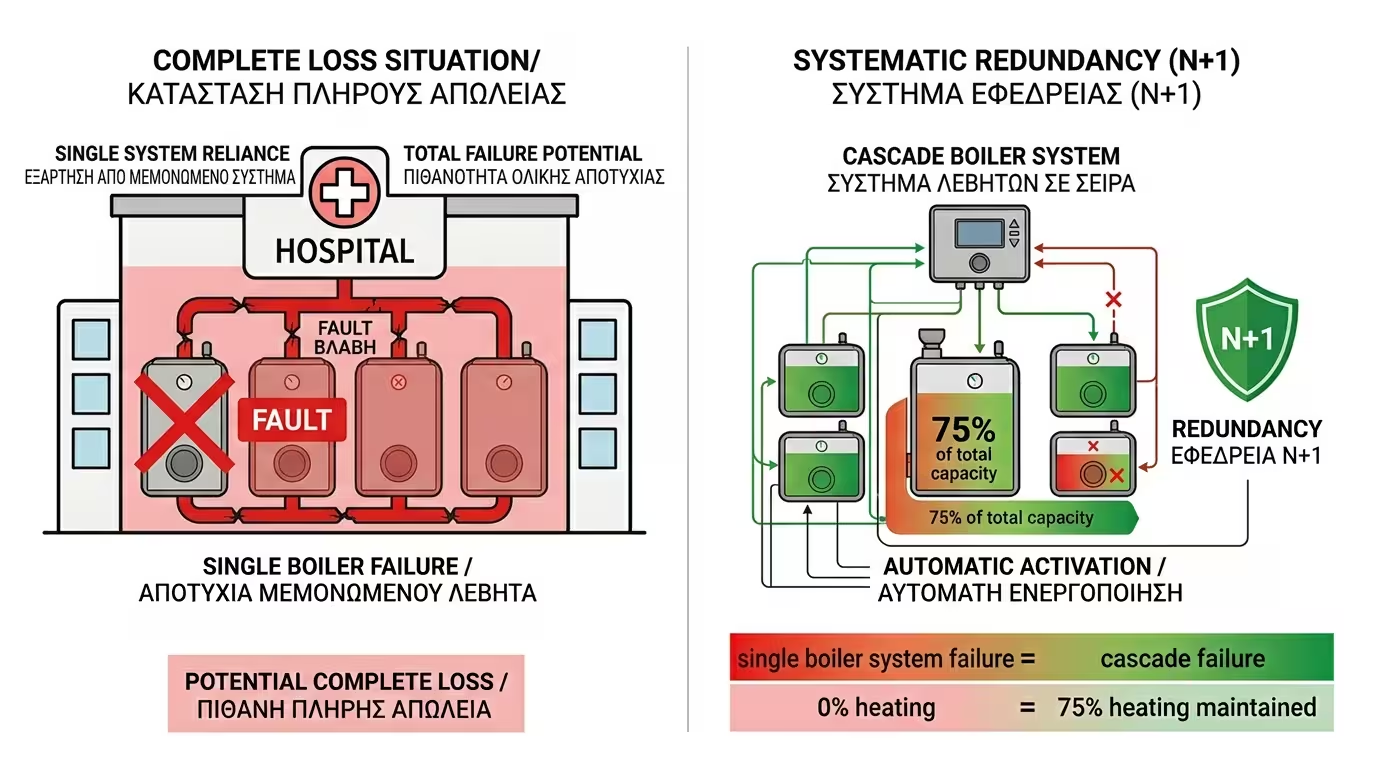
If Boiler #2 develops a fault on Christmas Day, the Controller detects it instantly. It isolates the faulty unit, displays an error code, and commands standby Boiler #4 to take its place.
Nobody in the building will notice that a fault occurred in the boiler room. Heating and hot water continue as normal while the technician receives an electronic notification to schedule a repair.
Under the N+1 rule, one extra machine is installed beyond what is needed. If 3 × 25 kW = 75 kW is required, 4 boilers are fitted. The 4th is the "safety net" for breakdowns or unexpected peak demand.
Hospitals, nursing homes and nurseries are required by regulation to use cascade systems. A heating outage of even 1 hour can endanger vulnerable occupants - redundancy is mandatory.
🏢 The Cascade Controller transforms the boiler room into a living ecosystem. Unbeatable economy, maximum equipment lifespan, and a guarantee that the building will never freeze. The absolute "must" for commercial premises and large complexes.
Return to category.
Go to categoryReturn to the central guide.
Go to guide