Wiring Centres & Thermal Actuators: The Ultimate Temperature Control for Underfloor Heating

In underfloor heating, there are no wall-mounted radiators to fit thermostatic heads (TRVs) to. Kilometres of plastic pipes are buried beneath your tiles, all ending at a metallic box called the Manifold (Collector).

How do we tell the manifold to send hot water only to the bedroom and cut the living room? The answer lies in two words: wiring centre and thermal actuators.

1. The "Muscles": Thermal Actuators

Open the metallic enclosure of the manifold: on the supply bar valves you'll see small plastic cylinders (usually white or blue) with a cable. These are the thermal actuators - the "muscles" that open and close water flow to each room.

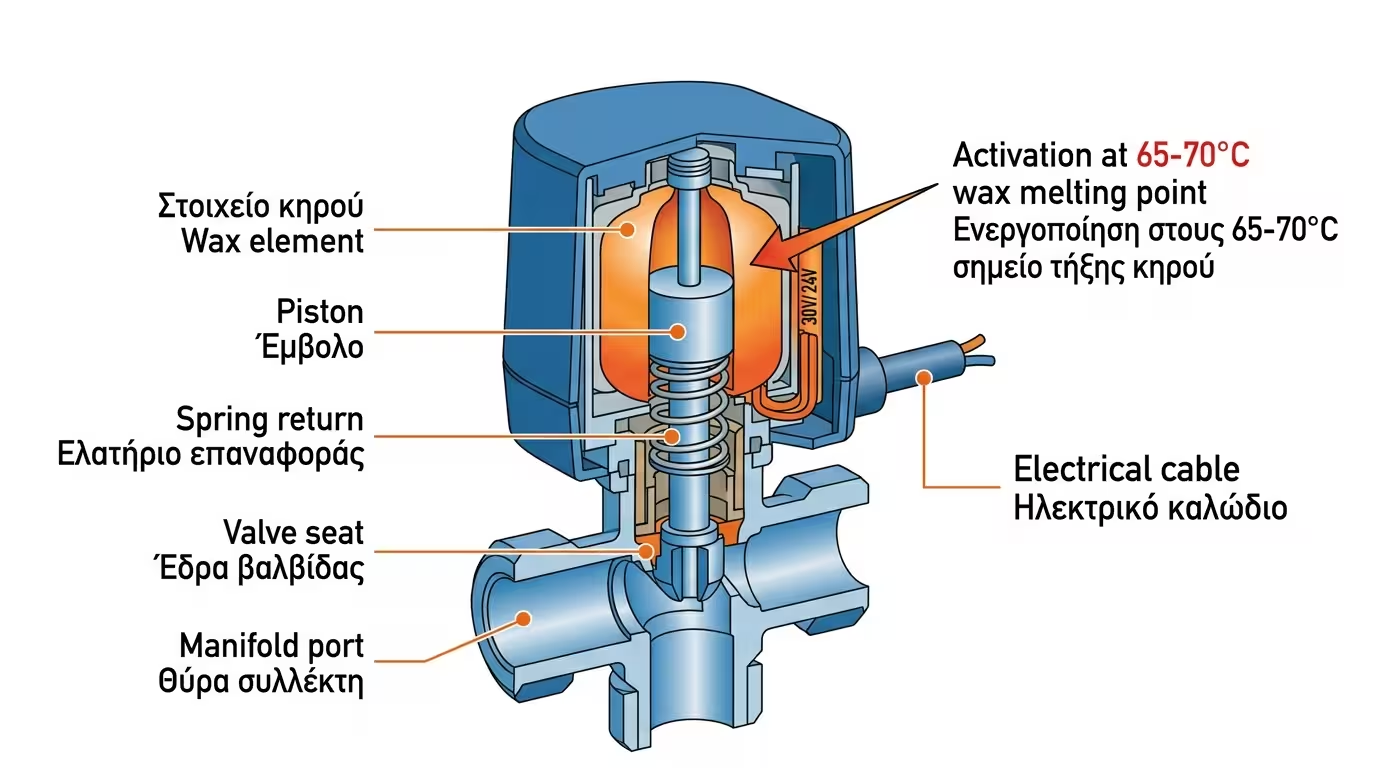
Thermal actuator - wax capsule, plunger, manifold valve

🔇 100% silent

Unlike traditional motorised valves (gears, motor, noise), underfloor actuators use a wax-filled capsule. When powered (230V or 24V), a tiny resistor heats the wax. The wax expands, pushes a plunger and opens the valve - completely silently.
⏱️ Smooth opening (2-3 minutes)

Because the wax heats slowly, the valve opens very gradually and smoothly (about 2-3 minutes). This is actually an advantage: it prevents sudden water hammer - the loud banging heard in pipes when flow changes abruptly.

🔌 NC: Normally Closed

Most actuators are NC (Normally Closed). Without power, the valve stays hermetically shut. This ensures safety: if the power is cut or the actuator fails, the circuit closes automatically and the room cannot overheat.

🔧 Installation

The actuator screws directly onto the manifold valve with a standard M30×1.5 thread. No tools needed - hand-tight is enough. A single cable connects to the wiring centre. Replacement in case of failure takes 2 minutes flat.

2. The "Brain": The Wiring Centre

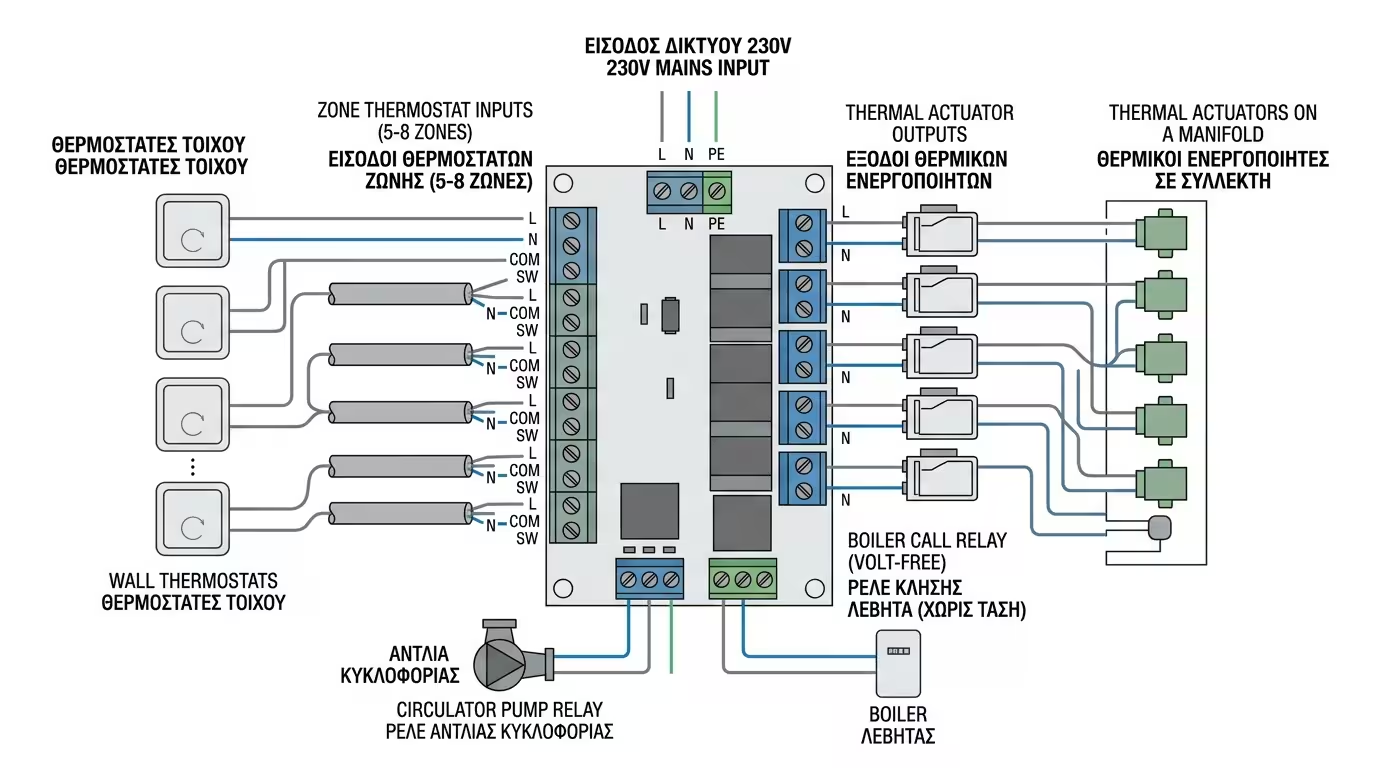
Wiring centre - PCB, pump relay, heat pump command

With 6 room thermostats and 8 actuators on the manifold (larger rooms have 2-3 circuits each), we need a "traffic controller" to route the signals - without short circuits.

📍 Where it goes

Directly above the manifold, inside the metal enclosure. It's a PCB (controller) to which every cable in the house connects: thermostat cables in, actuator cables out.

🔀 Central routing

The PCB reads which thermostat is calling for heat at any moment, then sends power only to the actuators that correspond to the correct room. 6 channels, 8 actuators, zero confusion.

⚡ Boiler Interlock

The wiring centre doesn't just open valves. It has two critical relays: once it confirms at least one valve has opened, it starts the circulator pump and the heat pump. When all rooms reach setpoint, it shuts everything down - zero energy waste.

🛡️ Pressure protection

Many modern centres include anti-collision logic: they prevent all valves from closing simultaneously, or signal an Inverter circulator to reduce speed, preventing water hammer and pipe whistling.

3. The "Command Chain": How Everything Works Together

Let's walk through a real scenario step by step: the child's bedroom has dropped to 19°C while you've set it to 21°C.

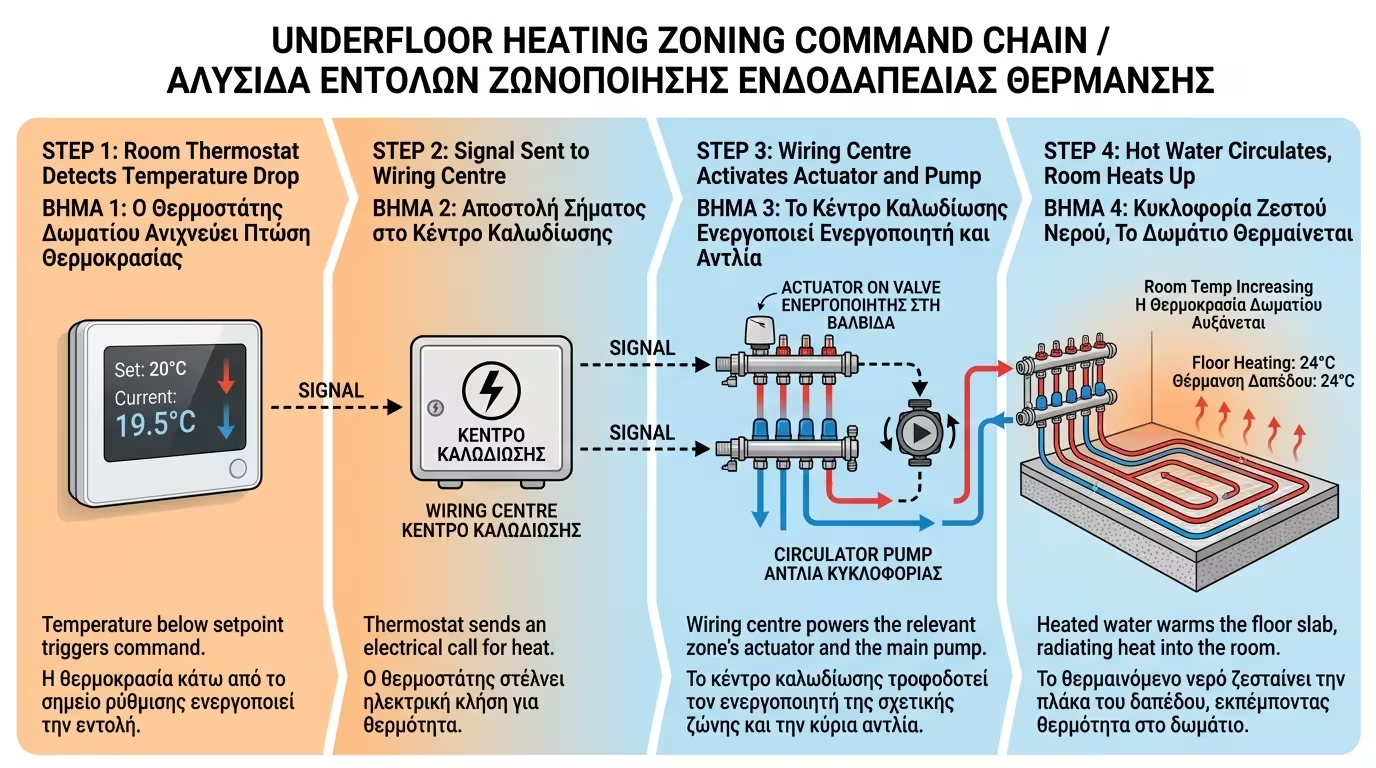
Command chain: thermostat → wiring centre → actuator → valve → heat pump

1️⃣ The request

The bedroom's PID thermostat reads 19°C (setpoint 21°C). It sends an electrical signal (click) to the wiring centre through the wall cable.

2️⃣ The routing

The wiring centre reads the "Bedroom" channel and sends power only to the 2 thermal actuators corresponding to the bedroom's pipe loops - all other rooms remain unaffected.

3️⃣ The opening

The actuators heat up, the wax expands, the valve opens smoothly over 2-3 minutes. Hot water begins circulating only through the pipes under the bedroom floor.

4️⃣ System start

Once the relay confirms the valve is open, the centre commands: circulator ON, heat pump ON. When all 6 rooms reach setpoint, everything shuts down automatically.

4. The Modern Wireless (RF) Alternative

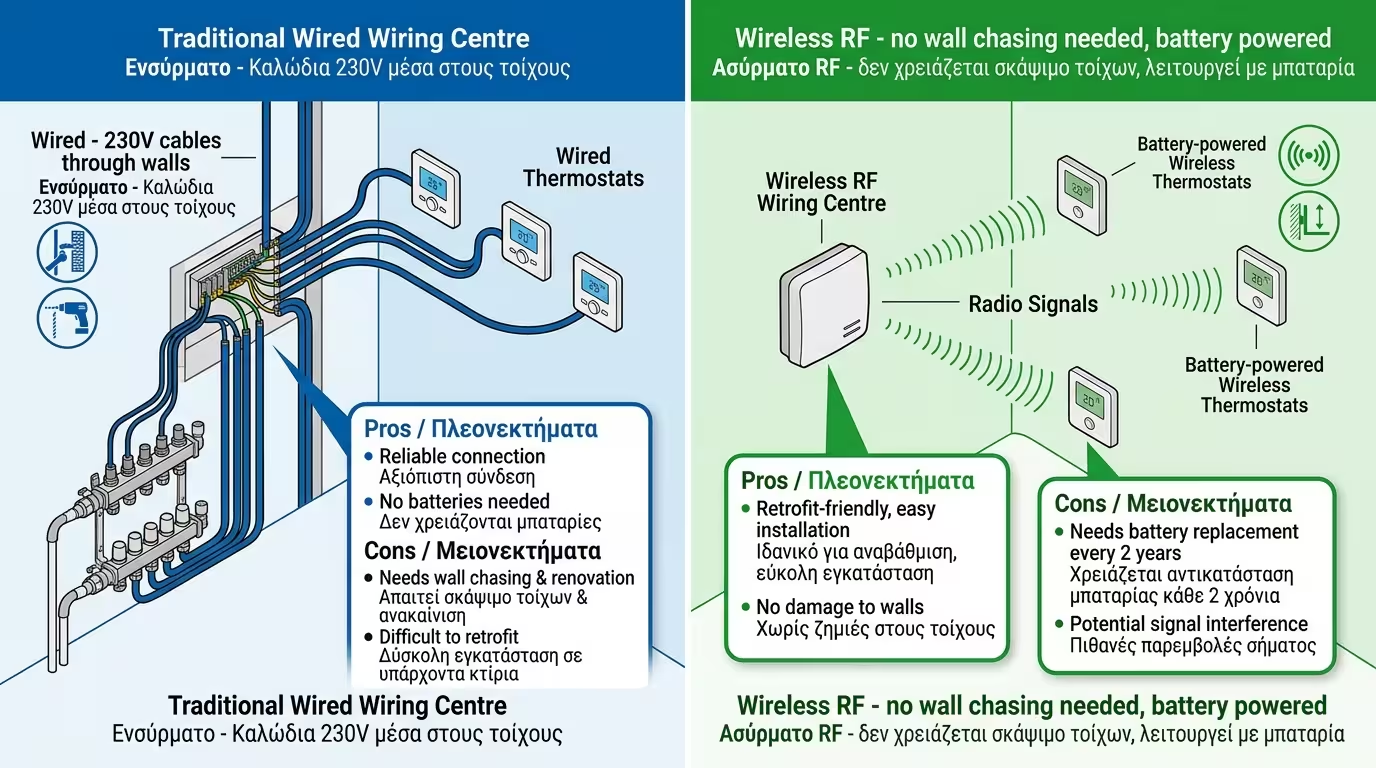
What if you renovated, installed underfloor heating, but the electrician forgot to run thermostat cables? No problem! Modern wiring centres are wireless (RF).

Wireless RF wiring centre - battery-powered thermostat, no renovation needed

📡 How it works

Wireless thermostats with batteries (2×AA, lasting 2 years) mount on walls. They communicate wirelessly (868 MHz or 2.4 GHz) with the central PCB at the manifold. The PCB still powers the actuators via wires. Result: zero holes in walls.

🏗️ Ideal for renovation

In existing buildings, chasing new cable channels is a nightmare (broken plaster, dust, cost). The RF solution eliminates the problem entirely. Only the actuator cables (short, inside the manifold box) remain wired.

📱 Smart Home integration

Many wireless centres (e.g. Honeywell evohome, Watts Vision) offer a mobile app, daily/weekly scheduling per zone, and integration with Home Assistant, Alexa or Google Home.

🎯 Summary

Underfloor heating is a massive energy store. Without proper control, it wastes electricity. The combination of a wiring centre plus silent actuators ensures hot water goes only where needed, exactly when needed.

🏠 Underfloor heating + Wiring Centre + Thermal Actuators = Ultimate zoning, zero noise, and zero energy waste. For renovations, the wireless (RF) alternative is a game-changer.

Related Articles

Preview