⚙️ Operating principle
As the temperature rises, one metal expands faster - forcing the strip to bend. When it bends enough, it makes or breaks an electrical contact - switching the boiler on or off.
The thermostat is the switch that tells the boiler or heat pump "start, I'm cold" or "stop, I'm warm". It sounds simple, but the way each device senses temperature is the difference between night and day.
Discover why that old, round thermostat with the dial and the characteristic "click" is literally stealing your money every winter - and how a €25-50 swap is enough to save 10% on fuel.
These are the classic wall thermostats with a dial that goes "click" as you turn it. Inside there is no circuit board and no digital component. They work using a bimetallic strip: two different metals bonded together, expanding at different rates as the room heats up.
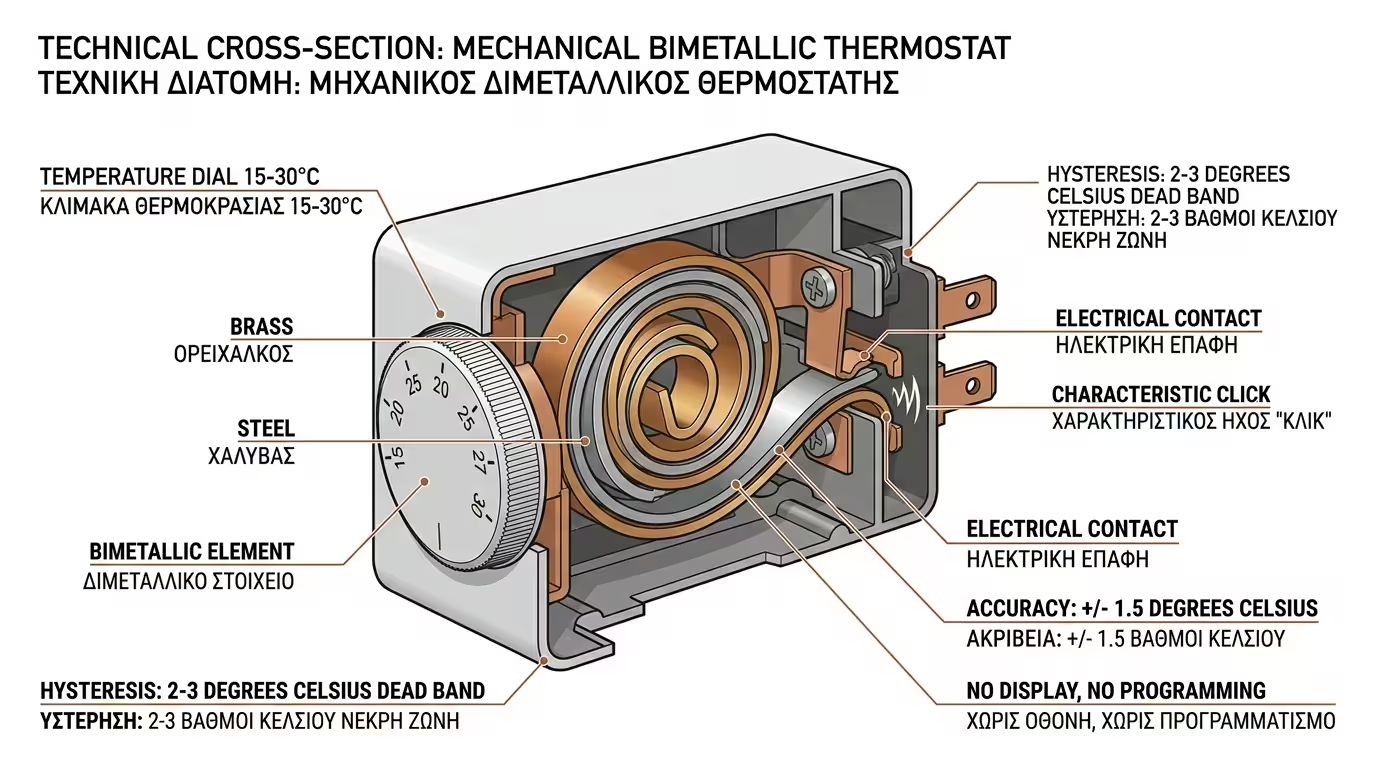
As the temperature rises, one metal expands faster - forcing the strip to bend. When it bends enough, it makes or breaks an electrical contact - switching the boiler on or off.
There is no processor. The thermal inertia of the metal means it lags behind the actual room temperature. Result: the boiler keeps firing unnecessarily until the metal finally catches up.
Purchase: €5-15. Installation: a simple electrician in 5 minutes. Hidden cost: +12-15% fuel waste per heating cycle due to hysteresis. Found in millions of Greek homes, mainly in pre-2010 installations.
Typical accuracy: ±2-3°C. No display, no numerical temperature read-out, no scheduling. You simply turn the dial "a bit more" or "a bit less" - and hope for the best.
Imagine you set your mechanical thermostat to 20°C. What actually happens?
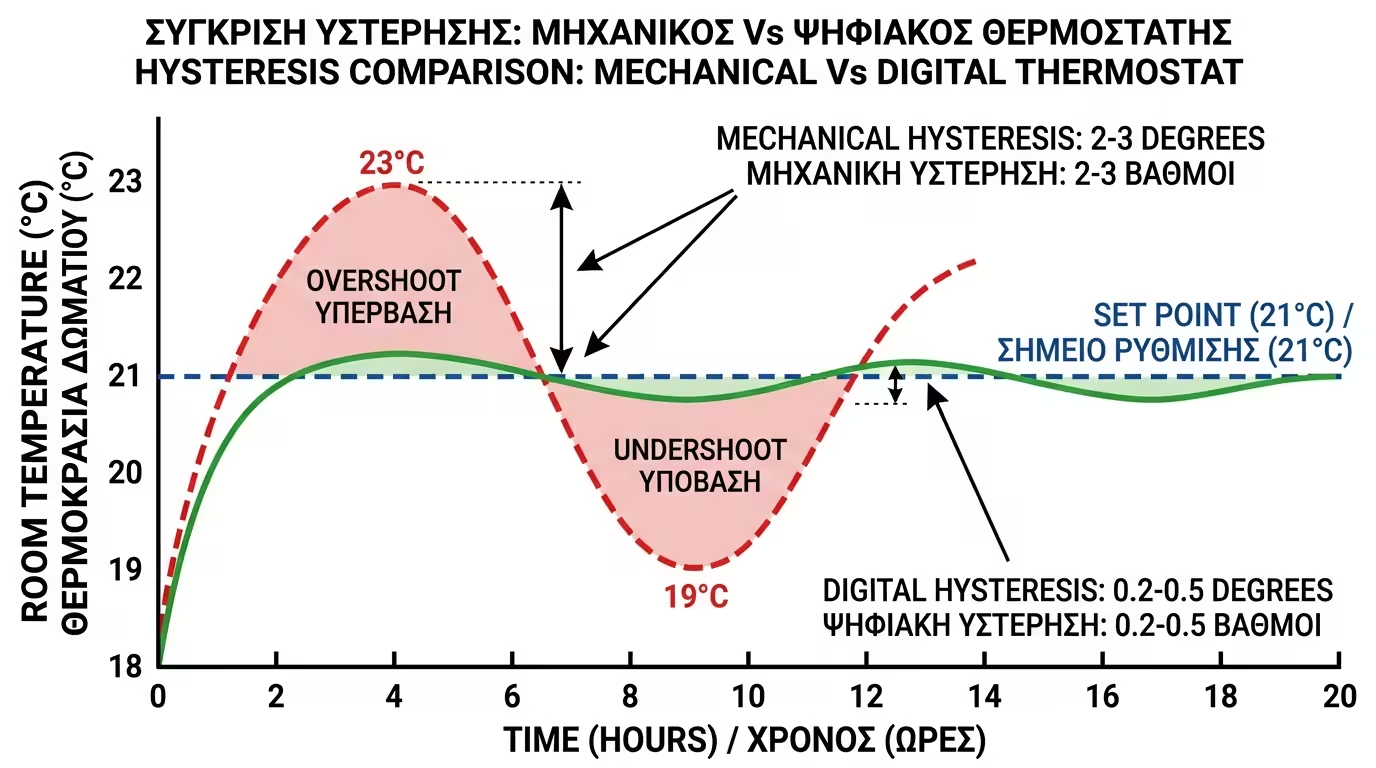
The radiator fires. The room reaches 20°C, but the metal strip hasn't bent yet. The boiler keeps burning until the room hits 22°C. Then it "clicks" off. You start sweating.
The room cools: 20°C … 19°C … The boiler stays off. The metal hasn't un-bent yet. It waits until the room drops to 18°C before triggering the boiler again. You shiver on your sofa.
The result: instead of a steady 20°C, you live in a "roller-coaster" between 18°C and 22°C. This 4°C swing is called hysteresis (or dead zone) - and it costs energy every single cycle.
Engineering rule: every 1°C above 20°C → +6-8% energy consumption. So those 2 degrees of overshoot cost you 12-15% extra fuel per cycle.
Digital thermostats replace the metal with an electronic thermistor (NTC/PTC): a micro-sensor that reads air temperature with decimal-point accuracy - i.e. 0.1°C resolution.
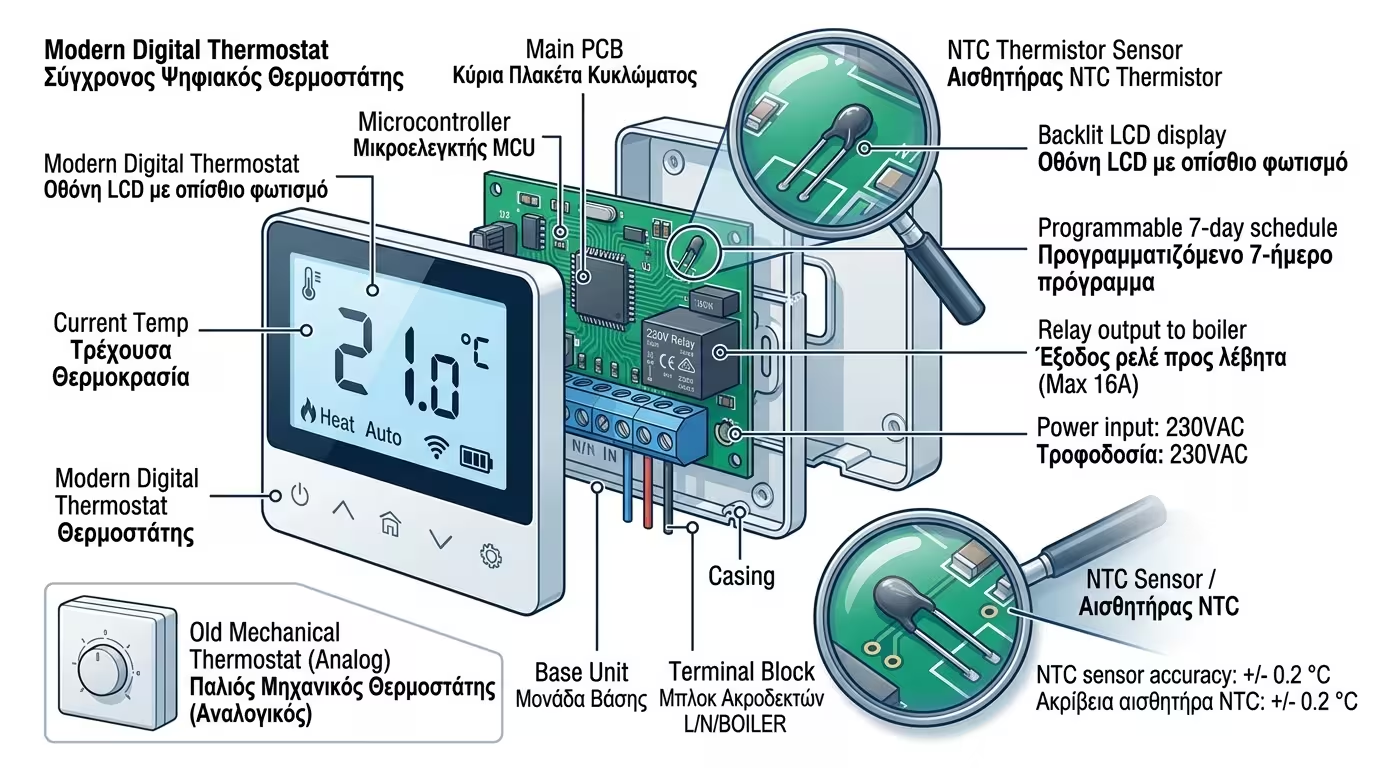
A good digital thermostat has a hysteresis of only 0.2°C to 0.5°C. Set 20°C → fires at 19.8°C → cuts off at 20.2°C. The temperature stays as a near-flat line.
You see the exact temperature on a digital display (e.g. 20.3°C). Many digital thermostats offer daily/weekly scheduling - lower at night, warm up before you wake.
The NTC electronic sensor reacts in seconds - not minutes. No metal strip to bend. The "cut the boiler" command arrives exactly when needed.
A basic digital thermostat (no Wi-Fi, no app) costs €25-50. Swapped in 10 minutes by an electrician. Payback is literally in the first month of winter.
The immutable engineering rule: every +1°C above 20°C → 6-8% more energy consumption. The mechanical thermostat forces a 2°C overshoot → 12-15% waste per cycle.
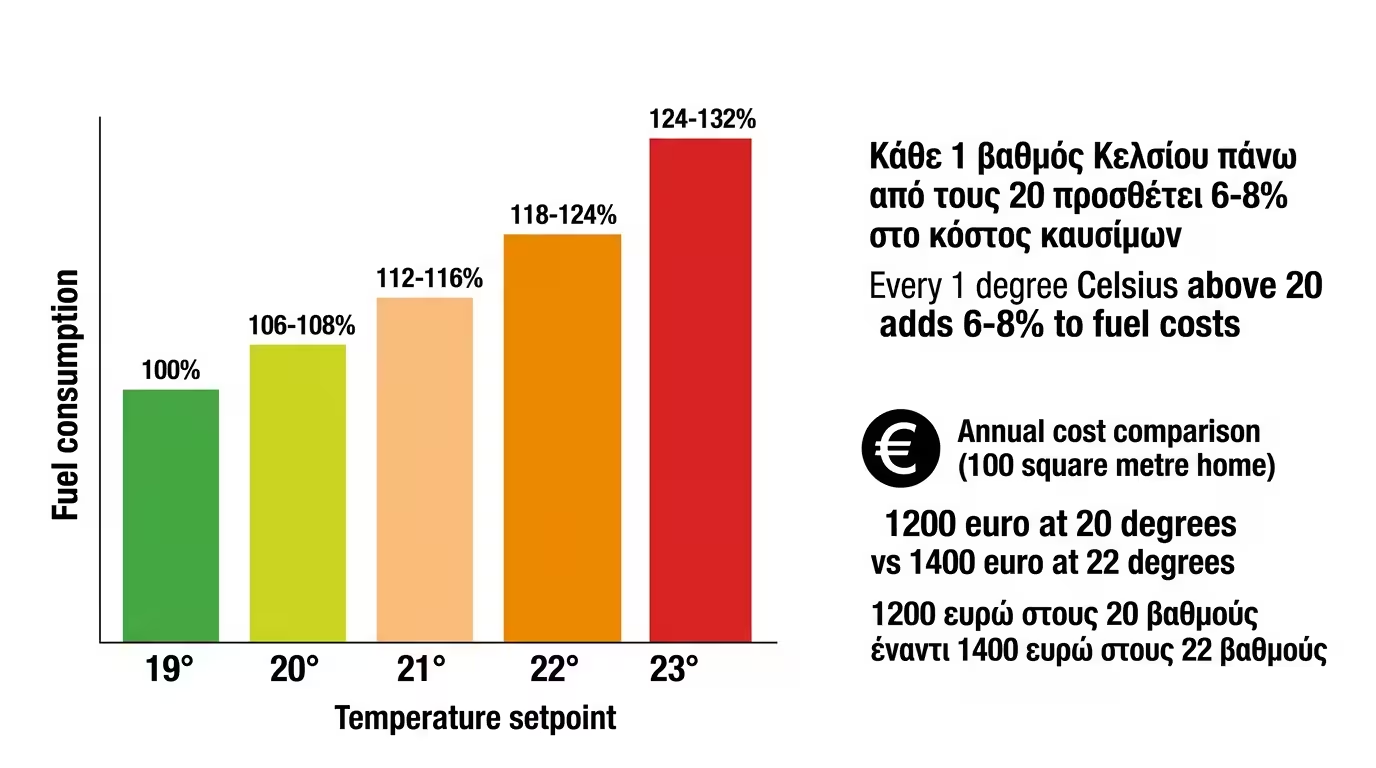
Every time the mechanical thermostat overheats the room to 22°C instead of 20°C, it doesn't waste a small amount - it wastes a staggering 12-15%. In a home spending €1,500/winter, that's €180-225 wasted.
The digital thermostat cuts the boiler at 20.2°C instead of 22°C. It eliminates the 2°C overshoot. Result: ~10% lower consumption without any other measure - no boiler change, no insulation, no renovation.
Home 120 m², annual heating €1,500. Digital thermostat: €40. Savings: ~€150/year. Payback: first month. 5-year ROI: €750 profit.
If your living room still has a dial thermostat that goes "click", you're losing money every day you heat. Replacement is the cheapest and most immediate upgrade you can make. One afternoon is all it takes - and your wallet will thank you every winter.
🔑 The digital thermostat isn't a luxury - it's the cheapest upgrade (€25-50) that cuts fuel by 10% by eliminating hysteresis. If yours still "clicks", it's time for a change.
Return to category.
Go to categoryReturn to the central guide.
Go to guide