🧠 Decentralised system
There is no central "brain" that, if it fails, brings everything down. Every switch, every thermostat, every light has its own microchip. If one fails, the rest continue working normally.
Imagine a building like the United Nations: air-conditioning from Japan, alarm from America, lighting from Germany, shutters from Italy. How do they all "talk" to each other?
To press a single "Away" button and have lights off, shutters down, alarm armed and HVAC in Eco Mode - you need Communication Protocols: the invisible interpreters of the building.
If you're building a luxury villa today, KNX is the undisputed king of Smart Home. A single green cable runs through the walls of the entire house.
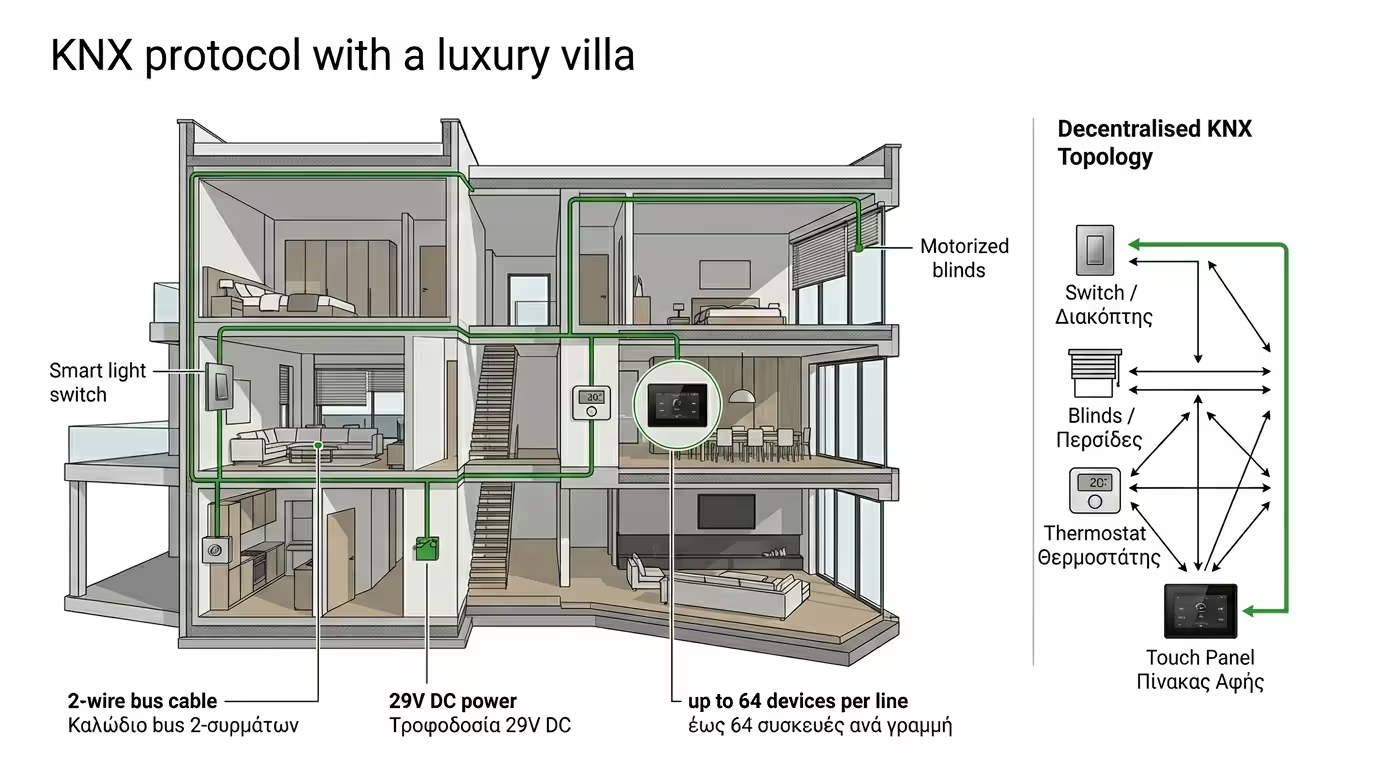
There is no central "brain" that, if it fails, brings everything down. Every switch, every thermostat, every light has its own microchip. If one fails, the rest continue working normally.
You press the glass KNX switch and request 22 °C. The switch sends a "telegram" through the green cable. The Heat Pump reads it and obeys - along with fan coils, circulators and motorised dampers.
You can control temperature, lights and music from the same switch. This eliminates the "ugliness" of multiple different controls on the walls. One panel replaces 4-5 old switches.
A KNX installation costs 5-15% of the electrical budget for a new-build home. For a 200 m² villa, that means approximately €5,000-15,000 (depending on complexity). Only worthwhile for new builds.
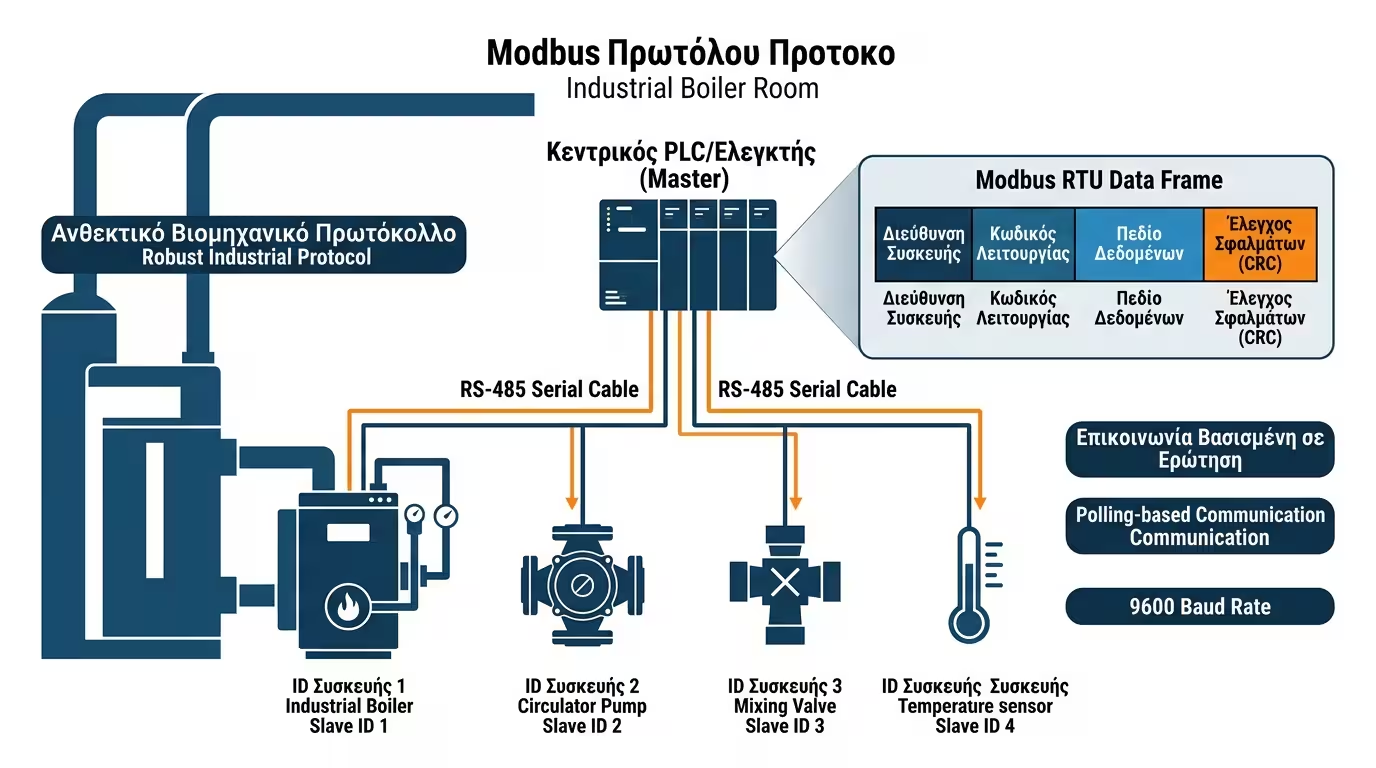
Created in 1979 - possibly the oldest, yet the most reliable industrial protocol. It's the "language of machines" and you'll find it in every boiler room.
A central controller (the "master") continuously polls the other devices (the "slaves"): "What's your temperature?", "How much power are you consuming?" The architecture is extremely simple.
Energy meters, Inverter circulators, Chillers - nearly all of them "speak" Modbus. They send data to the technician's central display. Cheap, robust, and never freezes.
Modbus RTU: serial RS-485 cable (2 wires), ideal for short distances within a boiler room. Modbus TCP: runs over Ethernet - longer distances, same reliability.
Almost every industrial HVAC device supports Modbus out of the box. No expensive Gateways needed. A technician with a laptop can "talk" to any machine in 5 minutes.
If KNX is for villas, BACnet is designed for skyscrapers, hospitals, airports and massive hotels. The name stands for Building Automation and Control networks.
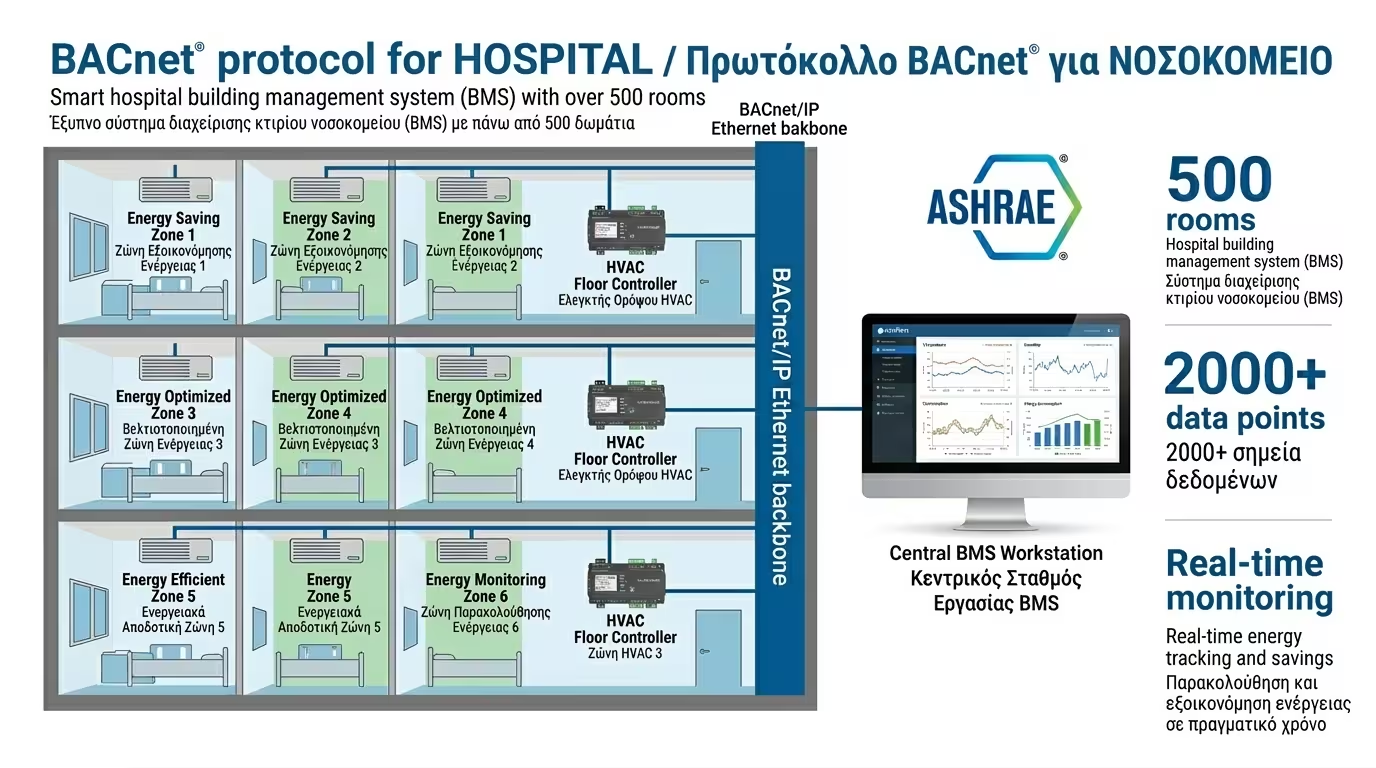
Designed by the American Society of Heating, Refrigerating and Air-Conditioning Engineers (ASHRAE) specifically for HVAC applications. It's not a general protocol - it "speaks" the language of climate control.
It can handle tens of thousands of data points simultaneously: temperature, humidity, CO₂, fan speeds in 500 rooms - all on a single screen.
A hospital engineer sits in front of one screen viewing live energy consumption charts, adjusting everything with a click. If an operating theatre needs 18 °C instead of 22 °C, the change happens in seconds.
BACnet is an open standard (ISO 16484-5). This means a Carrier chiller, a Trane AHU and a Siemens controller can "talk" without a Gateway - eliminating vendor lock-in.
Here lies the biggest trap for anyone building a Smart Home. You buy a €15,000 VRV system - but it "speaks" Japanese while your KNX speaks German!
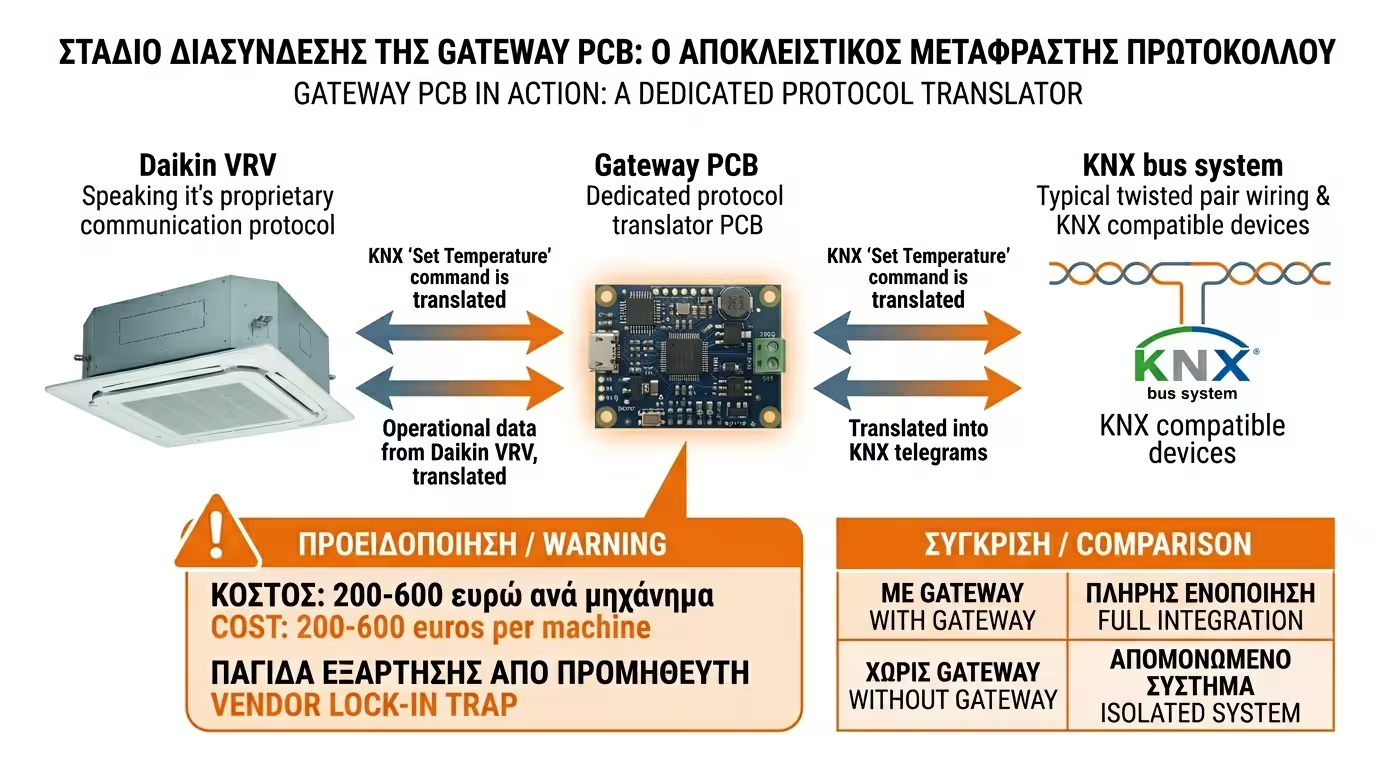
It's a special "translation" board (e.g. Daikin to KNX Gateway). It converts commands from one protocol to another. Without it, machines remain "isolated."
A Gateway costs €200-600 per machine. In a home with 4 VRV indoor units, you need at least 1 Gateway per indoor unit - that means €800-2,400 in additional cost.
Before ordering any heating/cooling equipment for a smart home, ask: "Is there a Gateway to connect it to my KNX / Modbus?" If the answer is "no," the machine will only work via its own remote control.
Prefer machines that natively support your home's protocol (e.g. a heat pump with built-in Modbus). You save the Gateway cost and avoid compatibility headaches.
🏢 Wired protocols (KNX, Modbus, BACnet) are the "nervous system" of a Smart Building. Security from hackers, independence from Wi-Fi, absolute reliability. Plan them BEFORE you build - otherwise your automation will remain half-baked.
Return to category.
Go to categoryReturn to the central guide.
Go to guide