🚛 The truck analogy
The boiler cuts at 20°C, but the radiators keep emitting for 15-20 minutes. Room temperature overshoots to 21.5°C. That's Overshoot: energy consumption you never asked for.
Even if your digital thermostat cuts exactly at 20°C, the radiators (or underfloor piping) are still full of 70°C water. That "hidden" heat will keep radiating for 20 minutes - pushing the room temperature past the target (Overshoot).
To solve this, engineers borrowed an algorithm from robotics and put it on your living room wall. Let's meet the PID thermostat.
Imagine a heavy truck (your home) trying to stop exactly on a Stop line (20°C). A simple ON/OFF thermostat keeps the throttle down until the line. But the radiators are full of 70°C water - they'll keep warming the room even after the boiler shuts off.
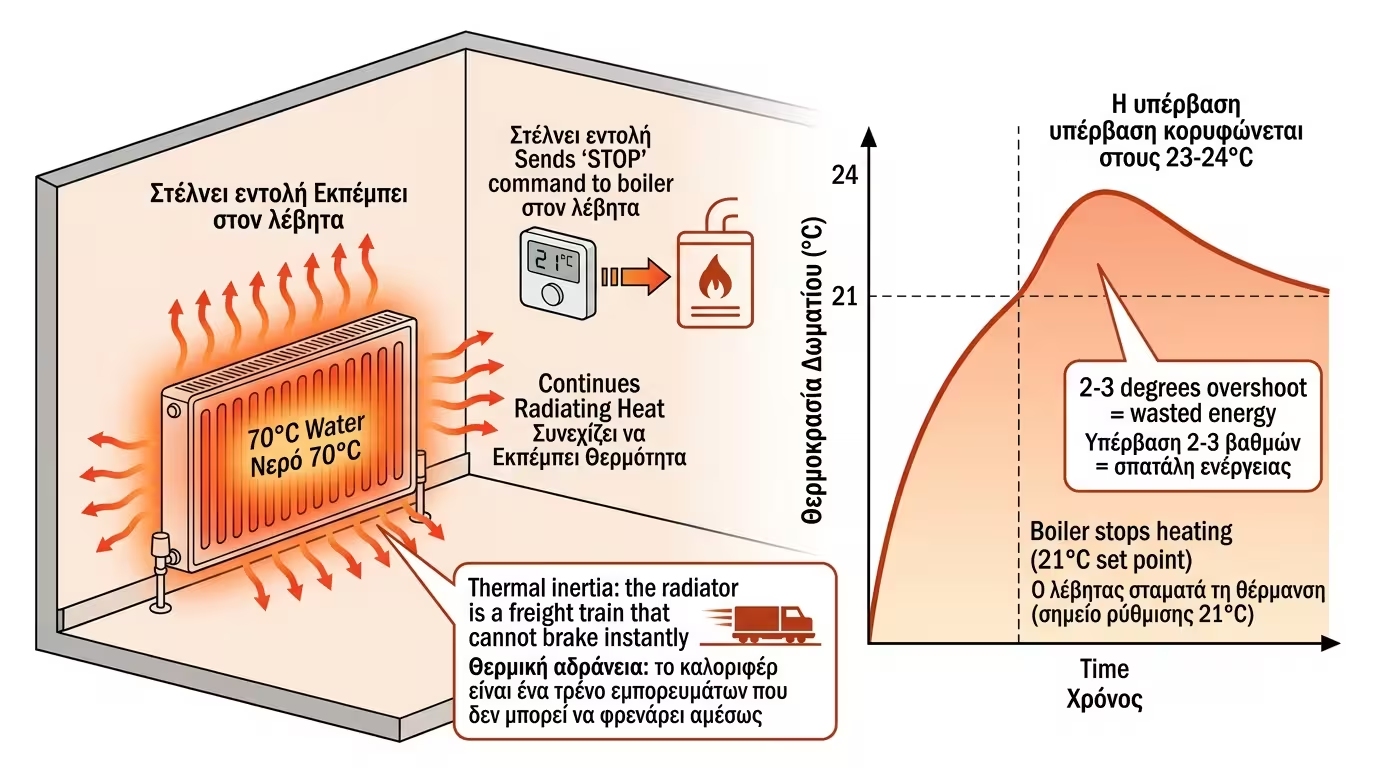
The boiler cuts at 20°C, but the radiators keep emitting for 15-20 minutes. Room temperature overshoots to 21.5°C. That's Overshoot: energy consumption you never asked for.
The opposite: the thermostat fires at 20°C, but the radiators need time to heat up. The room dips to 18.5°C before warmth arrives. Overshoot + Undershoot = 3°C oscillation.
Every 1°C above 20°C = +6-8% energy consumption. Overshoot is invisible on the thermostat display - but very visible on your bill. With underfloor heating, the swing without PID can reach 4-5°C.
High thermal mass = larger overshoot. Homes with underfloor heating, old cast-iron radiators, or thick concrete slabs. In these homes, PID isn't a luxury - it's a necessity.
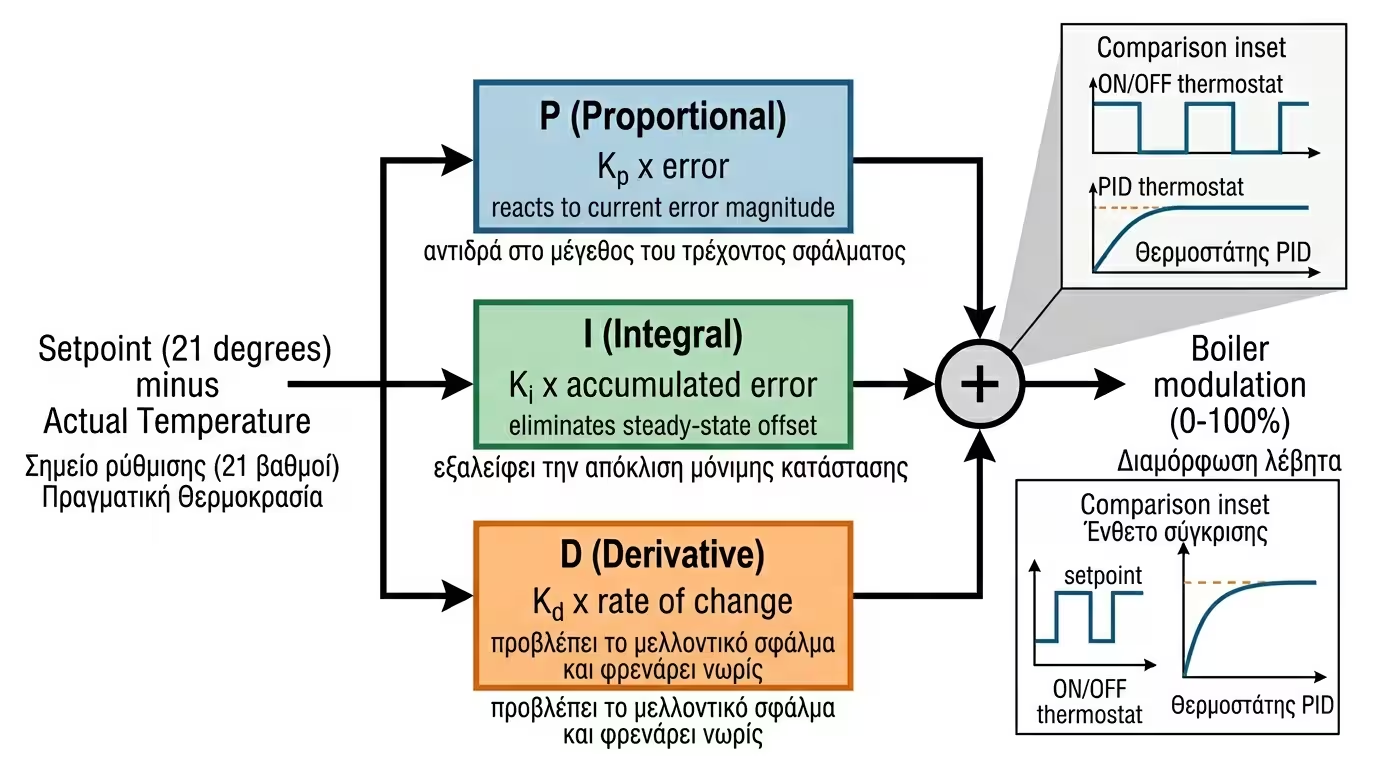
The letters PID describe three mathematical parameters that make the thermostat think like a skilled driver: it knows to "hit the brakes" before reaching the Stop line.
Looks at now. How far is the current temperature from the setpoint? At 15°C targeting 20°C, P commands 100% output. As it approaches (18°C… 19°C), P proportionally reduces power.
Looks back. If the room is stuck at 19.5°C, I accumulates the time off-target and delivers an extra boost to overcome losses from poor windows or a cold snap.
Looks ahead. The magic ingredient. D monitors how fast the temperature is rising. If it sees rapid warming, it cuts the boiler at 19.6°C - knowing the residual heat in the radiators will coast the room to exactly 20.0°C.
Zero Overshoot. The temperature touches 20°C like an athlete braking 30 metres before the wall. The boiler stops short-cycling (on-off every 3 minutes) and consumption drops noticeably.
For the first 3-5 days, the PID "makes mistakes" - on purpose. This process is called Auto-Tuning: it fires the boiler, shuts it off, and simply… observes.
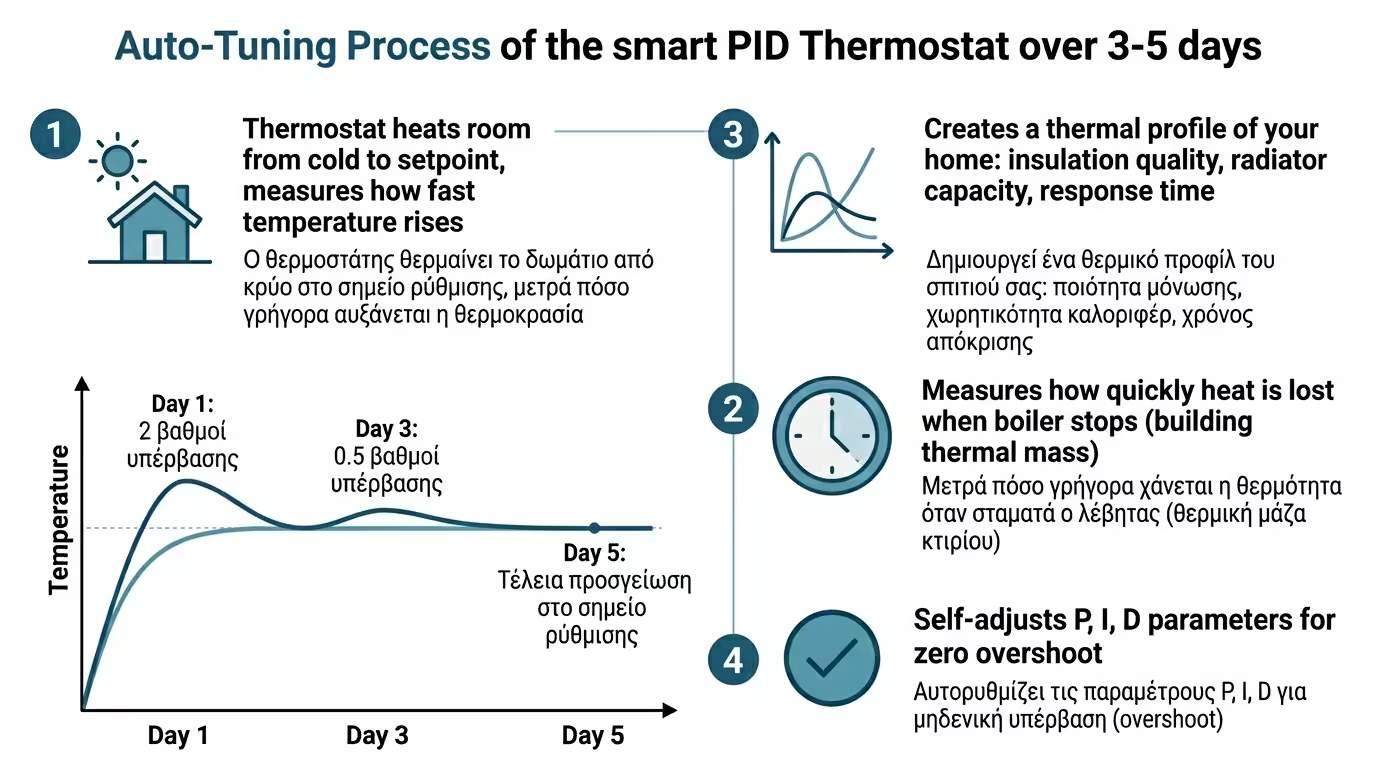
How long your specific room takes to heat up. How fast it cools down. How massive the radiators are. How well insulated the walls are. It builds a digital thermal profile of your home.
From day 5 onwards, it operates with surgical precision. The boiler stops short-cycling and runs in long, smooth cycles - less wear, less consumption.
The PID never stops learning. If the season changes, if you close a window, or if 10 guests arrive in the living room, it adapts automatically to the new reality.
The most common "fault": the user changes the setpoint every day. PID needs stability to learn. Set 20°C, leave it for 5 days - and watch the magic.
If you have underfloor heating or old cast-iron radiators, a simple ON/OFF digital thermostat is the wrong choice. The concrete slab takes hours to heat - and hours to cool. Only PID can "predict" this behaviour.
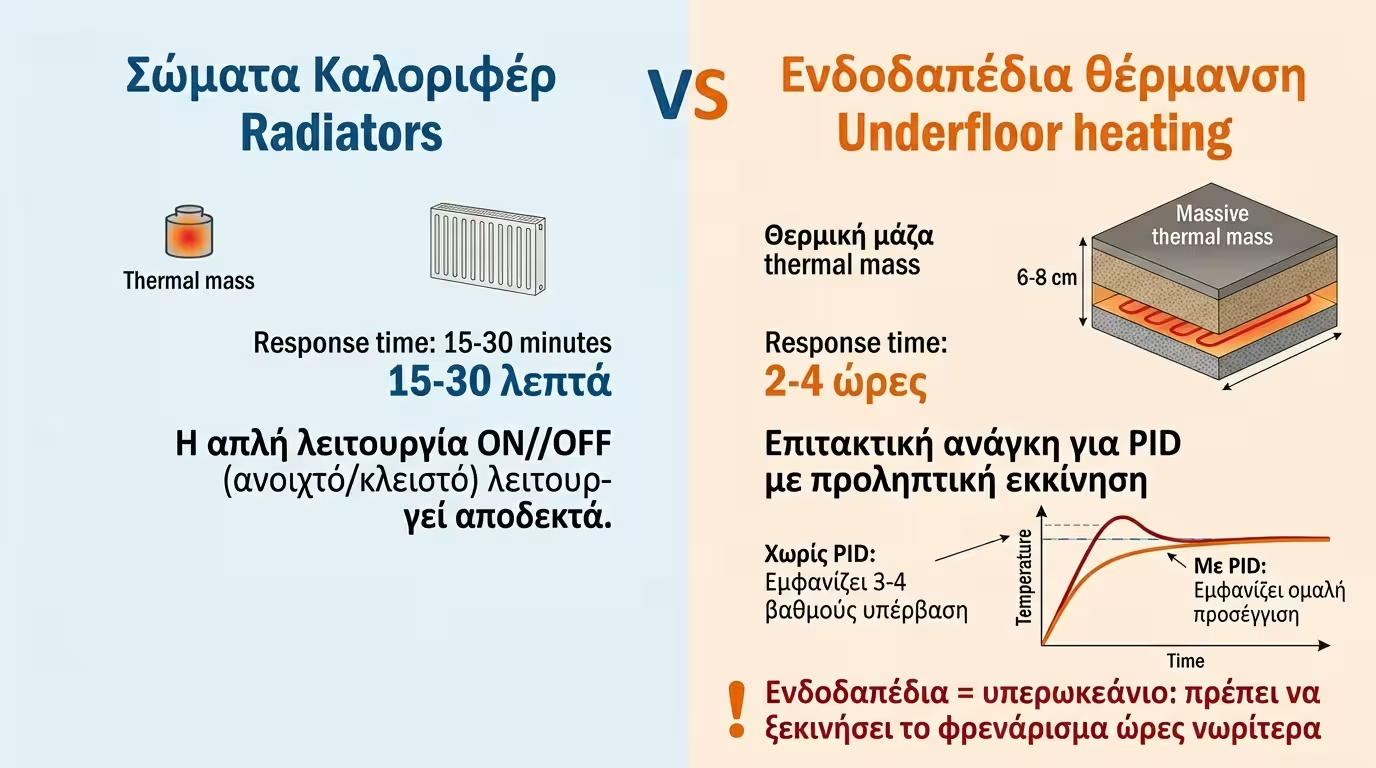
The concrete slab (5-7 cm) needs 2-4 hours to reach temperature. Without PID, the boiler "overheats" the slab to 28°C instead of 25°C - wasting massive energy.
Old cast-iron sections weigh 30-50 kg each. Their thermal mass means 20-30 minutes of "silent" emission after shutdown. Without the D-term, Overshoot is guaranteed.
PID is a perfect match for inverter units. Instead of ON/OFF, PID modulates demand proportionally - the heat pump "accelerates" or "brakes" smoothly at the ideal COP.
PID isn't a gadget for geeks - it's the autopilot that "brakes before the finish line". If anything in your home heats slowly or cools slowly, PID is the only correct choice.
🧠 PID "sees" present, past and future. It learns your home's thermal mass in 3-5 days. It eliminates Overshoot. For underfloor or cast-iron systems, it's essential.
Return to category.
Go to categoryReturn to the central guide.
Go to guide