Bypass Valves (Differential Pressure Valves): The Circulator's Lifeline in Zoned Systems

You've installed thermostatic heads (TRVs) on your radiators or thermal actuators on the manifold - great for savings. But what happens when all rooms reach temperature simultaneously and every valve shuts?

The circulator pump (the water system's "heart") will be pushing desperately against a wall! Let's see how the bypass valve saves your equipment from "cardiac arrest."

1. The Problem: The "Blockage" and the Whistling

The circulator pump draws water from the boiler and pushes it through the radiators with force. When TRVs or actuators close valves, they create a dynamic network where the "doors" open and close constantly.

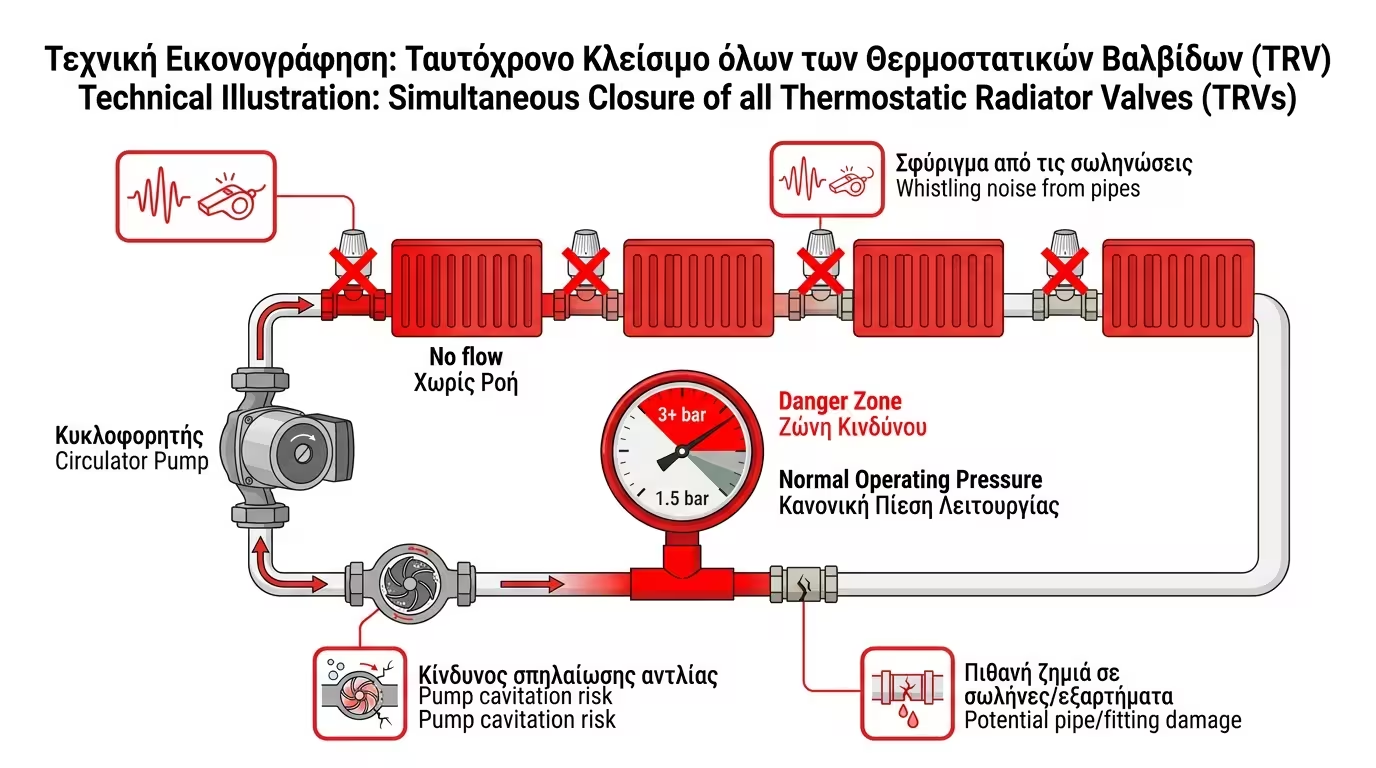
Pressure problem - pipe whistling, circulator, closed TRVs on radiators

🔊 The whistling

If 4 of 5 radiators reach temperature and their TRVs close, the circulator forces the entire water volume through the single open valve. Water velocity skyrockets - a deafening whistle like a kettle echoes through the house, especially at night.
🔥 Burnout (Dead Heading)

If the last valve closes too, the circulator pushes water into a sealed circuit. Pressure rises dramatically, the pump overheats (no water circulating to cool it), and the circulator burns out.

💰 Damage cost

A burnt circulator costs €150-400 to replace (plus labour). In heat pumps, the internal circulation pump can cost even more if integrated into the unit.

⚠️ Identification signs

Night-time "noisy" heating is usually pressure whistling, not air in the radiators. If the noise appears only after rooms reach temperature, the cause is almost always a missing bypass valve.

2. The Solution: How the Bypass Valve Works

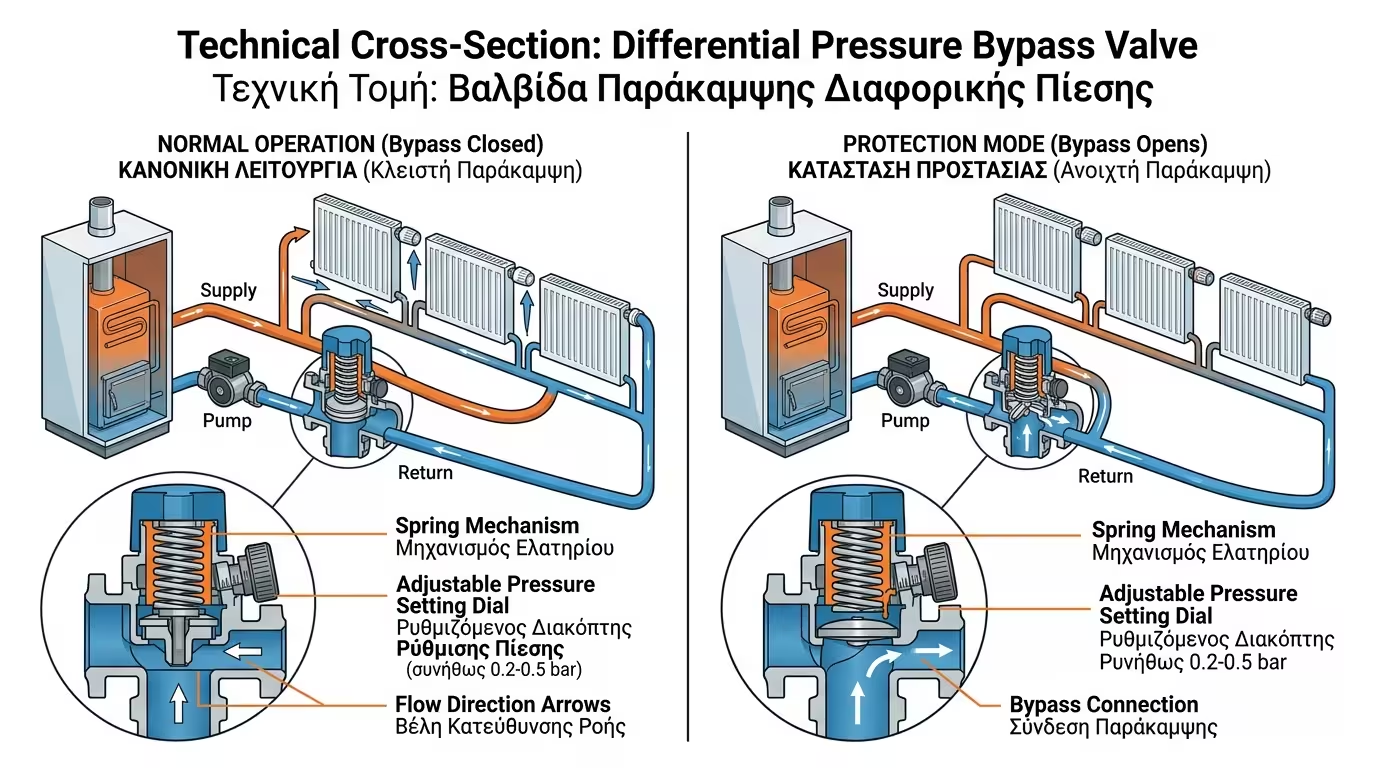
Bypass valve - spring, water shortcut, circulator protection

The Automatic Bypass Valve (Differential Pressure Valve) is a small brass fitting costing €20-30 that connects the flow pipe directly to the return pipe.

🔧 Mechanism

Inside the valve sits a stiff spring that keeps it shut during normal operation. The circulator works normally - the bypass valve doesn't interfere at all.

⚡ Activation

When TRVs close and pressure rises, the force "defeats" the spring! The valve opens. Water finds a "shortcut" and returns straight back to the boiler.

🔇 Instant result

Pressure drops, noise stops instantly, the circulator "breathes" freely. No wear, no waste. The valve operates purely mechanically - no electricity, electronics or maintenance needed.

📐 Installation

The valve goes before the radiators, between supply and return pipes. On underfloor manifolds, it mounts directly on the collector. A rotating cap adjusts spring stiffness to match system pressure.

3. Inverter Circulators: Do You Even Need a Bypass?

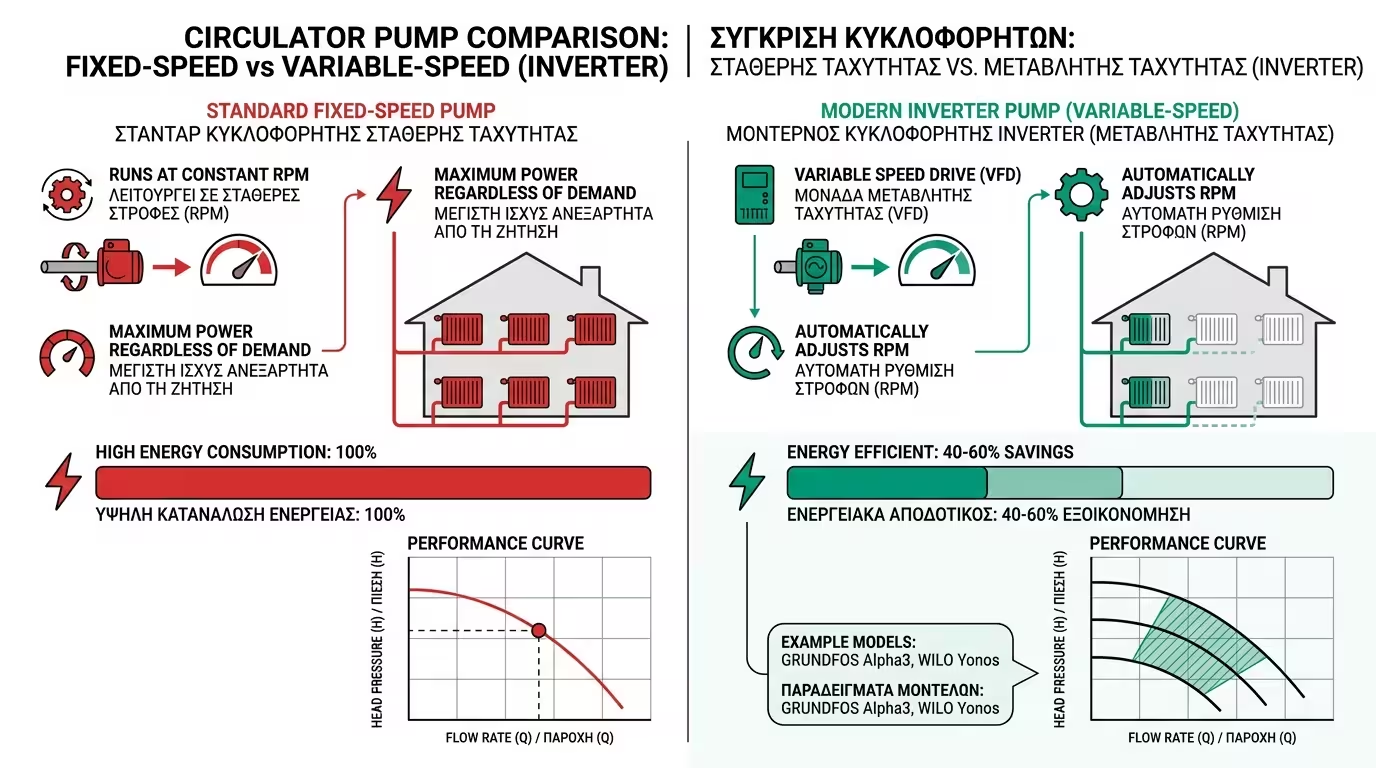
Technology has advanced. Old circulators (3 fixed speeds) worked "blindly." Modern Inverter circulators have built-in pressure sensors and automatically reduce their speed.

Electronic Inverter circulator - variable speed, energy savings

📉 Auto adjustment

When TRVs close, the Inverter circulator "senses" the resistance and automatically reduces speed. Power drops to just a few Watts, saving significant electricity and preventing whistling.

💡 Electricity savings

An old circulator consumes 60-80W constantly. An Inverter drops to 5-15W when rooms are warm. Annual savings: €100-200 on electricity.

⚠️ Bypass as fail-safe

Caution: Even with an Inverter circulator, if your boiler doesn't have an internal bypass (many modern gas boilers include one), engineers recommend an external bypass valve as the ultimate fail-safe.

🔄 When Inverter alone is enough

If your heat pump or boiler has a built-in bypass, an Inverter circulator suffices. For older machines without internal bypass, install both: Inverter + external bypass.

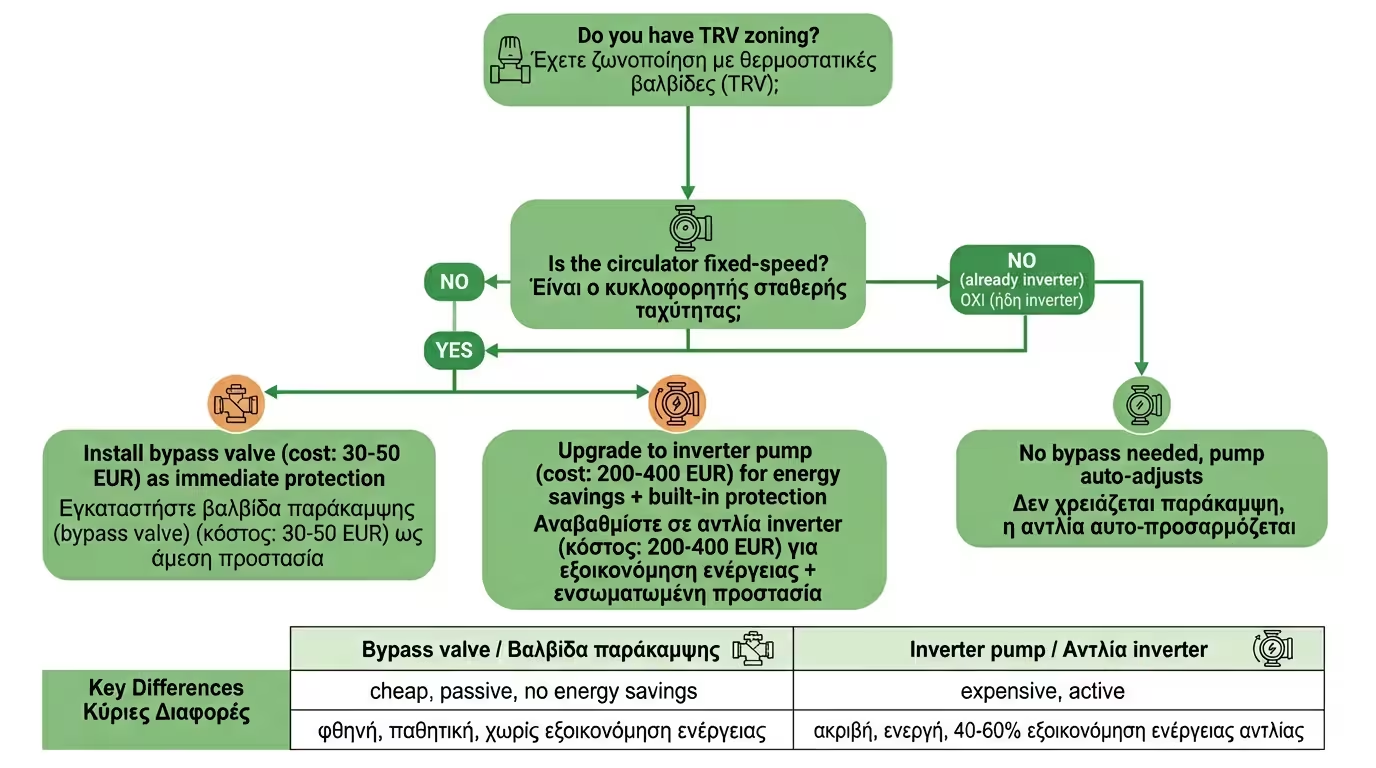
4. Summary: When You Need Each Solution

If you installed TRVs on your radiators and suddenly hear whistling at night, the TRVs aren't to blame. The system is "choking" on pressure.

Comparison bypass vs inverter - when each solution is needed

✅ Scenario 1: Old system

Oil/gas boiler + old 3-speed circulator. Solution: install an external bypass valve (€20-30) + consider upgrading to an Inverter circulator (€150-300).

✅ Scenario 2: New heat pump

Heat pump with built-in Inverter circulator and internal bypass. No external bypass needed - the system manages variable pressure on its own.

✅ Scenario 3: Underfloor

Underfloor manifold with actuators + wiring centre. Solution: bypass on the collector + Inverter circulator. Underfloor systems open/close zones frequently - a bypass is essential.

🎯 Golden rule

Every zoned system must have a way to relieve pressure. Bypass valve (€20-30) or Inverter circulator (€150-300) or both. Without these, the TRVs are not the problem - the installation is.

🏠 Midnight whistling? A bypass valve (€20-30) or upgrading to an Inverter circulator solves it immediately. The TRVs aren't to blame - the real issue is that nobody planned for variable pressure.

Related Articles

Preview