🔌 Sockets & switches
A socket on an exterior wall is not airtight. Behind the plastic box lies uncovered brick or render - air passes freely. You can feel it by holding a lighter nearby on a cold day.
You may have the best insulation and the most expensive windows, but if air enters uncontrollably through cracks, sockets, pipes and roofs, heat escapes as if there were no insulation at all. This phenomenon is called uncontrolled air infiltration - and it is the greatest invisible energy waste in Greek buildings.
Uncontrolled leaks aren't just windows that "let in air." Air finds dozens of hidden pathways invisible to the naked eye: sockets on exterior walls, drain pipes, roller-shutter boxes, cracked render, and even the wall-to-roof junction.
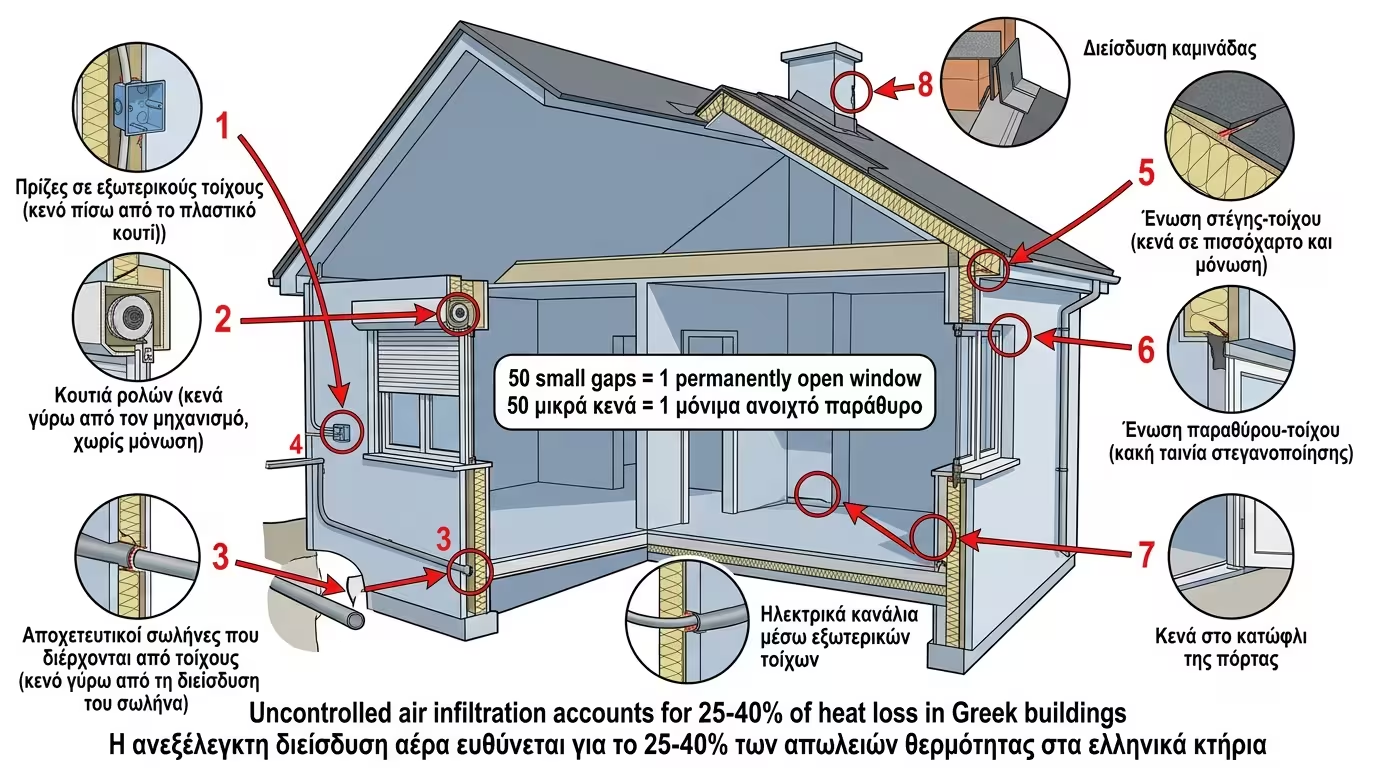
A socket on an exterior wall is not airtight. Behind the plastic box lies uncovered brick or render - air passes freely. You can feel it by holding a lighter nearby on a cold day.
Old roller-shutter boxes have holes, gaps and zero insulation. They are among the worst spots in Greek homes - especially when the shutter doesn't close properly.
Every drain pipe, every electrical conduit passing through the wall leaves a small gap around it. Multiply 50 such points and the total "hole" equals an open window.
The roof-to-wall (or flat-roof-to-wall) junction is rarely airtight. Air enters through roof tiles, false ceilings and cracks in the insulation - invisible but devastating.
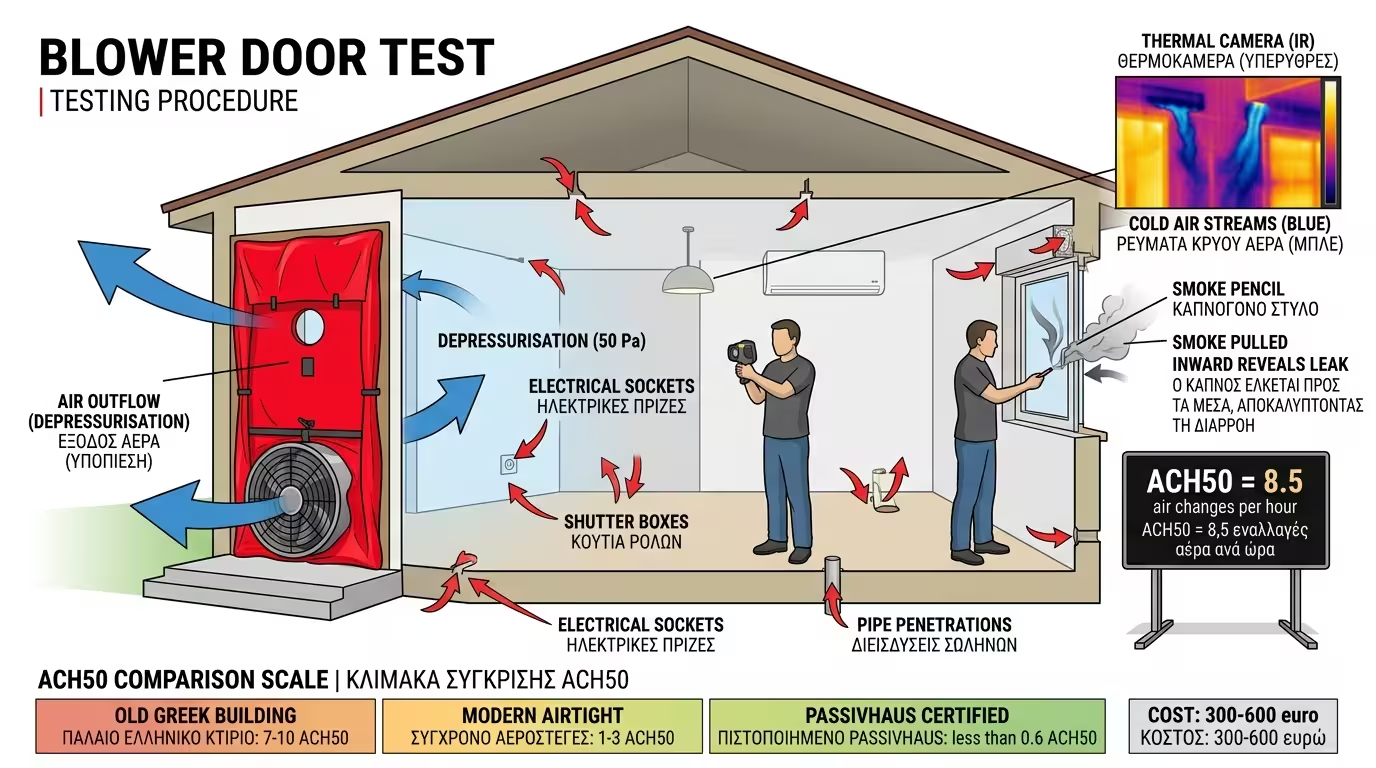
How do we measure whether a house "leaks"? With a Blower Door Test - a simple but extraordinarily revealing procedure. A large fan is installed in an exterior door and creates artificial depressurisation (50 Pa) inside the building.
The fan "sucks" air out. Replacement air enters through every crack. We measure how many times the air changes in 1 hour: ACH50. Old Greek house: 7-10 ACH. Passivhaus: < 0.6 ACH.
While depressurisation is running, the technician uses a thermal camera or smoke pencil to find exactly where air is entering. Every leak lights up - airtightness becomes visible.
A Blower Door Test costs €300 – €600 (depending on building size). Certified technicians exist in Greece, though it's not yet mandatory under KENAK. In Passivhaus projects it is compulsory.
Ideally, the test is performed in two phases: once before internal finishes are complete (so findings can be fixed) and once after - to certify the final result.
Many homeowners (and even some builders) believe that "if you seal everything, you'll suffocate." This is completely wrong. The correct rule says: "Build Tight, Ventilate Right" - seal hermetically, ventilate in a controlled manner.
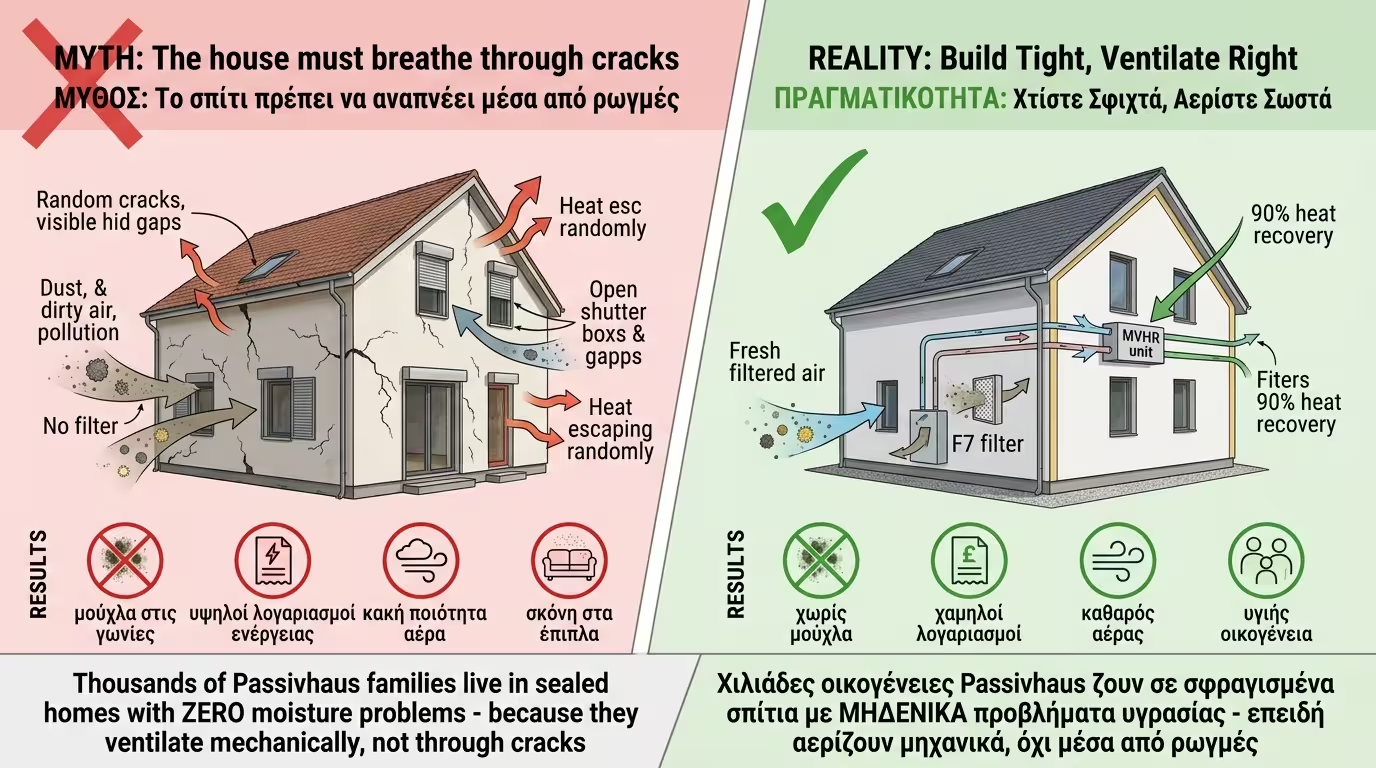
Cracks don't ventilate - they waste energy. You can't control the quality of air entering (dust, pollutants, pollen), nor when it enters (e.g. at night you lose heat for no reason).
In an airtight building, air enters only where you want it: via MVHR, a trickle vent or a window that you open. Heat stays inside, air quality improves, and the bill drops.
In Germany, Scandinavia and Passivhaus projects worldwide, airtightness is mandatory. Thousands of families live in "sealed" homes without any moisture problems - because they ventilate mechanically.
Houses that "breathe" through cracks actually have the worst mould problems! Because the irregular, uncontrolled air carries moisture that condenses on cold spots.
Once we've sealed the building, air must be renewed mechanically. That role belongs to MVHR (Mechanical Ventilation with Heat Recovery) - or VMC in its French acronym - a system that extracts stale air and recovers its heat before introducing fresh air.
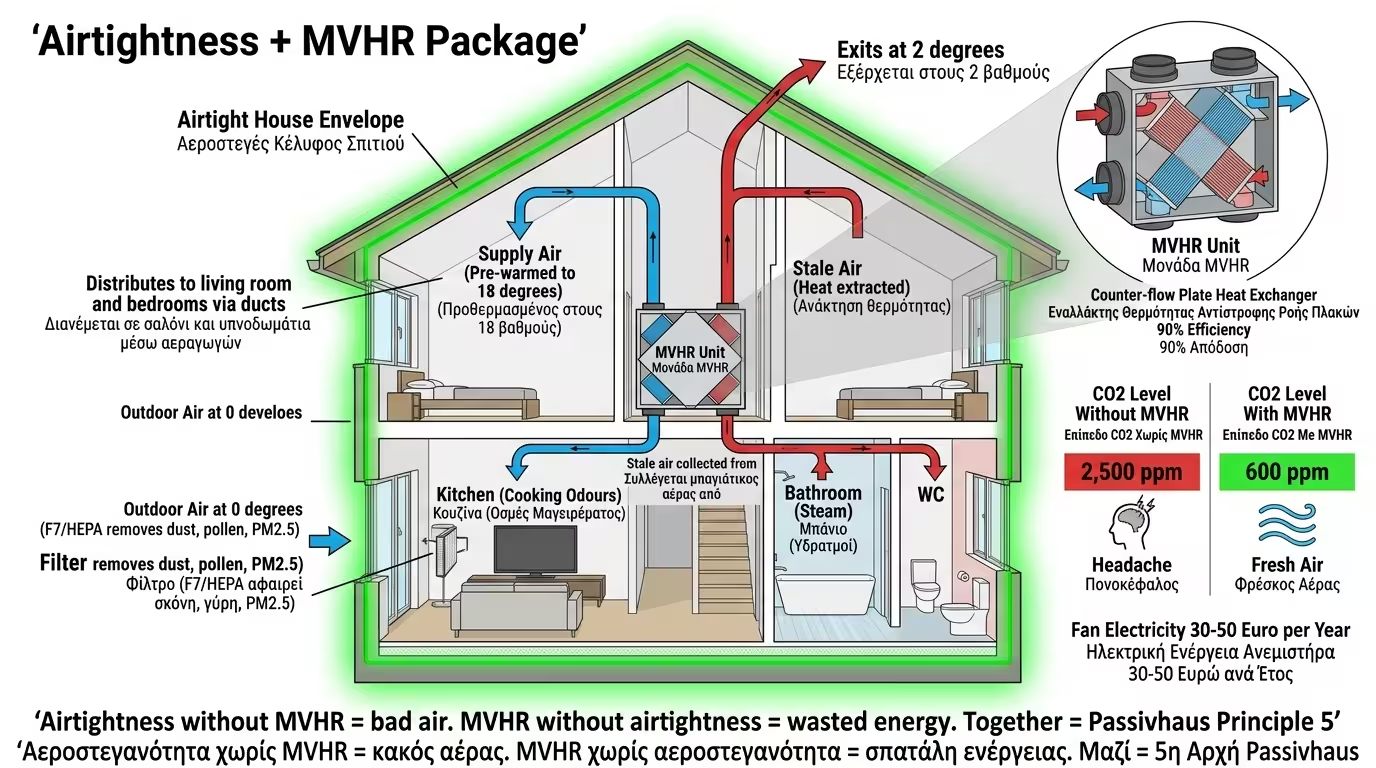
Stale air exits, but its heat is recovered at 90% through a heat exchanger. The fresh air is pre-warmed before entering the rooms - zero cold-air drafts.
Incoming air is filtered with F7 or HEPA filters. Dust, pollen, particulates and allergens stay outside. Ideal for urban environments, near roads or agricultural areas (pesticide spraying).
In a typical unventilated home, CO₂ levels reach 2,000 – 3,000 ppm at night (dizziness, headaches). With MVHR, they stay below 800 ppm - always fresh air.
The two are inseparable. Airtightness without MVHR = poor air quality. MVHR without airtightness = wasted energy. Together they form the 5th principle of Passivhaus.
🔒 Build Tight, Ventilate Right. Seal every crack, every pipe, every roller-shutter box. Then let mechanical ventilation (MVHR) bring fresh, filtered air without losing a single degree Celsius. That is the definitive goodbye to the old, wasteful buildings.
Return to category.
Go to categoryReturn to the central guide.
Go to guide