🪟 Ug (Glass Only)
Refers solely to the glass surface. An old single pane has Ug ≈ 5.8, a double with Argon drops to 1.0-1.1, while a Passivhaus triple reaches 0.5.
Walls may be thick and insulated, but windows are literally "holes" covered with a thin layer of glass. If you don't choose the right frames, your insulation and your heat pump will "fly away" through the pane.
Let's decode the manufacturers' jargon: U-Value, g-value, Low-E, Argon - so you know exactly what you're buying.
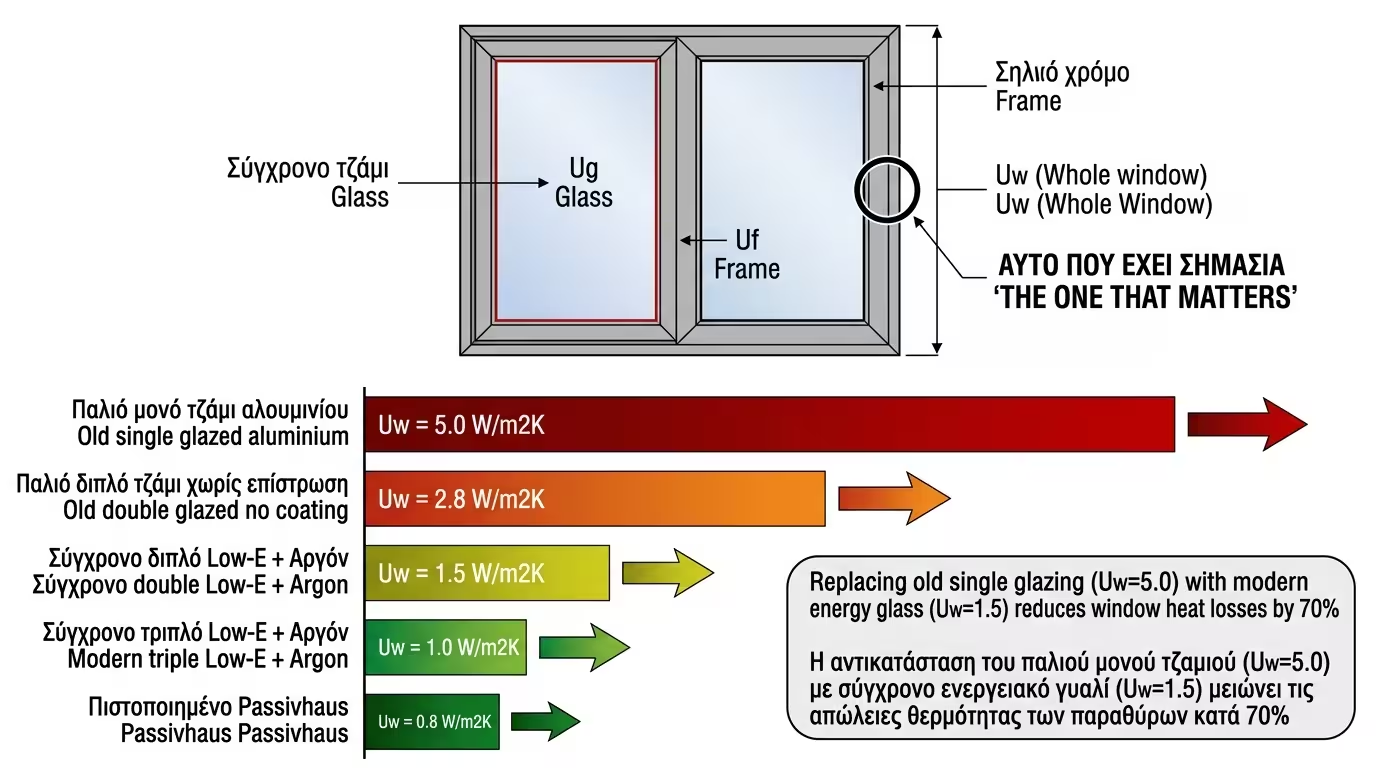
The U-Value measures how much heat "escapes" through the window. Unit: W/(m²K). The rule: the lower, the better the insulation. In spec sheets you'll see three indicators: Ug (glass), Uf (frame), Uw (whole window). The one that matters is always Uw.
Refers solely to the glass surface. An old single pane has Ug ≈ 5.8, a double with Argon drops to 1.0-1.1, while a Passivhaus triple reaches 0.5.
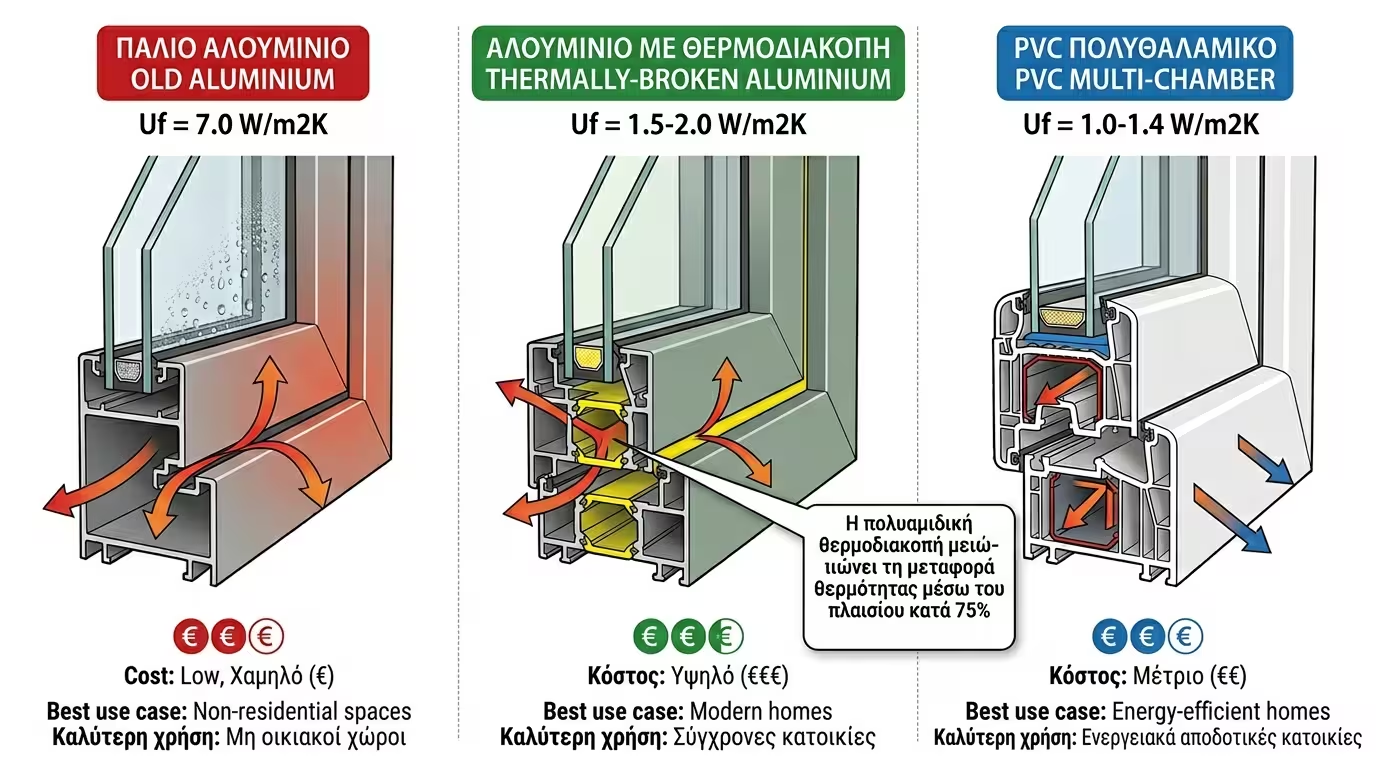
Refers to the frame (aluminium, PVC or timber). An old aluminium without thermal break: Uf ≈ 7.0. A modern PVC or thermally-broken aluminium: Uf ≈ 1.2-1.8.
The truly important indicator. An old single- glazed aluminium window: Uw ≈ 5.0. Modern energy-rated: Uw ≈ 1.5. Passivhaus: Uw below 0.8!
Replacing old single-glazed windows (Uw=5.0) with modern energy-rated ones (Uw=1.5) reduces heat losses through windows by 70%. This directly translates to a smaller heating system and a lower bill.
Old aluminium was an excellent heat conductor: the frame froze, "sweated" and transferred cold inside. The modern solution: the profile is "cut" down the middle with polyamide (thermal break) - the outer aluminium freezes, the inner stays warm.
Between the outer and inner sections, a rigid plastic strip (polyamide) "cuts" the thermal bridge. Uf drops to 1.5-2.0 W/(m²K) - a huge improvement.
The plastic itself is a poor heat conductor - therefore an excellent insulator. Uf ≈ 1.0-1.4. Usually more affordable, but with limitations on very large openings due to structural strength.
Excellent insulation (Uf ≈ 1.2-1.6), aesthetically beautiful, but require regular maintenance (painting, varnishing). Ideal for listed buildings or Scandinavian-style homes.
Always ask the manufacturer: "What is the frame Uf?" If they don't know or won't answer, keep your distance. A reputable factory always provides certified technical data sheets.
The glass covers 80% of the window surface. Insulation isn't provided by the glass itself, but by the cavity between the layers - filled with Argon (or Krypton) gas for even higher performance.
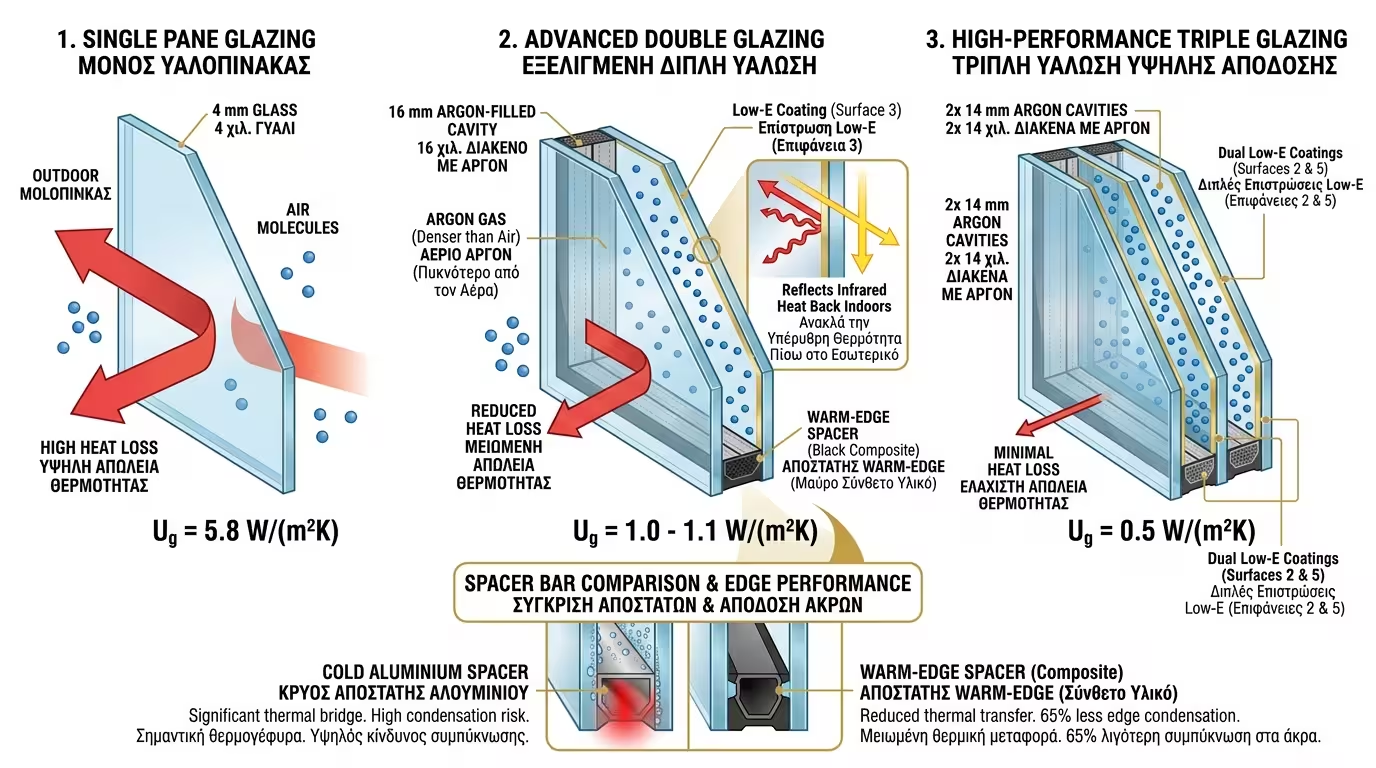
Argon is denser than air and hinders heat transfer through the cavity. It reduces Ug by 15-20% compared to ordinary air. In premium applications, Krypton is used (costlier, even more effective).
An invisible, microscopic silver coating on the inner surface of the glass. In winter, heat escaping towards the glass is reflected back into the room like a mirror. Reduces radiative losses by 70%.
Double glazing with Argon and Low-E (4/16/4) is the baseline of every modern construction. Triple glazing (4/14/4/14/4 Argon) offers even lower Ug ≈ 0.5 - but is heavier and more expensive.
The spacer between the panes makes an enormous difference. A cold aluminium spacer creates a thermal bridge at the edge of the glass. Ask for a Warm Edge Spacer to reduce edge condensation by 65%.
The g-value (expressed as a fraction, e.g. 0.40 or 40%) indicates how much solar radiation passes through the glass. It's the biggest trap for homes in Greece - if you don't factor in orientation.
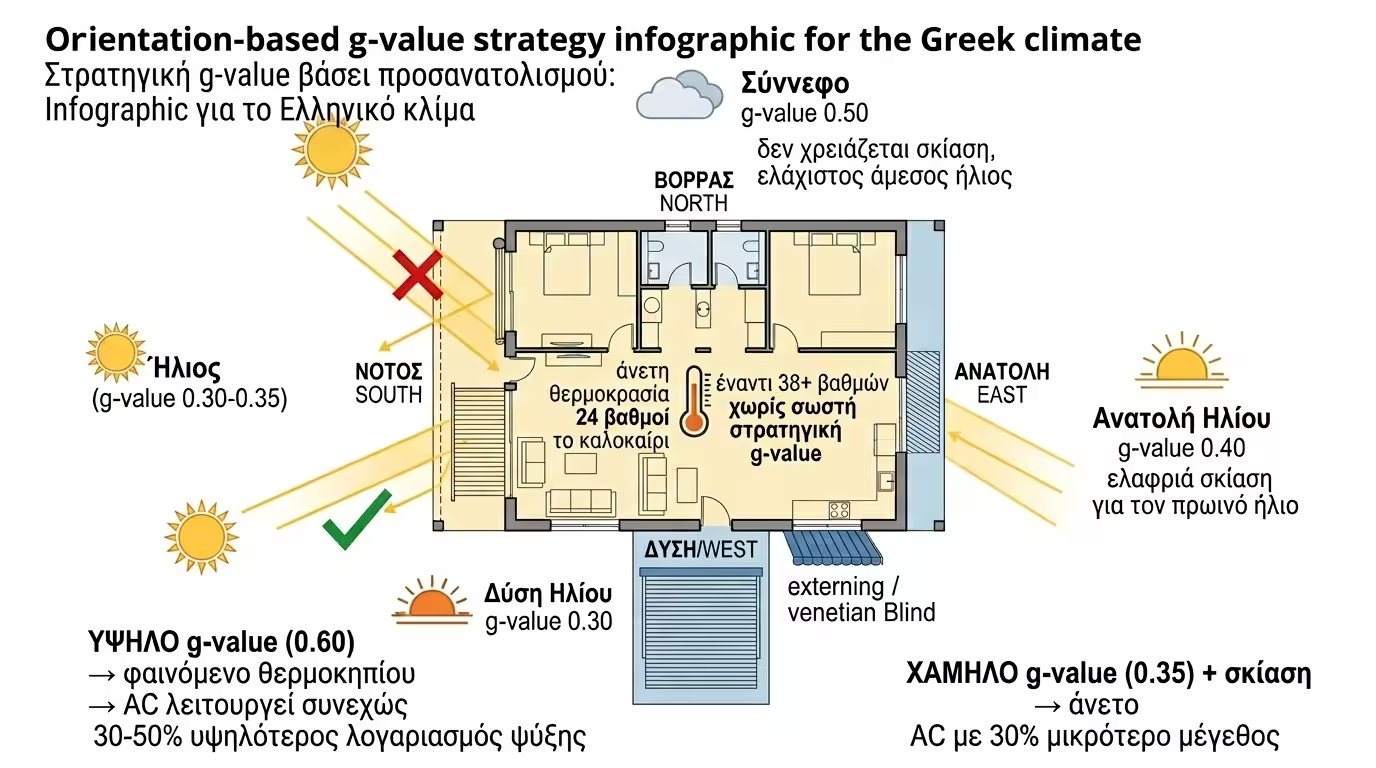
Lets the sun in for free. Perfect for Northern Europe and for south-facing windows in winter. But in Greek July, the south side becomes a greenhouse - the air conditioner never stops.
Blocks the sun. "Four-Season Energy Glass" with g ≈ 0.30-0.40 is the ideal choice for the Mediterranean climate - lower cooling loads, smaller A/C unit, lower bill.
South/West: low g-value + external shutters or awnings. North/East: medium g-value, as it receives little intense sun. The engineer should design different glass per façade.
In Greece, summer cooling loads often exceed winter heating loads. The right g-value choice (combined with shading) reduces A/C kW by 30-50%.
🪟 Choosing windows is about balance. Always check Uw, insist on thermal breaks, demand Argon, and discuss g-value with your engineer - so you don't lose the sun in winter, but don't "bake" in summer.
Return to category.
Go to categoryReturn to the central guide.
Go to guide