Internal Gains & Solar Radiation: The "Free" Heating and the Summer
Nightmare
Until now we focused on cold and heat entering through walls and
windows. But our home is not an empty box. We cook, shower, watch TV,
work on computers. All these activities produce enormous amounts of
energy.
Let's see how Internal and Solar Gains act as free radiators
in winter, but become the biggest enemy of your air conditioner in summer.
1. Internal Heat Gains
Anything consuming energy inside your home ends up releasing heat.
This is called an "Internal Gain". The engineer must
calculate these precisely - both for heating (winter) and cooling
(summer).
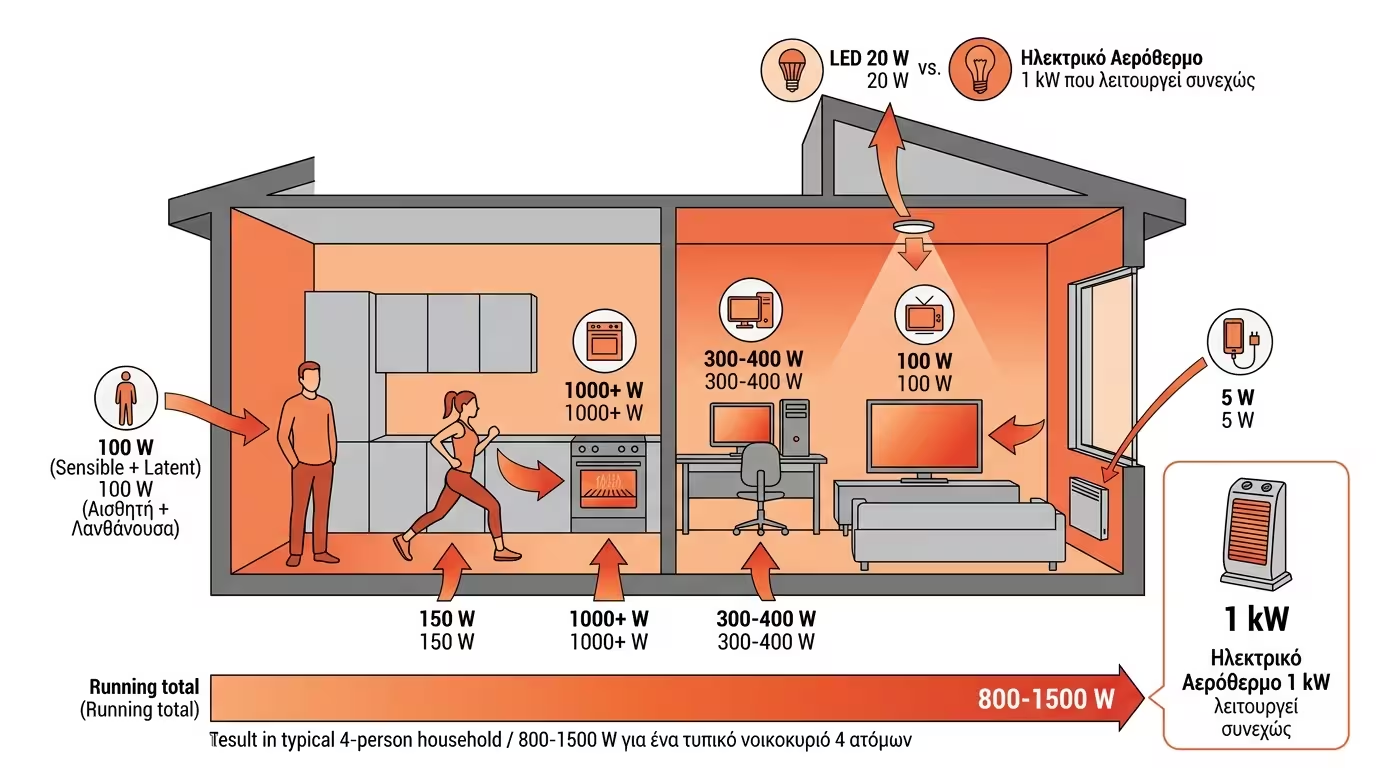
👥 People - Walking Radiators
The human body (at 36.6°C) emits roughly 100 Watts at
rest and 150 W during housework. Invite 10 friends and
you've just added 1,000 Watts to your living room -
as much as a small space heater! Besides temperature, people also produce
moisture (latent gain) through breathing and sweating.
💡 Appliances & Lighting
The oven (1,000+ W), cooktop, fridge, TV, even the
phone charger - all the electricity they consume ultimately converts
to heat. A desktop PC releases 300-400 W - enough to
heat a small room on its own.
🍳 Cooking & Bathing - Latent Gain
Boiling water and hot showers don't just raise the temperature -
they fill the house with water vapour (moisture) ,
adding enormous latent energy load. This is particularly challenging
in summer, where it intensifies the AC's dehumidification work.
📊 The Full Picture
A typical Greek home with 4 occupants, cooking, TV, lighting and a
computer produces internal gains of 800-1,500 W at any
given time. That's an entire electric heater running constantly - invisible
but very real.
2. Solar Gains
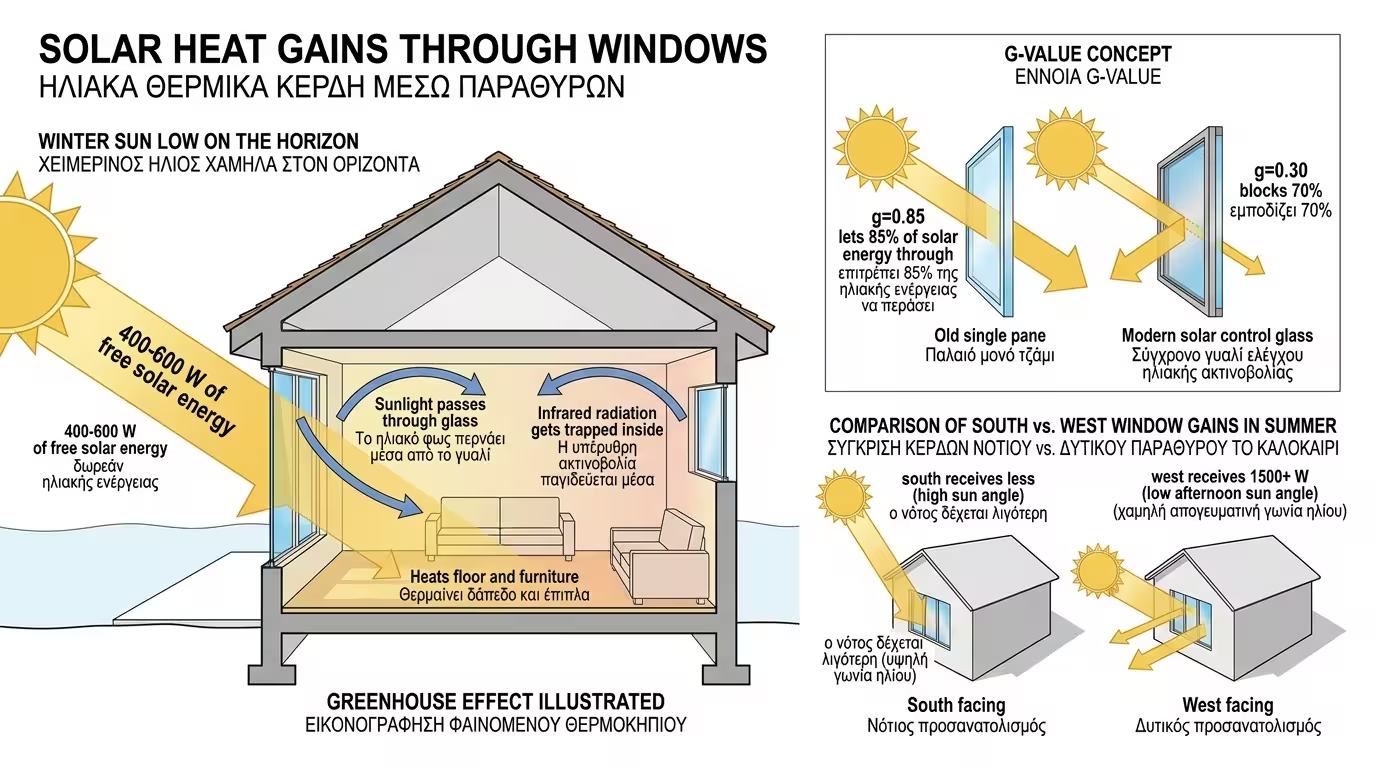
The heat entering through windows from Solar Radiation
is the largest free energy source for a home. Sunlight passes
through the glass, strikes floors and furniture, heats them, and the warmth
gets trapped inside (the Greenhouse Effect).
🌞 South Windows - Winter Champions
In winter the sun is low on the horizon and penetrates
deep into the house through south-facing windows. A 2
m² south window can import 400-600 W of free solar energy
on sunny January days.
🌆 West Windows - The Summer Nightmare
West-facing windows receive the scorching afternoon sun almost
head-on. A 3 m² balcony door facing west can import 1,500+ W of solar heat in July - equivalent to 1.5 electric heaters! Without
external shading, this energy dominates the AC's workload.
📐 The Role of G-Value
The G-Value (Solar Factor) of each window determines
how much solar radiation passes through. An old single pane (g ≈ 0.85)
lets almost everything in. A modern solar-control glass (g ≈ 0.30) blocks
70%
of solar energy, dramatically reducing cooling loads.
🧭 Orientation - The Greek Factor
In Greece, the summer sun is so high that south windows actually
receive fewer solar gains than west-facing ones! That's
why bioclimatic design recommends large south windows (winter gain) and
small west windows (summer protection).
3. The Two Faces of the Coin
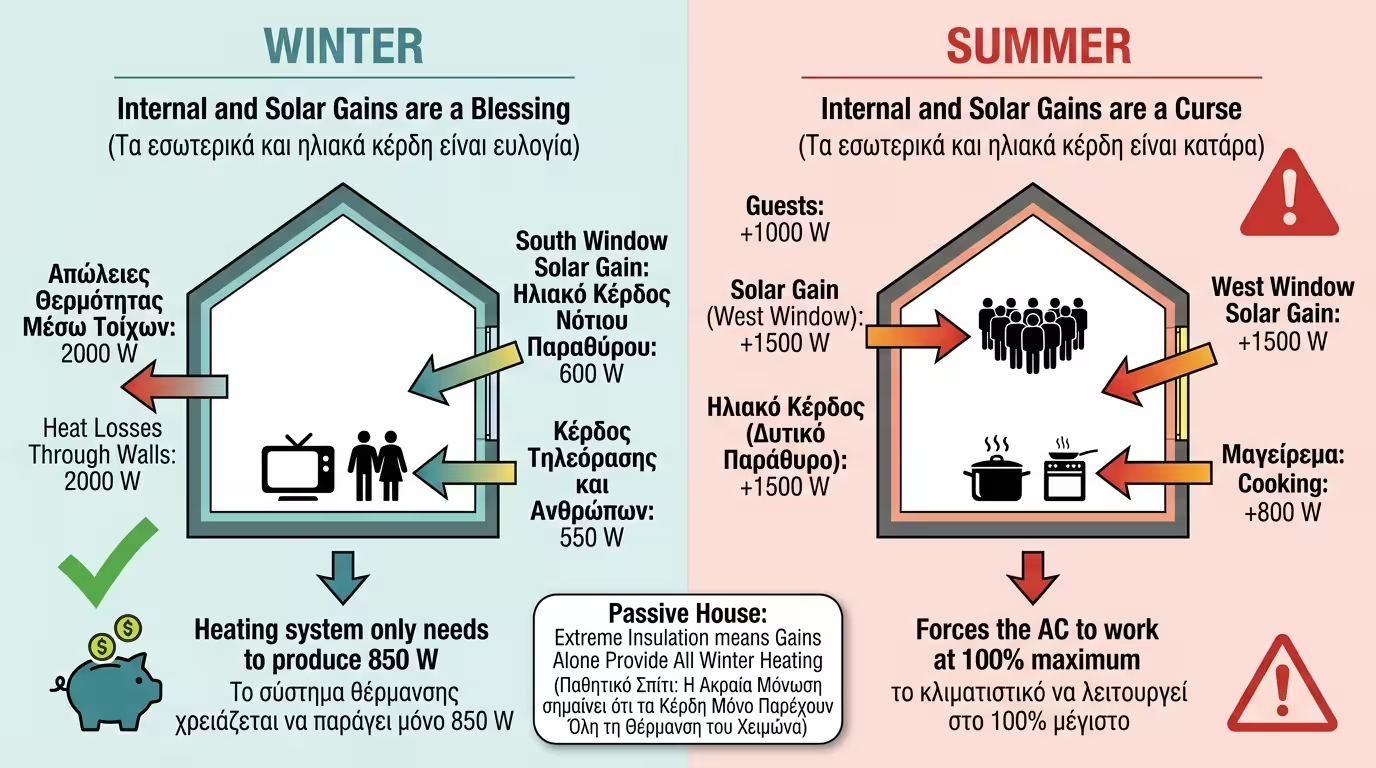
Internal and solar gains behave completely differently depending on
the season. In winter they're a blessing - in summer a
curse.
❄️ Winter: The Blessing
In winter, the engineer subtracts gains from heat losses.
If the living room loses 2,000 W to cold, but south windows provide 600
W, the TV 150 W and 4 people 400 W, then heating needs to produce only 850 W
instead of 2,000. In Passive Houses, these gains alone suffice!
☀️ Summer: The Curse
In summer, the equation reverses violently. All gains must be expelled by the AC. Cooking in August + 10 guests + west-facing glazing = AC
at 100% just to "offset" the internal heat, before it even starts cooling.
🏗️ The Role in Passive Houses
In Passive Houses (Passivhaus), insulation is so
extreme that free internal and solar gains provide heating for
almost the entire winter. No conventional radiators needed! The
challenge shifts to
overheating - how to avoid excess warmth.
📈 Why It Matters in the Study
Depending on use (residential vs office), internal gains change
dramatically. An office with 20 computers and lighting may need
cooling even in winter!
That's why EN 12831 always asks "what will happen inside the building".
4. Summary: How to Manage the Gains
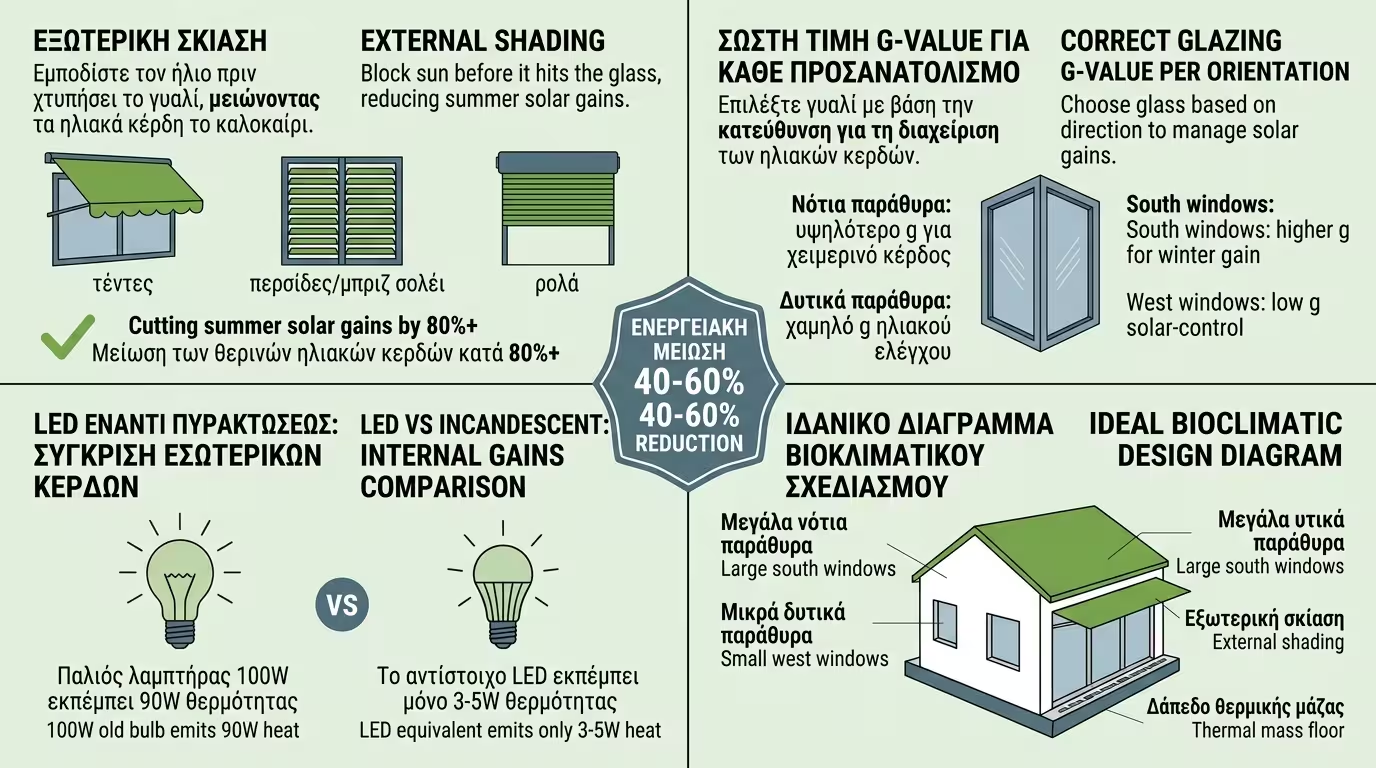
The solution is not to stop breathing or cooking! The answer lies in smart bioclimatic design - maximising gains in winter and minimising them in summer.
🏠 External Shading
Awnings, external roller shutters or louvres (brise-soleil) block
the sun before it hits the glass. Interior curtains
are not enough - the heat is already inside. External shading cuts
summer solar gains by
80%+.
🪟 Correct Glazing by Orientation
Choose glass with the right G-Value per orientation:
south windows can have higher g for winter solar gain, while west-facing
need low g (solar-control) to minimise cooling loads.
💡 LED Lighting
Replace old incandescent bulbs with LED. They don't
just save electricity - they produce
negligible heat, significantly reducing the AC's
summer load. A 100 W incandescent emits 90 W of heat. An equivalent
LED emits just 3-5 W.
🌿 Bioclimatic Design
The ideal design combines large south windows (maximum
winter solar gain), small west ones (summer minimisation), external shading
and interior thermal mass (solid floor storing heat). This philosophy
reduces energy needs by 40-60%.
🔥 Internal and Solar Gains are not a "detail" - they are the
hidden protagonist of the energy balance. Good design exploits
them in winter and controls them in summer.