nZEB Buildings (Nearly Zero Energy): The New, Strict Building Law

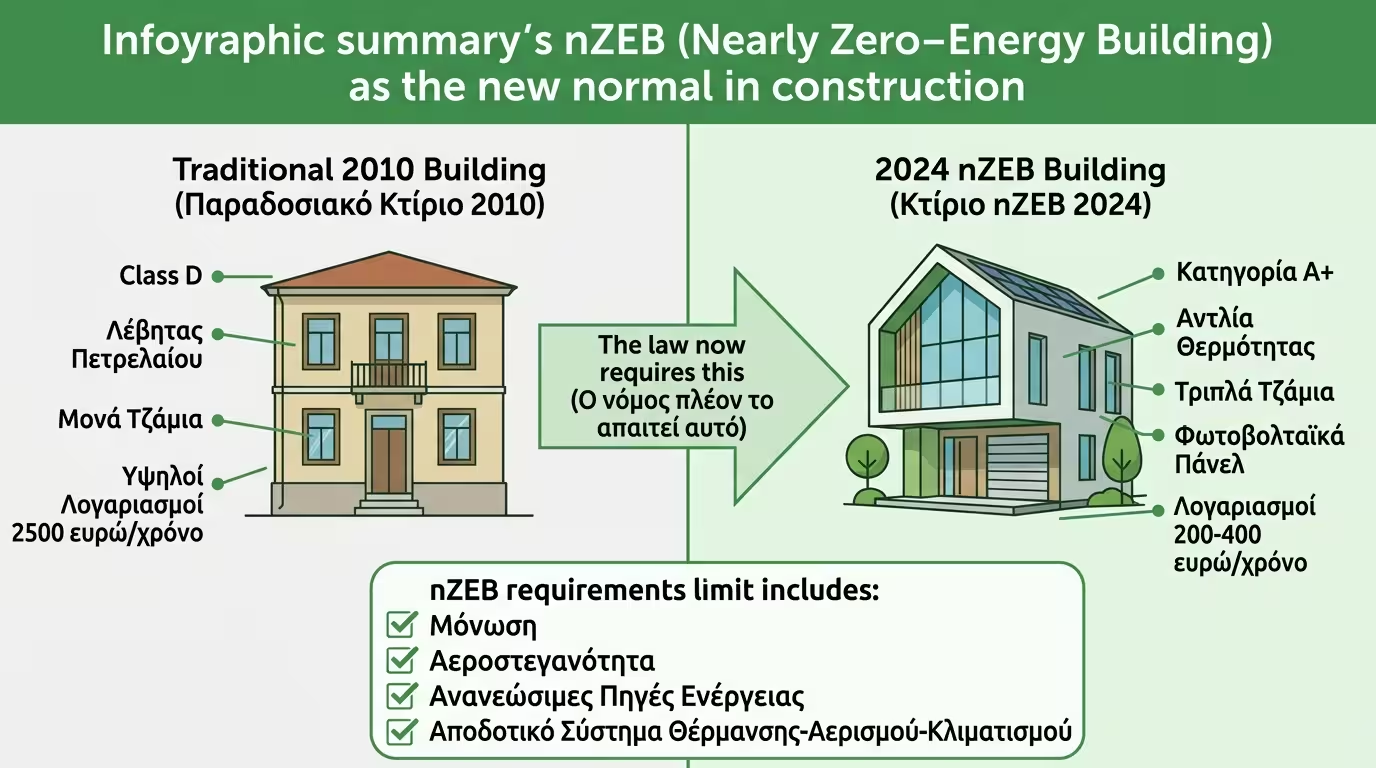
If you think that getting a new building permit today simply allows you to build an energy class "B" home (i.e. a merely "good" house), you're wrong. Since 2021, legislation in Greece and Europe has changed dramatically.

The state now requires you to build a building from the future. Welcome to the era of nZEB Buildings. Let's explore what this acronym means and why it's changing the way we build.

1. What Exactly Is an nZEB Building?

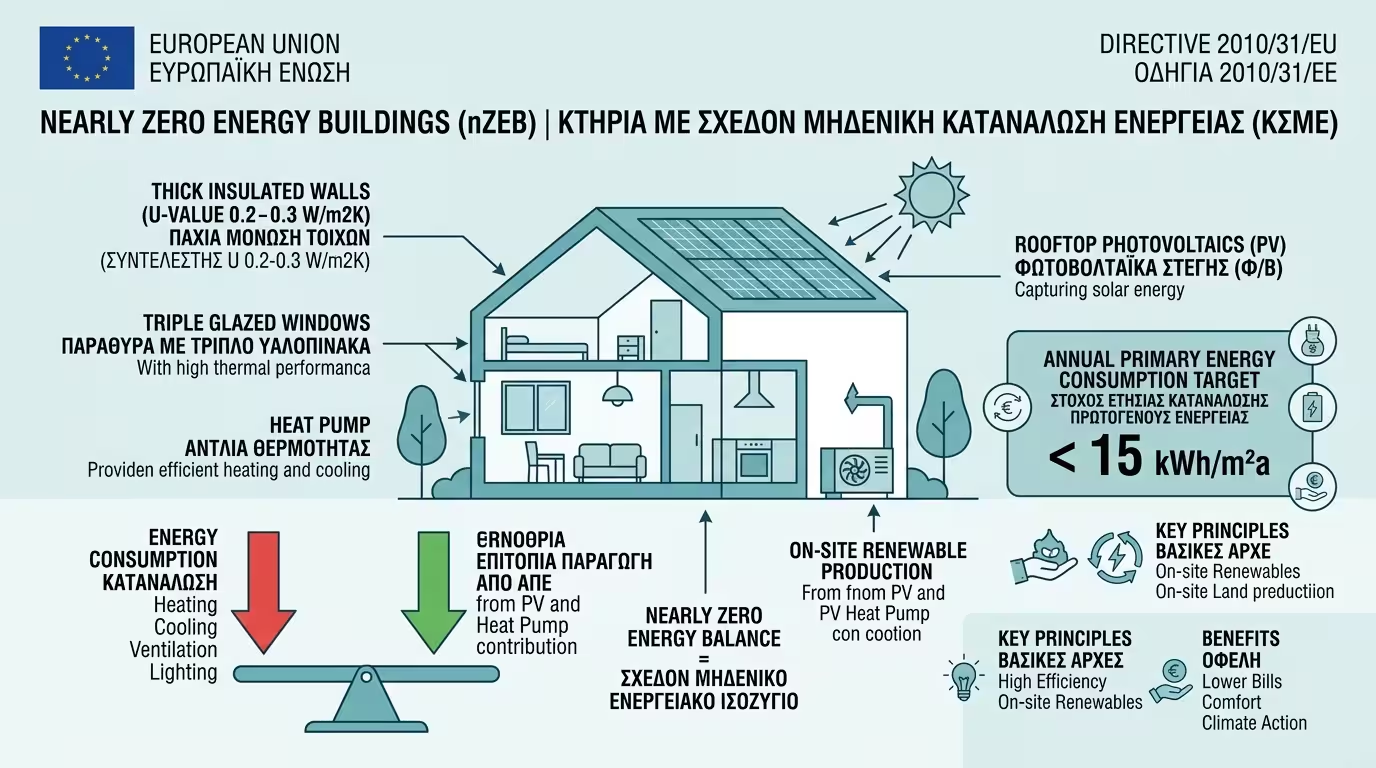
The acronym nZEB stands for nearly Zero Energy Building. It is not some optional "green" certification for the environmentally conscious. It is the official, mandatory legislation of the state.

nZEB definition – nearly zero energy consumption, EU EPBD directive, on-site RES

🏗️ The European definition

According to the EU definition, an nZEB is a building with very high energy performance. The nearly zero energy required must be covered to a very large extent by Renewable Energy Sources (RES) produced on-site - on your roof or on your plot.
🇬🇷 The Greek standard

In Greece, under the revised KENAK, a new residential building must be classified at least as Energy Class A. "B+" or "B" is no longer sufficient. "A" is the new minimum - anything less means the permit is simply rejected by the Planning Authority.

🌍 Pan-European obligation

The EPBD (Energy Performance of Buildings Directive) applies across every EU member state. Europe aims for a zero-emission building stock by 2050, and nZEB is the first step towards that goal.

📊 What it means in practice

An nZEB home doesn't mean zero bills - it means that energy needs are so low that the majority is covered free by the sun and air. Electricity bills drop dramatically, often below €50 per month even in winter.

2. Is It Mandatory? (The Law)

nZEB legislation – mandatory since 2021, private buildings, building permit, Planning Authority

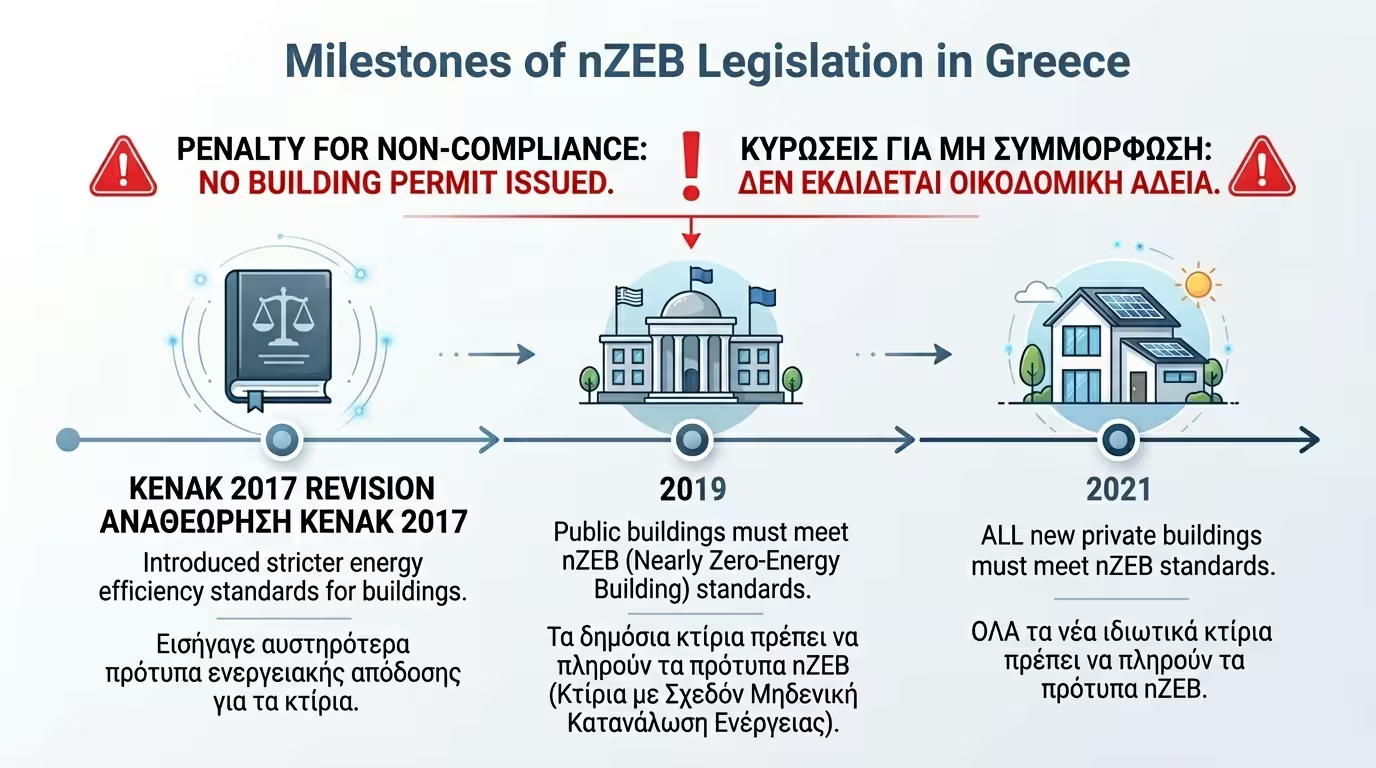
The answer is an absolute Yes. There is no exemption for new construction. If your engineer submits a design that rates the house as "B+", the permit is simply rejected.

🏛️ Public buildings (2019)

For new public buildings, the obligation has been in force since 1 January 2019. Schools, hospitals, town halls - no public building can be constructed without meeting nZEB specifications.

🏠 Private buildings (2021)

For all new private buildings (residences, offices, etc.), the requirement to build to nZEB standards has been in force since June 2021. If you are starting the process for a building permit today, your design must target class A.

⚠️ What about renovations

If you carry out a major renovation (changing more than 25% of the envelope), you too must approach nZEB requirements. You don't need to hit exactly "A", but you must demonstrate significant improvement in energy performance.

📋 The engineer's role

Your engineer prepares the MEA (Energy Performance Study), which proves that the design meets the requirements. Without an approved MEA, you don't receive a permit and not a single brick is laid on site.

3. The "Holy Trinity" of nZEB: How to Achieve It

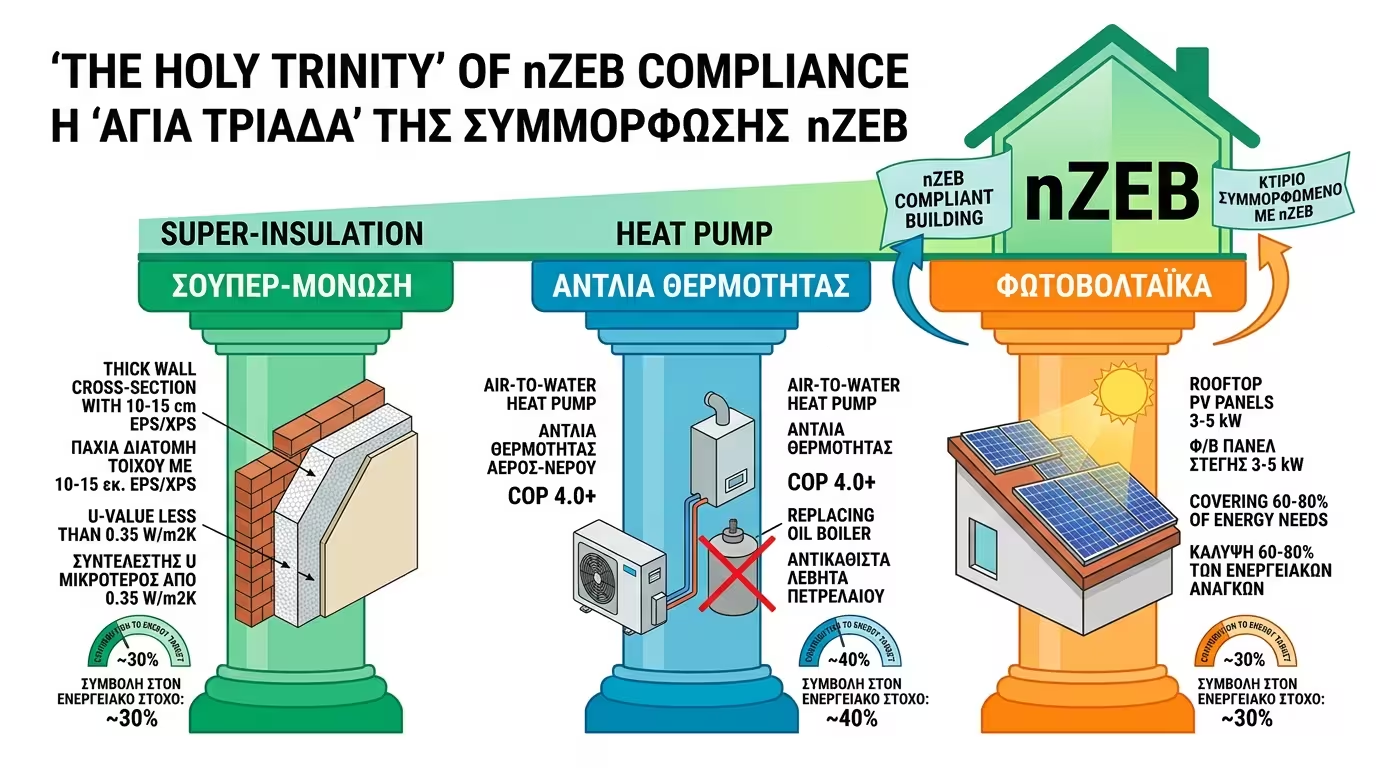
To achieve the coveted "A" rating and get your permit, heavy insulation alone is not enough. It requires a combination of three technologies - the "Holy Trinity" of nZEB.

nZEB Trinity – insulation, heat pump, photovoltaics, solar thermal

🧱 A. Extreme Insulation

The building envelope must be flawless. Insulation thicknesses increase (often 8-10 cm and above), windows must have extremely low U-Values (often triple glazing in cold zones) and thermal bridges must be calculated and insulated 100%. Goal: reduce energy demand to an absolute minimum.

♨️ B. Heat Pumps

In nZEB buildings, traditional oil boilers belong permanently in the past - they "sink" the energy class. The heat pump is now the only option. Because it absorbs 75% of its energy free from the air (classified as RES), it is the only machine that can secure class A.

☀️ C. Photovoltaics & Solar Thermal

Once the heat pump minimises electricity consumption, the remaining electricity must be produced on your roof! Installing photovoltaic panels (with Net Billing/Net Metering) is the most reliable route. The solar water heater remains absolutely mandatory, providing free DHW 8-9 months per year.

🔄 How they work together

Insulation reduces demand (from 150 to 40 kWh/m²/year). The heat pump covers that demand with COP 3.5-4.0 (each 1 kWh of electricity yields 3.5-4 kWh of heat). Photovoltaics produce those kWh of electricity free. Result: the building practically sustains itself energetically.

4. Summary: nZEB Is the New Normal

nZEB is not a luxury for the few - it is the new normal. European legislation essentially forces us to stop depending on external energy sources and to transform our homes into small, independent "power stations".

nZEB summary – new normal, energy independence, protection from price hikes

💰 Initial cost vs long-term gain

The initial construction cost may be slightly higher (10-15% more), but an nZEB home will pay you back every day, fully protecting you from energy crises and electricity price hikes.

🛡️ Shield against price hikes

When oil or electricity prices skyrocket, the owner of an nZEB home doesn't break a sweat. Insulation keeps the heat in, the heat pump turns 1 kWh into 3.5, and rooftop panels generate free electricity. Energy independence is the best insurance.

🏡 Resale value

An nZEB home sells at a higher price and rents faster. Buyers prefer properties with low bills - energy class "A" has become the new showcase in property listings.

🔮 The future: Zero Energy Buildings

The EU is already preparing the next regulation: ZEB (Zero Energy Buildings) - fully zero-energy buildings. nZEB is the bridge to that future. Those building to nZEB standards today will be already prepared for even stricter legislation.

🏗️ nZEB isn't "luxury for the few" - it's the new building standard that ensures energy independence and savings for decades to come.

Related Articles

Preview