Heat Loss Study (EN 12831 Standard): The End of Guesswork in Heating

Until now, the most common way to choose a boiler or radiators in Greece was the infamous "plumber's rule of thumb": "Put 1,000 calories per square metre and you're covered!". This crude calculation is responsible for most overconsumption and poor-performance problems with heating systems today.

Let's see how science - specifically the European standard EN 12831 - calculates with surgical precision exactly how many Watts your home needs to stay warm. The Heat Loss Study is the most valuable document your mechanical engineer will deliver, turning guesswork into mathematical certainty.

1. Step 1: Defining Design Temperatures (ΔT)

Before any calculation, we must define the climate. The study always begins with two fundamental temperatures: the Outdoor Design Temperature (Text) and the Indoor Temperature (Tint).

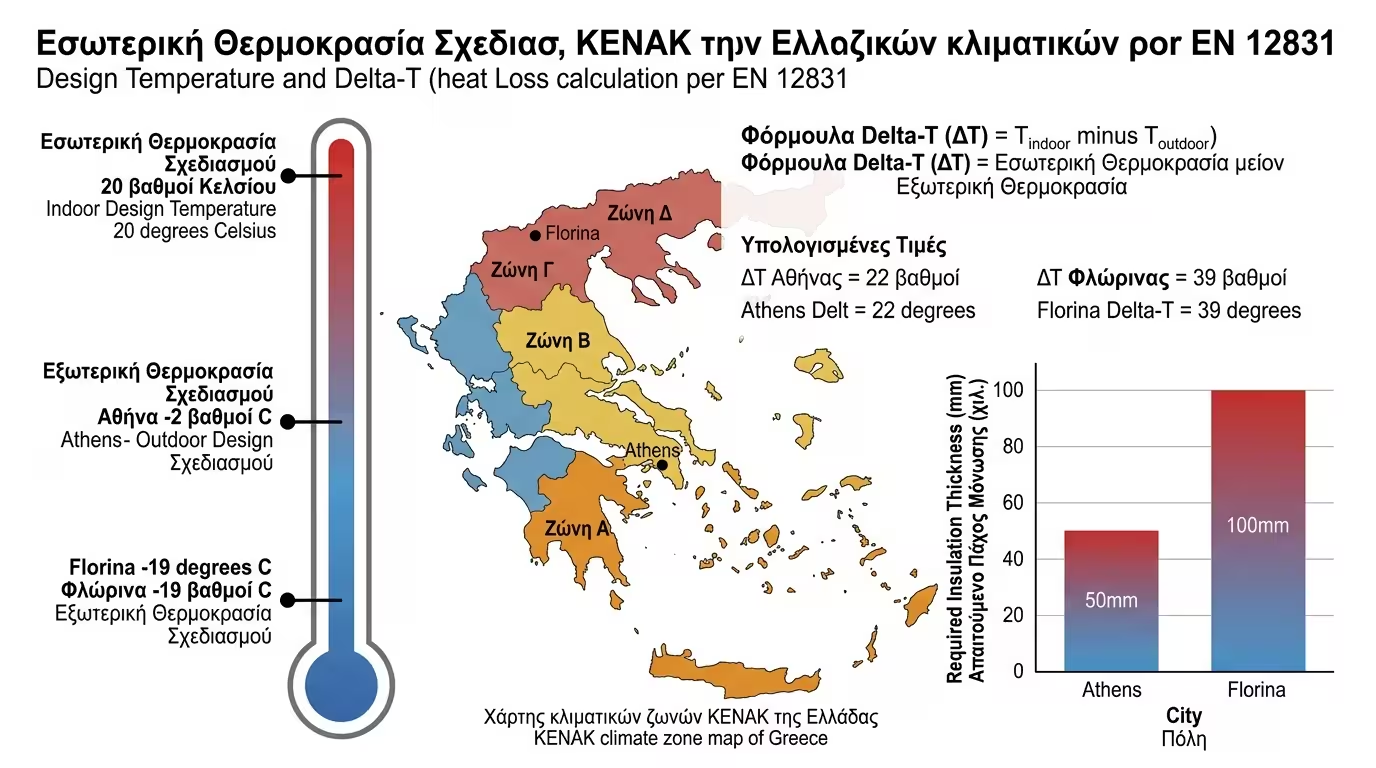
Design temperatures ΔT - outdoor Athens 0°C, Florina -9°C, indoor 20°C

🌡️ The Outdoor Design Temperature

We do not take the most extreme temperature of the century. We use a statistically cold day for the region, according to KENAK climate zones. For Athens (Zone B) this value is roughly 0°C, while for Florina (Zone D) it drops to -9°C. Every city and village in Greece has its own value, recorded in the Technical Chamber of Greece tables.
🏠 The Indoor Temperature

How warm do we want it inside? The EN 12831 standard sets a reference of 20°C for main rooms (living room, bedrooms) and 24°C for bathrooms. Each room can have a different indoor temperature setting - even a storage room at 15°C.

📐 ΔT - The Magic Difference

The difference between these two gives us ΔT. If it is 0°C outside and we want 20°C inside, ΔT is 20 degrees. If outside is -9°C and inside 20°C, then ΔT = 29 degrees. The larger the ΔT, the harder the building has to work - and the more energy the boiler or heat pump must provide.

🗺️ Why Location Matters

The exact same house, built in Rhodes (ΔT ≈ 15°C), needs almost half the heating kW compared to an identical house in Kozani (ΔT ≈ 29°C). This is why the "rule per square metre" never works - it completely ignores the climate.

2. Step 2: Transmission Losses (ΦT)

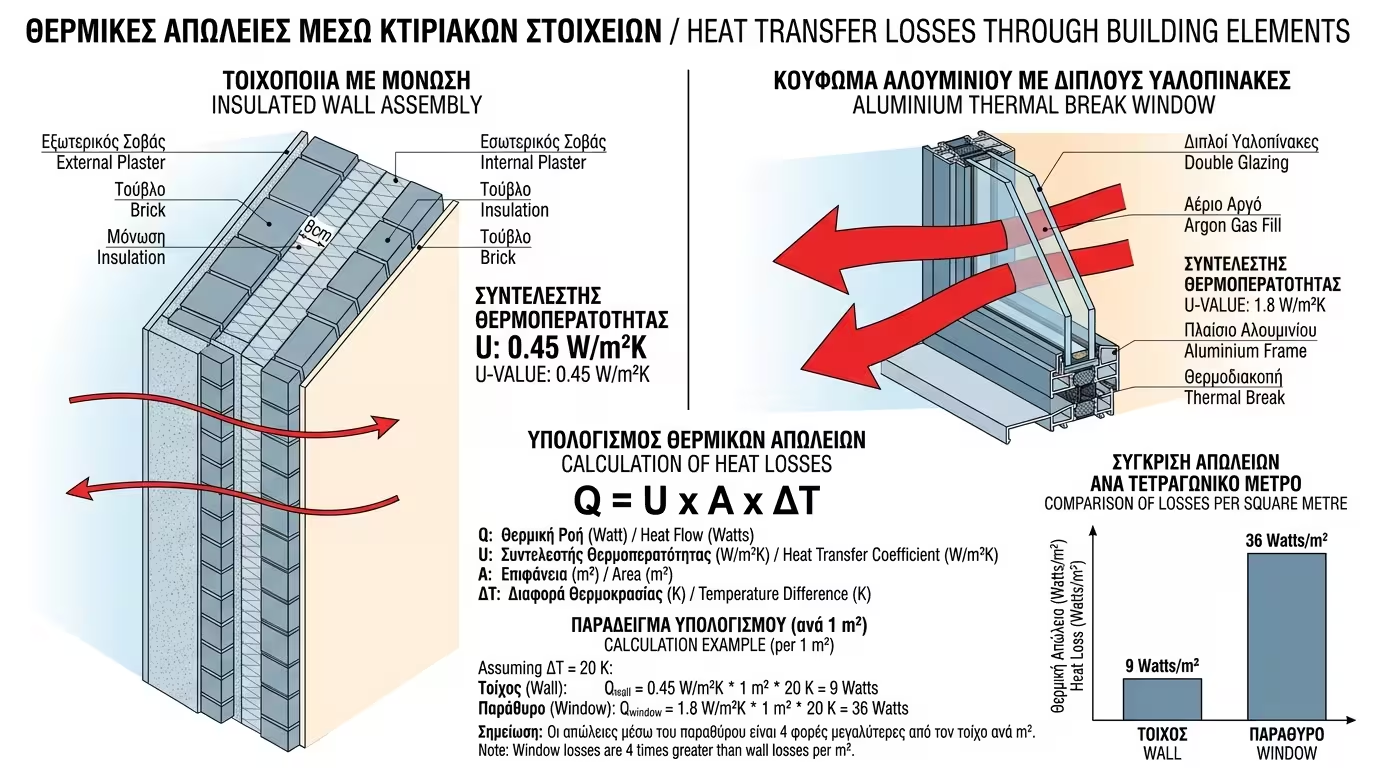
Transmission loss calculation - formula U × A × ΔT for walls, windows, roof

Here we measure the heat escaping through the building fabric - walls, windows, ceiling, floor. The engineer takes the architectural plans, measures the area of each surface, and applies the fundamental equation of building thermodynamics: ΦT = Σ(U × A × ΔT).

🧱 The U × A × ΔT Formula

For each building element (wall, window, door, roof, floor), the engineer multiplies three values: U - the Thermal Transmittance (W/m²K), A - the area in m², and ΔT - the temperature difference. The result is the Watts lost through each surface.

📊 Example: Uninsulated vs insulated wall

An uninsulated wall (U = 2.5 W/m²K), with area 10 m² and ΔT 20°C, loses 500 Watts. If we insulate it with external wall insulation (U = 0.5), it loses only 100 Watts - an 80% reduction! This number shows why insulation is the first investment worth every euro.

🪟 Windows: The Weakest Link

Windows have a U-Value far worse than walls - an old single-glazed aluminium window reaches U = 5.0 (ten times worse than an insulated wall). Even a modern energy-rated window (U = 1.2) loses triple the energy per m² compared to the wall next to it. This is why the study measures each window separately.

🏗️ The Role of Roof and Floor

An uninsulated roof can be responsible for 25-30% of total losses in a house. The floor (if above a pilotis or basement) also contributes. The engineer applies the same formula to every surface and adds up the Watts - room by room - building the transmission losses table.

3. Step 3: Ventilation & Infiltration Losses (ΦV)

Even if the walls, windows and roof are perfectly insulated, heat still escapes through the air that enters the building. Whether it comes through cracks, because we open windows, or via a VMC system - the cold air entering the house must be heated, and that requires energy.

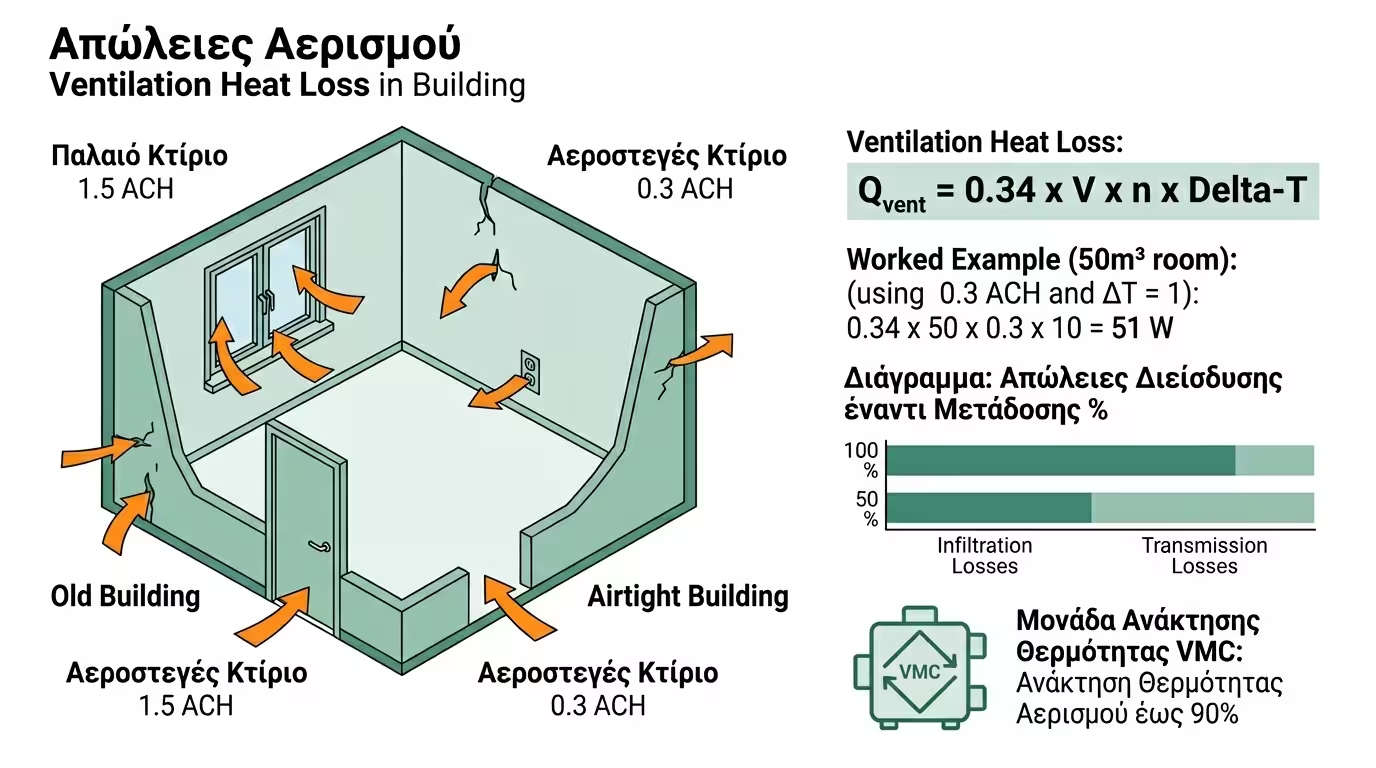
Ventilation losses - air infiltration, room volume, VMC heat recovery

🌬️ The Air Change Rate (ACH)

The engineer calculates the room volume (length × width × height) in m³ and multiplies it by the air change rate per hour (ACH - Air Changes per Hour). A typical home without VMC changes 0.5-1.0 times its air volume per hour, depending on how leaky the envelope is.

📐 The Calculation Formula

The energy required to heat cold air is calculated as: ΦV = 0.34 × V̇ × ΔT, where V̇ is the airflow rate in m³/h, 0.34 is the volumetric heat capacity of air (Wh/m³K) and ΔT is the indoor-outdoor temperature difference. A 40 m³ room with 0.5 ACH loses 136 Watts from ventilation alone (ΔT = 20°C).

🕳️ Infiltration vs Controlled Ventilation

In old houses, gaps around windows, sockets and pipes create uncontrolled cold air drafts. These "hidden" losses can reach 25-40% of the total heat load. An airtight house with MVHR (Mechanical Ventilation with Heat Recovery) slashes these losses to a minimum, recovering 90% of the outgoing heat.

🔄 Why It Must Not Be Ignored

Many installers ignore ventilation losses, focusing only on walls. This leads to calculations 10-20% lower than real needs - especially in homes with many windows or in windy areas. A proper EN 12831 study always includes ventilation losses alongside transmission losses.

4. The Final Result: Your Energy Needs Identity

At the end of the study, the engineer adds up the transmission and ventilation losses for each room (Φi = ΦT + ΦV) and delivers a complete table - an "energy identity card" for every space. This document is the foundation for every subsequent decision.

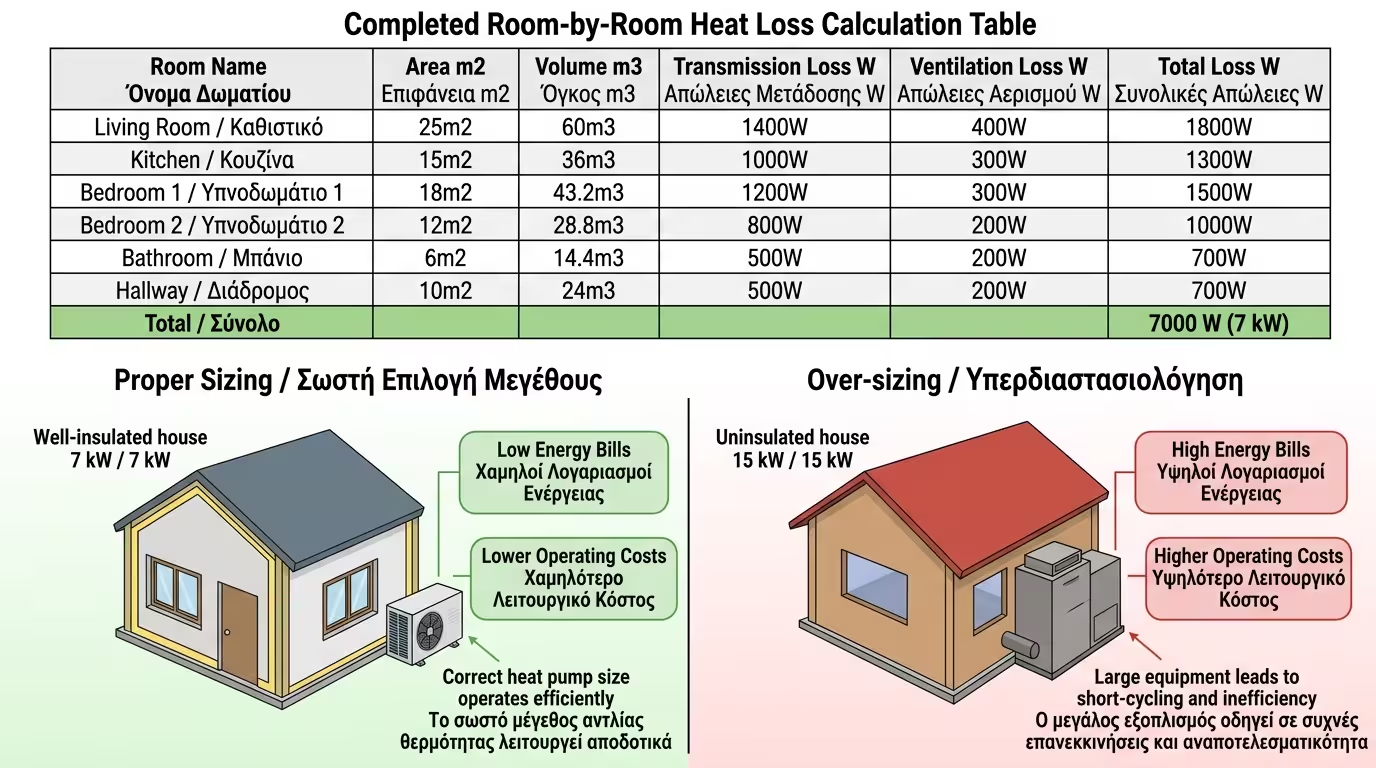
Final heat loss table per room - 6.2 kW total vs 15 kW rule-of-thumb

📋 The Heat Loss Table

A typical result looks like this: Living room 2,100 W, Bedroom 1: 900 W, Bedroom 2: 850 W, Bathroom: 450 W, Kitchen: 1,200 W, Hallway: 700 W. Building total: 6,200 W (or 6.2 kW). With this table you know exactly how many Watts each room needs.

⚠️ The Intermittent Operation Reheat Factor

The EN 12831 standard adds (if needed) a small Reheat Factor. If you plan to turn heating off completely when you are away (e.g. holiday home or internal insulation), the system needs a few extra Watts of power to rapidly bring the cold house back to 20°C when you return.

📉 6.2 kW vs 15 kW: The Rule-of-Thumb Myth

Had you followed the old "per square metre rule", for a 100 m² home you'd be told to buy a boiler or heat pump rated at 15 kW! The proper study shows that just 6.2 kW is enough - less than half. You'd pay double for hardware, the machine would short-cycle constantly because it's massively oversized, and you'd have permanent comfort problems.

🎯 Why It's Worth Every Euro

An EN 12831 study typically costs €200-500, but saves thousands in wrongly-sized equipment. Each room gets a radiator rated at exactly what it needs - no more, no less. For the whole house you buy a 7 kW heat pump instead of 15 kW. The Heat Loss Study is the foundation of every economically sound HVAC installation.

📜 The EN 12831 Heat Loss Study is not a luxury - it is the golden rule that separates a correct HVAC installation from an expensive experiment. Without it, every equipment purchase is essentially a blind bet.

Related Articles

Preview