📏 15-30 cm thickness
Passivhaus insulation isn't "normal" polystyrene. We're talking about thick sheets of insulating material (EPS, mineral wool, PUR) that embrace every square centimetre of the envelope. Heat simply has no escape route.
A Passive House isn't simply a home with "good insulation." It's a rigorous, scientific building standard (born in Germany) that slashes heating and cooling demand by 90%.
Instead of machines, the house heats itself "passively": from the sun, from the heat of electrical appliances, and even from the body heat of the occupants! To achieve this, it must obey 5 Core Principles. If even one breaks down, the system collapses.
In a conventional home we install 5-7 cm of insulation. In a Passive House, the insulation is extremely thick: 15, 20 or even 30 cm depending on the climate. The insulating material wraps the building on all sides - walls, roof, and under the foundations.
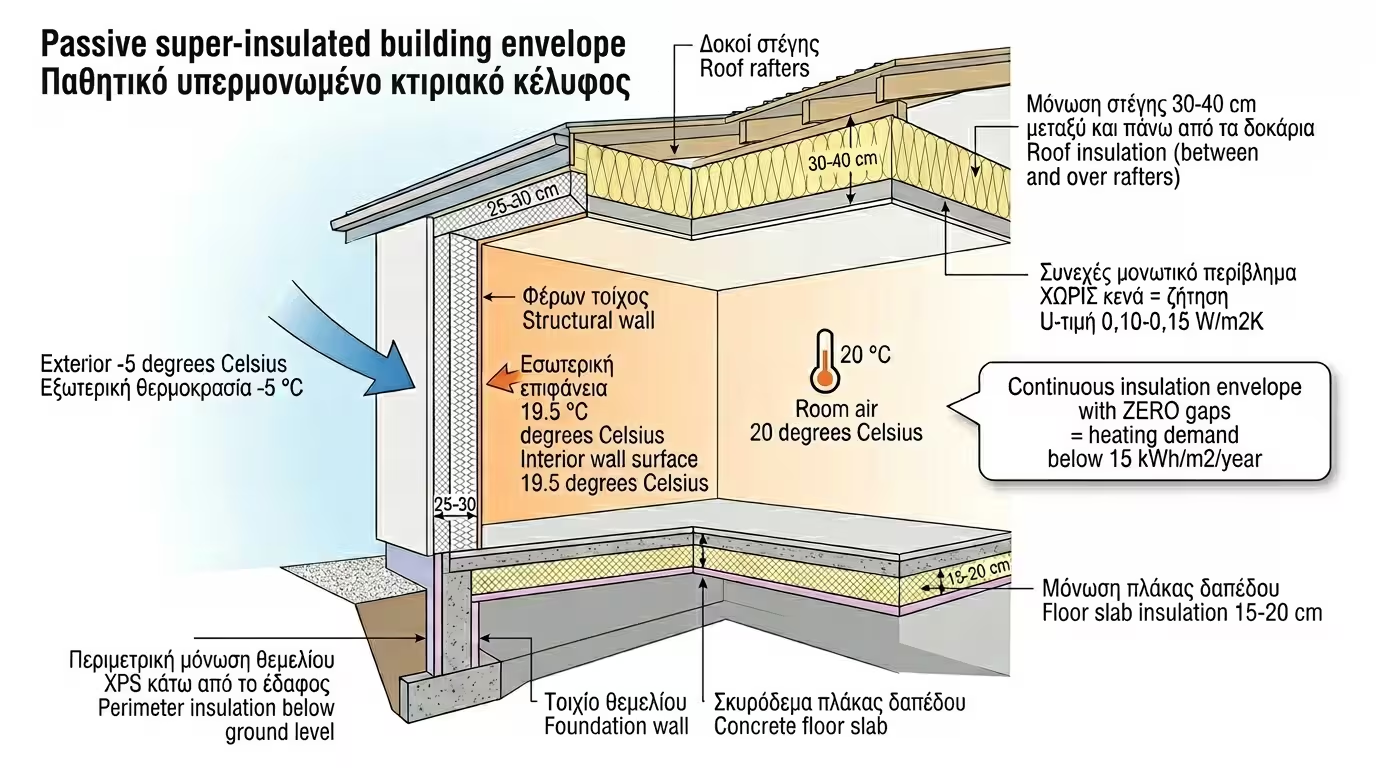
Passivhaus insulation isn't "normal" polystyrene. We're talking about thick sheets of insulating material (EPS, mineral wool, PUR) that embrace every square centimetre of the envelope. Heat simply has no escape route.
Unlike conventional homes, in a Passivhaus the floor slab never touches the frozen ground directly. Special insulation boards are placed beneath the concrete foundation, cutting off every thermal leak downwards.
In an old home, the wall loses as much heat as an open window. In a Passivhaus, the wall transfers so little energy that the loss is virtually zero - and that's precisely what allows the traditional radiator to be abolished.
Even at -10°C outdoors, the inner surface of the wall stays warm (above 17°C). There's no cold-radiation feeling near the walls - something unimaginable in older houses.
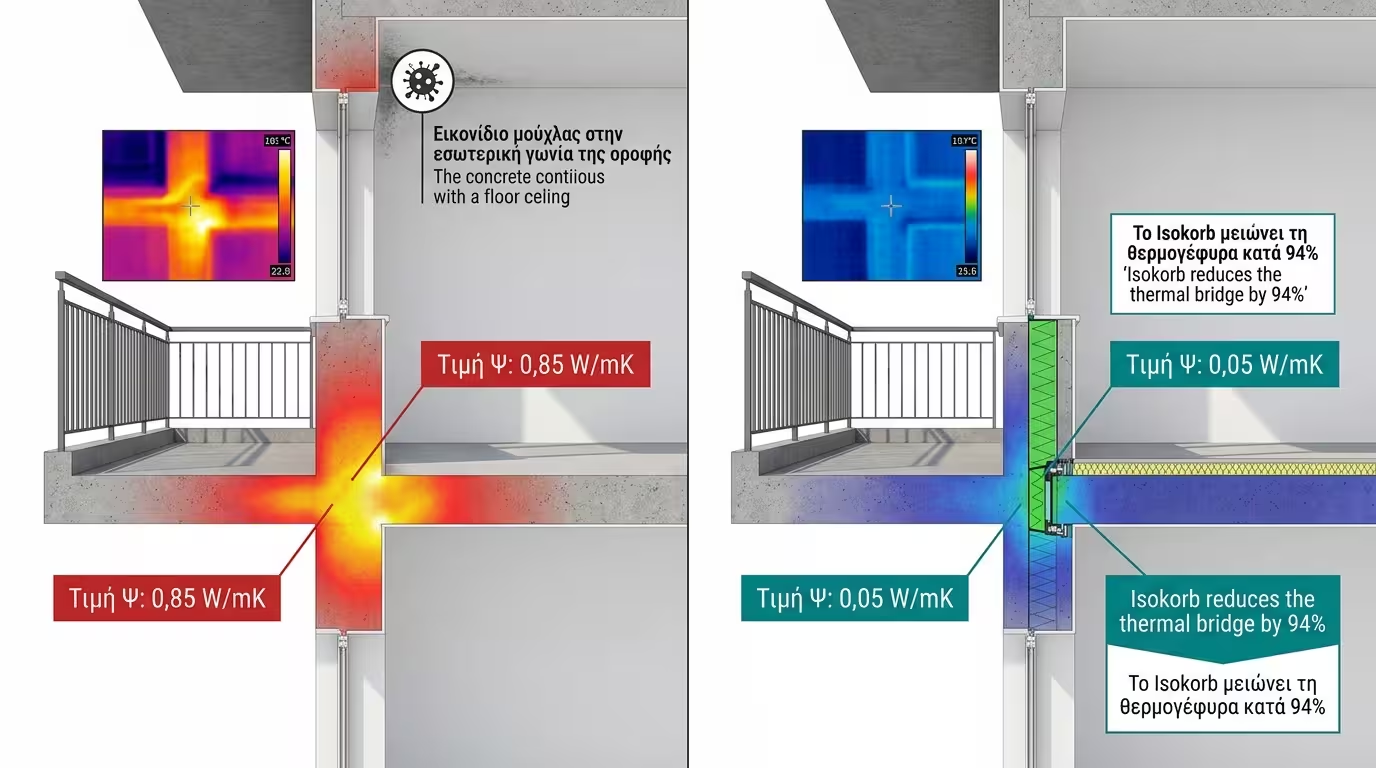
Even with super-insulation, if there is just one spot where the concrete is exposed directly to the cold, energy will "rush" to escape through it. These spots are called thermal bridges - e.g. a canopy or a balcony protruding like a "tongue" from the floor slab.
In a Passivhaus, the architect ensures the insulation is absolutely continuous with no interruptions. No concrete spot is left "bare" - every column, beam and ring beam is fully covered.
Where a balcony must protrude, special thermal-break elements (e.g. Schöck Isokorb) are used - "sponges" of insulating material and stainless steel that sever the contact between interior and exterior concrete.
The linear thermal bridge coefficient (Ψ-Value) in Passivhaus buildings drops close to zero. By contrast, typical Greek balcony thermal bridges can reach Ψ = 0.90 W/(mK) - a massive loss!
Without thermal bridges there are no "cold spots" on the walls. Without cold spots there is no vapour condensation. Without condensation, black mould disappears - that plague of old buildings.
Windows are traditionally a building's biggest "hole." In Passivhaus buildings, triple-glazed windows are installed, filled with inert gas (Argon or Krypton) and Low-E coatings. The frames are themselves filled with insulating material.
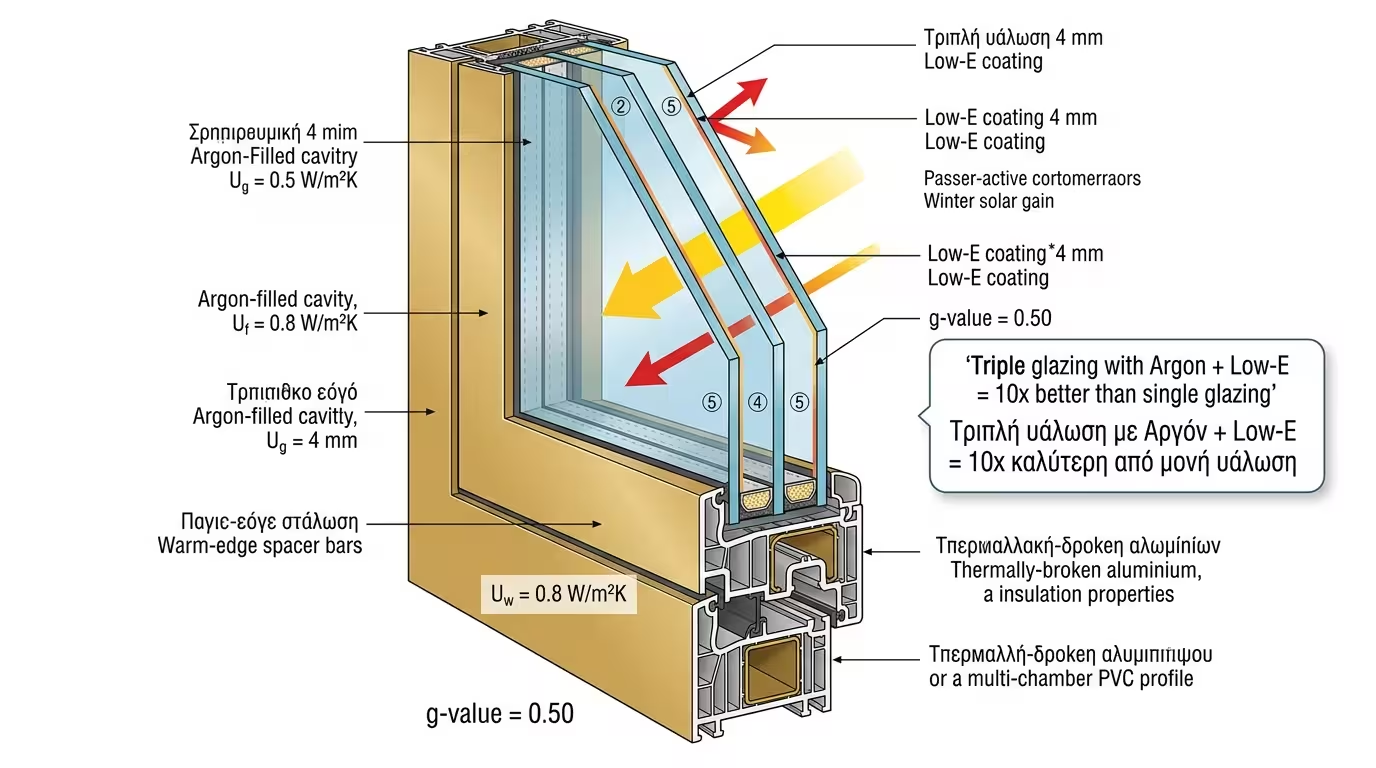
Large south-facing windows act like enormous "radiators." They let the sun's heat in, but thanks to special Low-E coatings, they don't let it escape again at night - free heating!
An old single pane has Uw ≈ 5.0. A modern energy-rated window drops to 1.5. Passivhaus windows go below 0.80 - virtually zero losses through the glass!
The gaps between the panes are filled with inert gas, denser than air. This hinders heat conduction through the glass, dramatically lowering the Ug (glass U-value).
Passivhaus window frames aren't ordinary aluminium. They are technological masterpieces with multiple thermal breaks and internal insulation foam filling. The frame never "gets cold."
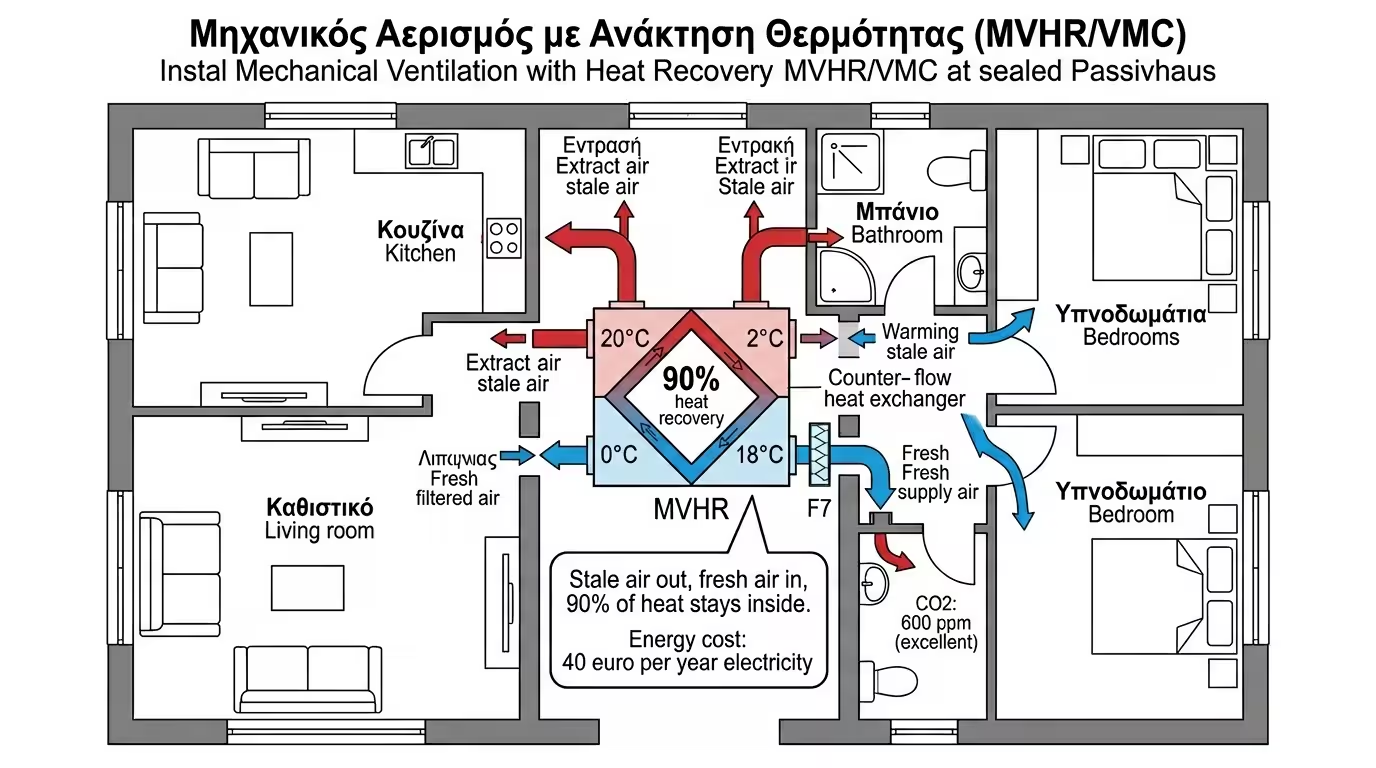
A Passivhaus is sealed entirely with special airtight membranes. Literally not a millimetre of air leaks in or out. To breathe, a Mechanical Ventilation with Heat Recovery (MVHR/HRV) system is installed.
The Blower Door Test measures how many times the air changes in 1 hour under 50 Pa pressure. An old Greek house scores 7-10 ACH (a sieve). A Passivhaus must score below 0.6 ACH - absolutely sealed.
The MVHR system extracts stale air, "steals" 90% of its heat, and transfers it to the fresh, filtered air entering from outside. The house is ventilated 24/7 without losing even half a degree Celsius.
Incoming air passes through F7 or HEPA filters that trap dust, pollen and particulate matter. Ideal for allergy sufferers, asthmatics and families with young children.
A 100 m² Passivhaus needs just 1,000 Watts (as much as a hair dryer) on the 3-4 coldest days of the year. The rest of the time it literally heats itself - on its own.
🏗️ Passivhaus isn't a trend - it's mathematics. It reduces heating demand by 90% and cooling demand by 75% compared to a conventional building. It was pioneered in Germany, is spreading to thousands of homes in Greece, and represents the very definition of the "house of the future."
Return to category.
Go to categoryReturn to the central guide.
Go to guide