Energy Performance Certificate (EPC): The Label That Determines Your
Home's Value
Just as you check the energy label when buying a fridge or washing
machine (to see if it's A+++ or G), houses now get their own "label"
too. This is the famous EPC (Energy Performance Certificate).
Let's see when it is mandatory, how it is issued, and - most importantly
- which HVAC upgrades can dramatically boost your property's value.
1. When Is the EPC Mandatory?
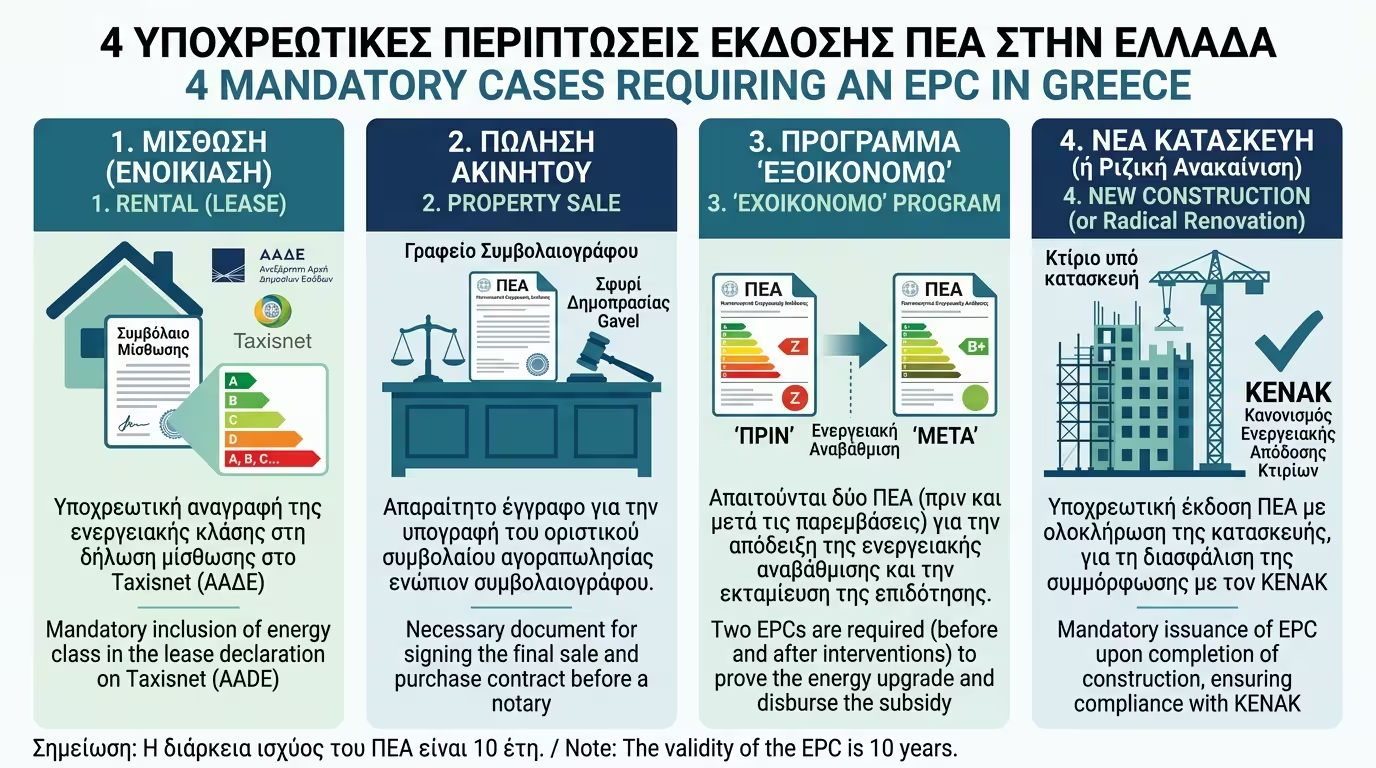
The law is clear. You cannot carry out almost any real estate
transaction without it. The EPC is a mandatory companion document for every rental, sale, or property transfer.
🏠 Renting a property
The EPC protocol number must be listed on the electronic lease filed
with the tax authority (AADE/Taxisnet). Even in rental listings
(e.g. Spitogatos), the energy class must be displayed.
Without a valid EPC, the lease contract cannot be legally submitted.
🔑 Buying or selling
The notary cannot proceed with the transfer contract
without a valid EPC. If you're buying a home, always ask to see the certificate
before signing - it reveals how much you'll pay each year for heating
and cooling.
🏗️ "Exoikonomo" programme
To receive a subsidy, you need an EPC at the start (to prove the
house is energy-inefficient) and a new EPC at the end (to prove you
hit the energy target). Without both EPCs, the
subsidy is cancelled.
📅 Valid for 10 years
The EPC is valid for 10 years, unless you make a
major renovation in the meantime (e.g. new heating system,
insulation, windows). After a major renovation you must issue a new
EPC. If you upgraded your home, the new EPC will reflect a higher energy class.
2. How Is It Issued and How Much Does It Cost?
The EPC is issued exclusively by certified Energy Inspectors (engineers registered in the Ministry's official registry). The inspector
visits your home, measures the walls, checks the windows, records the heating
system and the method of domestic hot water production.
💶 Issuance cost
There is no fixed government price - the fee is freely negotiable.
For a typical apartment of 80-100 m² , the cost
ranges between €50 and €150 , depending on the
area, building complexity and square footage. For detached houses or
multi-storey buildings, it can exceed €200.
📊 What the Inspector checks
They measure insulation thicknesses, glazing type
(single, double, triple), the boiler or heat pump, air conditioners,
solar water heater, lighting and automation systems. The data is
then entered into the
Ministry's software, which calculates the annual
energy consumption.
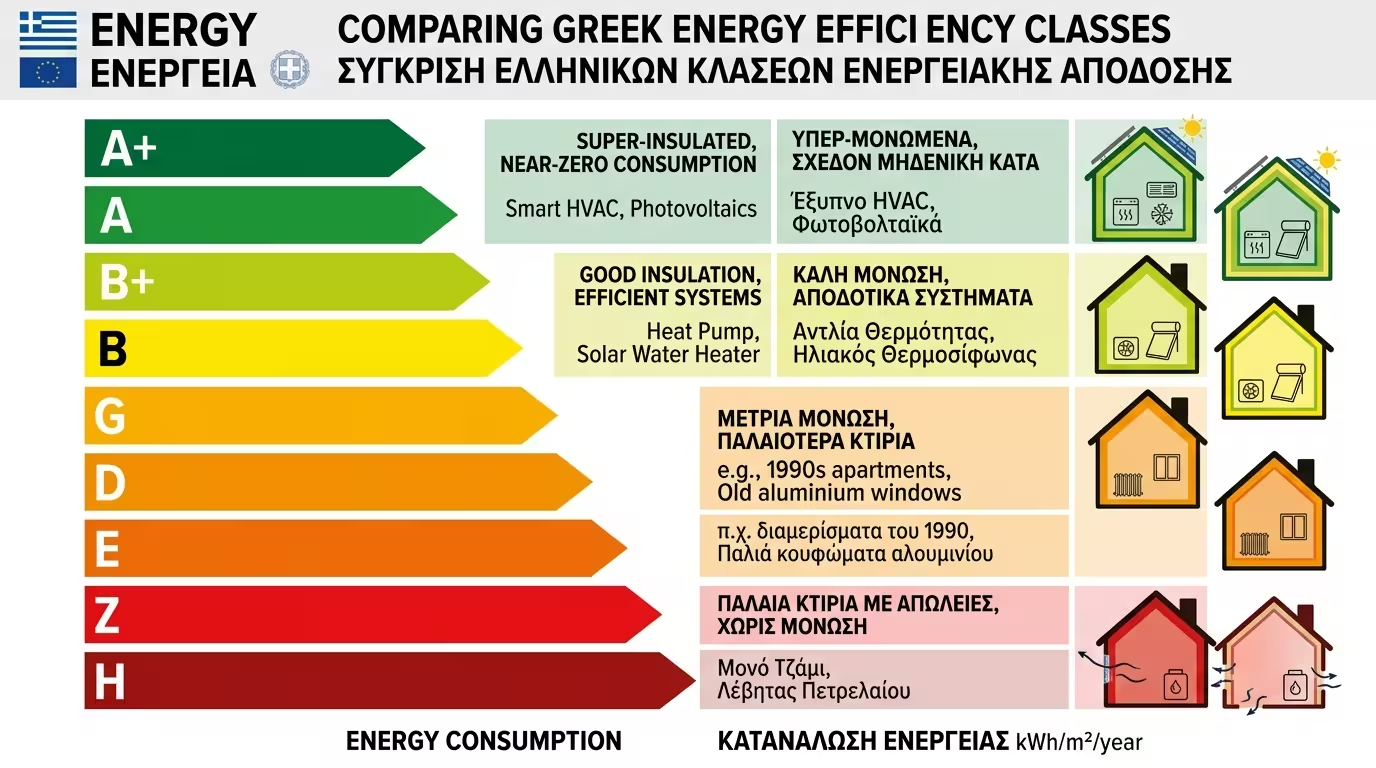
📈 The 9 Energy Classes
The software classifies your home into one of
9 classes (A+, A, B+, B, C, D, E, F, G). Classes F & G: the "sieves" - old homes with no insulation and single glazing.
Classes
A & A+: the "elite" - super-insulated buildings
with photovoltaics and smart HVAC systems.
🔍 What it does NOT consider
Secret: The EPC grade is not based on your electricity
bills! It is based on theoretical, standard usage.
If you're away all day and spend €10 on electricity per month, the
house doesn't get an "A+" rating. If the walls are uninsulated, it
will be rated "G" regardless of what you pay. The EPC evaluates the building, not your behaviour.
3. HVAC Upgrades: How to "Hack" Your EPC
If your home scored "G" and you want to upgrade to "C" or "B" (whether
to increase its value or to qualify for the "Exoikonomo" programme),
mechanical upgrades give the
most points with the least disruption. You don't always
need to knock down walls!
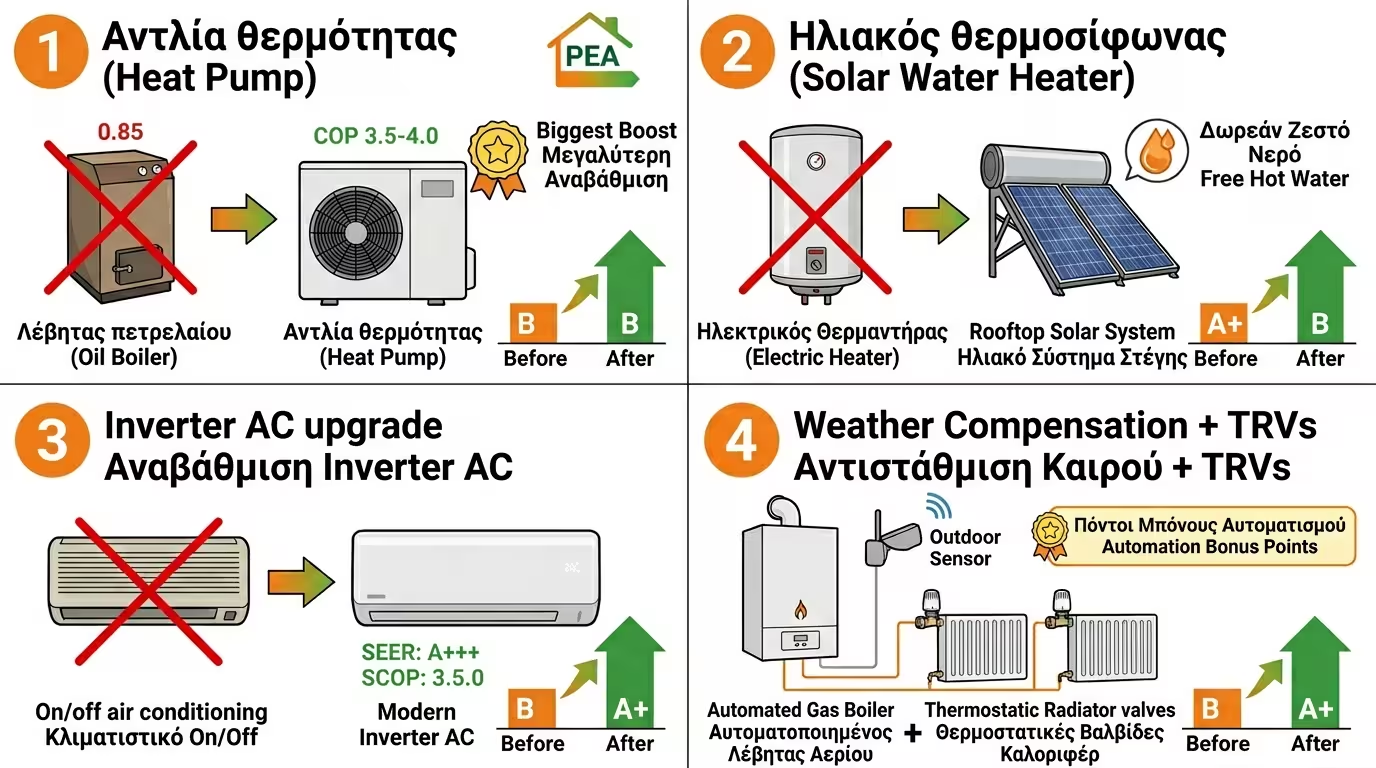
🔥 Heat Pump (The Ultimate Boost)
Replacing the old oil boiler with a high-COP
heat pump creates a huge jump in the EPC ranking. The
efficiency goes from 0.85 (oil) to 3.5 or 4.0 (heat pump)
- four times more efficient! This single intervention can push the EPC
up by 2-3 classes
immediately.
☀️ Solar Water Heater
The cheapest upgrade with the highest EPC return. Replacing an
energy-hungry electric water heater (consuming 4,000 W) with free solar hot water dramatically improves the primary
energy index. It costs €800-1,500 and pays for itself
in 2-3 years.
❄️ Inverter A+++ Air Conditioners
Replacing 20-year-old "on/off" air conditioners with modern units
featuring high SEER/SCOP
ratings boosts the cooling class dramatically. A modern
A+++ Inverter consumes up to
50% less electricity compared to an old-generation unit
of the same capacity.
🌡️ Weather Compensation & TRVs
Even if you keep your gas boiler, adding an
outdoor sensor (weather compensation)
and thermostatic radiator valves (TRVs) earns valuable "automation points"
in the KENAK software. In practice, you prove that your system doesn't waste
a single kWh, automatically adjusting heat per room.
4. Summary: The EPC as a Value Tool
The Energy Performance Certificate is not just another piece of
bureaucratic paper. It is the official "X-ray" of your
property and its showcase in the real estate market.
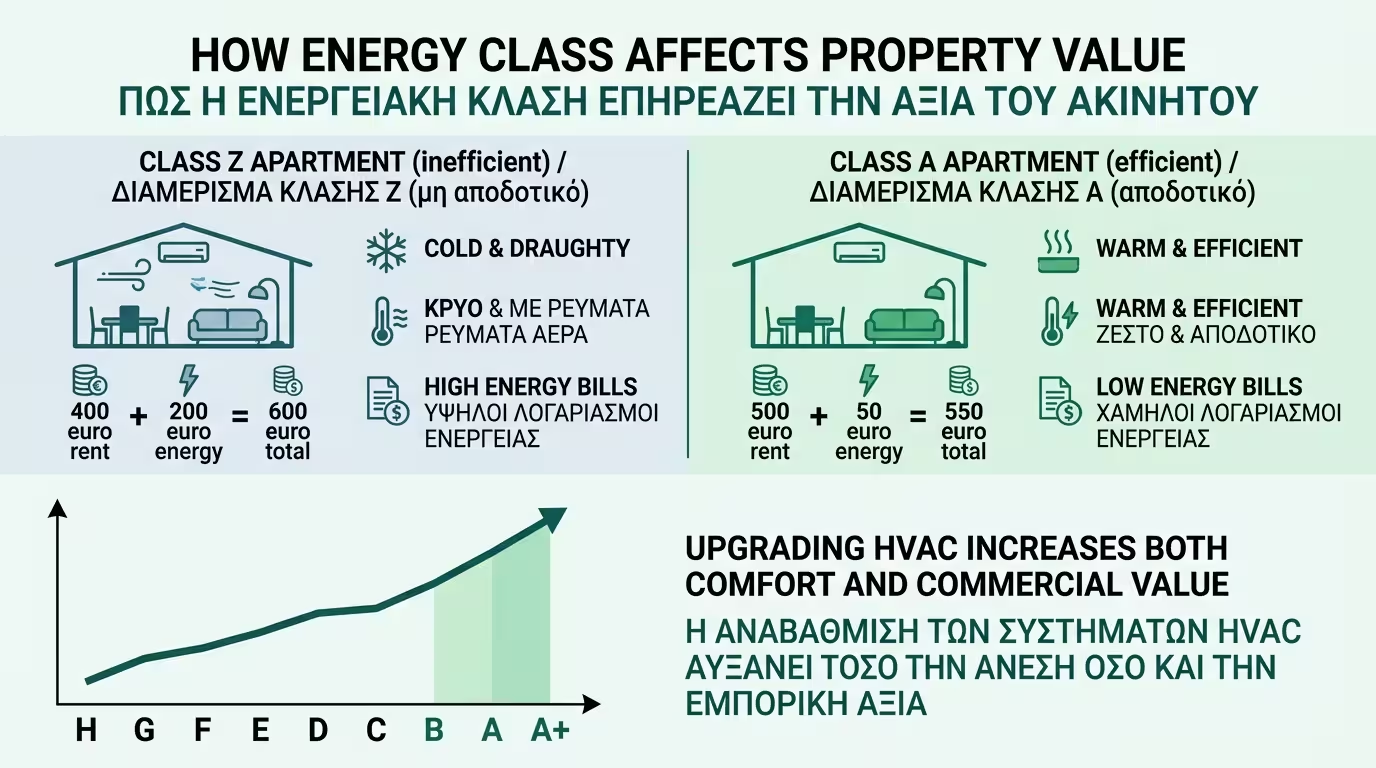
👥 Changing mindset
Tenants and buyers are now educated: they know that a
€400 rent in a "G" class home will ultimately cost more
than a €500 rent in an "A" class home. Energy class
has become a search criterion in property listings, just like the
number of bedrooms.
💰 Increasing value
By upgrading your heating and cooling systems, you don't just gain
in comfort. You dramatically increase the market value of your property. Studies show that class A/B+ buildings sell for 10-15% more than equivalent lower-class properties.
⚡ Correct sequence of interventions
The ideal strategy: insulation & windows first (reduce
needs), then heat pump
(replace fossil fuels), and finally solar & photovoltaics (energy production). This sequence maximises the EPC class jump and
minimises equipment cost.
📞 Get your calculation now
Contact a specialised engineer who can evaluate the
best HVAC interventions for your specific property. Proper
planning before renovation ensures that every euro invested returns many
times over, both in savings and in
property value.
📜 The EPC isn't "bureaucracy" - it's your property's
energy passport. Make sure it looks good!