🏗️ Typical locations
Balcony slabs continuous with the floor slab, reinforced-concrete columns, parapet ring beams, window reveals, wall-ceiling junctions. Every spot where unclad concrete is exposed to the cold.
A house may have excellent wall insulation, but if balconies, columns and ring beams remain "bare," heat rushes to escape through those very spots. These "hidden pathways" are called thermal bridges - and they are the number-one culprit for mould, cold spots and unexplainedly high bills.
Imagine wearing a warm down jacket but with bare arms. Heat escapes precisely from there. In a building, the "bare arms" are columns, beams, ring beams and balconies - which are typically not wrapped in insulation in conventional construction.
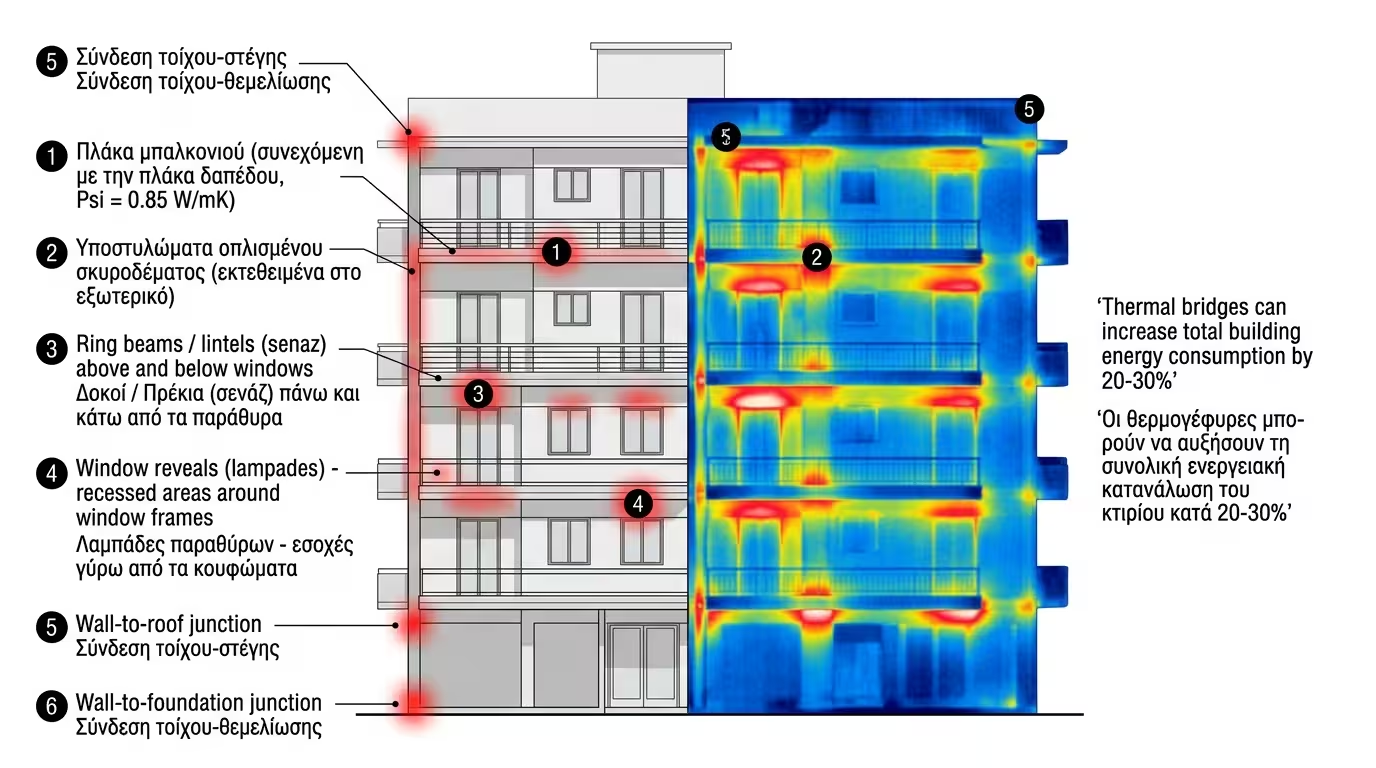
Balcony slabs continuous with the floor slab, reinforced-concrete columns, parapet ring beams, window reveals, wall-ceiling junctions. Every spot where unclad concrete is exposed to the cold.
A thermal bridge is measured in W/(mK). An unbroken balcony: Ψ = 0.80 – 0.90. With Isokorb: Ψ = 0.05. The difference in annual losses is enormous.
An IR thermal camera photographs the building and shows in red-yellow colours exactly where heat is escaping. Balconies "glow" like energy-wasting light bulbs.
Thermal bridges can increase a building's total consumption by 20-30%. You pay for electricity or oil for heat that never stays in the room - it escapes through bare structural elements.
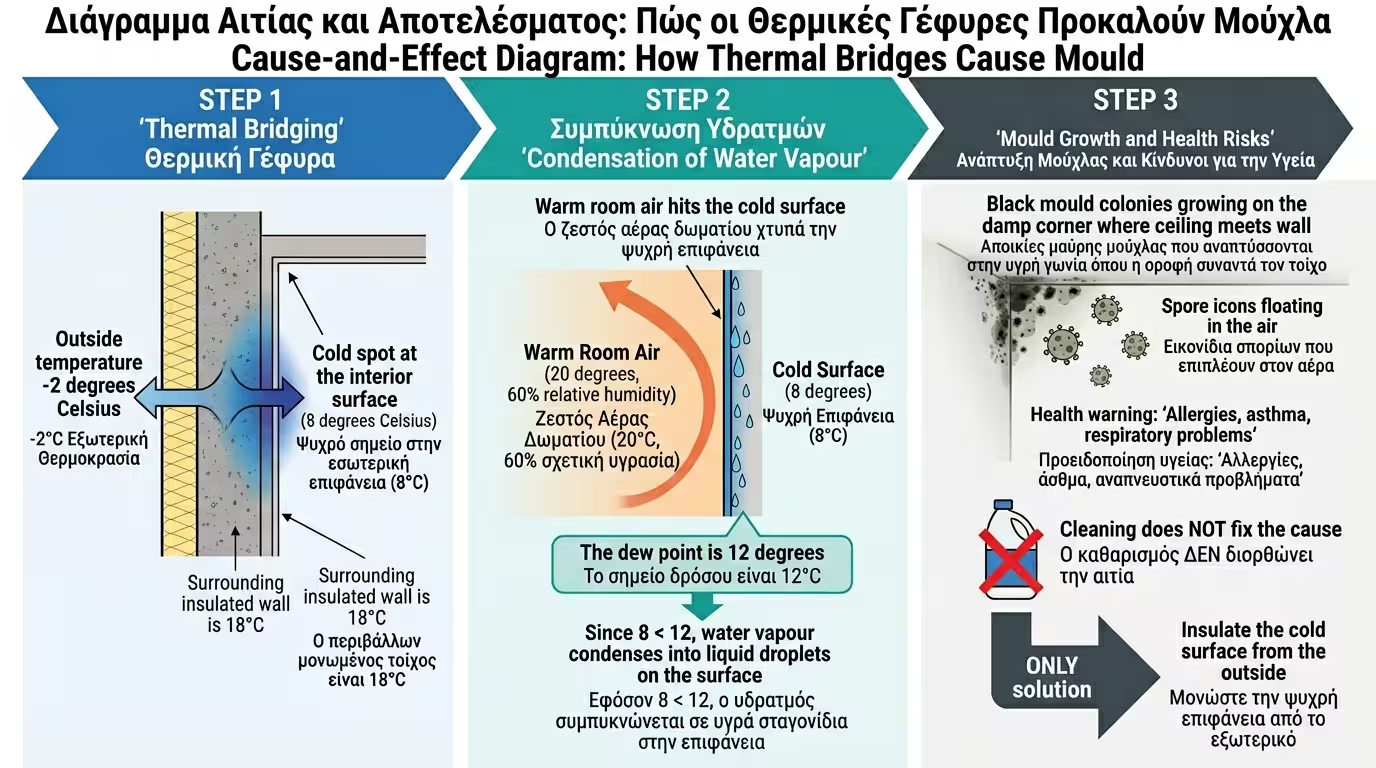
Many homeowners see black mould in ceiling corners or behind wardrobes and assume "water is leaking in." In reality, mould in typical Greek buildings is almost always caused by thermal bridges.
The warm room air carries moisture. When it hits a frozen corner (thermal bridge), it cools below the dew point. Water vapour turns into droplets - the perfect "food" for mould.
Mould spores float in the air and cause allergic reactions, respiratory problems, and in severe cases chronic asthma. In homes with young children or elderly residents, the risk is even greater.
The owner cleans the mould with bleach, but within two weeks it reappears. Why? The cause (the frozen column or ring beam) remains. The only solution is external insulation of that spot.
Beyond health, chronic moisture damages plaster, turns walls grey, and can even corrode the reinforcing steel in the concrete - undermining structural integrity.
In new buildings (or full reconstructions), the engineer can design an uninterrupted insulating envelope, with no concrete spot left "bare" to the cold.
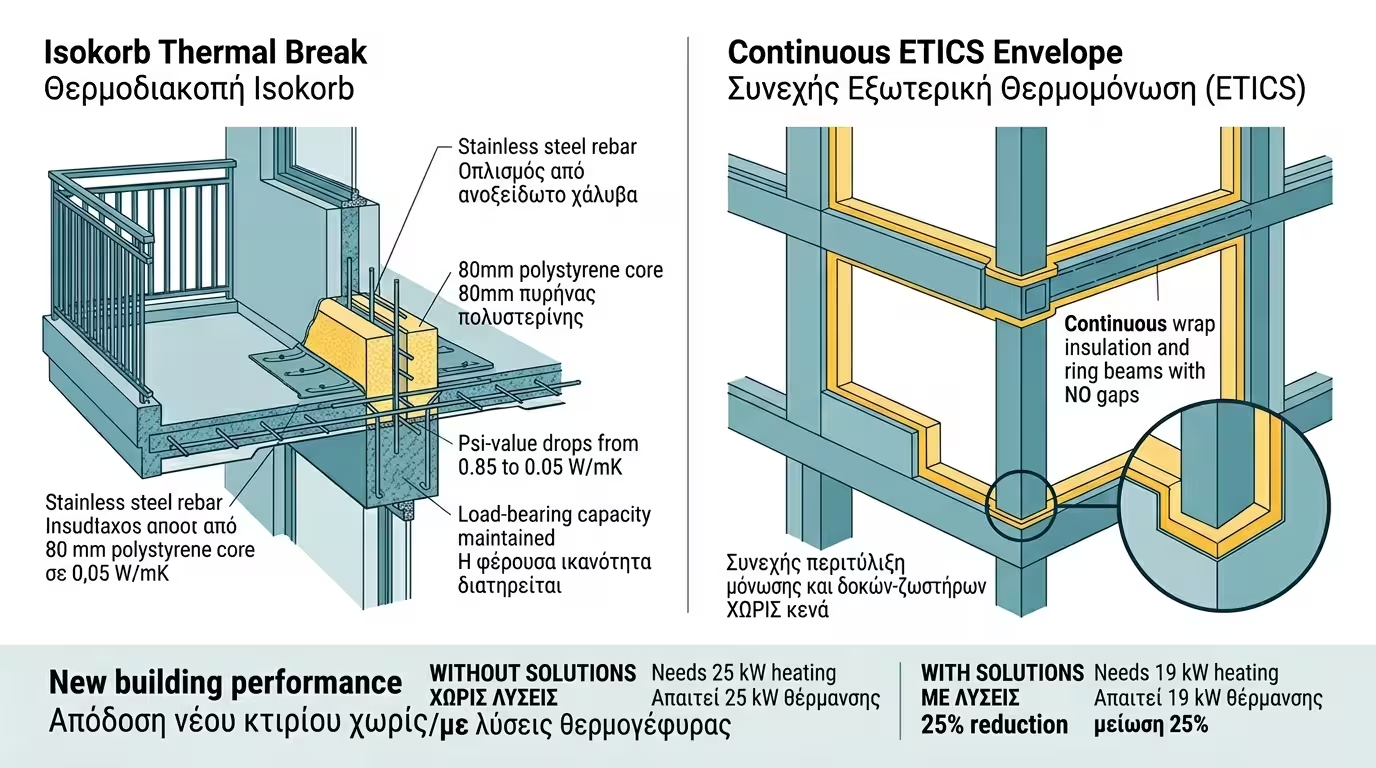
Special elements cast inside the concrete during pouring. They "cut" the thermal bridge by 90% while maintaining full structural capacity. The cleanest solution.
Reducing or eliminating protruding balconies. Instead of external slabs, loggias (recesses) within the envelope are designed - with zero thermal bridges.
External insulation hugs every structural element with no "gaps." Columns, beams, ring beams - all are wrapped in insulation. The most effective large-scale solution.
A new building without thermal bridges needs 15-25% fewer kW of heating, never develops mould, and ensures uniform temperature on every interior surface.
In an existing building, installing Isokorb on balconies is practically impossible without demolition. But there are alternative solutions that drastically reduce losses.
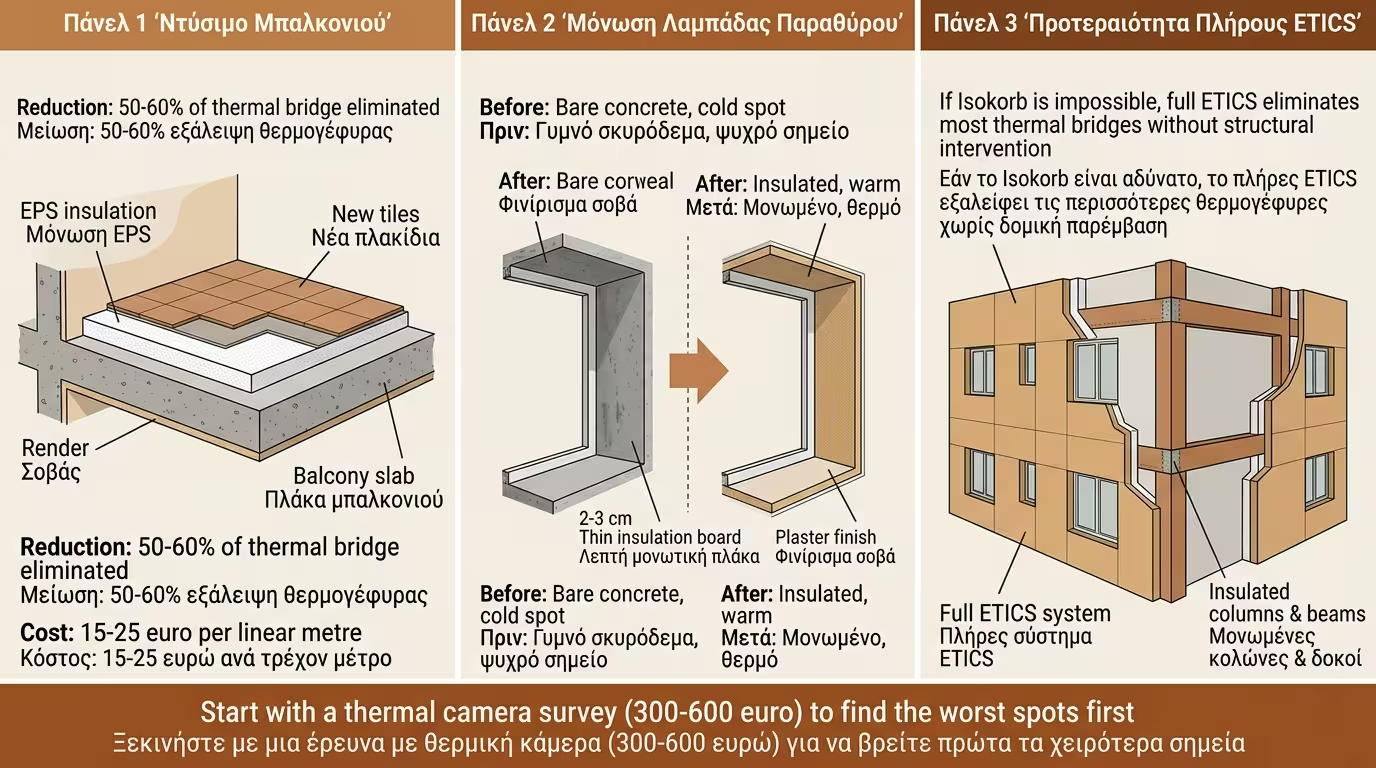
The balcony slab is wrapped with EPS or mineral wool on top and underneath. It doesn't eliminate the bridge 100%, but reduces it by 50-60%.
Window reveals (recesses) are hidden thermal bridges. Installing thin insulation (2-3 cm) internally or externally at the reveals significantly reduces local losses.
External insulation (ETICS) automatically "wraps" columns, beams and ring beams. If you can't fit Isokorb, a full ETICS system eliminates most thermal bridges without any structural intervention.
Before deciding, request a thermographic survey of the building. It reveals exactly where heat is escaping, so you can focus on the highest-return spots - without wasted money.
🏗️ Thermal bridges are invisible, but costly. Every "bare" column, every uninsulated balcony is an invisible bill you pay every month. External insulation and thermal-break elements erase these "ghosts" forever.
Return to category.
Go to categoryReturn to the central guide.
Go to guide