🔋 The building's "battery"
Every cubic metre of concrete stores over 500 Wh/m³K. In a typical 100 m² home, the walls can "charge" enough energy to keep the space warm for hours after the heating switches off.
You've decided to insulate. Will you "wrap" the house from the outside (External Insulation / ETICS) or install mineral wool and plasterboard from the inside? The position of the insulation radically changes the way you should set your thermostat. Let's meet "Thermal Mass."
Heavy materials (bricks, concrete, earth walls) have a special property: they absorb heat, store it and release it slowly. This property is called Thermal Mass. Think of your walls as giant "thermal batteries" that can charge - or remain empty.
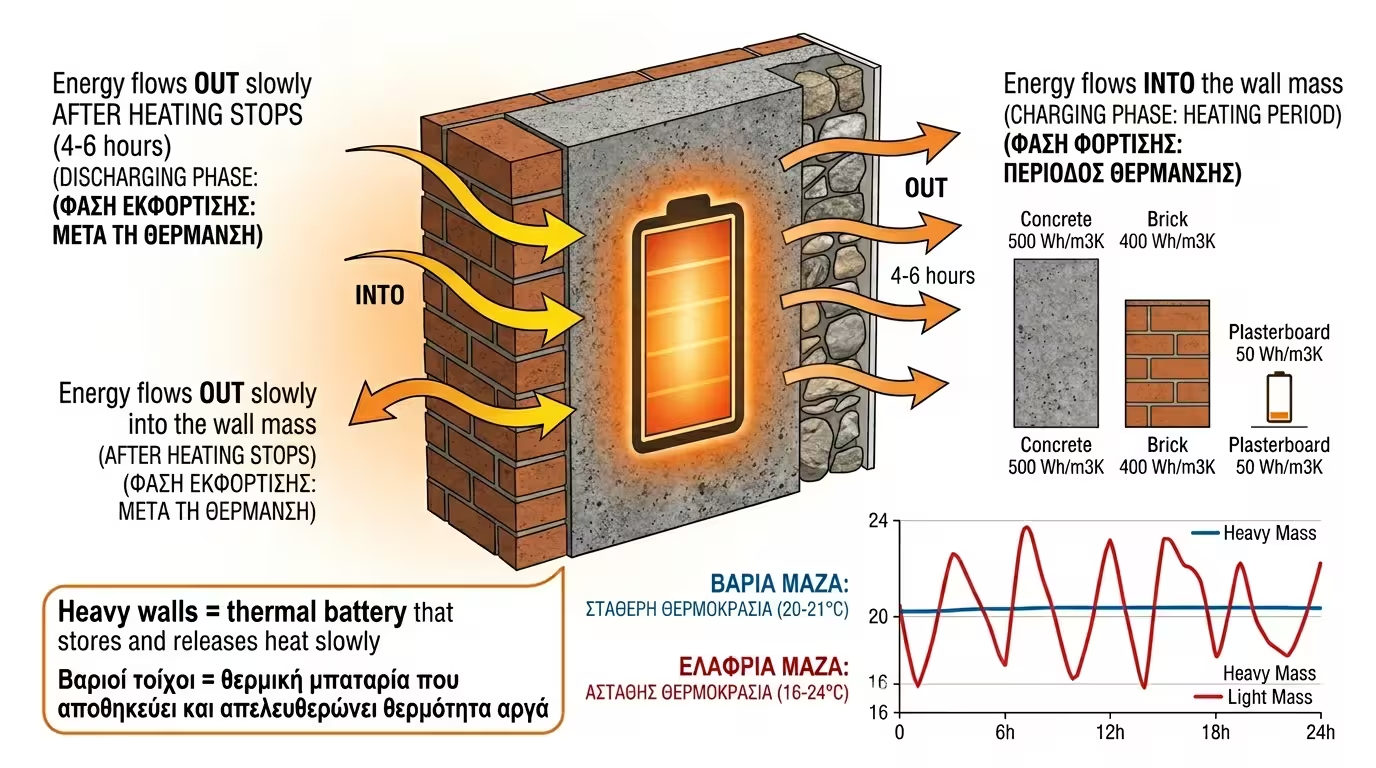
Every cubic metre of concrete stores over 500 Wh/m³K. In a typical 100 m² home, the walls can "charge" enough energy to keep the space warm for hours after the heating switches off.
Concrete, fired bricks, natural stone, ceramic tiles - all have high specific heat capacity. By contrast, plasterboard, timber and lightweight materials store virtually zero energy.
Where the insulation is placed (inside or outside) determines whether the "battery" (the bricks) charges with the home's heat or remains permanently frozen - out of the game.
Thermal mass isn't theoretical. In a home with warm walls you feel deep, patriarchal warmth - steady, gentle, without drafts. It's the same cosiness stone mansions provide.
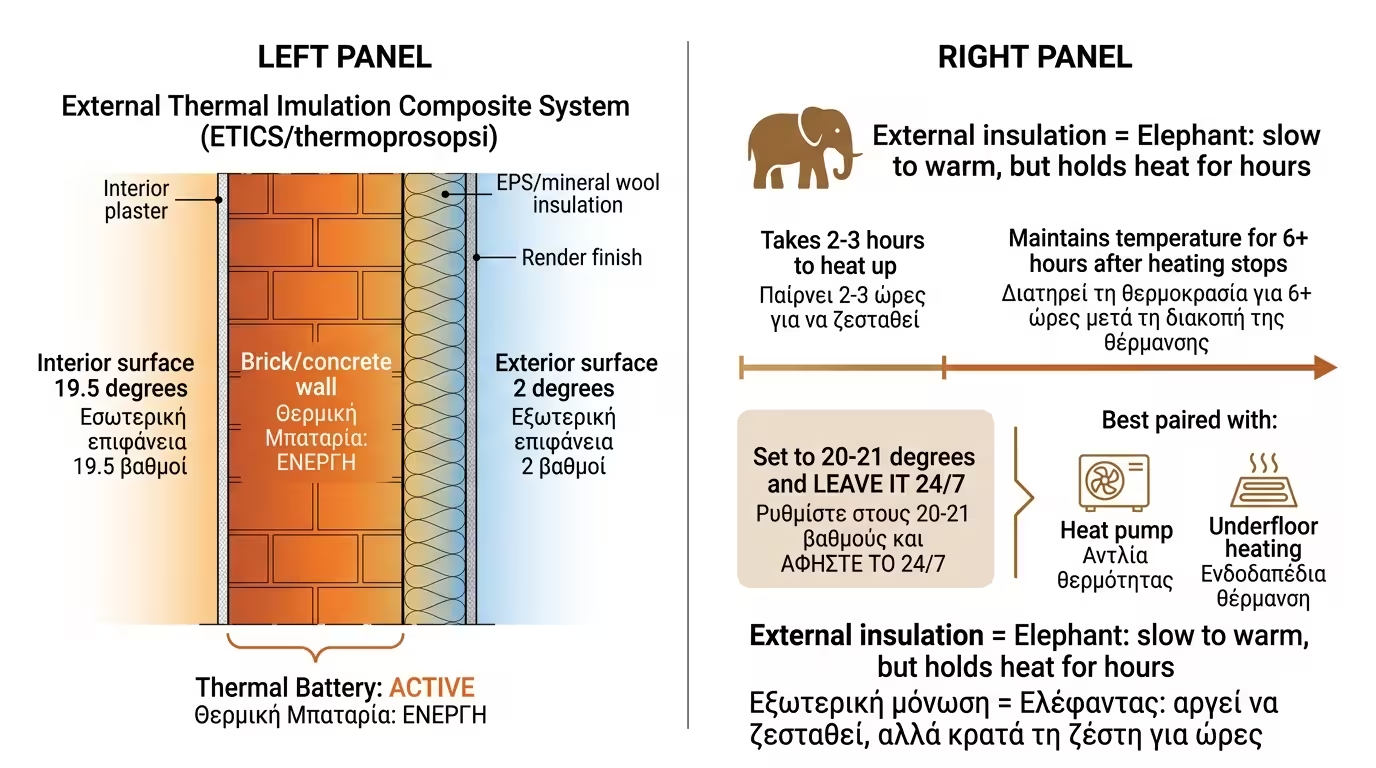
With external insulation, we bond the insulating material (EPS, graphite polystyrene or mineral wool) to the outside wall. The bricks and concrete now sit inside the protected zone - the "thermal battery" charges normally.
The house reacts like an elephant: slow to heat up (the energy first "charges" the heavy walls), but once warm, the walls become giant invisible radiators that emit heat for hours.
The ideal strategy: leave the thermostat at a steady 20-21°C without turning it on and off. Even if the boiler shuts down, the walls continue to warm the space for 4-6 hours.
External insulation works perfectly with heat pumps (which love continuous, gentle operation) and with underfloor heating. Ideal for permanent residences.
Because the insulation "hugs" the entire building (columns, beams, ring beams), thermal bridges disappear. The walls are protected from thermal expansion and contraction, extending the building's lifespan.
Here, the insulating material (e.g. mineral wool) goes on the inside of the wall and is covered with plasterboard. The bricks remain "outside" - the thermal battery stays frozen all winter.
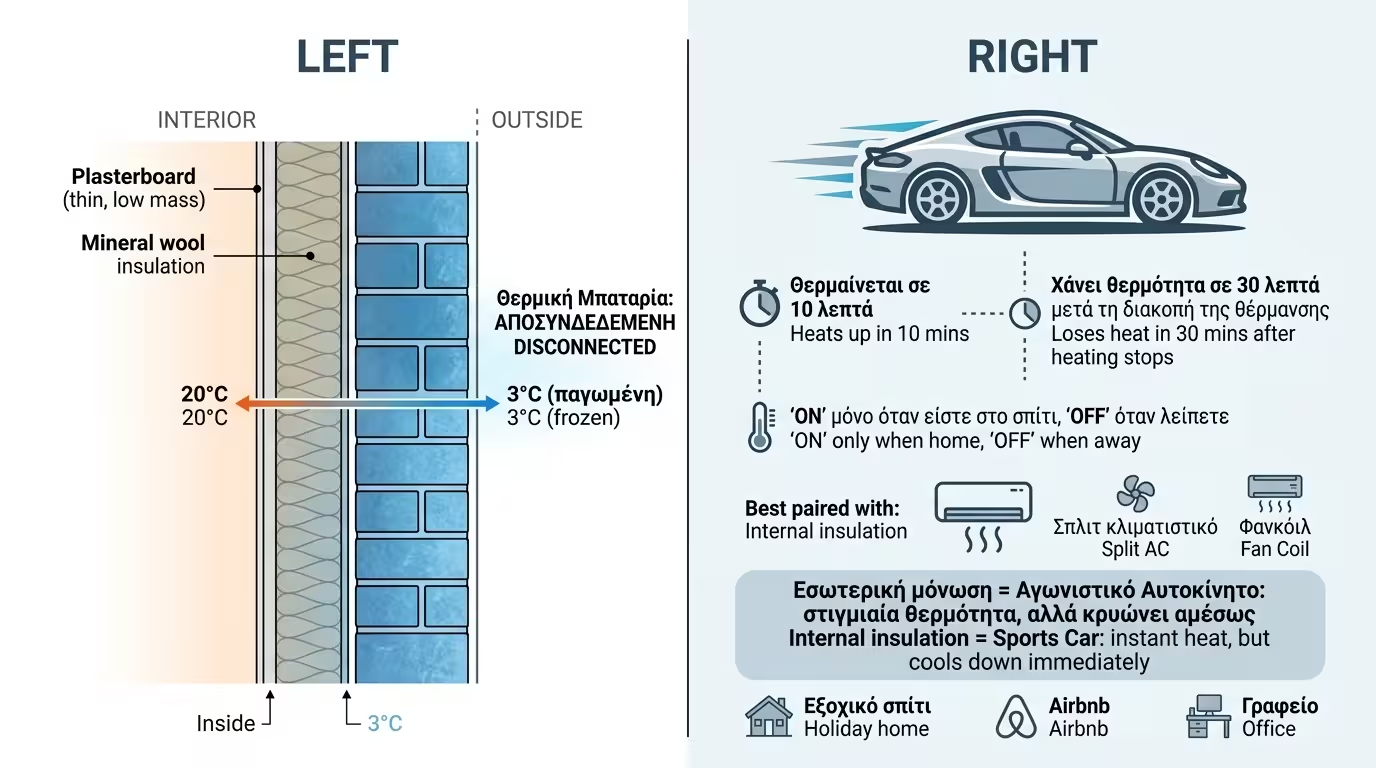
The house reacts like a sports car: heats up instantly (energy hits the thin plasterboard and stays in the air), but cools down equally fast - in 30 minutes after the thermostat switches off.
Here we use intermittent operation: turn the heating on only when you're in the room. Away at work? Turn it off entirely. The house will warm up in 10 minutes when you return.
Internal insulation is perfect for holiday homes, Airbnb properties, offices or bedrooms. It pairs perfectly with split air conditioners or fan coils, which heat the air "instantly."
Internal insulation does not eliminate thermal bridges, slightly reduces floor area, and can cause moisture problems behind the plasterboard if a vapour barrier isn't installed correctly.
From a mechanical-engineering standpoint, external insulation is always the superior choice for a permanent residence. It eliminates thermal bridges, protects the structural frame, doesn't reduce floor area, and delivers unmatched, steady comfort 24/7.
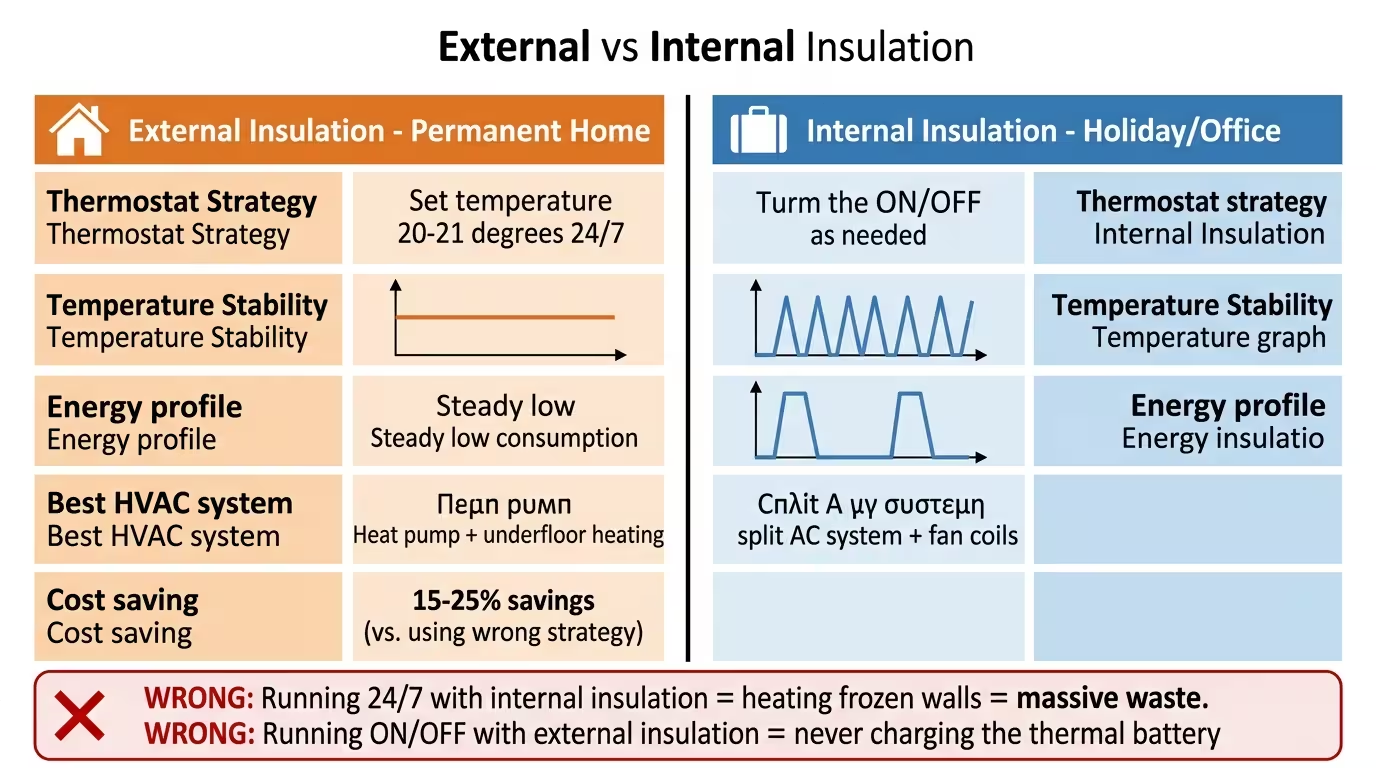
Warm walls 24/7, steady thermostat, ideal with heat pump + underfloor. The "queen" of insulation solutions for permanent residences.
Fast response, minimal floor area lost, ideal with split A/C units. The fallback solution when you can't modify the façade (e.g. listed building).
External = 24/7 steady thermostat. Internal = On/Off only when you're home. Mixing up the strategy will waste energy and money.
Correctly setting the thermostat based on your insulation type reduces the bill by 15-25% without any additional investment - just knowledge of how your "battery" works.
🏡 The position of insulation isn't just aesthetic - it radically changes the heating "chemistry" of your house. External = Elephant (slow but enduring). Internal = Sports Car (fast but loses heat immediately). Choose wisely - and set your thermostat accordingly!
Return to category.
Go to categoryReturn to the central guide.
Go to guide