📊 The Comparison
The software compares how much energy your design will consume versus the imaginary one. If yours consumes more, the planning authority rejects the plans and won't issue a permit. You must improve insulation, glazing or equipment.
If you're building a new home, undertaking a major renovation, or applying for a subsidy programme (like "Exoikonomo"), you'll encounter an acronym that causes headaches: KENAK.
KENAK (Building Energy Performance Regulation) was enacted in 2010 to align Greece with strict EU directives. Before it, anyone built however they wanted - minimal insulation, exposed columns, massive oil boilers. KENAK put an end to that waste.
KENAK's philosophy is based on the "Reference Building" . When your engineer designs your home, the ministry's software automatically creates an imaginary "twin" building - same size and orientation, but "dressed" in the minimum legal specifications.
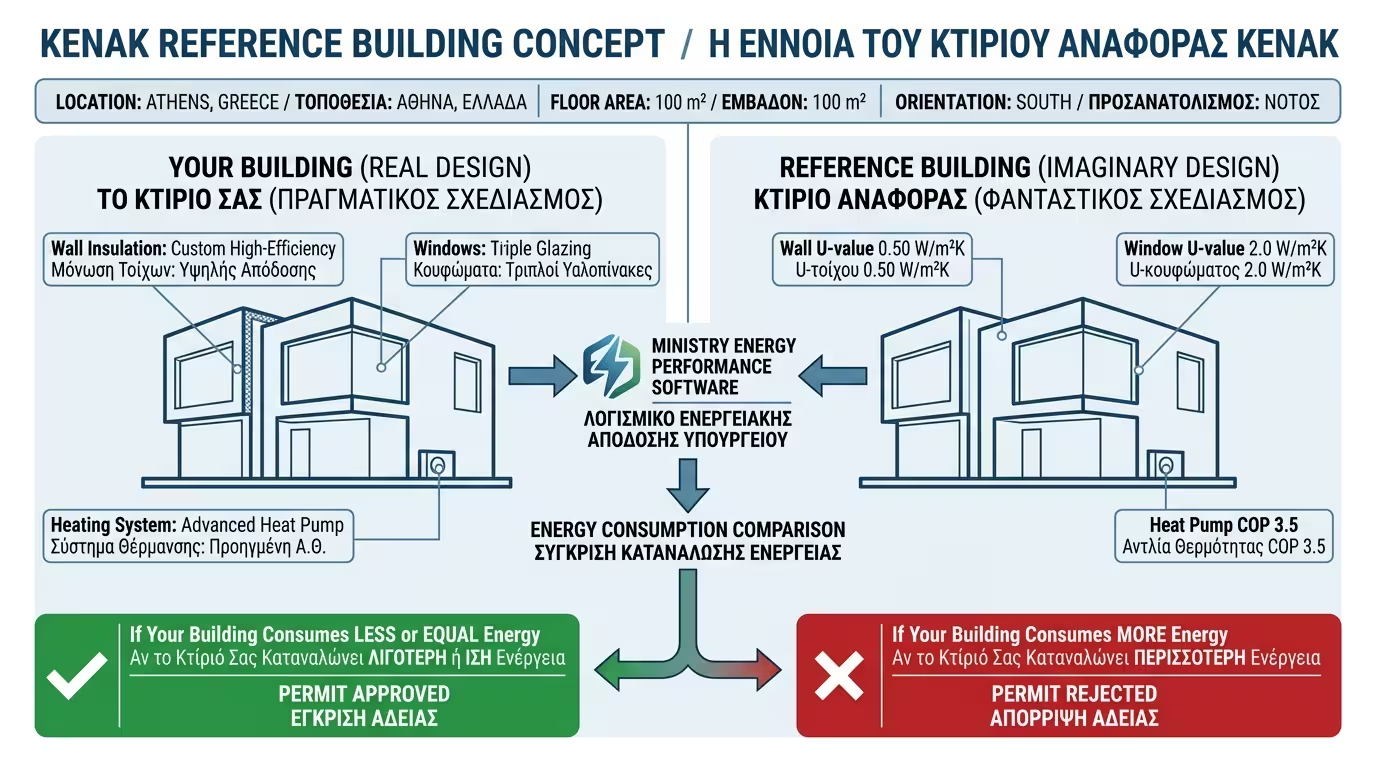
The software compares how much energy your design will consume versus the imaginary one. If yours consumes more, the planning authority rejects the plans and won't issue a permit. You must improve insulation, glazing or equipment.
The engineer must design so the building consumes less than or equal to the Reference Building. This may mean thicker insulation, better glazing, a heat pump instead of a boiler, or a solar water heater.
The Reference Building changes according to the climate zone. In Zone A (Crete) minimum requirements are lower. In Zone D (Kozani) they're much stricter. The system automatically accounts for each area's degree days.
KENAK is continuously revised. The latest revision (2023) significantly raised the bar - today every new building must be nearly zero energy (nZEB). Insulation and equipment efficiency requirements become stricter each time.
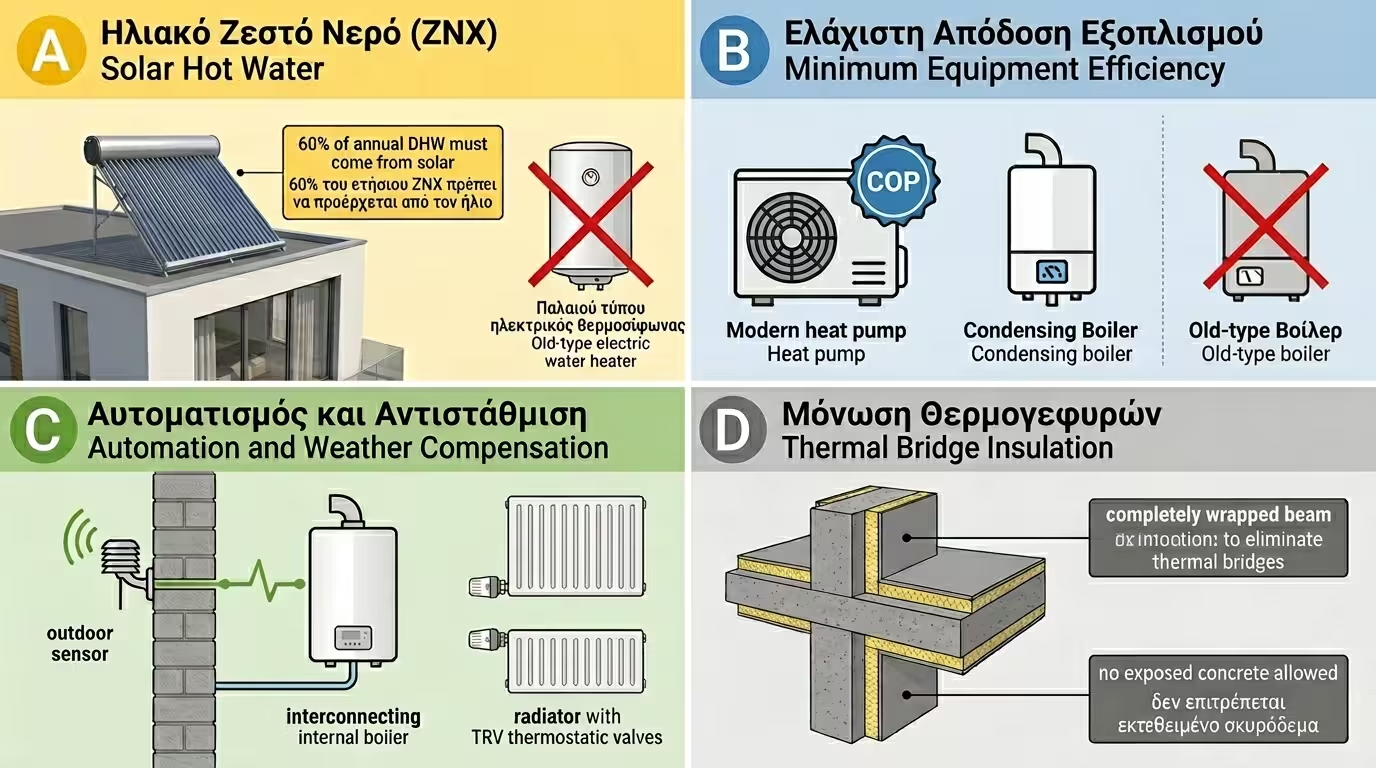
The law is no longer joking. If you're getting a permit today, KENAK forces you to incorporate modern technologies . You can't install whatever's on sale.
You cannot heat bath water exclusively with electricity or oil. KENAK mandates that at least 60% of annual DHW needs must be covered by solar thermal systems (solar water heater). Exception only for proven permanently shaded locations.
You can't install any random AC or boiler. KENAK sets minimum COP/EER for heat pumps and AC units. Gas boilers must practically be condensing technology. Old-type boilers are banned.
The heating system must have an outdoor sensor and weather compensation - otherwise it gets a "penalty" in scoring. Also required: thermostatic radiator valves (TRVs) or zone autonomy. The goal: no wasted kWh.
In old buildings, columns and beams were left exposed. The new regulation requires strict calculation and insulation of all thermal bridges, eliminating mould and energy losses. No part of the building can remain without thermal protection.
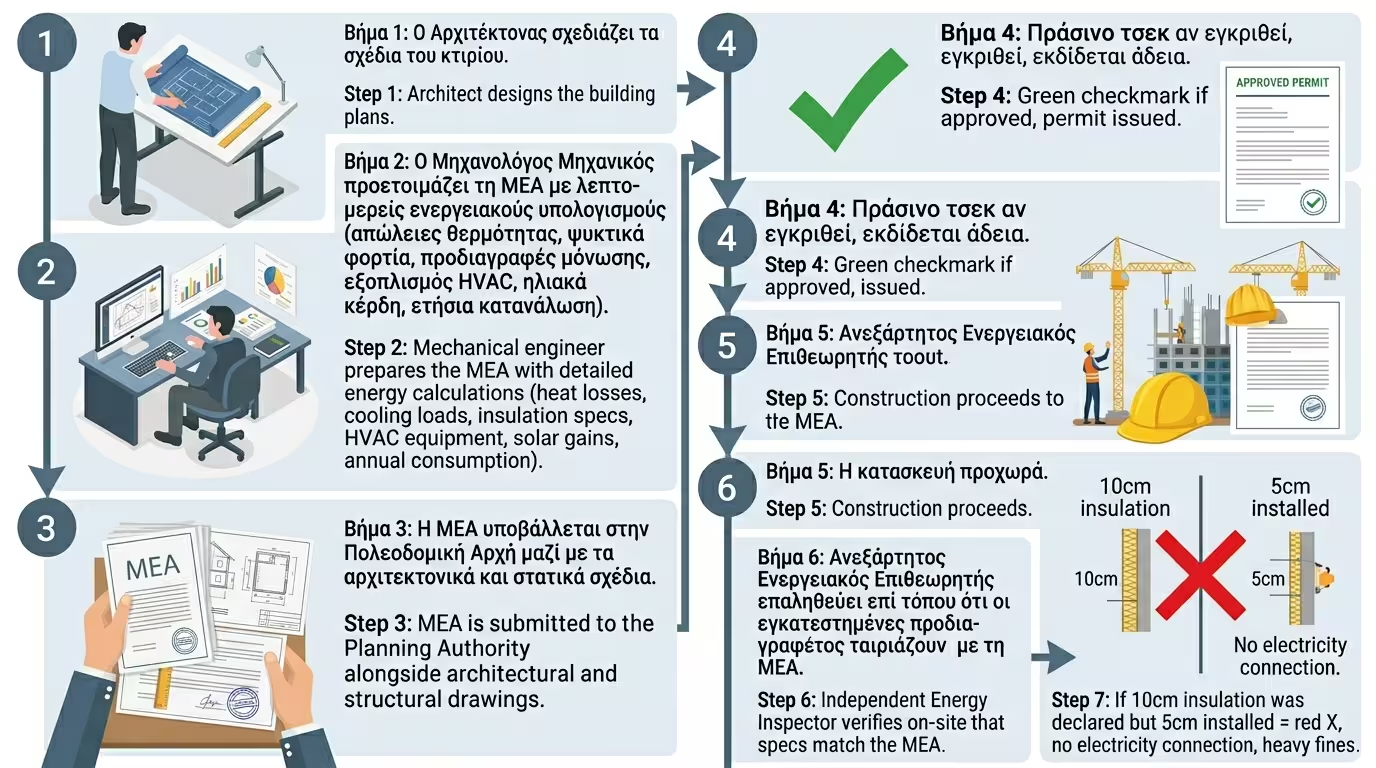
All this isn't declared verbally. The engineer prepares a detailed technical report: the MEA (Energy Performance Study) . It's submitted to the planning authority alongside architectural and structural drawings. Without an approved MEA, not a single brick is laid on site.
Detailed calculations of heat losses, cooling loads, insulation, glazing, HVAC equipment, solar gains, lighting, and annual energy consumption per use (heating, cooling, DHW, lighting). It's the building's energy "ID card".
After completion, an independent Energy Inspector visits. If they find you declared 10 cm insulation but installed 5 cm, the building won't get electricity and heavy fines apply. The inspection is real, not nominal.
The MEA typically costs €1,000-3,000 depending on building size. It may seem expensive, but ensures you won't spend thousands annually on wasted energy for the next decades.
The engineer who prepares the MEA bears personal liability for their calculations. If the inspector finds deviations, fines hit both the owner and the engineer. This ensures study seriousness.
KENAK is often seen as "bureaucracy" that raises construction costs. The truth is it protects you - it's a shield against old-school contractors, ensuring a modern, healthy home.
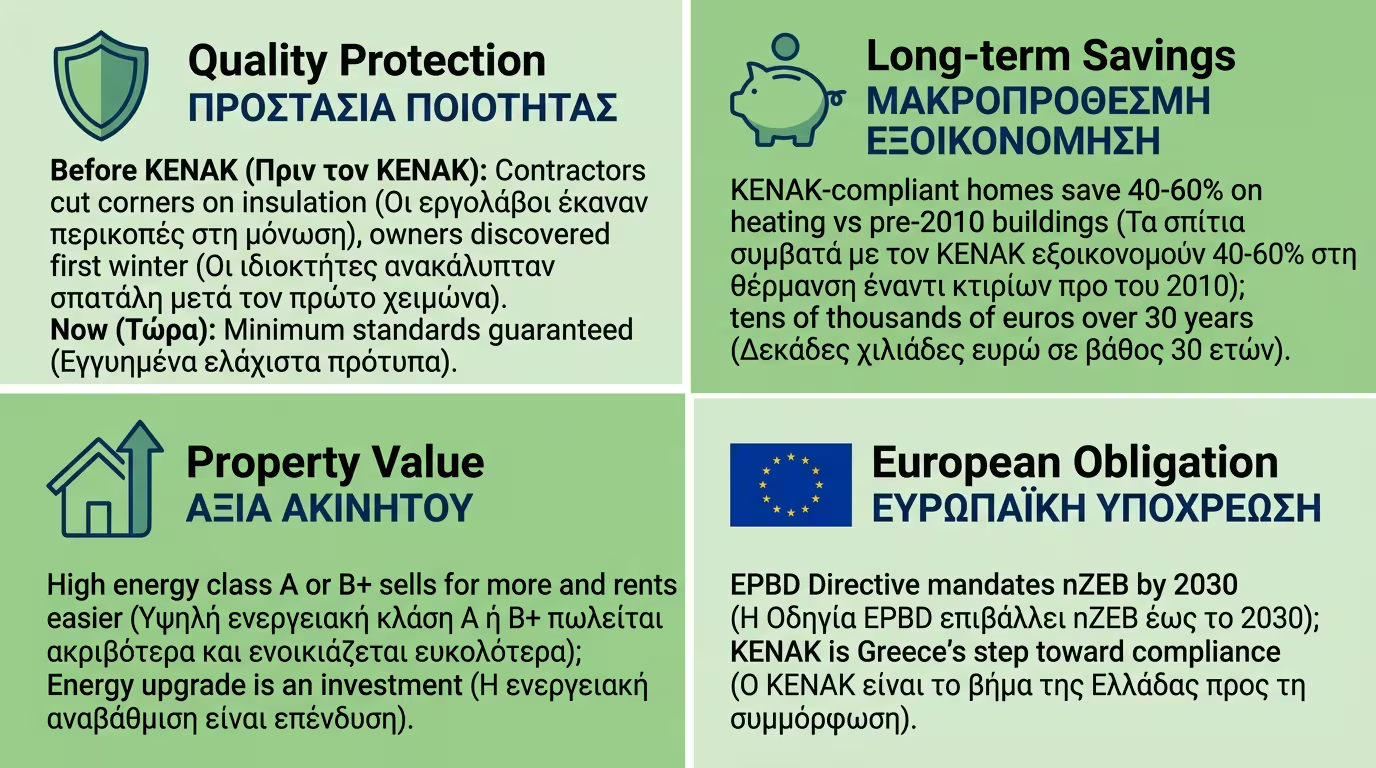
Before KENAK, many contractors cut corners on insulation and equipment. The owner discovered the waste only after the first winter - when it was too late. Now, legislation guarantees minimum quality.
A KENAK-compliant home saves 40-60% on heating bills compared to pre-2010 buildings. Over 30 years, this translates to tens of thousands of euros in savings.
A building with a high energy class (A or B+) sells for more and rents more easily. Energy upgrading isn't a cost - it's an investment in your property's value.
KENAK isn't a Greek "quirk". Every EU member state applies a corresponding regulation (EPBD Directive). Europe is driving towards nearly zero energy buildings (nZEB) by 2030 - and KENAK is Greece's step in that direction.
📜 KENAK may look like "bureaucracy", but in reality it ensures your home will be modern, healthy and economical for decades to come.
Return to category.
Go to categoryReturn to the central guide.
Go to guide