📐 The Calculation
The equation is simple: HDD = Tbase − Tavg, where Tavg is the average outdoor temperature over 24 hours. If one January day the average is 10°C, then: 18 − 10 = 8. That day the building accumulated 8 Degree Days.
We constantly talk about "cold" and "warm" regions. But how can we objectively compare whether Karpenisi is truly colder than Tripoli? And more importantly, how much does that cold cost in euros?
To solve this puzzle, scientists invented Degree Days - a unit combining time and temperature that lets us predict the heating bill before we even move in.
A Degree Day is a measurement unit combining time and temperature. First we define a "Base Temperature" (usually 18°C). If it's 18°C or warmer outside, the house needs no heating - internal gains (appliances, human warmth) suffice.
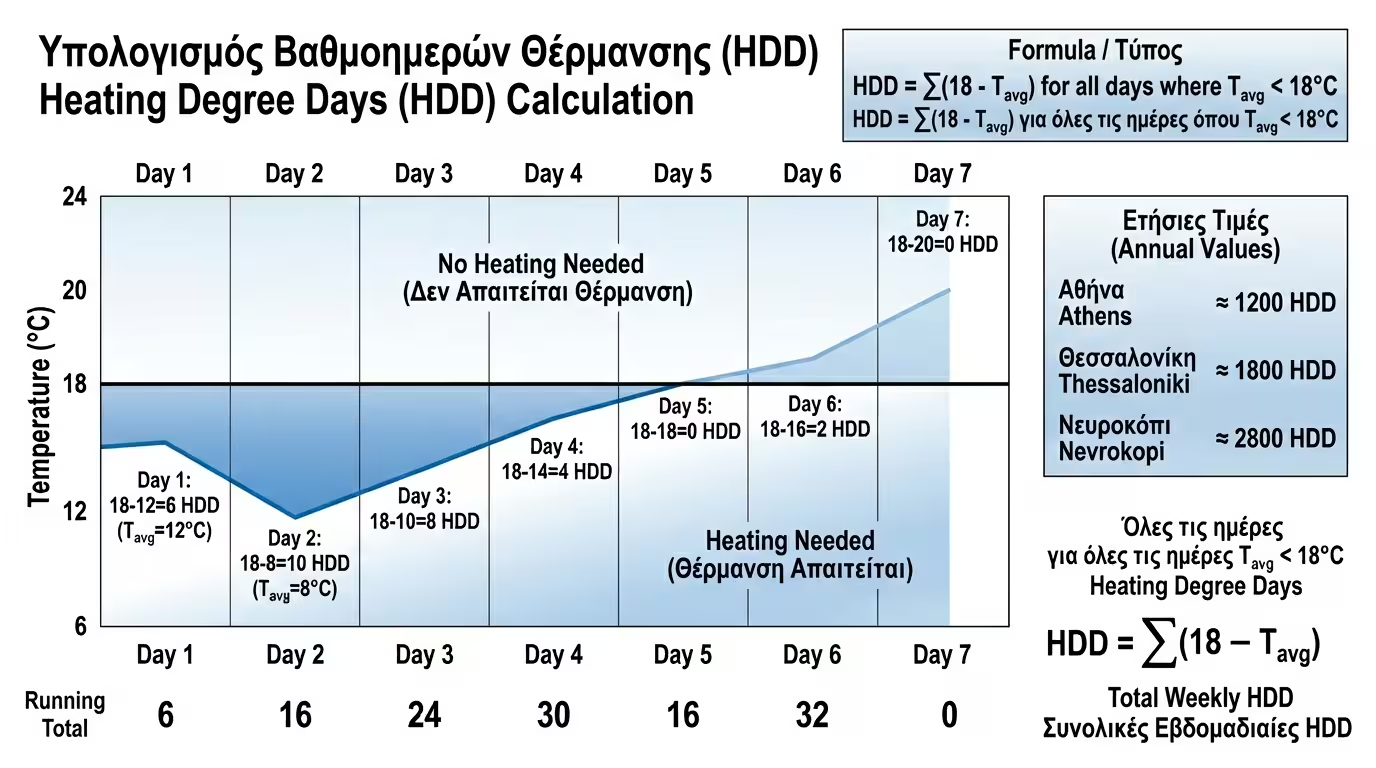
The equation is simple: HDD = Tbase − Tavg, where Tavg is the average outdoor temperature over 24 hours. If one January day the average is 10°C, then: 18 − 10 = 8. That day the building accumulated 8 Degree Days.
At winter's end we sum all daily degree days. Athens accumulates about 1,200 HDD per winter. Nevrokopi reaches 3,000 HDD. This means, with mathematical certainty, that an identical house in Nevrokopi burns more than double the fuel of one in Athens.
There are also Cooling Degree Days measuring how hot summer is above a base (usually 26°C). Crete and the Dodecanese accumulate far more CDD than Thessaloniki - that's why cooling bills there are explosive.
Degree days radically change our thinking: we no longer ask "how cold is it today" but "how cold is the entire season ". Only this way can we properly calculate the annual heating bill.
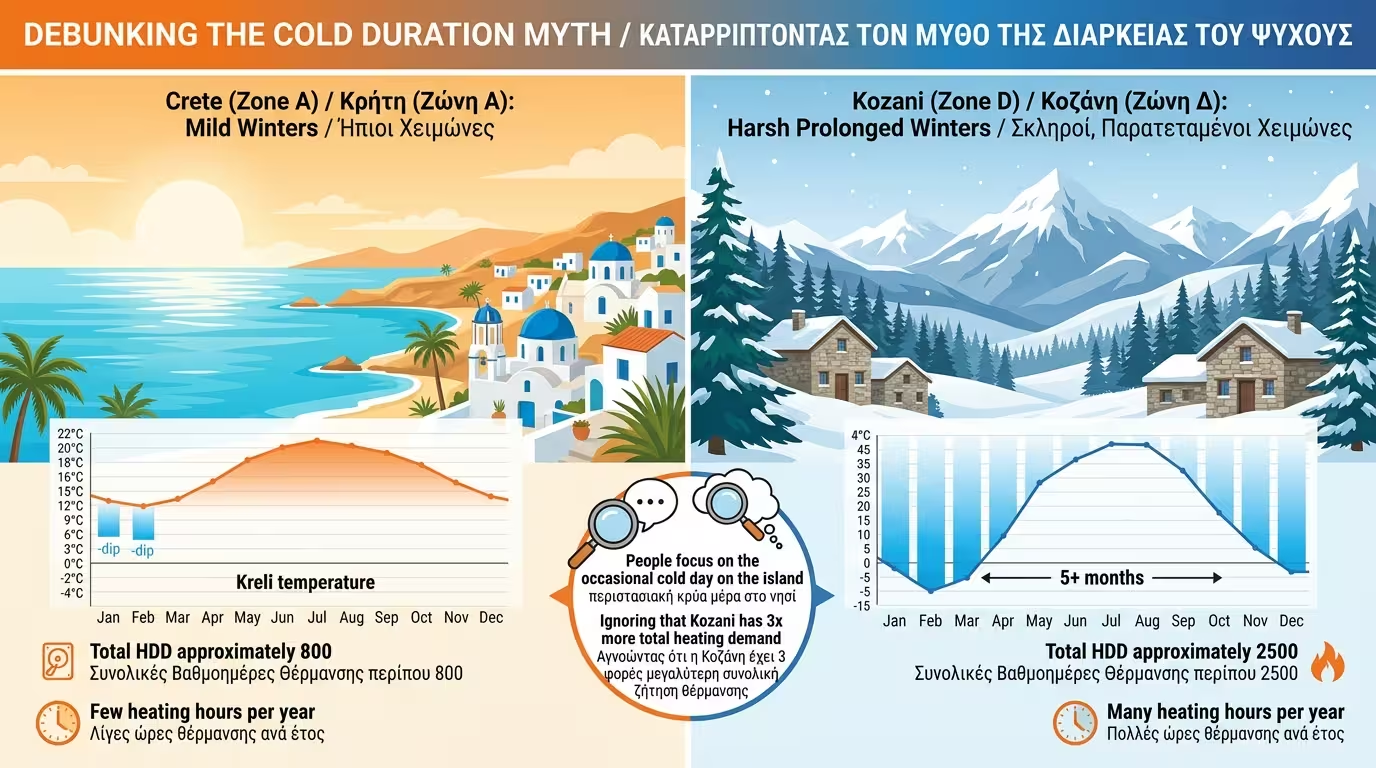
Degree days protect us from the "optical illusion" of extreme events. A Cycladic island might get snow for 2 days at -2°C, while Kozani endures 5 entire months at a steady 5°C.
Those 2 days of island frost contribute minimal degree days overall. Meanwhile, 5 consecutive months at 5°C in Kozani accumulate thousands. The heating bill depends on total cold duration, not TV weather records.
A day at -5°C gives 23 degree days. But 30 days at 8°C give 30 × (18 − 8) = 300 degree days. A "mild but long" winter costs far more than an "extreme but brief" cold snap. This is why Kozani spends triple what the islands do.
Meteorological data isn't based on a single year. Degree days represent a 20-30 year average, eliminating random extreme years. This makes forecasts exceptionally reliable.
In recent years, heating degree days are decreasing in many areas (warmer winters), while cooling degree days are rising dramatically. This means future homes will spend more on cooling than heating.
Based on annual degree days, the Ministry of Environment through KENAK (Building Energy Performance Regulation) divided Greece into 4 zones. This map is the "law" for every engineer issuing a building permit.
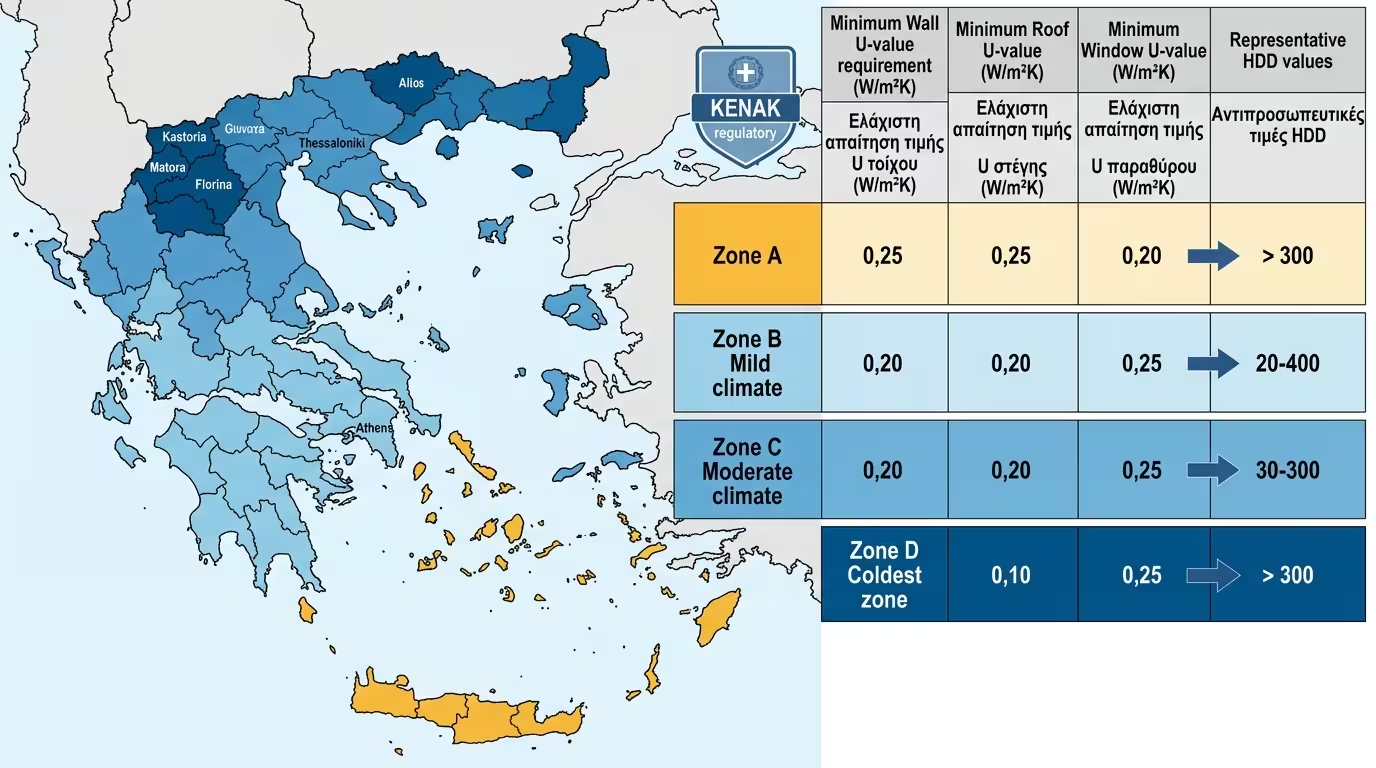
Heraklion, Rhodes, Chania, Cyclades. Fewest degree days, very mild winters. KENAK allows thinner insulation (~5 cm), since heating needs are low. But beware: cooling needs here are massive!
Attica, Corinth, coastal Peloponnese, Volos. Moderate heating requirements. The "heart" of Greece's population - the majority of buildings fall in this zone. Insulation rises to 6-7 cm.
Thessaloniki, Ioannina, Larissa, Alexandroupoli. Winters are long in duration. KENAK requires double insulation thickness compared to Zone A - often 7-8 cm on exterior walls.
Florina, Kastoria, Kozani, Grevena, Karpenisi. Greece's "Siberia". Buildings here are constructed to Northern European standards: insulation over 10 cm, triple glazing, special airtightness measures. Without these, the heating bill becomes prohibitive.
If you've completed the Heat Loss Study and know how many kW your house loses, you can now use the Degree Days to calculate how many euros you'll pay each winter - before you even move in.
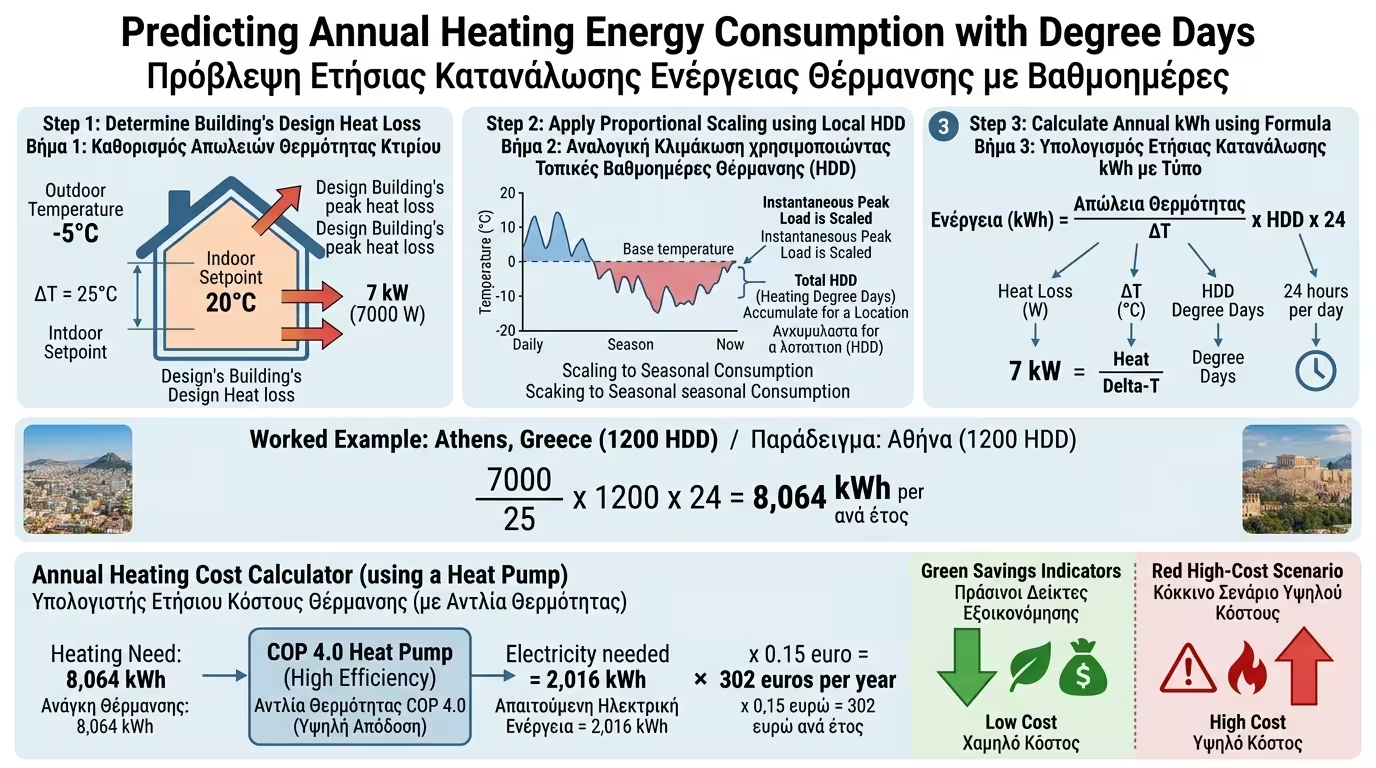
The engineer takes the losses (kW), multiplies by the annual HDD, the operating hours per day, and divides by the system efficiency (COP for heat pumps, or boiler efficiency). The result is kWh of energy per season. Multiply by the price per kWh and you have your annual budget.
A 100 m² house losing 6.2 kW. In Athens (1,200 HDD) the annual heating bill might be ~€700. In Kozani (2,800 HDD) the same house costs ~€1,600 - more than double. Without degree days, this prediction would be impossible.
Degree days enable objective comparison between oil, natural gas, heat pump and pellet. For each system, the price per kWh and efficiency change. Degree days (constant for each area ) provide a common comparison base.
Degree days connect meteorology with engineering. They ensure the house in Florina gets the "armour" it deserves, and the house in Crete doesn't over-invest in insulation that never pays back in winter (since there the real enemy is summer).
🌡️ Without Degree Days, every attempt at predicting energy costs is guesswork. With them, the engineer can calculate your exact annual bill before construction even begins.
Return to category.
Go to categoryReturn to the central guide.
Go to guide