🌬️ Hot Air from Infiltration
Every gap around windows, sockets and pipes lets the scorching outdoor air (38-40°C) enter the room. The AC must cool this air - an invisible but significant consumption, especially in older homes with poor airtightness.
In Greece, the real stress on a home - and on the electricity bill - isn't January. It's the July heatwave! And from an engineering standpoint, calculating the right air conditioner size is far more complex than sizing a boiler.
In winter, conditions are static: it's freezing outside, warm inside. But in summer, we have a massive, blazing "spotlight" - the sun - orbiting the house and striking different windows every hour. Let's see how engineers calculate cooling loads using the ASHRAE / Carrier method.
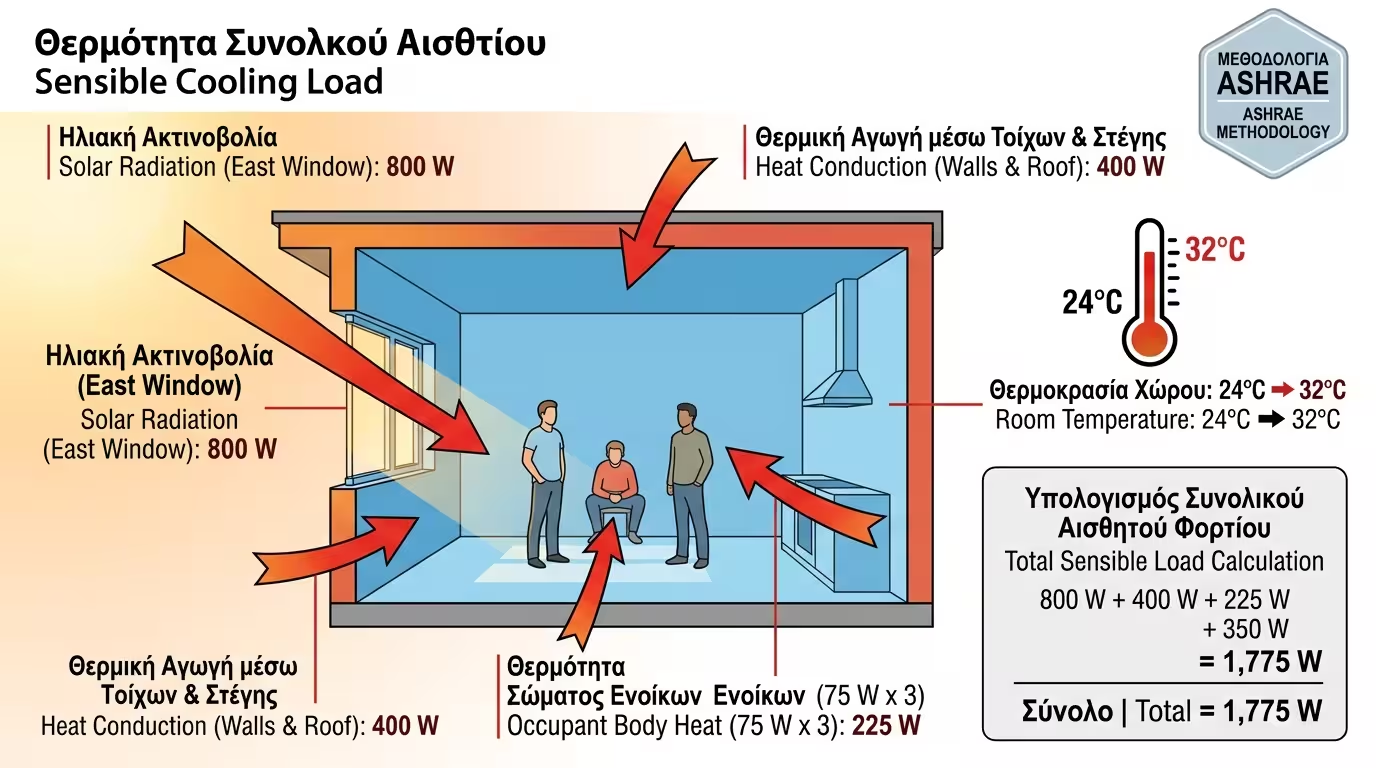
This is the easy part - the one we all understand. The sensible load is the heat that raises air temperature, the kind you see on the thermometer. If your living room is at 32°C and you want 26°C, the AC must absorb sensible heat.
Every gap around windows, sockets and pipes lets the scorching outdoor air (38-40°C) enter the room. The AC must cool this air - an invisible but significant consumption, especially in older homes with poor airtightness.
Under the midday sun, an uninsulated roof can reach 65-70°C on its outer surface. This heat "travels" through the concrete into the room. West-facing walls receive the low afternoon sun and heat up even more dramatically.
The TV, lights, computer, oven - all emit sensible heat. A desktop computer produces 150-300 W of heat, an oven over 1,000 W. In offices with many computers and lighting, internal gains can exceed solar gains.
The famous G-Value (Solar Factor) determines how much solar energy passes through glazing. A south-facing 2 m² window with g = 0.60 admits up to 600-800 W of solar heat in July - equivalent to a small space heater! External shading (awnings, shutters) is vital.
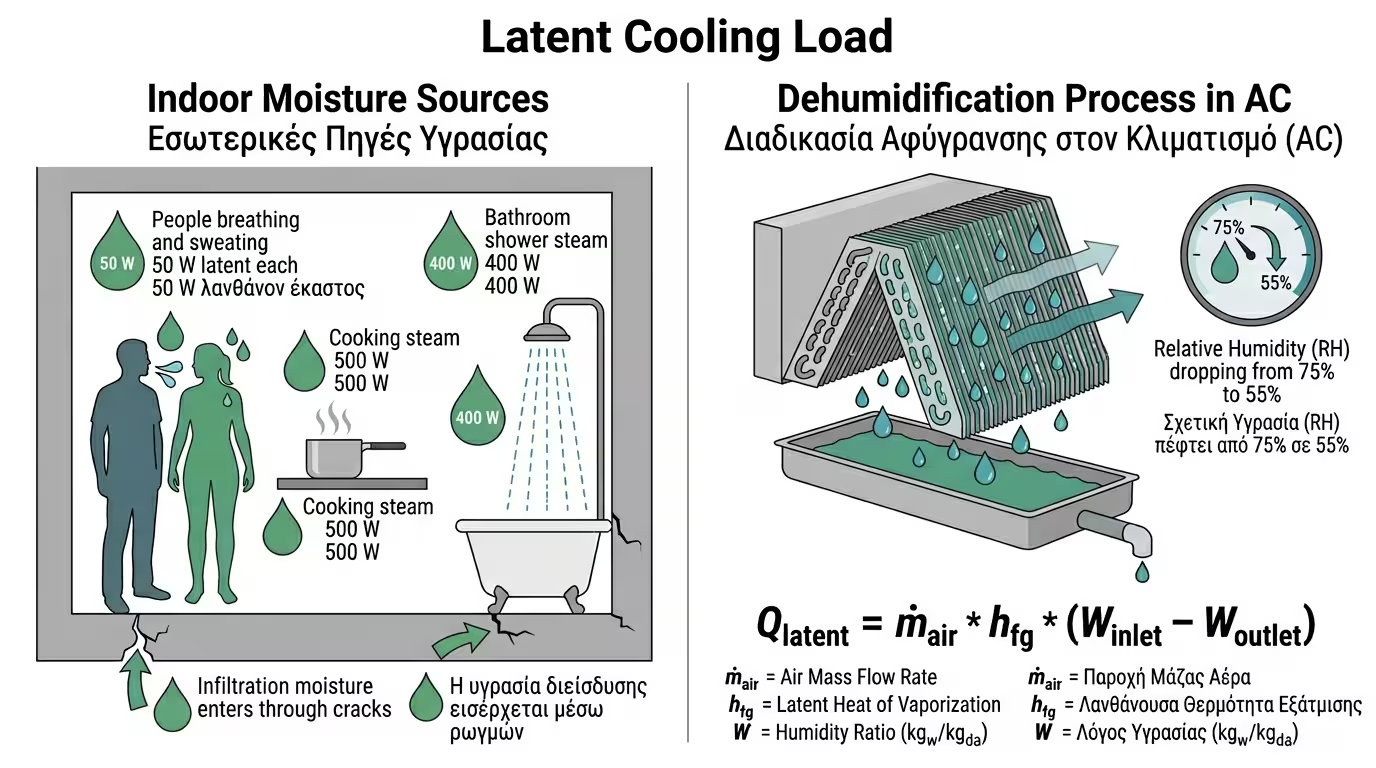
Here lies the true essence of air conditioning. The latent load is the heat that doesn't raise the thermometer, but concerns moisture (water vapour) exclusively. At 28°C with dry air you feel great - but at 28°C with 80% humidity, you sweat as if you're in a sauna.
To make you feel cool, the AC acts as a giant dehumidifier. Room air passes over the cold evaporator coil (at 8-12°C) and moisture condenses into droplets - that's why it drains water from the pipe! Condensing moisture requires enormous amounts of energy.
Outdoor air humidity (especially in coastal areas), boiling pots, showers, and even people themselves - we breathe and sweat constantly. Invite 10 guests to your living room and their body moisture will send the latent load soaring.
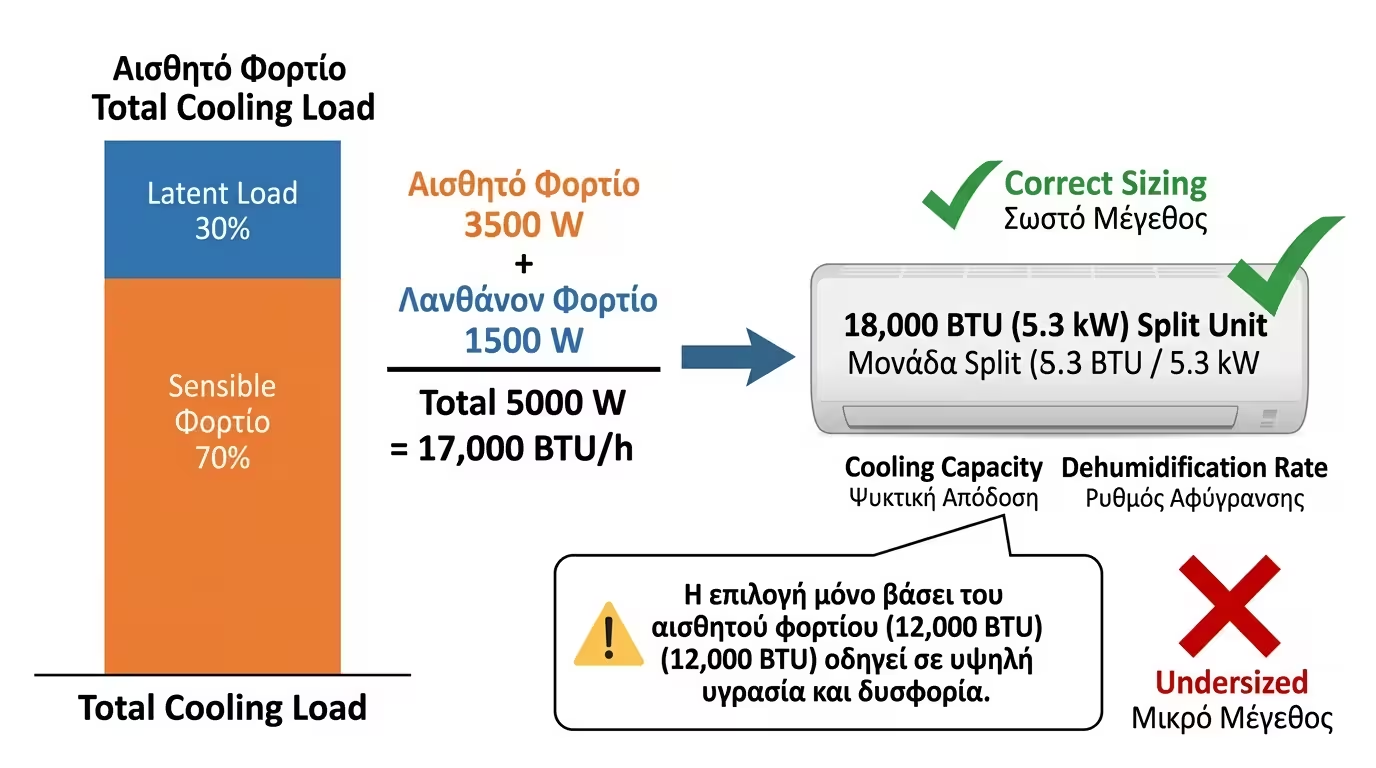
A large proportion of the AC's electricity goes solely to dehumidification, before it even starts lowering the temperature. In humid areas (islands, coastal cities), the latent load can reach 30-40% of the total cooling load.
The engineer calculates the SHR (Sensible Heat Ratio) - the ratio of sensible to total load. A typical SHR in Greece ranges between 0.65-0.80. If the AC cannot handle the correct SHR, the space will be cool but stuffy - or cool but excessively dry.
Unlike heating (where we calculate the worst frozen night), cooling is dynamic. The engineer simulates every hour of the day - from 08:00 to 20:00 - to find when each room is under maximum stress.
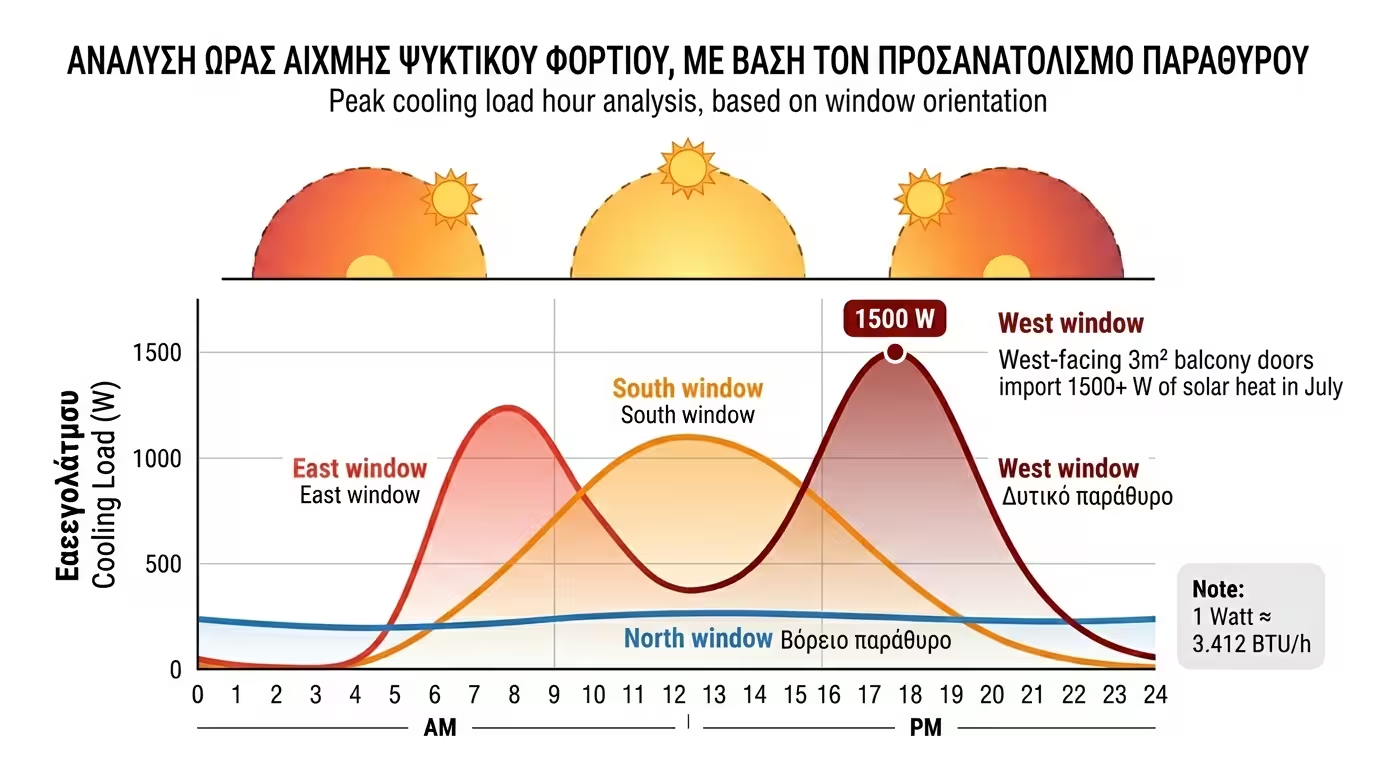
The east-facing bedroom may need 9,000 BTU at 09:00 (when the morning sun strikes), but only 3,000 BTU in the afternoon. Without hourly analysis, you'd install a 9,000 BTU unit - triple what's needed for most hours.
The west-facing living room with its large balcony door peaks around 17:30, demanding 18,000 BTU . The low western sun "spears" the glazing at an angle that no overhang can block without external awnings.
ASHRAE/Carrier software calculates loads hour by hour , considering sun angle, wall thermal mass (which absorbs heat in the morning and releases it in the afternoon), shading from awnings or adjacent buildings, and even occupancy schedules.
The engineer sizes each indoor unit based on each room's individual peak hour. The outdoor unit (e.g. VRV/VRF) is sized based on the building's simultaneous peak - which is not the sum of individual peaks, but the maximum concurrent demand. This "diversity factor" significantly reduces the required machine size.
The cooling load study is arguably the most demanding task for a building engineer. Unlike heating, there is no rule of thumb that works. Correct AC selection requires precise calculation of both temperature (sensible) and humidity (latent).
For heating we calculate a single "snapshot" - the worst night of the year. For cooling we must analyse every hour of a design day, with variable solar radiation, variable direction, variable humidity and variable occupancy. The complexity is exponentially greater.
The final AC size is determined by the total load - Sensible (temperature) + Latent (humidity). Many calculate only the air temperature, completely ignoring moisture. Result: the space "cools down" but remains stifling and oppressive.
An external awning or roller shutter on a west-facing window can reduce solar gain by over 80%. This means a smaller AC, a lower bill, and better comfort. Shading is the "external wall insulation" of summer.
Without a study, the installer "eyeballs it" and installs a standard 24,000 BTU unit in every room - 3 times more than needed. Oversized machines short-cycle, dehumidify less, wear out faster and consume more electricity. A proper study saves money on every front.
❄️ Cooling in Greece is not simply "install an AC and you're done". It is a multi-variable equation combining sun, humidity, people and architecture. The ASHRAE / Carrier method is the only way to solve this equation correctly.
Return to category.
Go to categoryReturn to the central guide.
Go to guide