Air-to-Water Heat Pumps: How They Work and Why They Dominate the Market
(A Beginner's Guide)
We have all felt that sinking feeling when opening the electricity bill
or hearing the heating oil price at the start of winter. Searching for a
money-saving solution, you have surely been bombarded by advertisements
and discussions about Air-to-Water Heat Pumps.
Everyone says they are "the future", that they "consume almost nothing"
and that they are generously subsidised. But behind the technical jargon
and the marketing, what exactly is this machine? How does it manage to
heat an entire house in winter using the freezing ambient air?
Let us set aside the complex mechanical engineering terms. In this
guide, we will explain in plain language how the technology that changed
heating in Greece forever actually works.
1. What Exactly Is an Air-to-Water Heat Pump?
The simplest explanation is this: Think of a heat pump as a refrigerator working in reverse. Your kitchen fridge removes heat from the food (its interior) and rejects
it to the environment (through the warm grid on its back). A heat pump does
the exact opposite: it draws free heat from the outdoor air (even at -5°C) and transfers it to the water circulating
in your radiators or underfloor heating.
🔑 The Big Secret
The big secret behind its success lies in a fundamental principle: a
heat pump does not burn electricity to create heat (unlike
an electric heater or a water heater). It uses electricity merely to run
its compressor, so it can transfer the heat that already exists
outdoors, indoors.
❄️ Even at -5°C
It sounds absurd to "pump heat" when it is snowing outside. Yet,
from a physics standpoint, thermal energy exists in the air all the
way down to absolute zero (-273°C). To capture this heat, the
machine uses a special refrigerant (such as the modern
R32) that has the property of boiling at very low temperatures.
2. How Does It Work? The "Magic" Cycle in 4 Steps
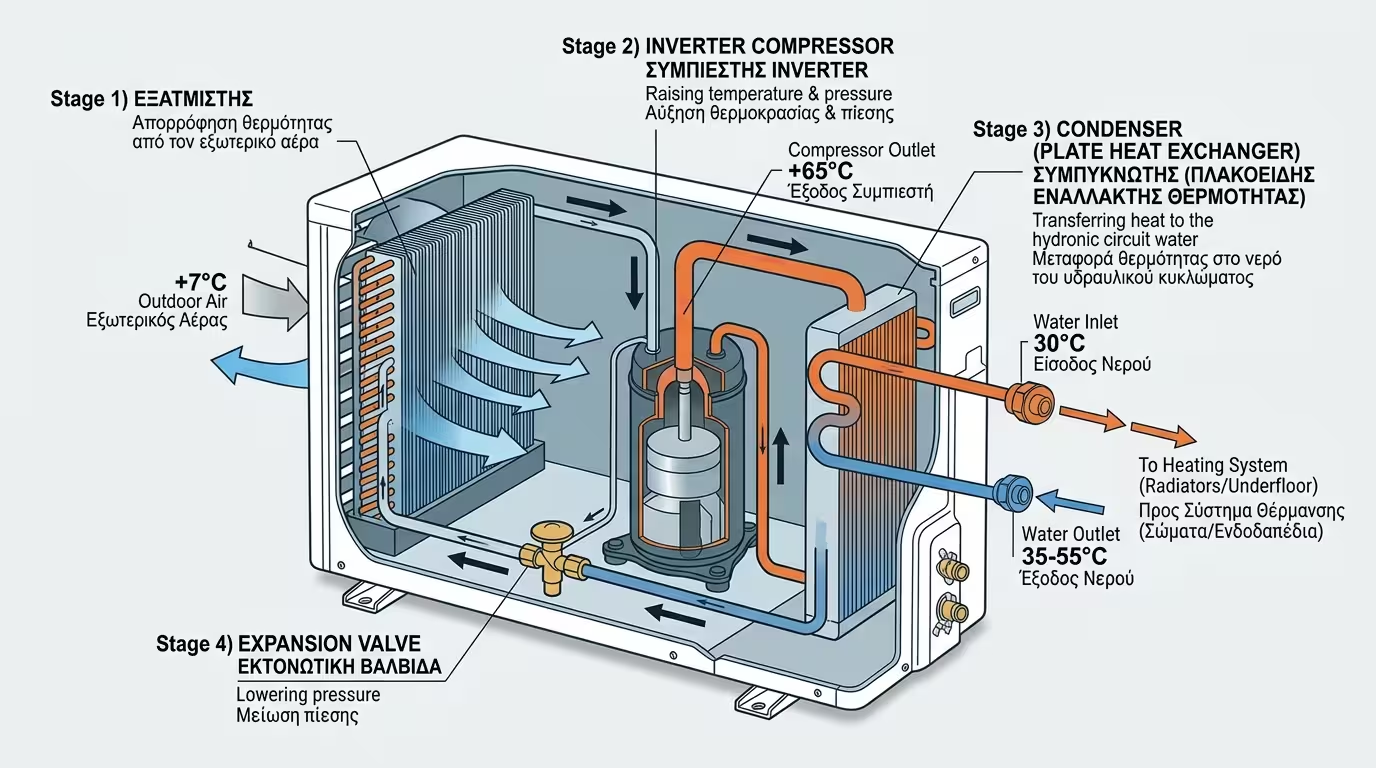
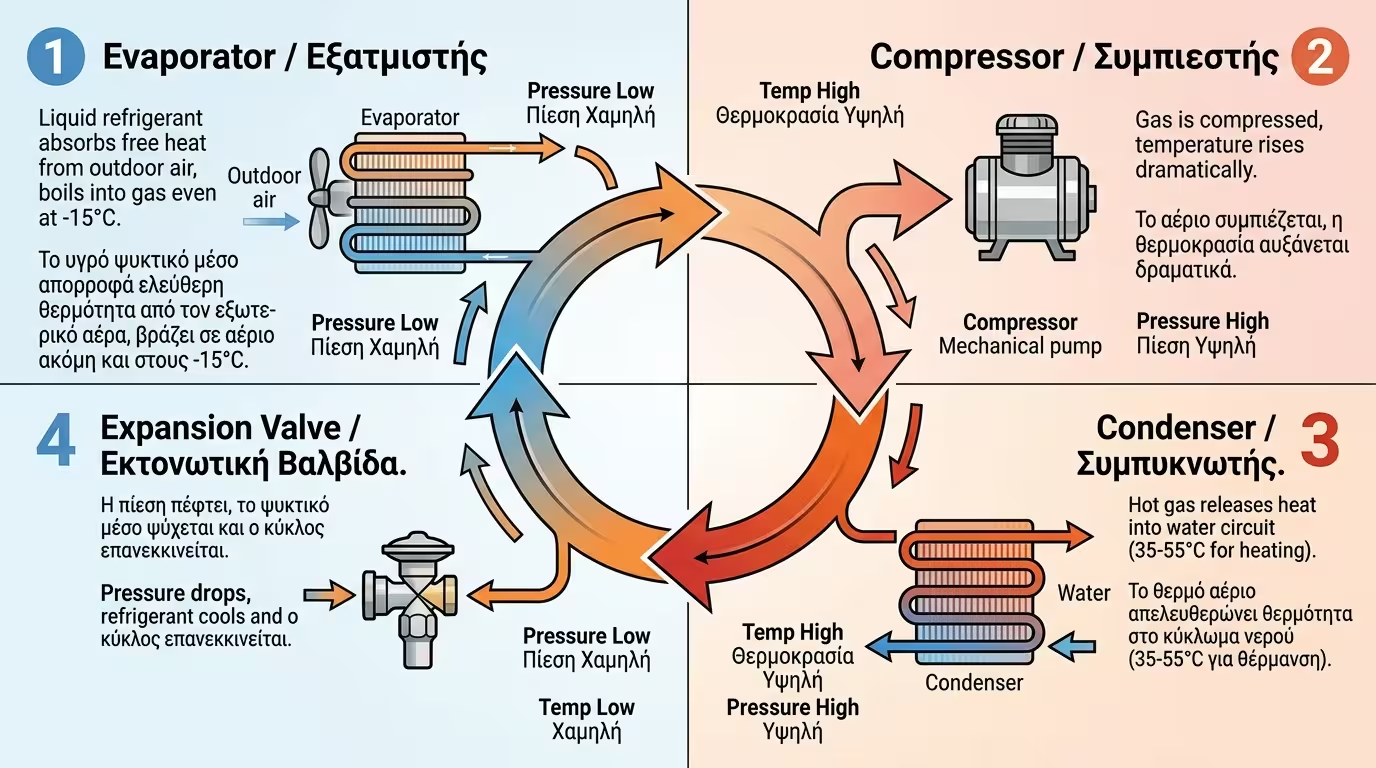
The process (refrigeration cycle) is completed in 4 steps, through
which the heat pump converts the cold outdoor air into hot water for
your radiators.
1️⃣ Evaporator (Absorption)
Outdoor air passes through the unit. The refrigerant, which is
ice-cold, absorbs the heat from the air and turns into
a gas (it evaporates).
2️⃣ Compressor (Compression)
This is where electricity comes in! The compressor (the heart of the
system) compresses this gas. When you compress a
gas, its temperature skyrockets. Suddenly, the warm gas becomes
scorching hot (e.g. 80°C).
3️⃣ Condenser (Delivery to Water)
The hot gas meets the heat exchanger. There, it delivers its high temperature to the water heading to your radiators. Losing its heat, the gas turns back into
a liquid.
4️⃣ Expansion Valve (Expansion)
The liquid passes through a narrow valve, its pressure drops
sharply, it freezes again, and it is ready to go back to the Evaporator to start the cycle all over again.
3. Why Do Heat Pumps Dominate Greek Homes?
It is no coincidence that nearly 90% of new homes in Greece - and the
bulk of renovations through the "Exoikonomo" subsidy programme -
choose this technology. The advantages are overwhelming.
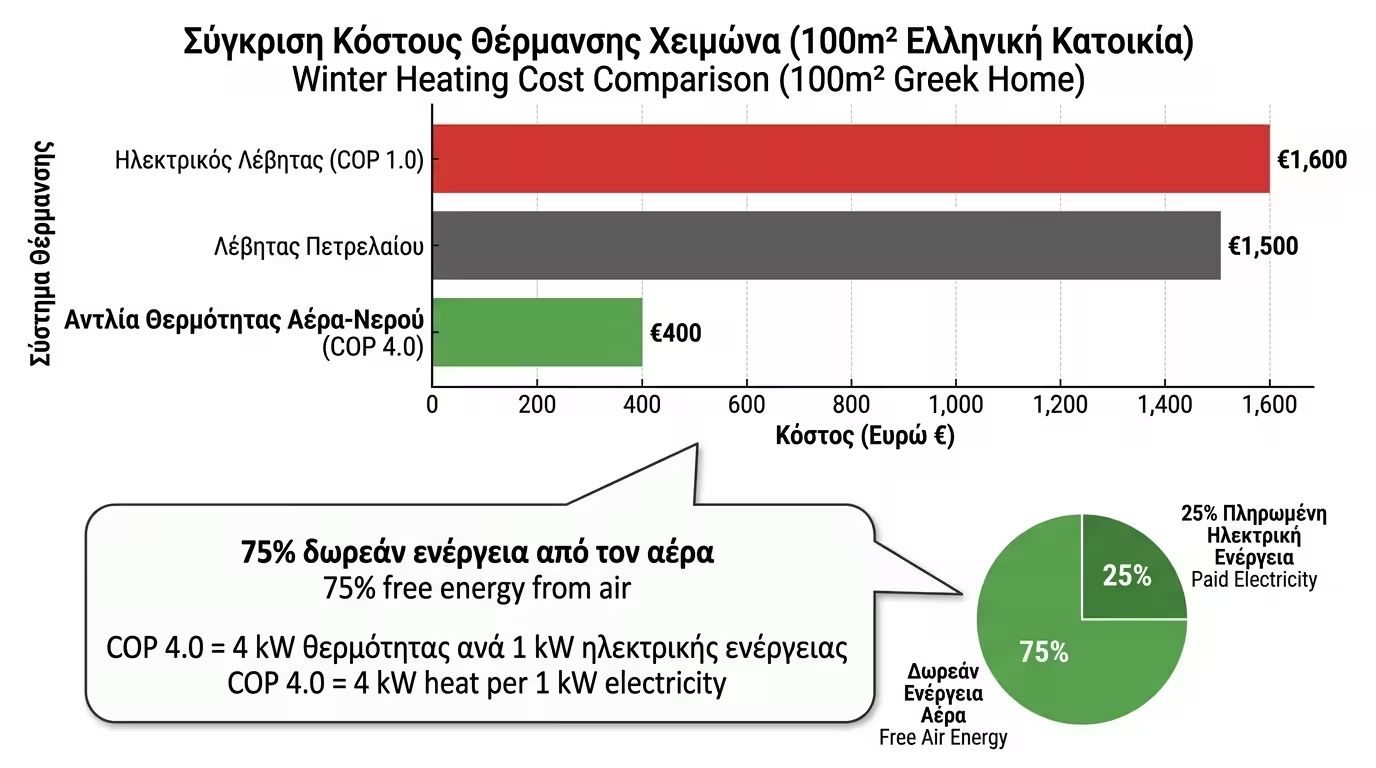
💰 Unmatched Economy (The COP Miracle)
The Coefficient of Performance (COP) of a modern heat pump is
approximately 4.0. This means that for every 1 kW
of electricity you pay for, the pump delivers 4 kW of heat. In
practice, you get 75% free energy from the environment and pay only 25%.
☀️ Ideal for the Greek Climate
Unlike northern Europe where temperatures drop to -20°C (where
ground-source heat pumps are preferred), Greece's mild winters allow
air-to-water pumps to operate at the absolute peak of their efficiency.
❄️ Two in One (Heating and Cooling)
An air-to-water heat pump, when combined with fan coils or
underfloor piping, can reverse its operation in summer. Instead of heating the water, it chills it, delivering excellent
cooling to the home and eliminating the need for multiple individual
air-conditioners.
🛡️ Absolute Safety and Cleanliness
Forget oil tanks, odours, gas leak risks, flues and smoke. It is a 100% clean and safe technology.
4. The Big Question: "What Is the Difference from My Ordinary
Air-Conditioner?"
Reading about compressors and refrigerant, it is perfectly logical to
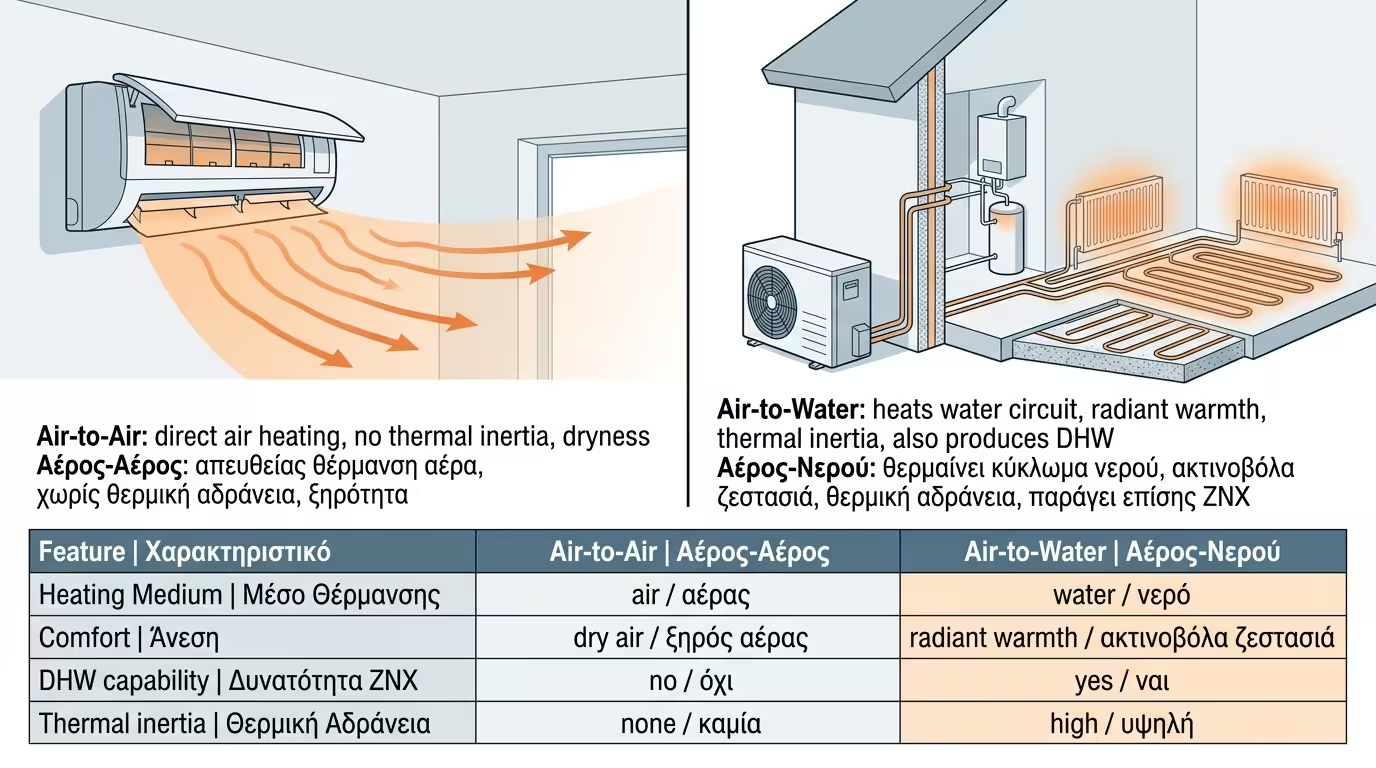
wonder: "Isn't this just an air-conditioner?" The answer is: Yes, they are based on exactly the same technology, but they differ
fundamentally in how they deliver heat inside the house.
🌬️ The Air-Conditioner (Air-to-Air)
It takes heat from outside and transfers it directly to the room air. This means instant heating but with significant drawbacks: it
dries the atmosphere, creates annoying draughts (that stream hitting
the back of your neck) and has no thermal inertia. The moment you
turn the unit off, the room freezes within 10 minutes because air does not retain heat.
💧 The Central Heat Pump (Air-to-Water)
It takes heat from outside and transfers it to
water. The hot water travels through piping and
reaches the underfloor heating or your radiators. Heating occurs
through radiation, just like a traditional oil
boiler. Sweet, uniform warmth everywhere, no air dryness, and huge thermal inertia (the house stays warm for hours after the machine turns off).
🚿 The Huge Bonus: DHW
There is also a huge bonus: an Air-to-Water Heat Pump can be
connected to a storage tank and provide you with
abundant Domestic Hot Water (DHW) for your bathroom - something a simple wall-mounted air-conditioner
can never do!
5. The "Fine Print": Are There Drawbacks?
💶 High Upfront Cost
The machine and installation cost significantly more than a simple
gas boiler. However, the payback (ROI) is typically achieved within 3 to 5 years thanks to the difference in running costs.
🏠 Requires a Good "Envelope"
If your house is completely uninsulated, with old draughty wooden
windows, the heat pump will struggle (and consume electricity) to
maintain the temperature. Proper thermal insulation is the first step.
🌡️ Compatibility with Old Radiators
Heat pumps love low water temperatures (e.g. 35°C for underfloor).
If you have old, small radiators (AKAN type) that need 75°C water to heat
the room, the pump must be a special High-Temperature model or you will need to upsize your radiators.
⚠️ As responsible professionals, we must point out that a heat pump is not a "magic box" you simply place in the yard. It requires proper engineering, proper installation,
and a properly insulated building envelope.
6. Conclusion: Is the Switch Worth It?
✅ Absolutely, Yes
Without a doubt, yes. Air-to-Water Heat Pumps are
the most mature, ecological and economical heating solution
available today. They are an investment that dramatically upgrades
your property's energy class and shields your wallet from the wild
fluctuations in fossil fuel prices.
➡️ Next Step
Now that you understand the basic working principles, the next step
is choosing the right type of machine for your space. In our next
article, we analyse the immediately most critical question: What to choose between a Monoblock and a Split heat pump?