⚠️ The Incompatibility
Conventional Heat Pumps, however, are engineered to work at peak efficiency when they heat water to 35°C – 55°C. If you send 45°C water through your small, old radiators, the house will simply never warm up.
You have decided to rip out the old, energy-guzzling oil boiler and install a modern Heat Pump. The technician arrives, inspects your home (a typical Greek apartment from the '90s) and says: "We can't fit a standard pump. You need a High Temperature model, otherwise you'll be cold." Suddenly the purchase cost climbs and you wonder whether they are telling the truth.
The truth is that the biggest mistake in HVAC renovations is thinking that a Heat Pump is just a "modern heater" that replaces the boiler one-for-one. For it to perform correctly and deliver the coveted savings (up to 75%), it must work flawlessly with your "emitters" - that is, the way heat reaches the room (radiators, fan coils or underfloor heating).
This is where Supply Water Temperature enters the picture. Let us see what the "Low", "Medium" and "High" temperature categories mean and which one matches your specific installation.
In Greece, most apartment blocks built in the 1980s, '90s and 2000s were designed around an oil boiler. That boiler heats water to 75°C – 80°C. Because the water is scalding hot, the radiators (usually the classic AKAN "fin" type) were designed to be relatively small in size.
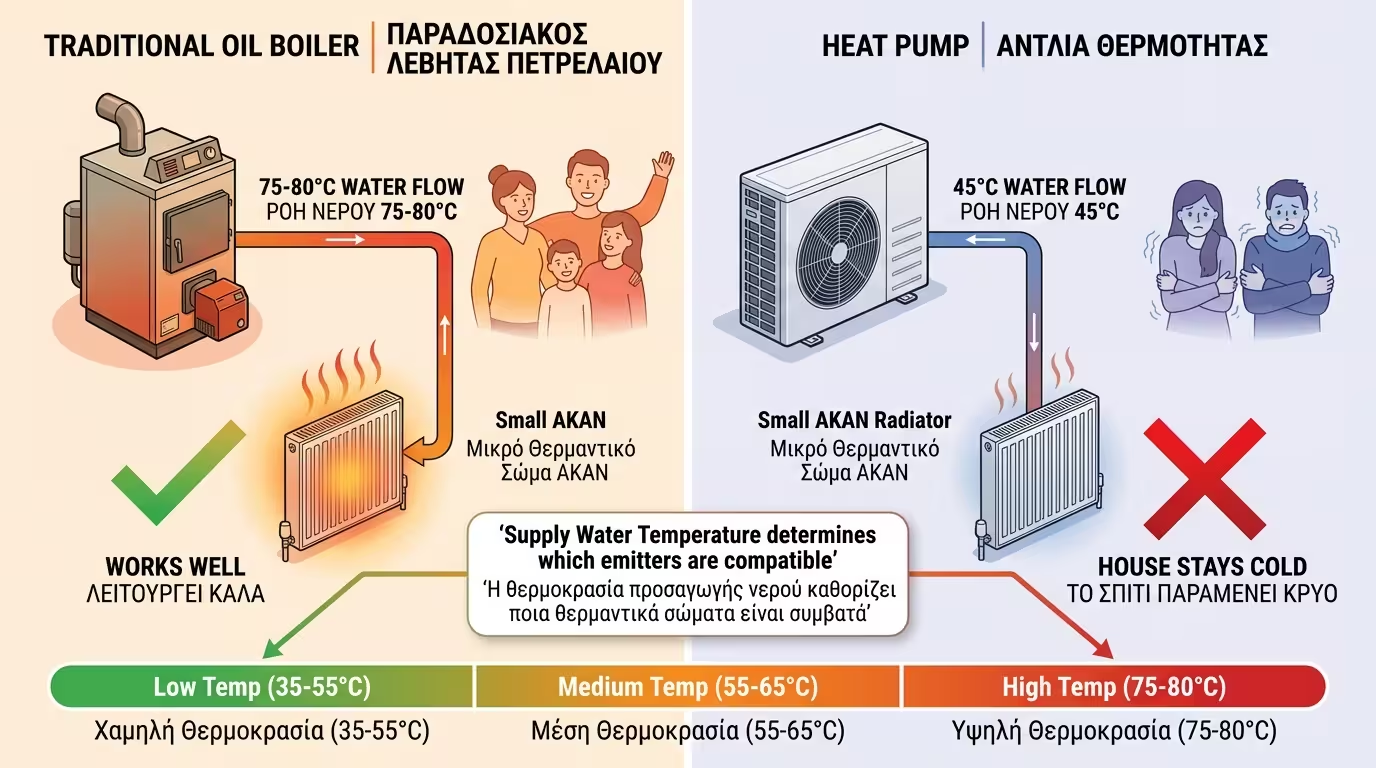
Conventional Heat Pumps, however, are engineered to work at peak efficiency when they heat water to 35°C – 55°C. If you send 45°C water through your small, old radiators, the house will simply never warm up.
That is why the market divides Heat Pumps into three broad categories, based on the Supply Water Temperature they can achieve: Low, Medium and High Temperature.
They are the "king" of energy savings. Their compressor runs very gently, consuming minimal electricity. Their ideal operating temperature ranges from 35°C – 45°C with a Coefficient of Performance (COP) that frequently exceeds 4.5.
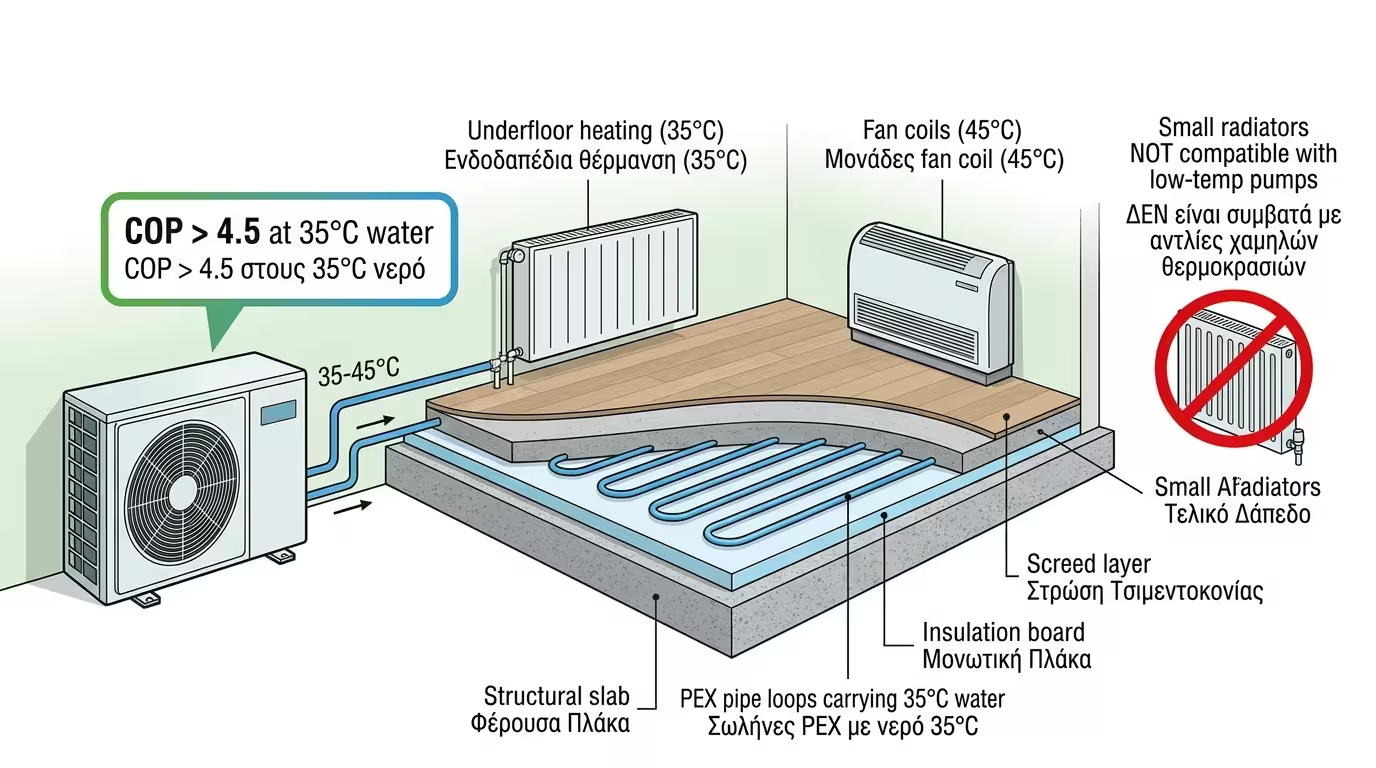
It is the ultimate "match". Because underfloor heating has an enormous surface area (the entire floor), it needs water at just 35°C to turn the house into a toasty warm space.
These units have a fan that pushes air through a water-filled element, so they perform superbly with water at 45°C.
Never connect them to old, small radiators (AKAN or cast-iron types). They will not manage to cover your home's heat losses on the cold winter days.
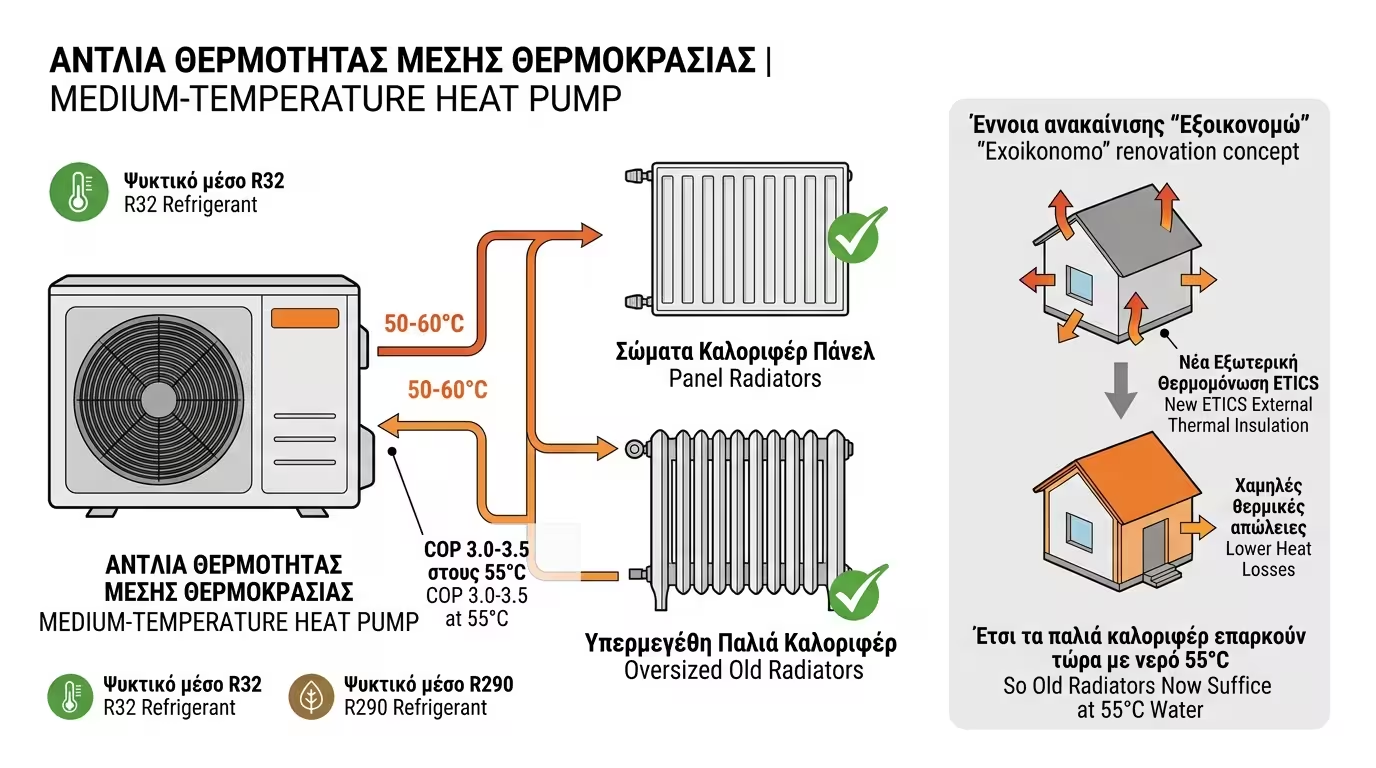
They represent the "golden mean" for modern apartment renovations. They use advanced refrigerants (such as R32 or R290) and can push the water temperature higher without destroying your savings. Their ideal operating temperature is 50°C – 60°C with a COP of around 3.0 to 3.5 at 55°C.
If you have modern panel-type radiators, or if your old radiators were "over-sized" (i.e. the plumber fitted larger bodies than strictly needed), a medium-temperature pump will serve you perfectly.
It is the most common choice when combined with simultaneous external insulation (ETICS). Because the building is better insulated, heat losses fall, and your old radiators suddenly "suffice" to warm you with 55°C water!
They are the "beasts" of the market. Designed exclusively for Retrofitting (renovations of older buildings) where absolutely nothing can be changed inside the house. They often use a dual-stage compression (Cascade) cycle to push water to near-boiling temperatures.
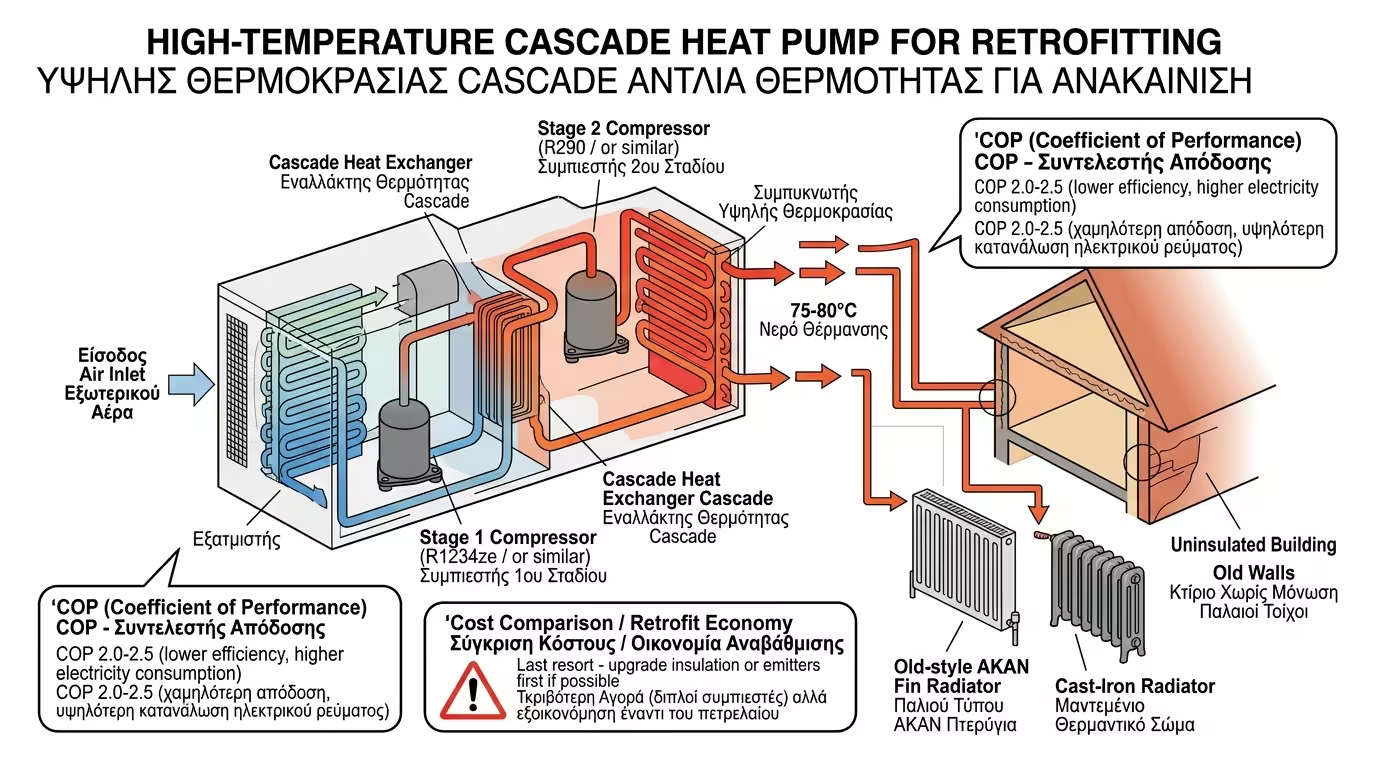
The COP drops to 2.0 – 2.5. You still save compared to oil, but you burn noticeably more electricity than a low-temperature pump.
If you live in an old, uninsulated house with classic radiators, don't want any building work, don't want to swap the emitters, and simply want to remove the oil boiler and connect the heat pump to the same pipe - this is the machine for you.
High-temperature heat pumps are significantly more expensive to buy (because of the dual compressors) and consume more electricity.
The good engineer's rule is simple: the lower the water temperature circulating, the less electricity you will pay.
If you are building a new home, the choice is obvious: Underfloor heating and a Low Temperature Heat Pump.
If you are renovating and adding external insulation (ETICS), a Medium Temperature Heat Pump will work perfectly with your old (or slightly up-sized new) radiators.
Only if you cannot touch anything inside the house (neither the emitters nor the insulation) should you resort to the expensive but life-saving High Temperature solution.
All of this comes down to one common denominator: your wallet. How do we calculate in practice how much electricity the machine will consume? In our next article, we finally decode the "jargon" of energy labels: What Is COP, SCOP and How to Calculate the Real Running Cost of Your Heat Pump.
Return to category.
Go to categoryReturn to the central guide.
Go to guide