1️⃣ Call the General Assembly
You must request in writing that the building manager convene a general assembly, formally announcing your intention to disconnect and install gas or a heat pump. This creates the legal timeline.
We've all experienced (or heard about) the same scenario: November, building assembly meeting. Half the residents are cold and want the central heating switched on; the other half refuse to pay for overpriced oil. The result? The boiler room stays off, walls freeze, damp flourishes, and neighbour relationships are destroyed.
If you've reached breaking point and decided to install your own wall-mounted gas boiler or heat pump, the first question on your mind is: "Can I do this alone or do I need their signatures?" Gaining heating independence is no longer the legal ordeal it once was. The legislative framework has been clarified, protecting those who want to upgrade their home's energy performance. Let's see exactly what the law says about consent, shared costs and the technical disconnection.
In the past, the building's bylaws were "gospel". If they stated that disconnection required 100% or 50%+1 of the vote, you were trapped. Law 4495/2017 changed everything: the legislator, wanting to promote the energy upgrade of buildings, gives you the right to become autonomous EVEN IF the majority or the bylaws disagree.
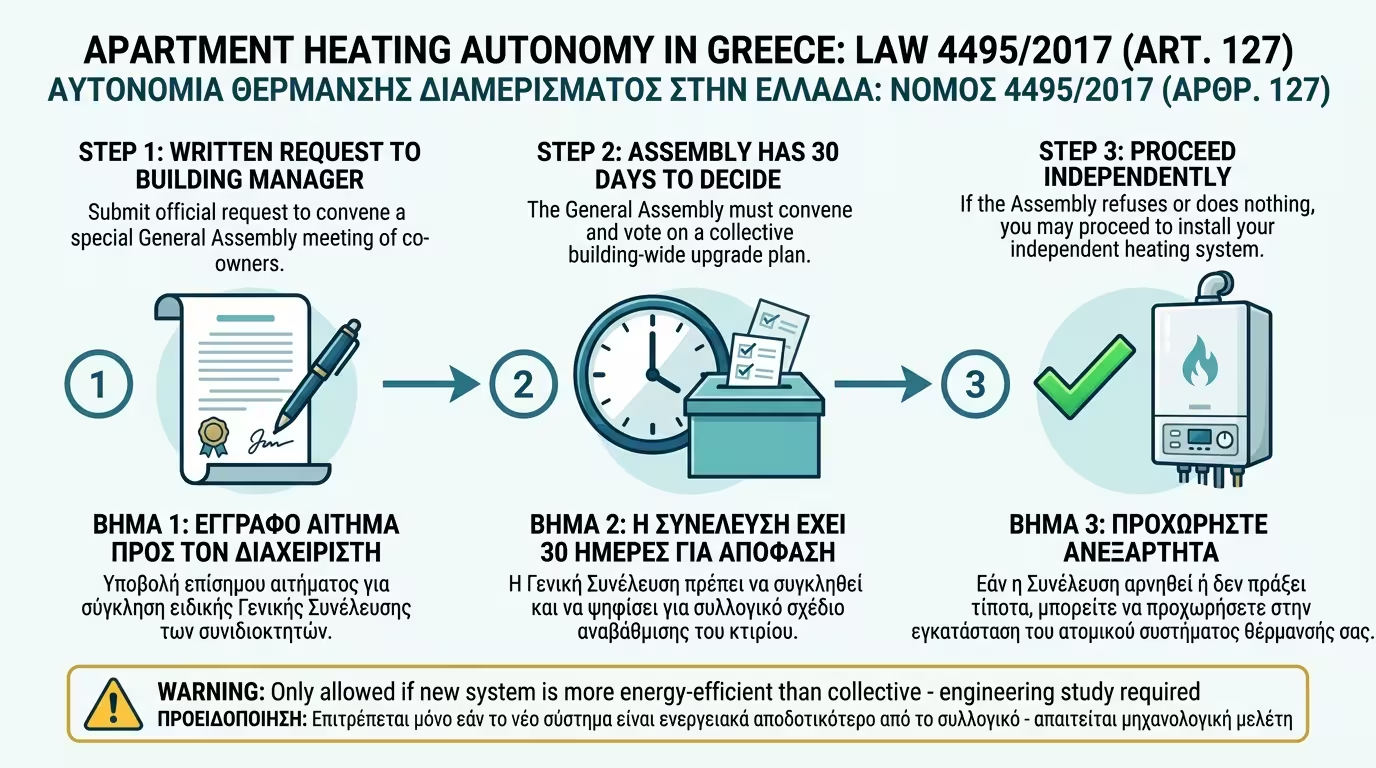
You must request in writing that the building manager convene a general assembly, formally announcing your intention to disconnect and install gas or a heat pump. This creates the legal timeline.
If the assembly decides within 30 days to upgrade the entire building's central system to gas, you follow the majority. If they refuse, stall or simply do nothing, you may proceed independently.
You have the right, at your own expense and responsibility, to install an autonomous system. The law permits disconnection only if the new system is more energy-efficient. You cannot disconnect to run plug-in electric heaters or portable stoves. A mechanical engineering study is required.
This is where the biggest "war" happens in corridors. "You've left, so why shouldn't you pay the 20% or 30% standing charge the bylaws mention?" The law is clear: the apartment that gains autonomy with a more efficient system is fully exempt from fuel consumption charges and routine maintenance costs.
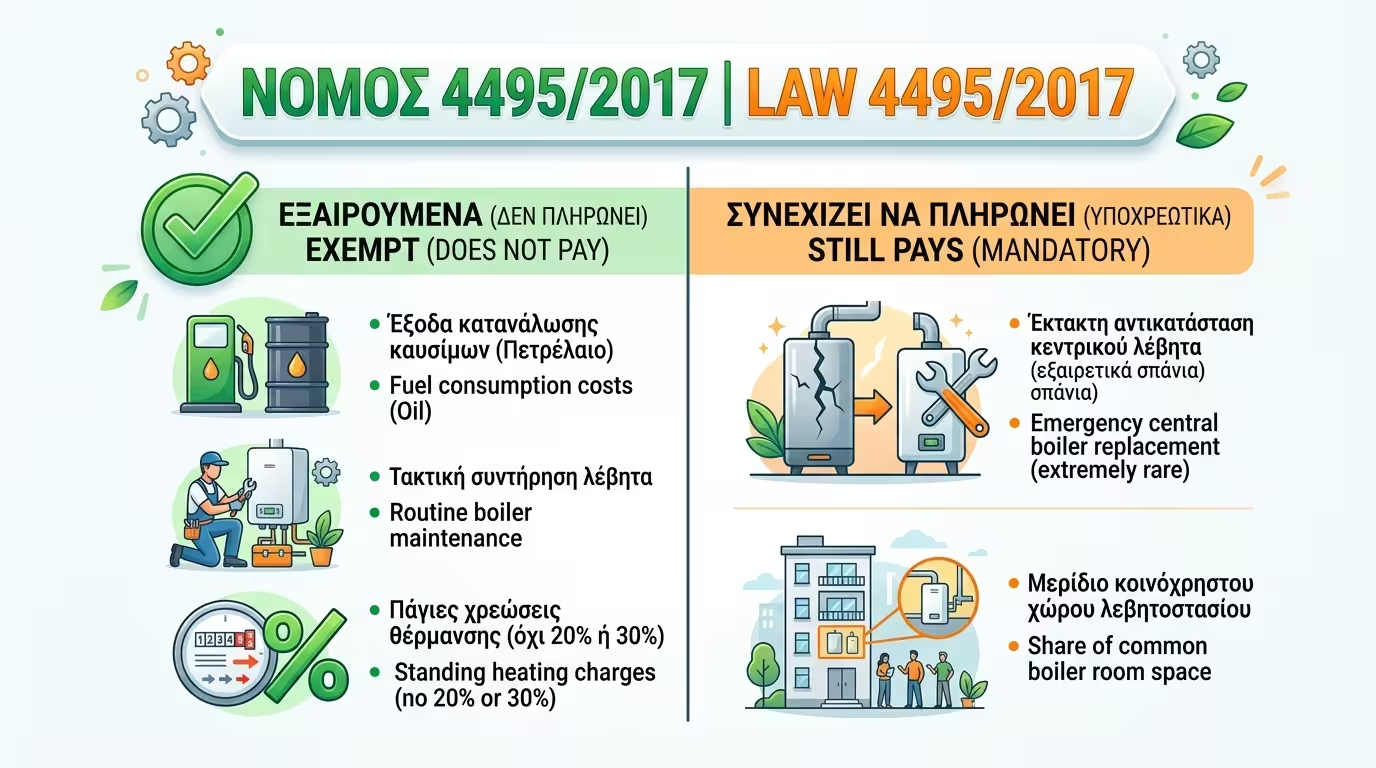
Fuel consumption costs (oil), routine central boiler maintenance. No "20% standing charge" or "30%" - the law leaves no room for misinterpretation.
Because you legally remain a co-owner of shared equipment (boiler, boiler room), you must contribute only to emergency replacement of the central boiler if it fails completely. This is an exceedingly rare occurrence.
Once the legal side is settled, the plumber takes over. Disconnection isn't simply "cut two pipes". The method depends entirely on the mechanical design of your building.
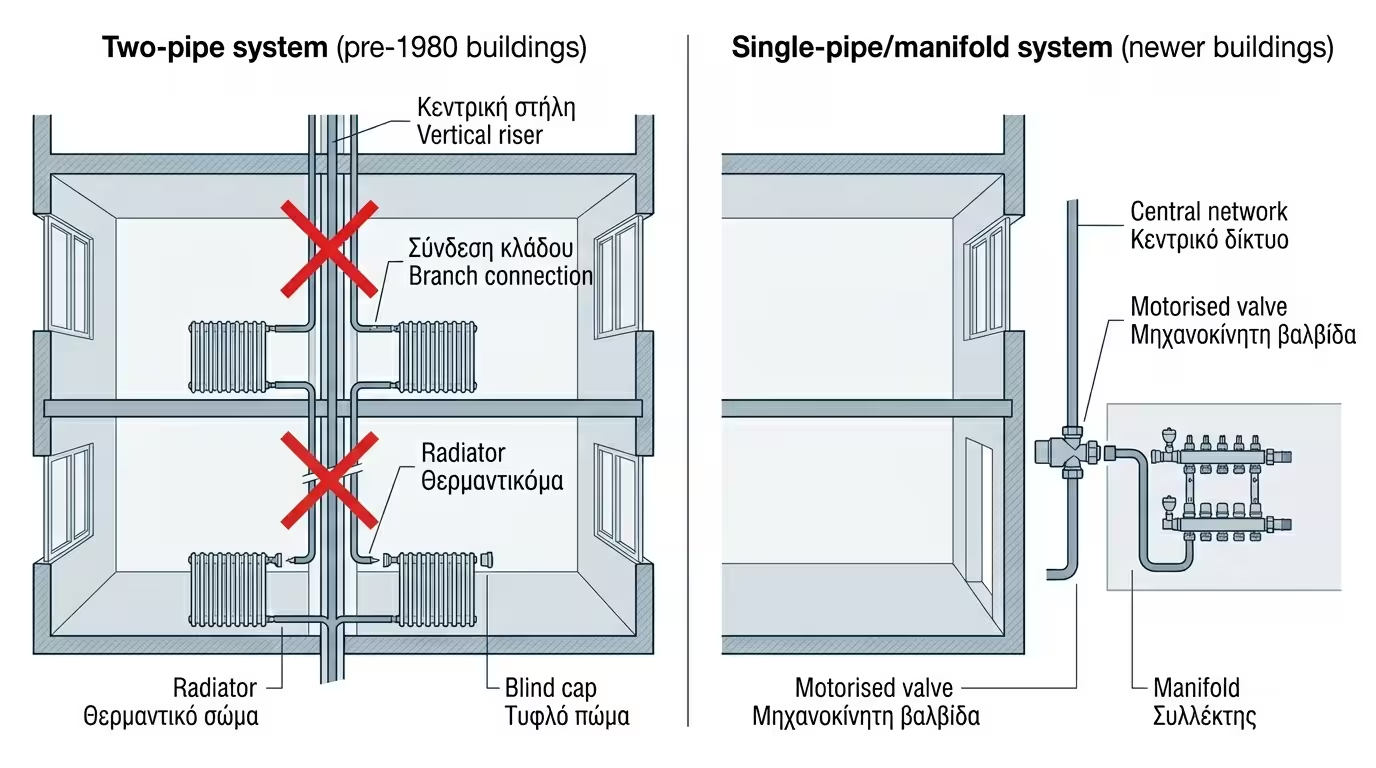
If the building was constructed before 1980-1990, you probably have thick vertical risers (stacks) running from ceiling to floor through your living room and on to the flat below. The plumber cuts the branches connecting each radiator to the central riser and fits blind caps. It is strictly forbidden to cut the central vertical riser - doing so would close the loop and leave all upper-floor neighbours without heating. The exposed risers are wrapped in insulation and concealed behind plasterboard.
If you have autonomy with a heat meter (hourly billing) and a manifold (collector) inside your flat, things are much simpler. Disconnection is done centrally, outside the apartment, at the point where the central pipe meets the motorised valve serving your flat. The technician simply caps the supply, leaving the building's central network running normally.
Once disconnected, your radiators are "orphaned". They must be connected to your new gas boiler on the balcony or your heat pump.
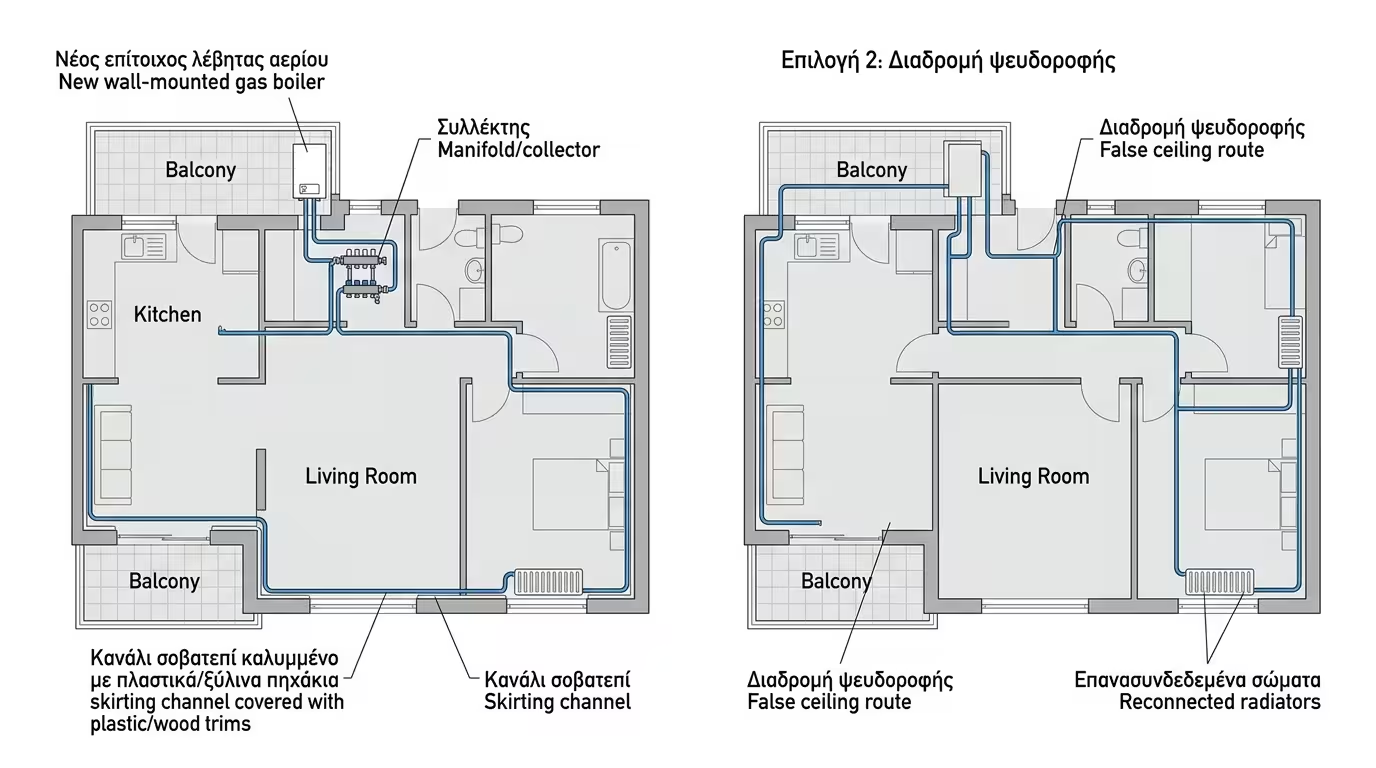
You're in luck! The plumber simply connects the new boiler directly to the existing manifold. Hot water flows immediately to all radiator bodies without any new pipework.
An entirely new pipe network must be built from scratch. The technician starts a new copper (or multilayer) pipe from the balcony and runs it around the perimeter of the apartment, connecting each disconnected radiator one by one. Typically, these new pipes are routed low along the skirting board and covered with plastic or wooden channels, or they pass through false ceilings.
Heating autonomy is a legal right designed to improve your quality of life and let you control your costs. Make sure to follow the letter of the law with the assembly process, hire certified technicians for the disconnection, and never cut the central vertical risers - that would be catastrophic for your neighbours.
This article completes our analysis of fossil-fuel heating (Gas/Oil). But what if you live in the countryside, outside the gas grid, and are looking for a cheap, traditional yet modernised solution? In the next category we explore the world of Biomass, Solid Fuels & Alternative Sources - starting with Pellet vs Wood boilers.
Return to category.
Go to categoryReturn to the central guide.
Go to guide