What Are COP and SCOP? How to Calculate the Real Cost of a Heat Pump

When you start shopping for a Heat Pump, salespeople and brochures bombard you with figures that seem magical: "400% efficiency!", "It gives you 5 kW of heat burning only 1 kW of electricity!".

If you have even basic physics knowledge, your first reaction is probably scepticism: How can efficiency be greater than 100%? Doesn't that violate the Law of Conservation of Energy?

Let us debunk this myth, explain the "jargon" of energy labels (COP and SCOP) and see, with pen and paper, how these numbers translate into real euros on your electricity bill.

1. The Physics Puzzle: How Do We Achieve > 100% Efficiency?

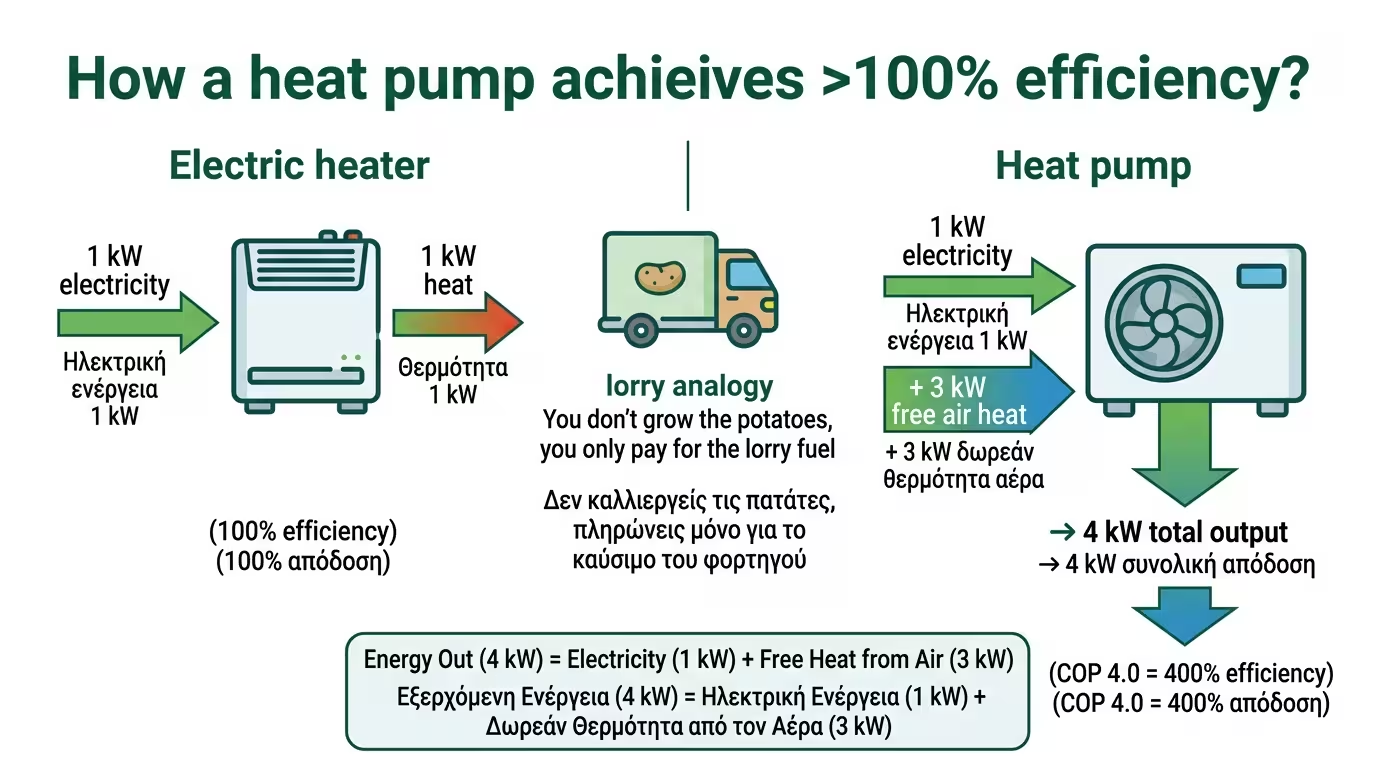
When you turn on a classic electric radiator or electric boiler, the appliance produces heat by converting electrical energy into thermal energy. There, efficiency is strictly 1-to-1 (or 100%). You put in 1 kW of electricity, you get 1 kW of heat.

Heat pump energy label showing COP and SCOP ratings

🔄 It Doesn't Produce, It Transfers!

A Heat Pump, by contrast, does not produce heat. It transfers it. It uses electricity solely to power a mechanism (the compressor and fans) that "steals" the free thermal energy already stored in the outdoor air (from the sun) and brings it inside the house.
🚛 The Lorry Analogy

Think of it like a lorry: you don't need to "grow" the potatoes; you only pay for the lorry's fuel to deliver them. The conservation law holds perfectly: Energy out (4 kW) = Electricity (1 kW) + Free Heat from the air (3 kW).

2. What Is COP (Coefficient of Performance)?

The COP (Coefficient of Performance) is precisely this "transfer" metric. It tells you how much thermal energy the pump delivers for every 1 kW of electricity consumed. If a pump has a COP of 4.0, it means that by consuming 1 kW of electricity you get 4 kW of heat (i.e. 75% free energy).

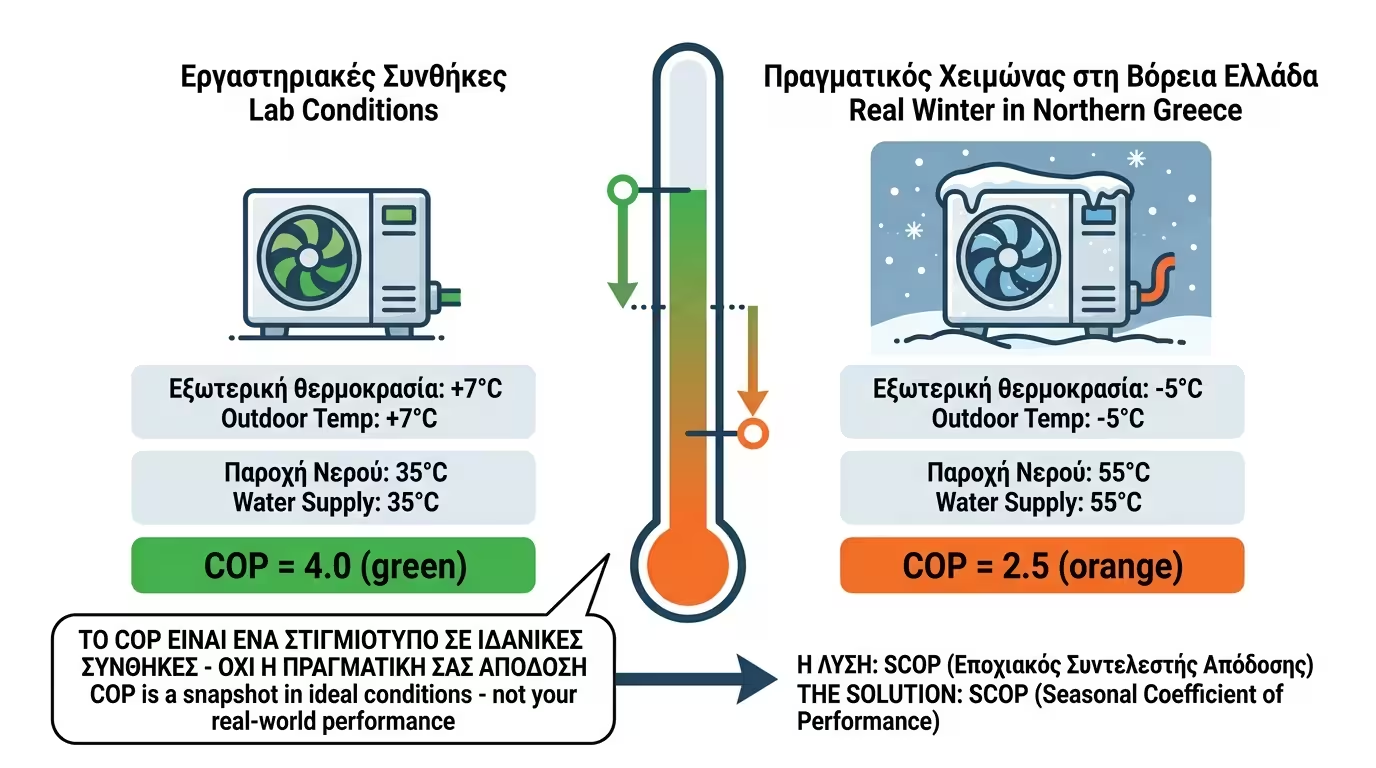
COP instantaneous coefficient of performance - lab measurement conditions

⚠️ The Big COP Trap

COP is a "snapshot in time". In laboratories, manufacturers measure COP under very ideal conditions: typically at an outdoor temperature of +7°C and with the pump supplying 35°C water (for underfloor heating).

❄️ In Reality

What happens if you live in Florina at -5°C and need 55°C water for your radiators? The machine has to work much harder to "find" heat in the freezing air. In that case, a COP of 4.0 can drop to 2.5.

That is why the European Union introduced a new, far more honest metric: the SCOP.

3. What Is SCOP and Why Is It the Only One That Matters?

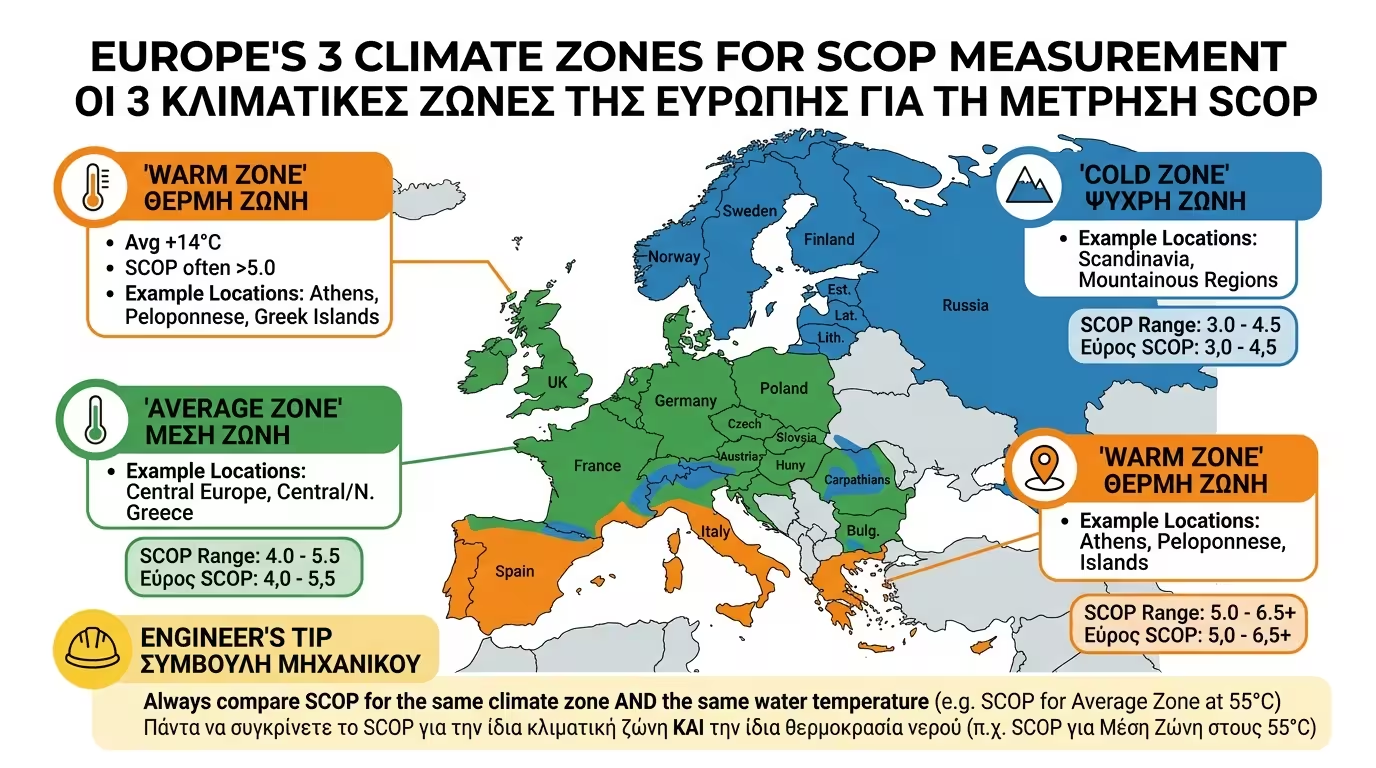
The SCOP (Seasonal Coefficient of Performance) is the average efficiency of the heat pump for the entire heating season, taking into account temperature fluctuations (both freezing days and sunny days). It is the number you really need to look at.

SCOP seasonal coefficient of performance - 3 European climate zones

🟠 Warm Zone

Covers areas such as Athens, the Peloponnese and the islands (average +14°C). Here SCOP values are huge, often above 5.0!

🟢 Average Zone

Covers Central European regions, as well as Central and Northern Greece.

🔵 Cold Zone

Covers the Scandinavian countries (or our very mountainous villages).

Engineer's Tip: When comparing two machines in the shop, make sure you compare the SCOP for the same climate zone and for the same water temperature (e.g. SCOP for Average Zone at 55°C).

4. How to Calculate the Real Running Cost in Euros

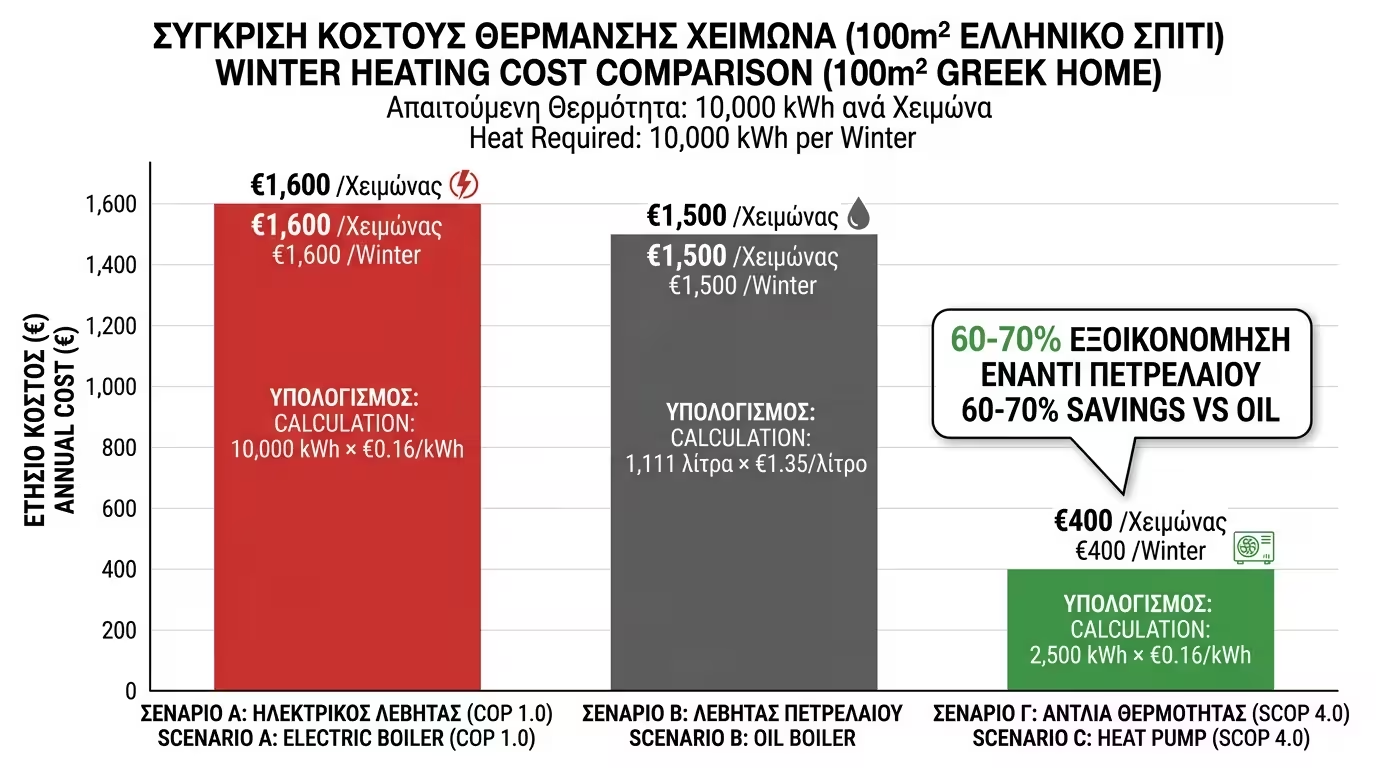
Heat pump running cost calculation in euros per winter season

Let us do the savings maths, adapted to the Greek reality. Suppose the engineering study shows your home (e.g. 100 m²) needs 10,000 kWh of thermal energy to stay warm all winter.

💡 Scenario A: Electric Boiler (COP 1.0)

It will consume exactly 10,000 kWh of electricity.
Cost: 10,000 kWh × €0.16/kWh = €1,600 per winter.

🛢️ Scenario B: Oil Boiler

1 litre of heating oil produces approximately 10 kWh of heat (at 90% efficiency you get 9 kWh/litre). For 10,000 kWh you need about 1,111 litres.
Cost: 1,111 litres × €1.35/litre = €1,500 per winter.

🌿 Scenario C: Heat Pump (SCOP 4.0)

To deliver the 10,000 kWh your home needs, it burns only 1/4 in electricity: 2,500 kWh.
Cost: 2,500 kWh × €0.16/kWh = €400 per winter!

The figures are indicative, but the savings ratio, which reaches 60-70% compared to oil, is absolutely realistic.

5. Summary

📖 The Takeaway

A Heat Pump does not perform magic - it does Physics. If you understand SCOP, you can choose the machine that will pay for itself the fastest.

➡️ Next Step

But what if you live in an area where winter is extremely harsh (-10°C) and the air-source pump struggles hard to find heat in the freezing air, dragging its SCOP down? There is another, ultimate technology, hidden beneath our feet. In our next article, we explore Geothermal Heat Pumps: how they work, the truth about boreholes in Greece and why they deliver the ultimate, constant COP regardless of the weather.

Related Articles

Preview