🎯 The Goal
To select a machine whose maximum output exactly covers those losses. Not smaller (you'd be cold), but above all, not larger.
It's a very common habit: when building something, we add "a little extra, just to be safe." If the engineer recommends 12 mm rebar in the foundations, we tell the contractor to use 14 mm. We've been doing the exact same thing with heating for decades. If the house needs a 20,000 BTU boiler, we buy a 30,000 BTU one "so it heats up quickly."
With old oil boilers, oversizing simply cost a little more fuel. With modern heat pumps, however, this mentality is absolutely destructive.
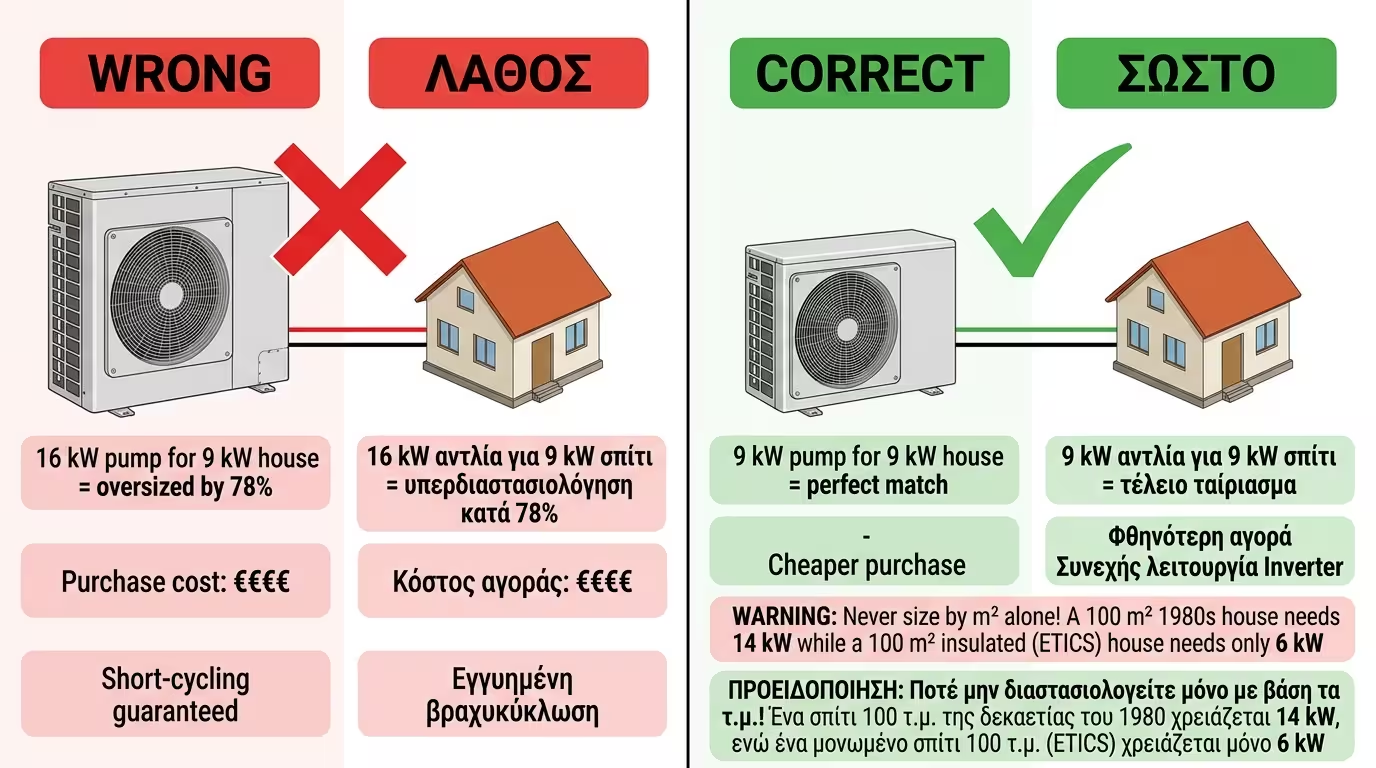
Let's see why a 16 kW heat pump in a house that needs only 9 kW will destroy the machine in record time and send your electricity bills through the roof.
Sizing (or capacity selection) is the process whereby a mechanical engineer calculates precisely how much thermal energy (in kW) your house loses on the coldest winter days (e.g. at -2°C). These are the famous heat losses.
To select a machine whose maximum output exactly covers those losses. Not smaller (you'd be cold), but above all, not larger.
Sizing "by the square metre" (e.g. 100 W/m²) is entirely amateur. A 100 m² 1980s house with old aluminium windows and zero insulation may need a 14 kW pump, while an identical 100 m² house with modern external insulation (ETICS) and energy-efficient glazing heats perfectly with just 6 kW! The difference is enormous - that's why a professional heat loss study is essential.
As we explained in the previous article, modern heat pumps use Inverter compressors. The magic of the Inverter is that it drops to idle (e.g. 30%) and maintains a steady temperature without ever switching off, achieving enormous savings (high COP).
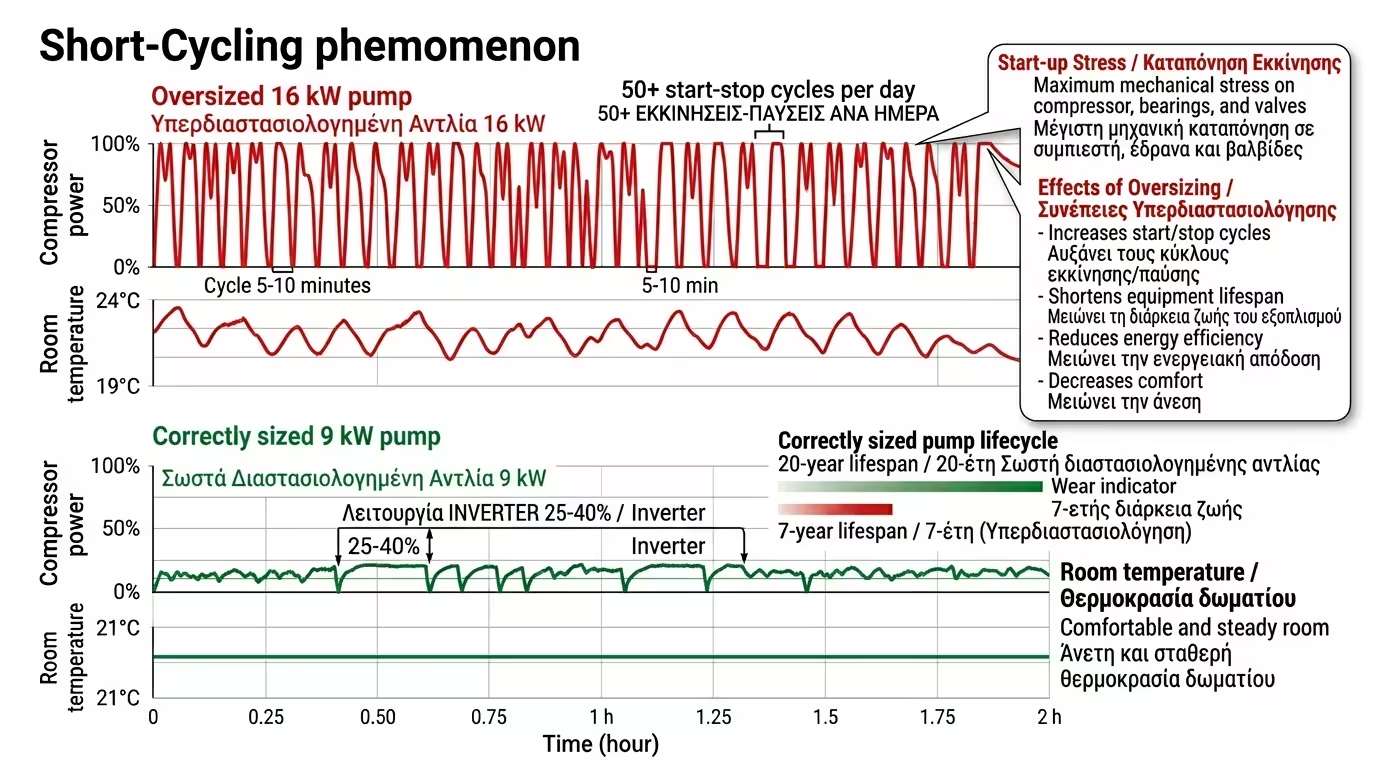
If you install a 16 kW pump in a 6 kW house, even at its minimum (30%), the pump still produces ~5 kW of heat. On a mild winter day (10°C), the house only needs 2 kW. The pump produces far too much heat → it has to shut off → the water cools → it restarts → shuts off again in 5 minutes.
This constant "On – Off – On – Off" pattern is called Short-Cycling. It turns your expensive Inverter heat pump into an old, cheap On/Off machine, nullifying every advantage of modern technology. In practice, for the hundreds of mild Greek winter days, the machine can never operate correctly.
Short-Cycling is not just an annoying technicality - it is a triple threat that simultaneously attacks the machine's lifespan, your electricity bill and your comfort.
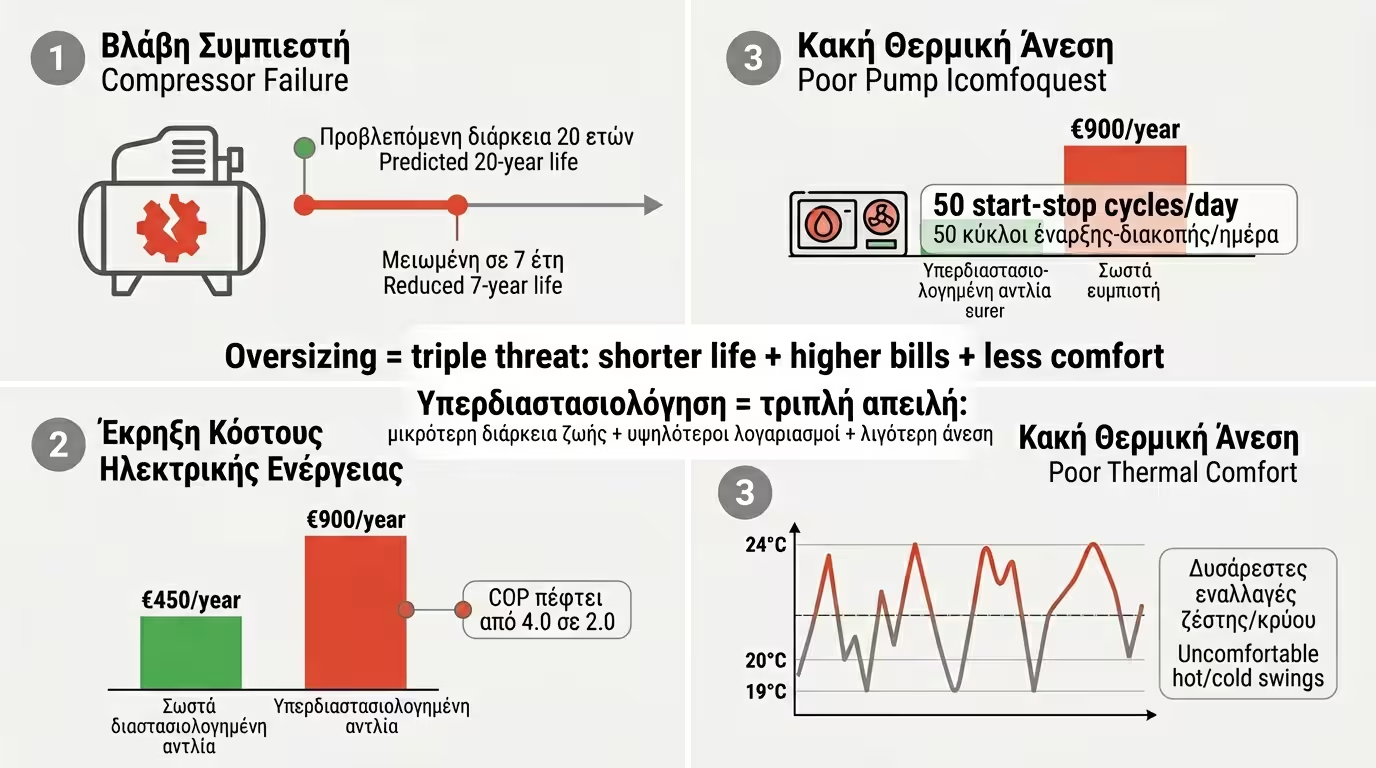
Startup is the most stressful moment for any motor. When the compressor starts and stops 50 times a day instead of running continuously, mechanical parts wear out rapidly. A machine designed to last 20 years may "burn out" in just 7.
The machine draws the most electricity at startup. Every time the compressor stops, temperature and pressure in the refrigerant circuit are lost. By losing the steady-state advantage of the Inverter, the COP plummets. You paid for a heat pump but consume electricity as if you had an electric boiler, since the average annual efficiency drops dramatically.
The house heats up abruptly (radiators boiling), then cools abruptly (radiators freezing). You lose the sensation of gentle, stable temperature that a correctly sized system delivers consistently throughout the day.
The antidote to oversizing is a professional Heat Loss Study to standard EN 12831 by a qualified mechanical engineer. The engineer calculates wall insulation (U-value), windows, local climate and emitter type.
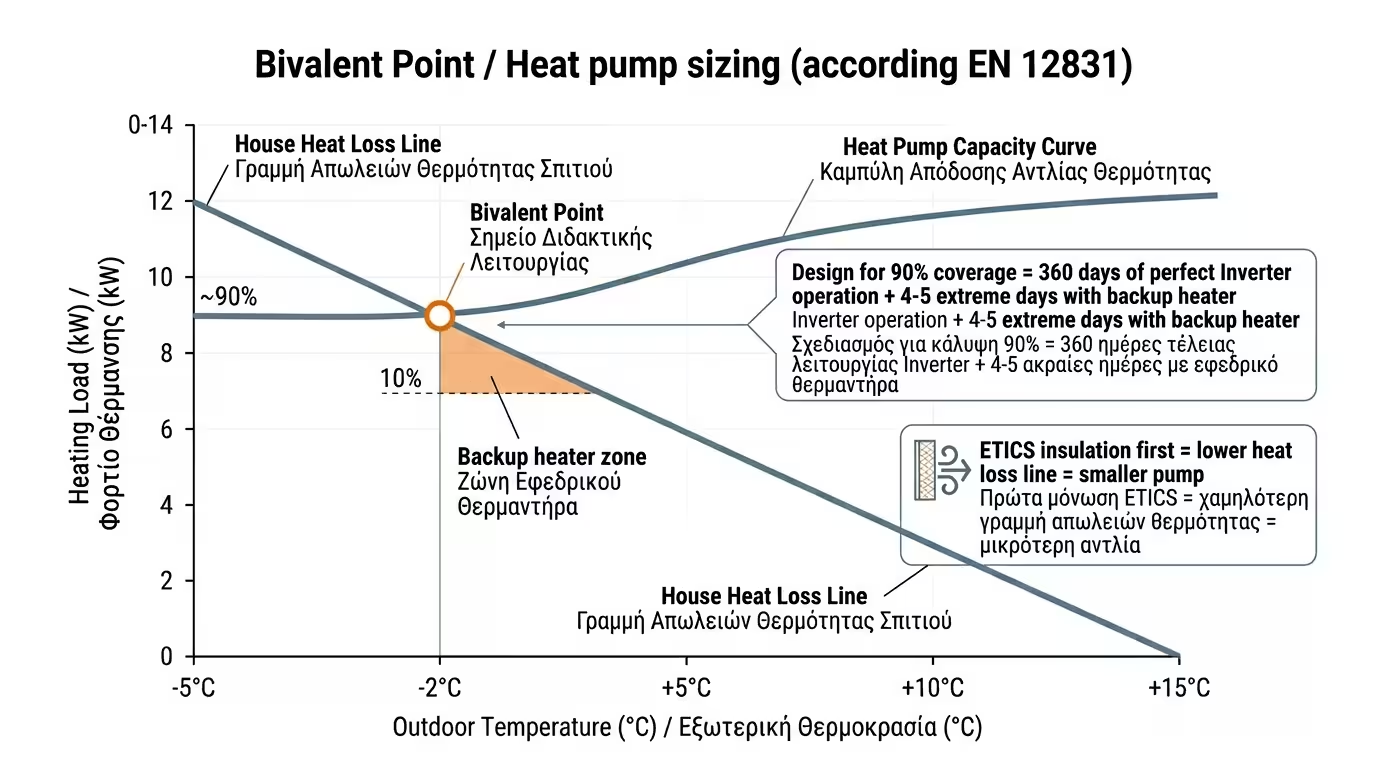
Often, it is preferable to choose a pump that is slightly undersized (e.g. covering 90% of peak losses). Extreme days (-5°C in Athens) occur 3–4 times a year. For the remaining 360 days, the smaller pump runs like clockwork with perfect Inverter efficiency and zero short-cycling.
For the few freezing days, all modern heat pumps include built-in electric resistance heaters that kick in automatically to cover the small gap, ensuring you're never cold.
If you add external insulation (ETICS) first, heat losses drop dramatically. That means a smaller heat pump = cheaper purchase + lower running cost + longer service life.
Never pressure your installer to fit a "size larger" machine. Trust the engineer's study. A correctly sized heat pump is cheaper to buy, lasts longer and consumes far less electricity.
What if you live in a very cold region and already have a new oil or gas boiler? Is there a way to keep both? In the next article, we cover Hybrid (Bivalent) Systems and how the smart combination of a heat pump and a boiler delivers unbeatable economy and security, especially during the harshest winter days.
Return to category.
Go to categoryReturn to the central guide.
Go to guide