Buffer Tank (Thermal Store): Why It's Mandatory for Biomass and How to Size It

Picture this scenario: it's a cold evening, you've loaded your brand-new wood boiler with thick logs and the fire is roaring at full power. Within an hour the living room has hit 22°C. The thermostat tells the circulator pump to stop. But the logs have no On/Off switch - they keep burning ferociously. Where will all that heat go? Without a Buffer Tank (Thermal Store), the water inside the boiler begins to boil, pressure skyrockets and you risk serious damage or even an explosion.

1. What Is a Buffer Tank?

In simple terms, it's a giant thermos - a heavily insulated tank (typically 500 to 2,000 litres) filled with water. It's not a domestic hot water cylinder - it holds the "dead" water that circulates through your radiator network (hence the word "inertia"). Its role is threefold: safety (absorbing excess heat), efficiency (the boiler always burns at optimum load) and autonomy (warmth continues even after the fire goes out). With a buffer tank, the boiler is hydraulically decoupled from the radiators and heats only the tank. The thermostat draws heat from the tank - not directly from the boiler.

Buffer tank 1000 litre thermal store in hydraulic system

🏗️ Construction & Capacity

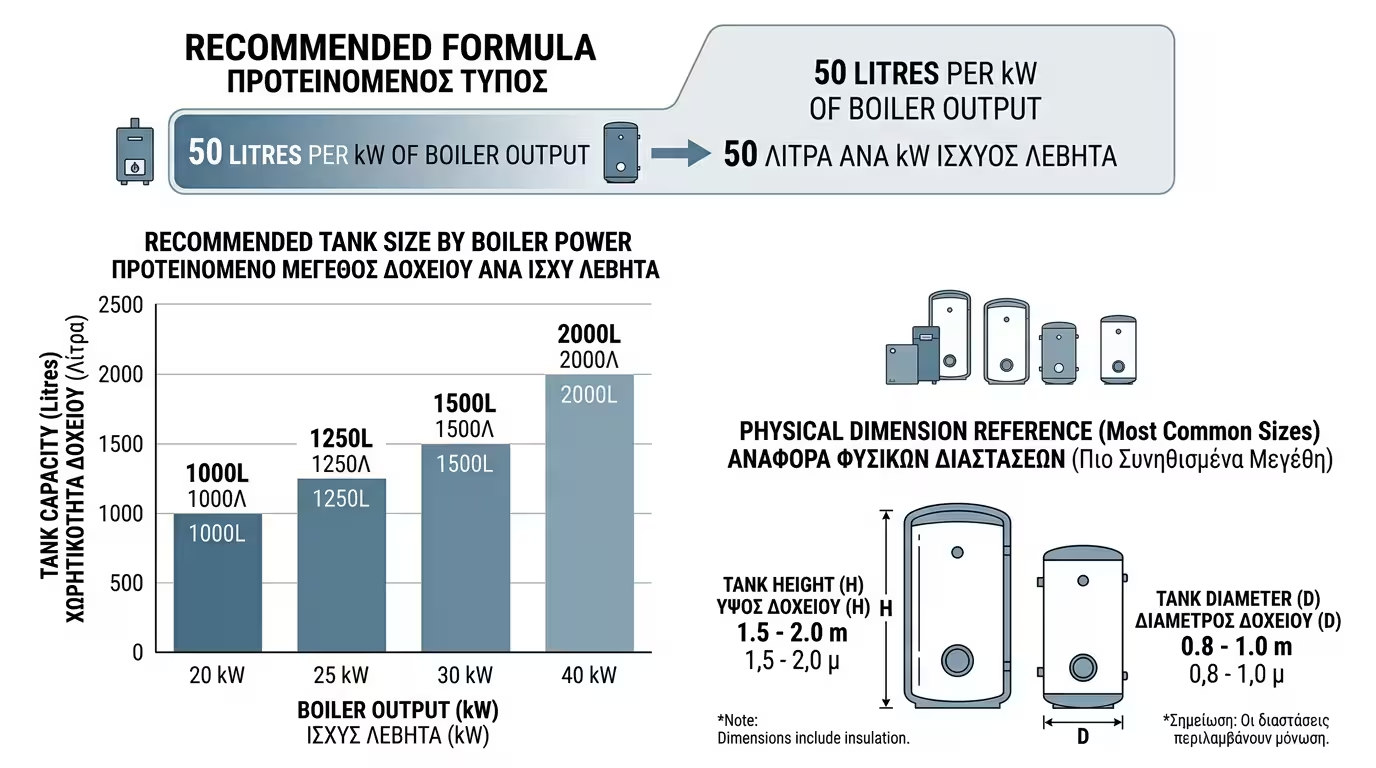
Most buffer tanks are made from stainless steel or carbon steel with internal enamel coating. They're insulated with 100+ mm polyurethane foam. The most common capacities are 500, 800, 1,000 and 1,500 litres. A 1,000-litre buffer tank stands approximately 2 metres tall with an 80 cm diameter - make sure it fits in your boiler room before ordering.
🔌 Circuit Connection

The boiler feeds the buffer tank via one circulator pump. The buffer tank then feeds the radiators or underfloor heating via a second circulator. A three-way valve controls when the room demands heat. If the boiler stops, the hot water in the tank continues to circulate and heat the radiators - thermal inertia without fire.

2. The Critical Safety Role: Boiling & Overpressure

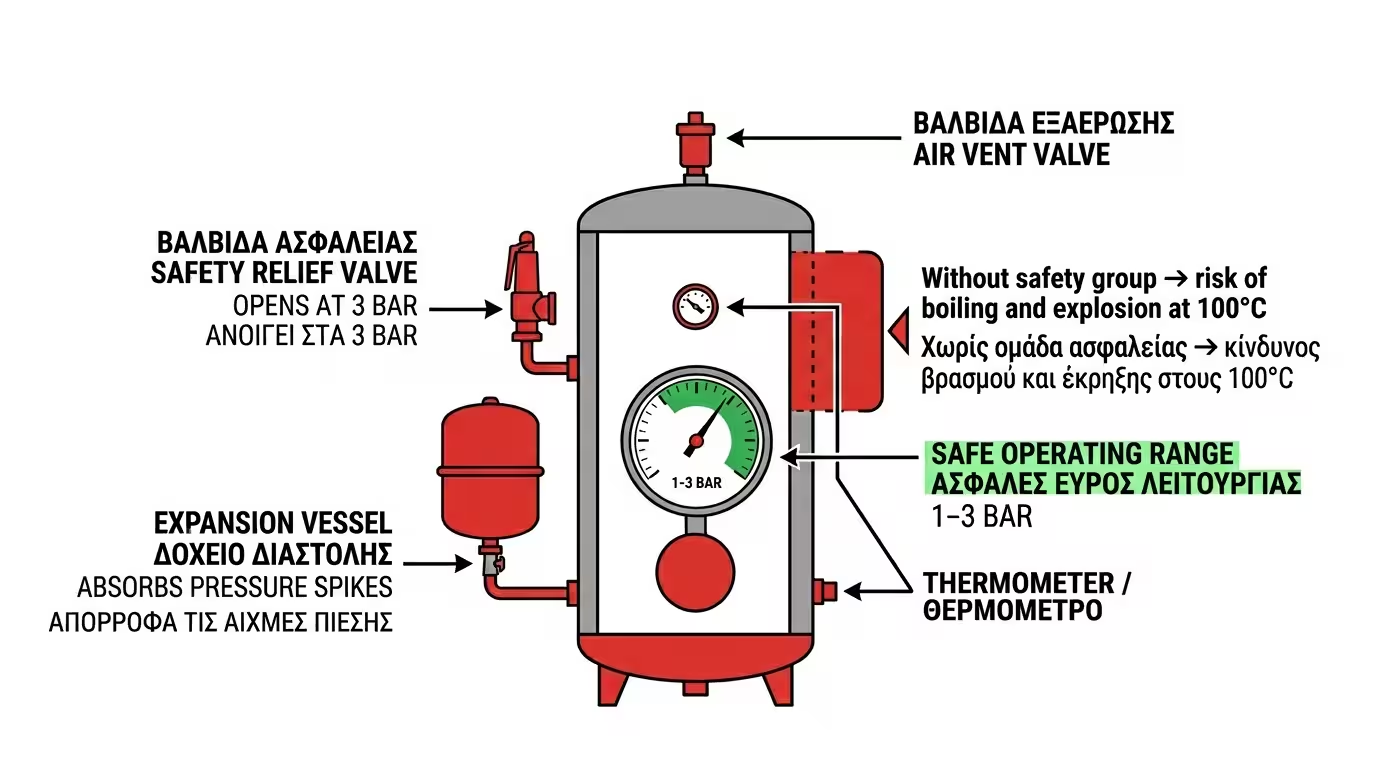
Here lies the most important reason for the buffer tank in biomass systems. Unlike a gas or oil boiler, a wood or pyrolysis boiler cannot be switched off instantly - the wood must burn. If the house refuses the heat (e.g. circulator pump failure), the temperature rises uncontrollably.

Safety - boiling, overpressure, relief valve

⚠️ Without a Buffer Tank

Without a buffer tank, the heat gets trapped inside the boiler. The temperature exceeds 100°C, the water starts to boil and pressure increases geometrically. The safety valve blows, ejecting steam and scalding water into the boiler room. In extreme cases, you risk a boiler rupture - an extremely dangerous situation that can cause severe injury. Even if you don't reach boiling point, running without a buffer forces the boiler into repeated shutdown-start cycles (cycling), which waste 20-30% more fuel and build up enormous amounts of tar (creosote) on the walls and flue.

✅ With a Buffer Tank

The excess heat is calmly absorbed by the 1,000+ litres of water in the tank. The temperature rises by a few degrees, not dangerously. The boiler always operates at optimum load (nominal output), without unwanted shutdown or boiling. Combustion stays clean - no tar, no creosote - so the chimney stays clear. Even during a power cut, the massive water volume acts as a "thermal extinguisher," absorbing the thermal energy smoothly until the wood burns out completely. Afterwards, the stored hot water continues to heat the radiators for hours without re-lighting.

3. Thermal Stratification: The Secret to Efficiency

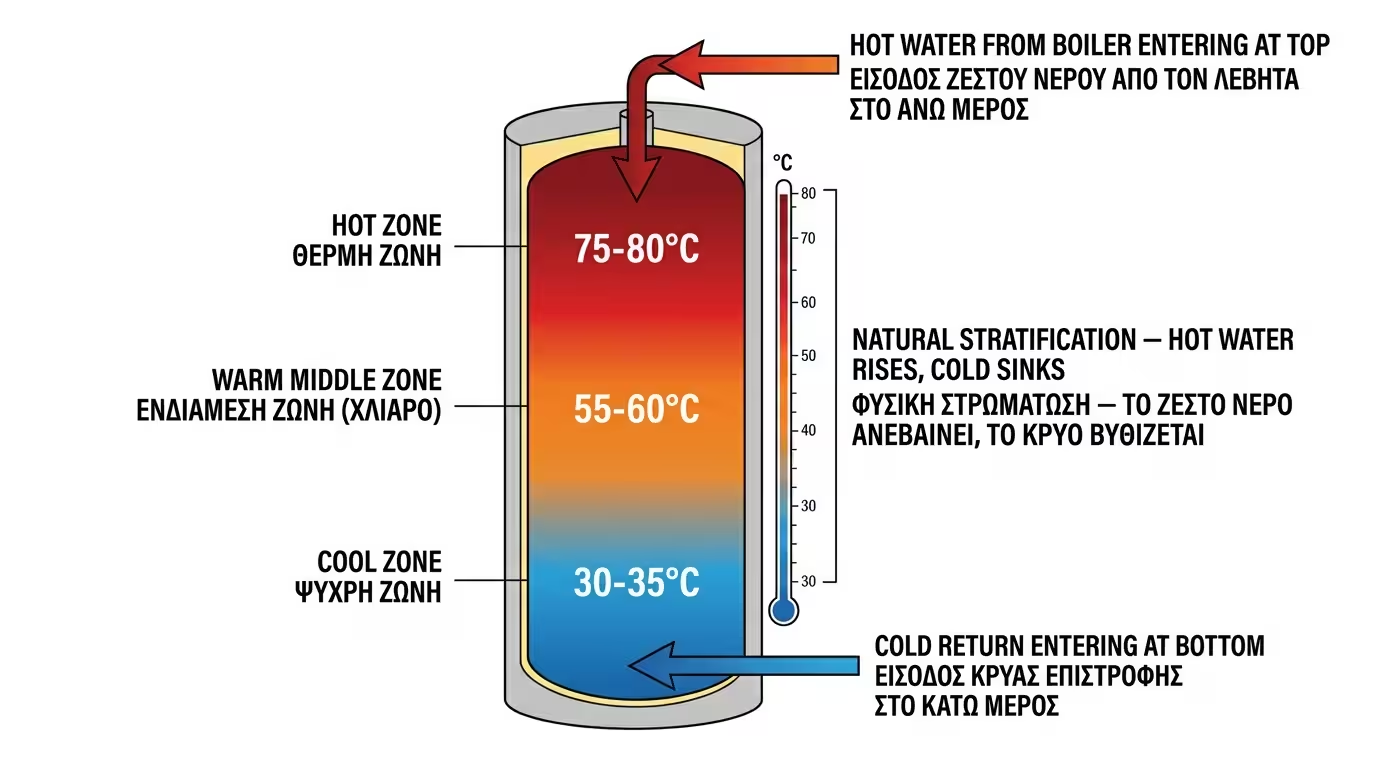
Thermal stratification - hot cold water layers, boiler

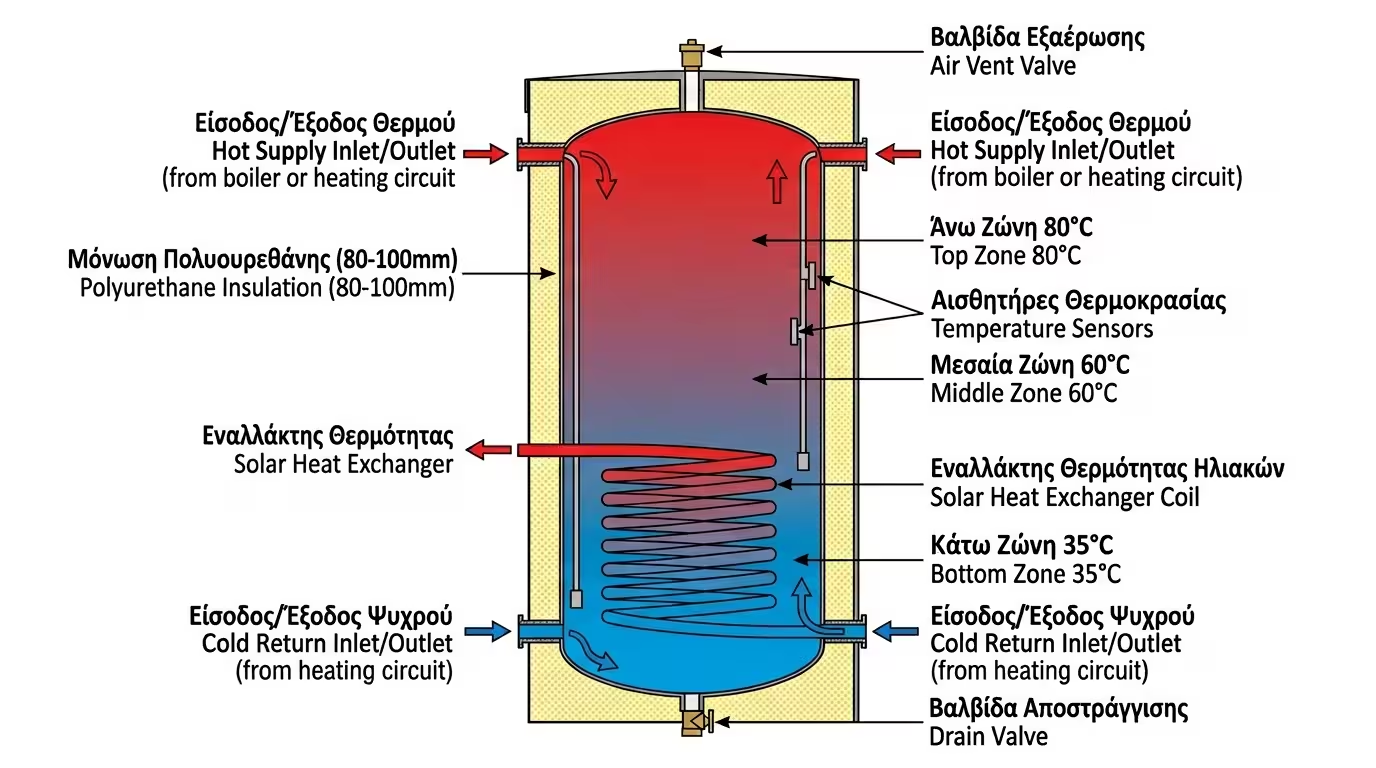
A properly designed buffer tank doesn't mix the water - it stratifies it. Hot water (60-80°C) rises to the top, while cold return water (30-40°C) settles at the bottom. This means you don't need to heat all the litres degree by degree before useful heat is available - the hot layer at the top is immediately ready for the radiators while the cold layer returns to the boiler. Stratification alone can improve fuel utilisation by 15-25%.

🌡️ Multiple Zones

Modern buffer tanks feature inlets and outlets at multiple heights, so the boiler always delivers hot water to the top and the radiators draw from there. With an integrated coil exchanger, the tank can simultaneously produce domestic hot water (internal boiler coil), eliminating the need for a separate cylinder - saving both space and money.

⚡ Solar Combination

Many buffer tanks accept a second (or third) heat exchanger coil - ideal for connecting solar thermal collectors. In winter the wood boiler does the heavy lifting, while in summer the sun takes over for domestic hot water, using the same tank. This combination maximises energy independence throughout the year.

4. Sizing: How Many Litres Do You Need?

The basic rule is simple: 50 litres per kW of boiler output. A 25 kW pyrolysis boiler needs at least 1,250 litres. A 15 kW hydronic fireplace needs at least 750 litres. In every case, a larger tank means more inertia, longer autonomy and safer overall operation.

Buffer tank sizing - 50 litres per kW

📏 Calculation Example

Detached house 150 m², 30 kW pyrolysis boiler: 30 × 50 = 1,500 litres minimum. If you also want a solar connection, a 2,000-litre tank is recommended. Tank cost: €800-2,500 (depending on material, insulation and integrated coil). Installation cost (circulators, pipework, valves): €500-1,500 on top.

⚖️ Large vs Small Tank

A larger tank means fewer boiler refills, but requires more time (and wood) to heat up initially. Conversely, a smaller tank means less inertia - the boiler must run more frequently. The ideal balance depends on your home's thermal needs, its insulation level and your family's daily routine.

➡️ Next Step

Now that you know where the heat goes (buffer tank) and how it reaches the radiators (circulator), one critical question remains: where do you put all this? In the next article we examine boiler room requirements for solid fuel systems - chimney, ventilation and fire safety regulations.

5. The Greek Reality: Why Many Skip It

🇬🇷 The Bad Mentality

In the Greek market we frequently hear: "You don't need a tank, it's money down the drain." Many installers omit the buffer tank to undercut competitors on price, condemning the customer to a dangerous and wasteful installation. The boiler runs in shutdown-start cycles, burns 20-30% more wood and fills up with tar that destroys both the boiler and the chimney.

💡 Practical Advice

If your installer doesn't include a buffer tank in the quote, change your installer. If you already have a wood boiler without a buffer tank, you can retrofit one into the existing system - it's an intervention by a qualified plumber that will pay for itself in 2-3 winters from fuel savings alone. Don't let the laws of physics punish you.

Related Articles

Preview