📐 Space Savings
Putting the boiler on the balcony frees up valuable indoor space. No dedicated boiler room, no tank, and no chimney running through the apartment are needed.
You've decided to connect to the natural gas network. The installer visits your home, you step out onto the balcony and search for the ideal wall to hang your new wall-mounted boiler. You want it in the corner, but the technician shakes his head: "It's not allowed there - the inspector will reject the study."
Natural gas is an extremely safe and convenient fuel, but only when the strict installation regulations are scrupulously followed. In Greece, the Gas Distribution Companies (EDA) have established very specific rules for where a boiler may be placed, how flue gases must exit and where pipes may run, to guarantee the absolute safety of you and your neighbours.
Modern wall-hung condensing boilers are sealed combustion chamber (Type C) appliances. They draw combustion air from outside and exhaust flue gases externally too. While installation indoors (e.g. in the kitchen, provided there's an external wall for the flue) is technically and legally permitted, in Greece we prefer the balcony for three key reasons.
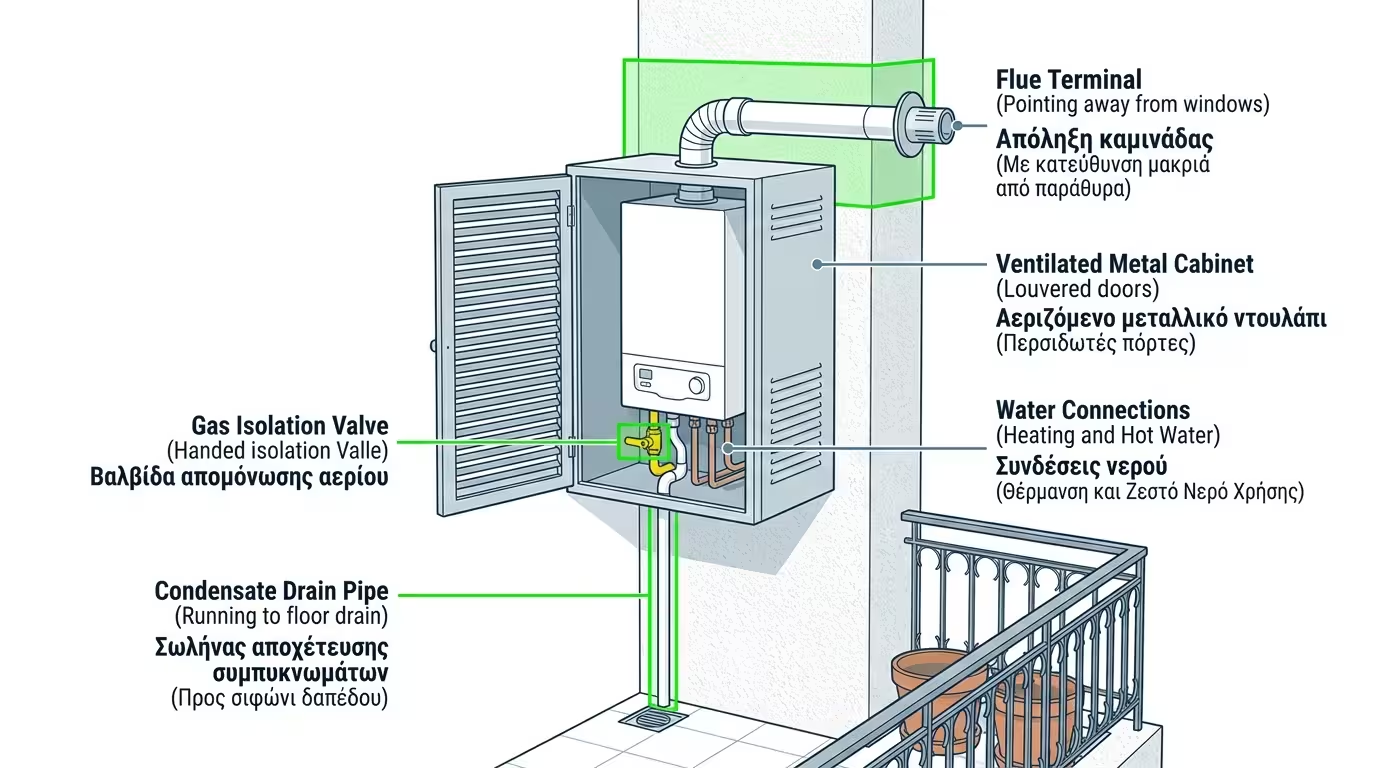
Putting the boiler on the balcony frees up valuable indoor space. No dedicated boiler room, no tank, and no chimney running through the apartment are needed.
Although modern boilers are virtually silent, a faint fan hum always exists. On the balcony, you never hear it indoors.
With the boiler on the balcony, the gas line stops at the external wall. It never enters the home, giving the whole family complete reassurance.
The engineer who signs the Internal Installation Study must comply with strict safety distances. Here's what you need to check before work even begins.
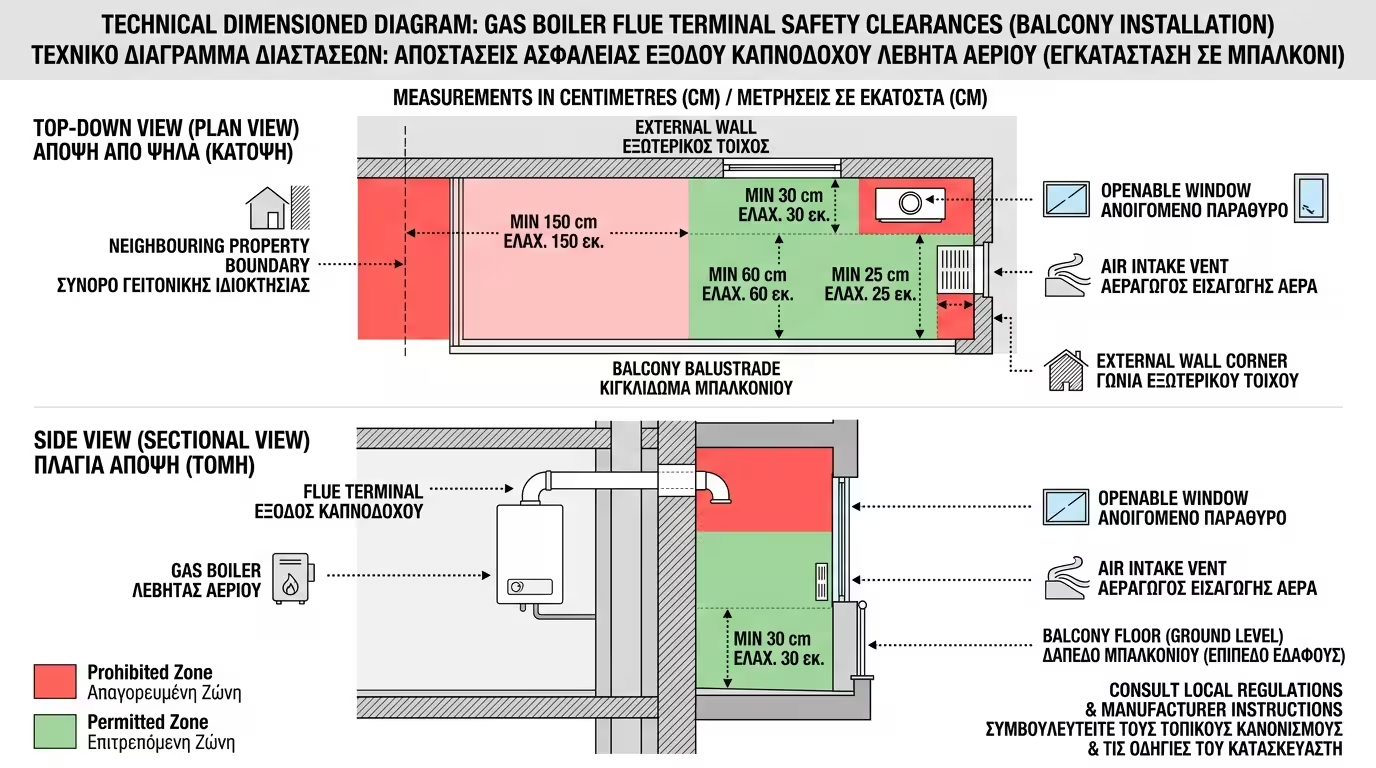
The boiler's flue emits combustion gases. If placed too close to an open window, gases could enter the home. The flue terminal must be at least 40 cm (0.40 m) from any openable frame (door or window) sideways or downwards.
The boiler uses a coaxial pipe (tube-in-tube): flue gases exit through the inner tube, fresh air is drawn through the outer tube. The flue must maintain minimum clearance from the slab of the floor above, depending on the appliance's kW rating. If the balcony is very enclosed, the flue must extend to the edge of the parapet so gases can vent freely into the open air.
Gas and sparks don't mix. The boiler (and especially the gas connection valves) must be at least 20 cm from sockets, switches, electrical panels or outdoor AC units. In the event of a micro-leak, no ignition source should be nearby.
The Greek sun "bakes" electronics (inverter boards) in summer, while frost can freeze water in the pipes. Best practice: install the boiler inside a metal enclosure (cabinet) designed for boilers. It protects your investment, hides pipework and insulates the system from frost.
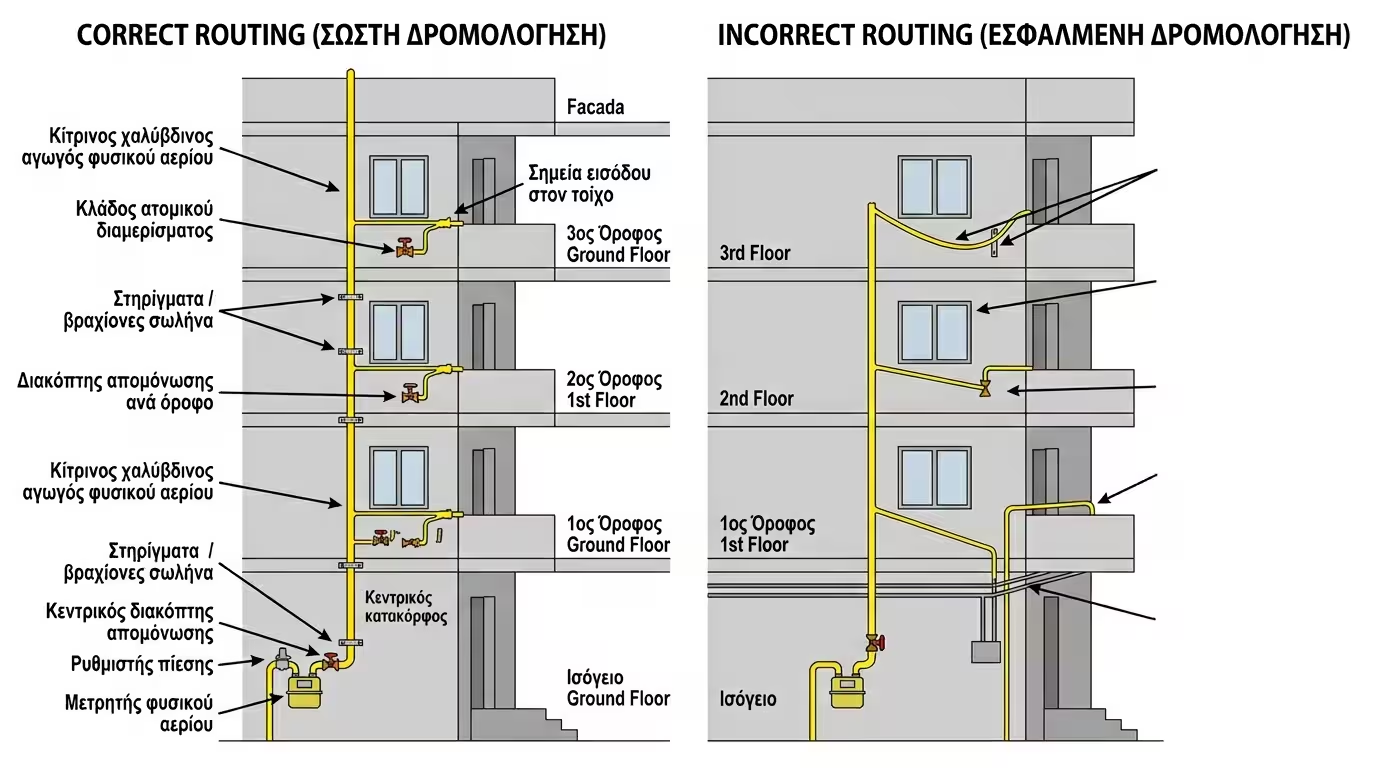
The gas must travel from the company meter (pavement, pilotis or ground floor) to your balcony. The pipe climbs the building's external face, painted yellow or matching the wall colour.
The gas pipe is strictly prohibited from passing through enclosed, unventilated spaces, bedrooms, lift shafts or chimneys. It must always be "visible" (exposed) or inside a purpose-built ventilated channel. Pipes are typically painted yellow or to match the wall colour of the building.
In the event of a micro-leak, the gas must disperse immediately into the open air. Exposed routing on the building exterior ensures any leak is detectable (by smell) and prevents gas accumulation in enclosed spaces.
This is the detail that foils most installations. As we saw in the Condensing Technology article, condensing boilers produce acidic water (condensate).
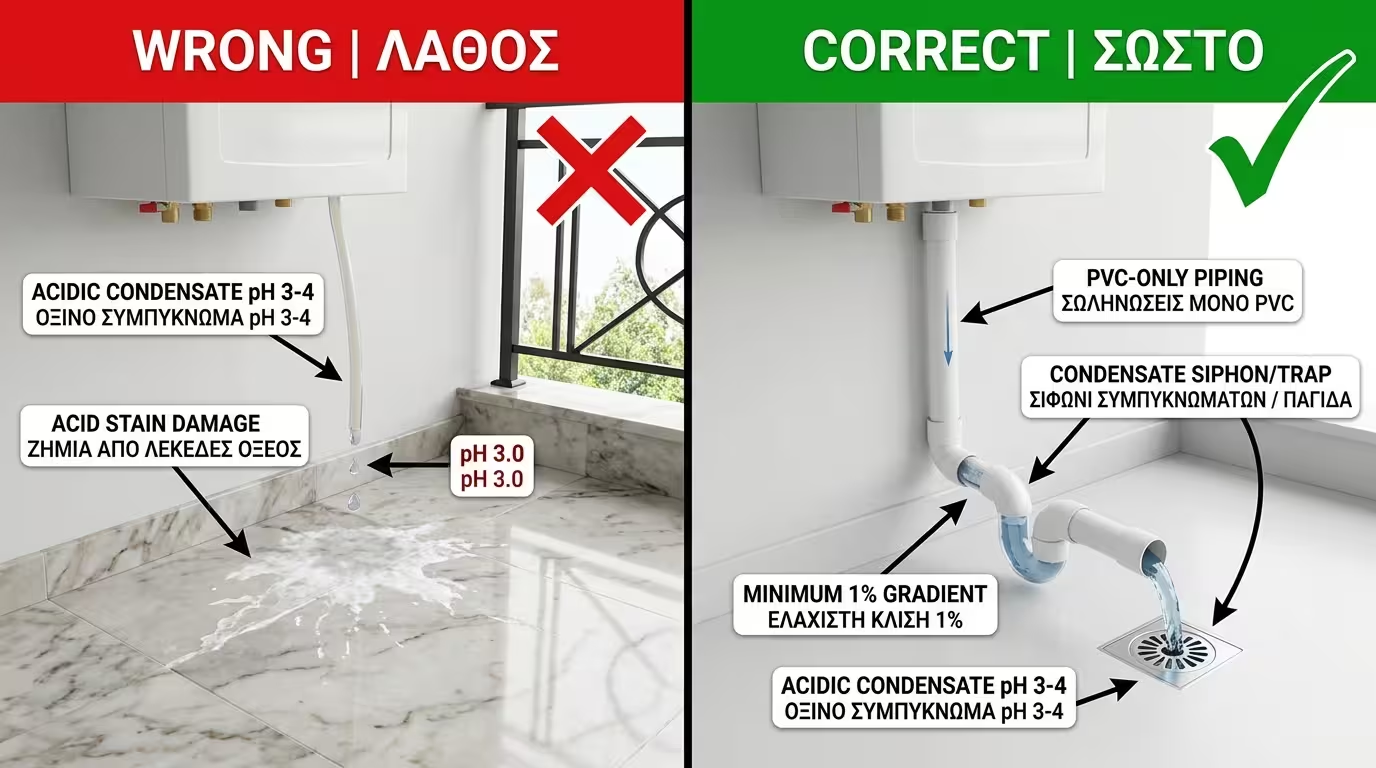
It is explicitly prohibited to let a tube drip freely onto the street, into the rainwater downpipe or onto your balcony marble. The acids destroy marble, car paint below and copper downpipes. The condensate must be routed to the foul-water drain.
Condensate must be directed to a foul-water drain (balcony floor drain or kitchen sink drain), via a special plastic trap that prevents sewer odours from rising. Designing this drainage is often the biggest headache for the installer.
Installing a gas boiler on the balcony requires strict safety clearances (40 cm from windows, 20 cm from sockets), a properly routed coaxial flue, externally-run gas pipes and mandatory condensate drainage.
In the next article we dive deep into the detail: Condensate Management (Acidic Water) - special traps, neutralisers and pumps.
Return to category.
Go to categoryReturn to the central guide.
Go to guide