Energy Fireplaces: Convection vs Hydronic - Complete Buying & Installation Guide

Want a fire in the living room without losing all the heat up the chimney? Modern energy fireplaces (closed combustion) aren't just decorative - they are genuine heating machines. With a fireproof glass door, an airtight seal and efficiency exceeding 80%, they transform the romantic flame into useful kW for the entire house. Let's examine the two categories in detail.

1. How Does an Energy Fireplace Differ? Closed Combustion vs Open Fireplace

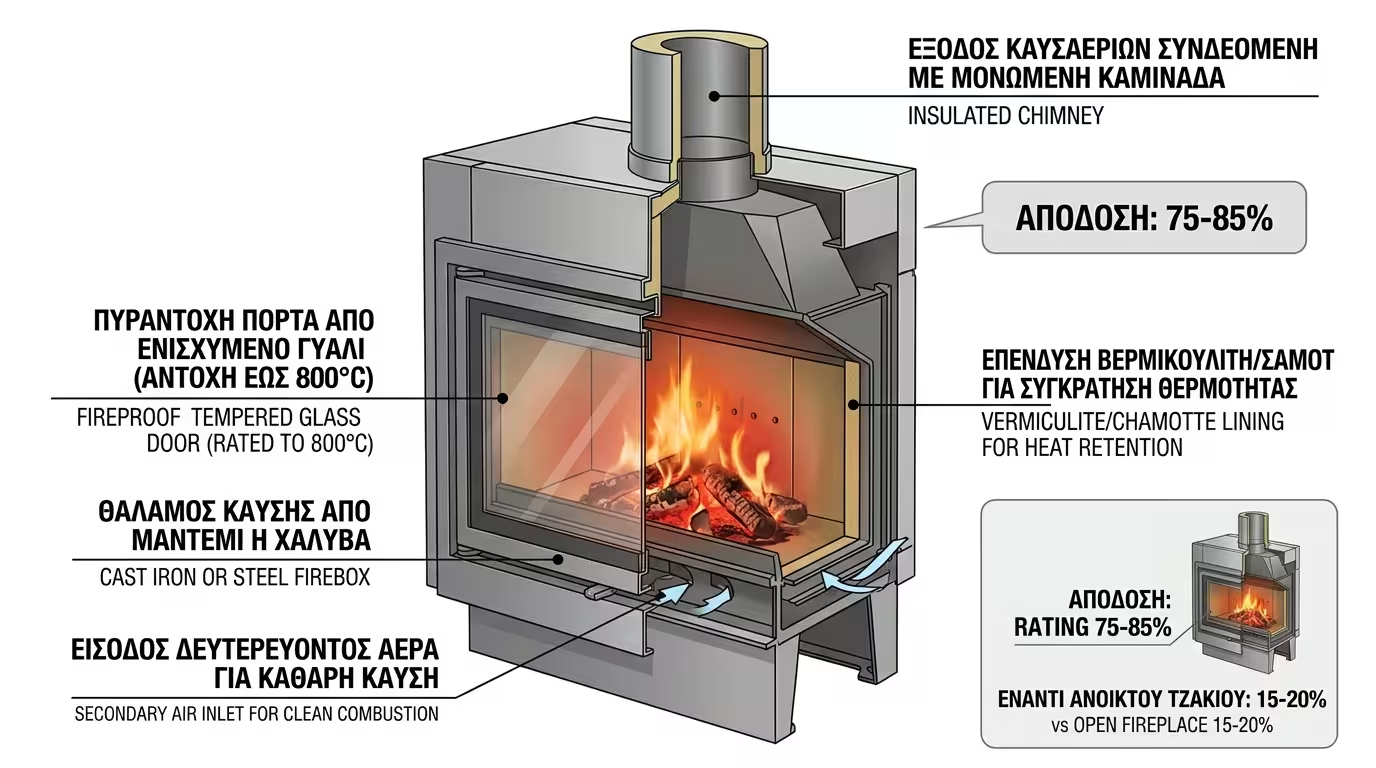
A traditional open fireplace has an efficiency rate of 10-15% - 85% of the heat disappears through the chimney. Moreover, it sucks the warm air out of the room, forcing your radiators to work harder. An energy fireplace (closed combustion) changes everything: an airtight door with fireproof glass, controlled combustion air intake, efficiency of 75-85%, and the ability to heat multiple rooms simultaneously.

Energy fireplace with closed combustion and fireproof glass

🔥 Cassette or Freestanding?

A cassette (insert) slides into your existing fireplace opening, using the already-built surround, and costs less to install. A freestanding unit can be placed even in a room without an existing fireplace - it simply needs a chimney connection. In both cases, the operating principle is the same: a sealed chamber, fireproof glass and controlled airflow.
🧱 Installation Requirements

Every energy fireplace requires a suitable chimney - typically Ø150 mm, double-walled, stainless steel. The room must allow for combustion air intake (external air vent), particularly in homes with excellent insulation. Installation must comply with fire safety regulations - minimum clearances from combustible materials must be strictly observed.

2. Convection Fireplaces: Immediate Heat Without Radiators

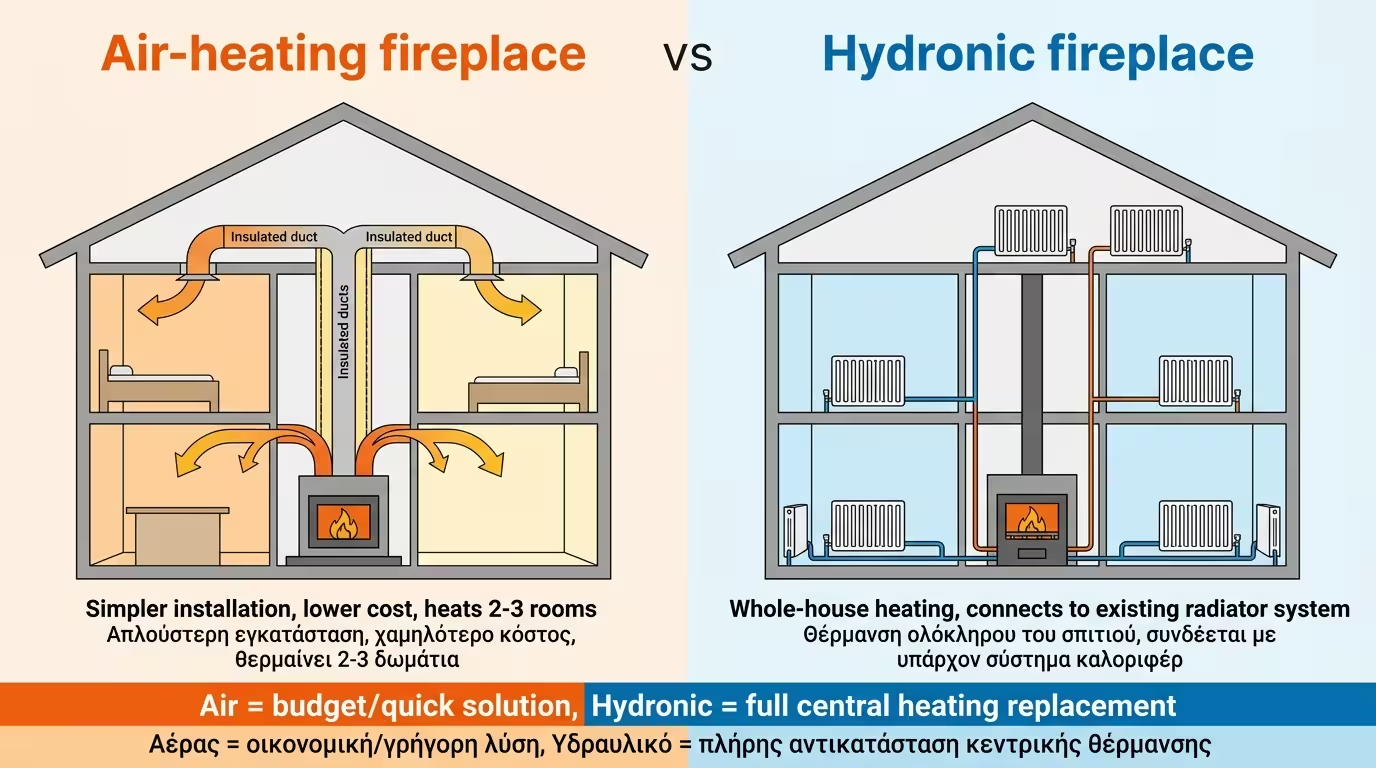
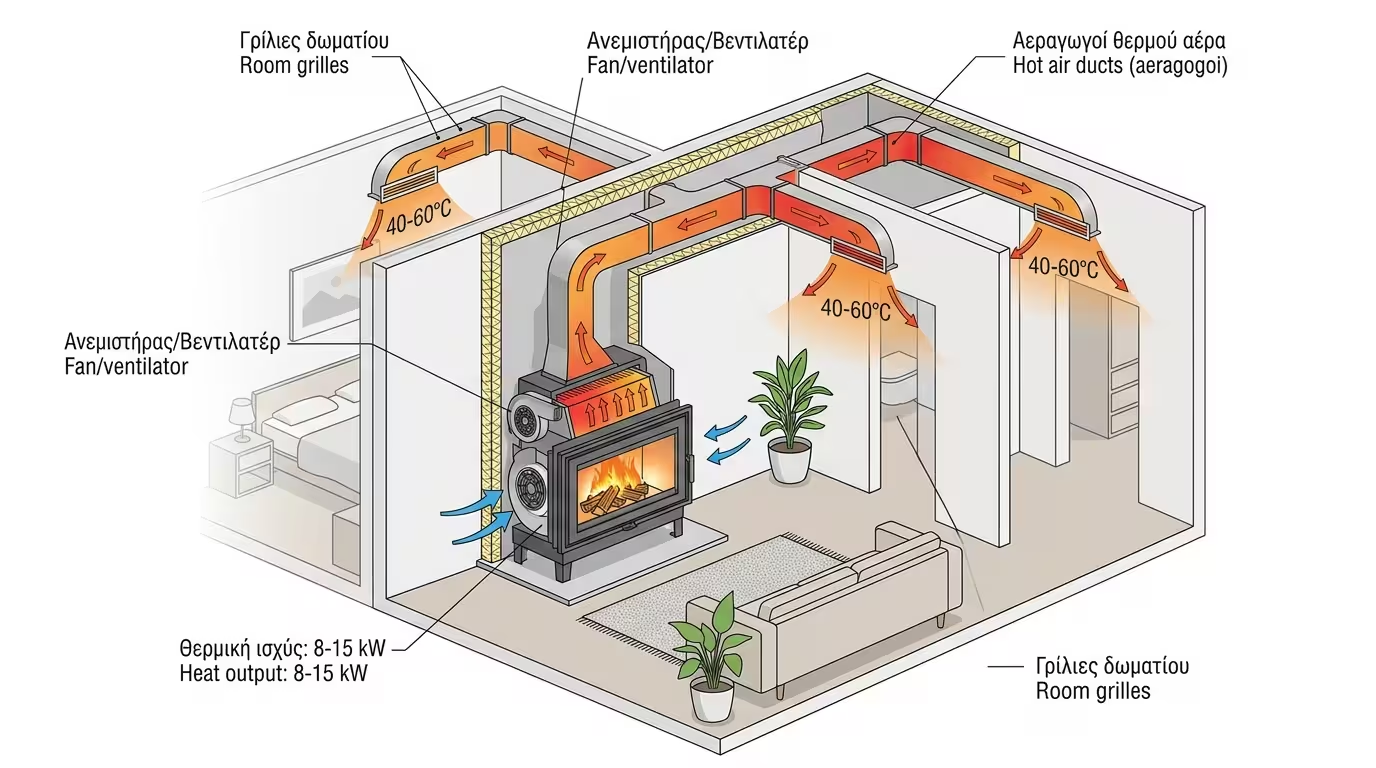
Convection fireplaces heat the air around the fire and distribute it throughout the house. They use no water and no radiators - just air. They are the simplest and most affordable way to harness fire as a genuine heat source for your home.

Convection fireplace - cassette, air ducts, fan

💨 Natural Circulation or Ducting

In the simplest form, hot air exits through grilles above the fireplace and heats the room it's in. With air ducts (channels) and an electric fan, you can send hot air to 2-3 adjacent rooms - even to a different floor of the house via insulated ducting.

✅ Advantages

Low purchase cost (€600-2,500). Easy installation with no plumbing. Immediate warmth within minutes. Ideal for small to medium homes (80-120 m²) or as supplementary heating in larger houses. No circulator pump or expansion vessel required.

⚠️ Disadvantages

The heat doesn't persist after the fire goes out - no thermal inertia (unlike radiators filled with water). Cannot heat domestic hot water. Ducts require cleaning and may transfer dust particles. Temperature distribution is not as uniform as a hydronic system.

3. Hydronic Fireplaces: The Fire Powers Your Radiators

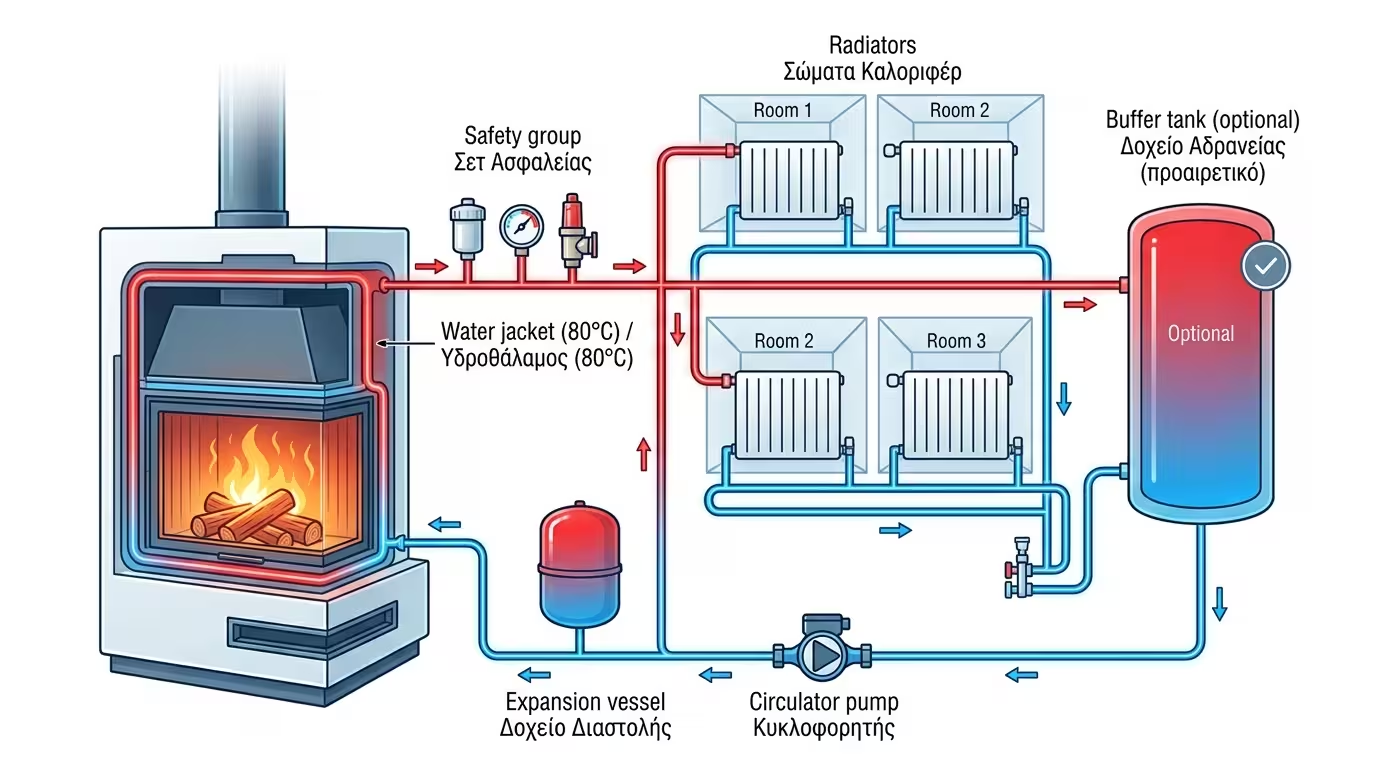
Hydronic fireplace, radiators, water circulator pump

A hydronic fireplace doesn't heat air - it heats water. Inside the fireplace body sits a heat exchanger (water jacket) that feeds your existing radiators, underfloor heating system, or a domestic hot water cylinder.

🏠 Full-House Heating

With a 15-25 kW hydronic fireplace, you can heat the entire house - from the first to the third floor. It connects to your existing pipework network, just like a boiler. Domestic hot water (shower, taps) becomes possible via an external cylinder or an integrated heat exchanger.

🔧 Installation Complexity

You'll need a circulator pump, expansion vessel, safety valve and a buffer tank. When the fire dies down, the thermal inertia of the water keeps the radiators warm for hours. Installation is significantly more complex - it requires a specialised plumber experienced with biomass heating systems.

⚡ Power Dependency & Safety

The circulator and electronics need continuous power supply. If electricity cuts out, the safety valve opens automatically and vents the heat. A UPS or gravity brake (automatic cooler) is needed as a dedicated safety mechanism to handle this critical scenario.

4. Convection vs Hydronic: Which Suits You?

The choice depends on three key factors: house size, existing radiator network, and whether you want the fireplace to be your main heat source rather than just a supplement.

Convection vs hydronic fireplace comparison - which to choose

💨 Choose Convection if:

You want warmth only in the living room or 2-3 nearby rooms. You don't have radiators or don't want plumbing work. Your budget is limited. You already use a primary heating system (heat pump, gas) and want ambience plus supplementary warmth.

💧 Choose Hydronic if:

You want to heat the entire house using wood alone. You already have a radiator or underfloor network and want to replace oil heating. You also want domestic hot water (shower). You have space for a buffer tank, circulator and expansion vessel.

➡️ Next Step

If you choose a hydronic fireplace or wood boiler, you'll need a Buffer Tank (Thermal Store) - a critical safety and performance component. What does it do, how is it sized, and why are you at risk without one? Read the full analysis in the next article.

5. Summary

📖 Decision Keys

Energy fireplaces deliver 75-85% efficiency, unlike open fireplaces that lose 85% of the heat. Convection: simple installation, low cost, heats 1-3 rooms. Hydronic: connects to radiators, full-house heating, domestic hot water, but with increased complexity and mandatory buffer tank.

Related Articles

Preview