Flat-Plate Selective Collectors vs Vacuum Tubes: Which Technology
Performs Best?
Now that you've chosen a closed-circuit solar heater (as we saw in the
previous article, so it never freezes), you go to the shop to place your
order. There, the salesperson asks the next critical question: "Do you want the classic flat-plate selective collector, or vacuum
tubes for maximum winter performance?" If you look at Greek rooftops, 90% of solar heaters have the familiar flat
panels (like glass panes). But in recent years, heaters with arrays of large
glass tubes resembling laboratory test tubes have started to appear. These
are the two dominant solar absorption technologies. Let's see how they work,
the pros and cons of each, and which one truly suits your region's climate.
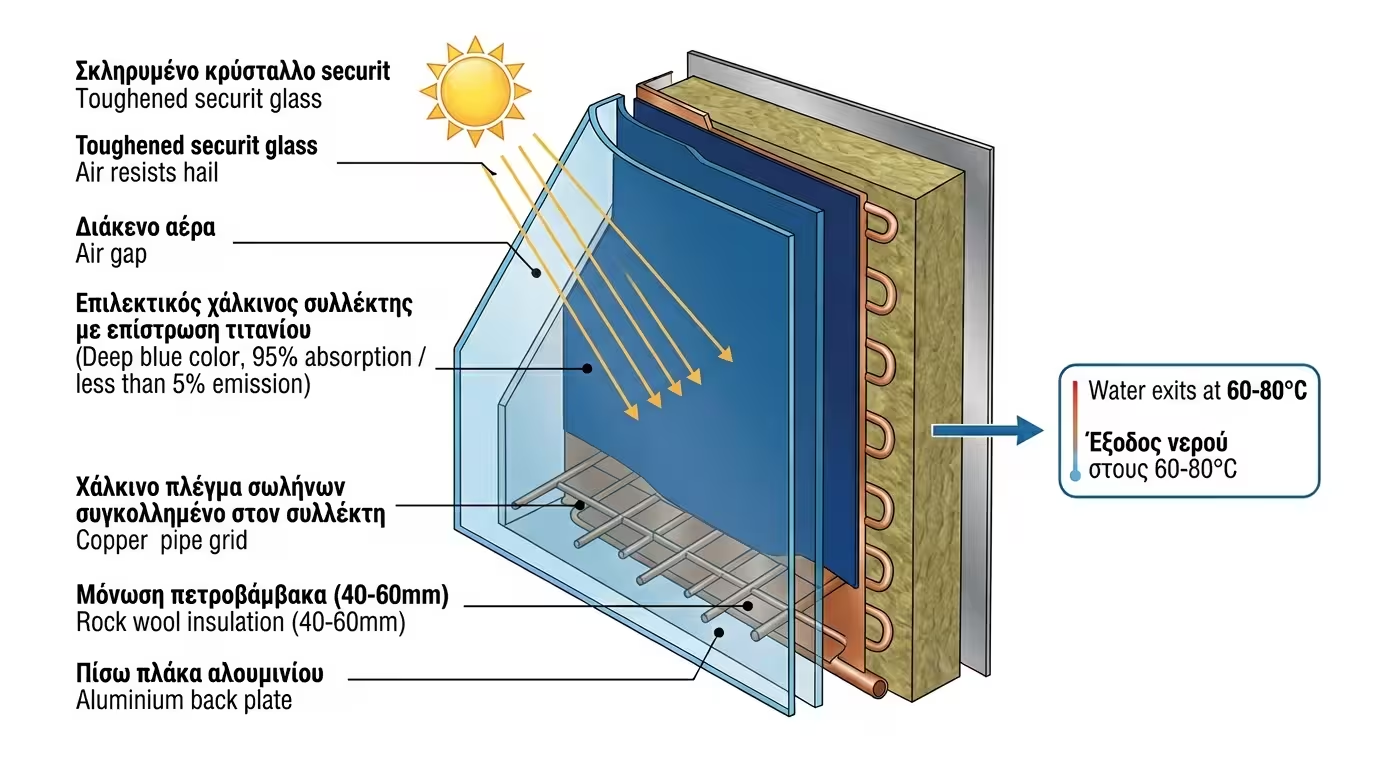
1. Flat-Plate Selective Collectors (Titanium)
Beware: modern flat-plate collectors have nothing in common with the
simple black-painted models of the '90s. Today we're talking
exclusively about Selective Collectors. Inside them
is a surface of copper or aluminium that has undergone a special
process - a titanium coating (usually in a deep blue colour).
This "selective" coating has an almost magical property: it absorbs up to 95% of solar radiation, but prevents the heat from
reflecting back into the environment (emissivity below 5%), keeping the energy trapped inside the collector.
🛡️ Durability & Aesthetics
The front glass (toughened/securit) is exceptionally resistant to
hail and harsh weather. A good selective collector will last 20+ years on your roof. They're more affordable and integrate beautifully - they
can even be flush-mounted into the roof without spoiling the home's appearance.
❄️ They Melt Snow
Because they have slight thermal losses outward (their glass warms
slightly), snow that settles on them melts quickly and
the heater starts working again. They also don't overheat easily in summer
- an important advantage in the Greek climate where stagnation can be
a serious problem.
⚠️ Disadvantage: Deep Winter
Despite good back-insulation (glass wool), on days with freezing
winds and -5°C outside, some heat escapes to the environment. This
means that in harsh winter conditions with heavy cloud cover, the
water will take a bit longer to heat up than with vacuum tubes.
2. Vacuum Tube Collectors
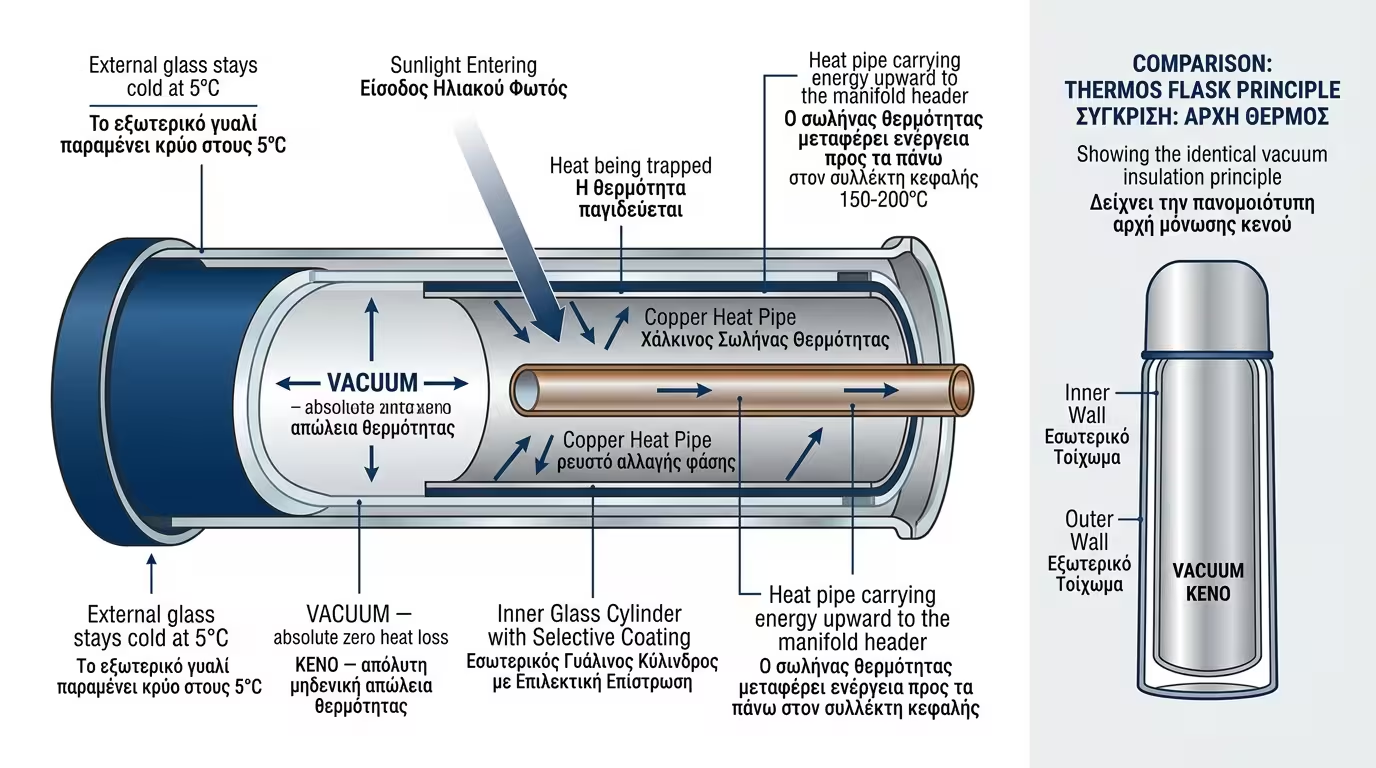
This is the ultimate insulation technology. The collector is not a
flat plate, but consists of 15 to 30 individual glass tubes. Each tube
has two layers of glass. Between the outer and inner glass, the air has been completely removed (creating a vacuum). Just like a thermos flask: the vacuum is nature's perfect
insulator. The sun's heat passes into the tube and warms a copper core
(heat pipe) at the centre, but that heat simply cannot escape outward through the evacuated space between the glass layers.
🌡️ Extreme Winter Performance
With zero thermal losses, vacuum tubes perform superbly even at -15°C with cloud cover. Thanks to their cylindrical shape, they catch the sun's rays
perpendicularly from sunrise to sunset, heating the water much
faster in the morning. Ideal for northern, freezing climates.
🔧 Easy Repair
If a tube breaks, you don't need to replace the whole heater. Simply
unclip the broken tube and insert a new one, while the system continues to operate normally with the remaining tubes - a genuine modular design advantage
that keeps costs and downtime to a minimum.
⚠️ The Greek Trap
Overheating (Stagnation): in Greece, with 40°C heatwaves,
their "inability" to lose heat becomes a problem. If you go on holiday
in August and aren't using water, the system boils, the safety valves
blow and the antifreeze evaporates - the tubes must be covered when you're
away. Hail: although made of tough borosilicate glass,
large hailstones can shatter them more easily than a flat panel. Snow: the outer tube stays completely cold (due to the vacuum), so snow sticks
to it and doesn't melt - you must climb up to the roof to brush them off,
otherwise you won't have hot water.
3. The Verdict: What Should I Choose?
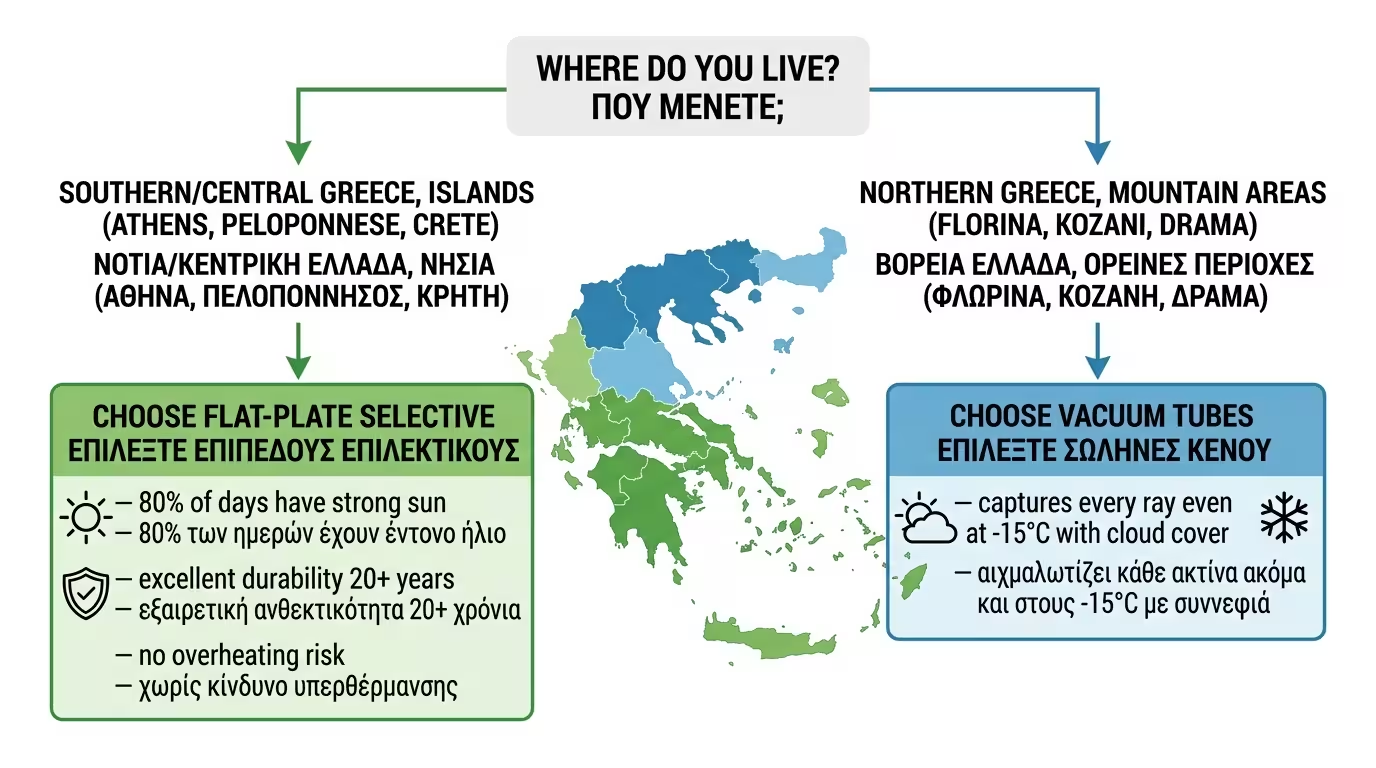
The decision comes down clearly to your postcode.
Choose flat-plate selective collectors if you live in Athens,
the Peloponnese, the islands, or generally in Southern and Central Greece:
the Greek sun is so powerful that a selective collector will deliver scorching
hot water 80% of the year, with outstanding durability and fewer overheating
problems in summer. Choose vacuum tubes if you live in
Northern Greece (Florina, Kozani, Drama) or in mountain villages with heavy
cloud cover and many months of freezing temperatures: the tubes' ability
to capture every last ray of sunshine without losing heat to the freezing
air will make all the difference.