Geothermal Heat Pumps: Open & Closed Loop Systems, Boreholes, and COP up to 6.0

Have you ever wondered why in winter the tap water isn't freezing cold, while in summer it comes out pleasantly cool? The answer lies right beneath our feet: in the constant temperature of the subsoil.

In the previous article, we saw that air-to-water heat pumps are excellent, but they have an Achilles' heel: when it freezes outside, the unit struggles to extract heat from the air. What if the pump could draw energy from a source with a constant temperature 365 days a year?

Welcome to the world of Ground Source Heat Pumps (GSHP) - the most efficient climate-control technology ever devised.

1. What is Shallow Geothermal Energy? (Busting the Myth)

When we hear "geothermal," we picture hot springs, thermal spas or volcanic activity. That is high-enthalpy geothermal energy - which has nothing to do with houses.

Shallow geothermal energy - stable subsoil temperature 15-18°C

🌍 Shallow Geothermal Energy

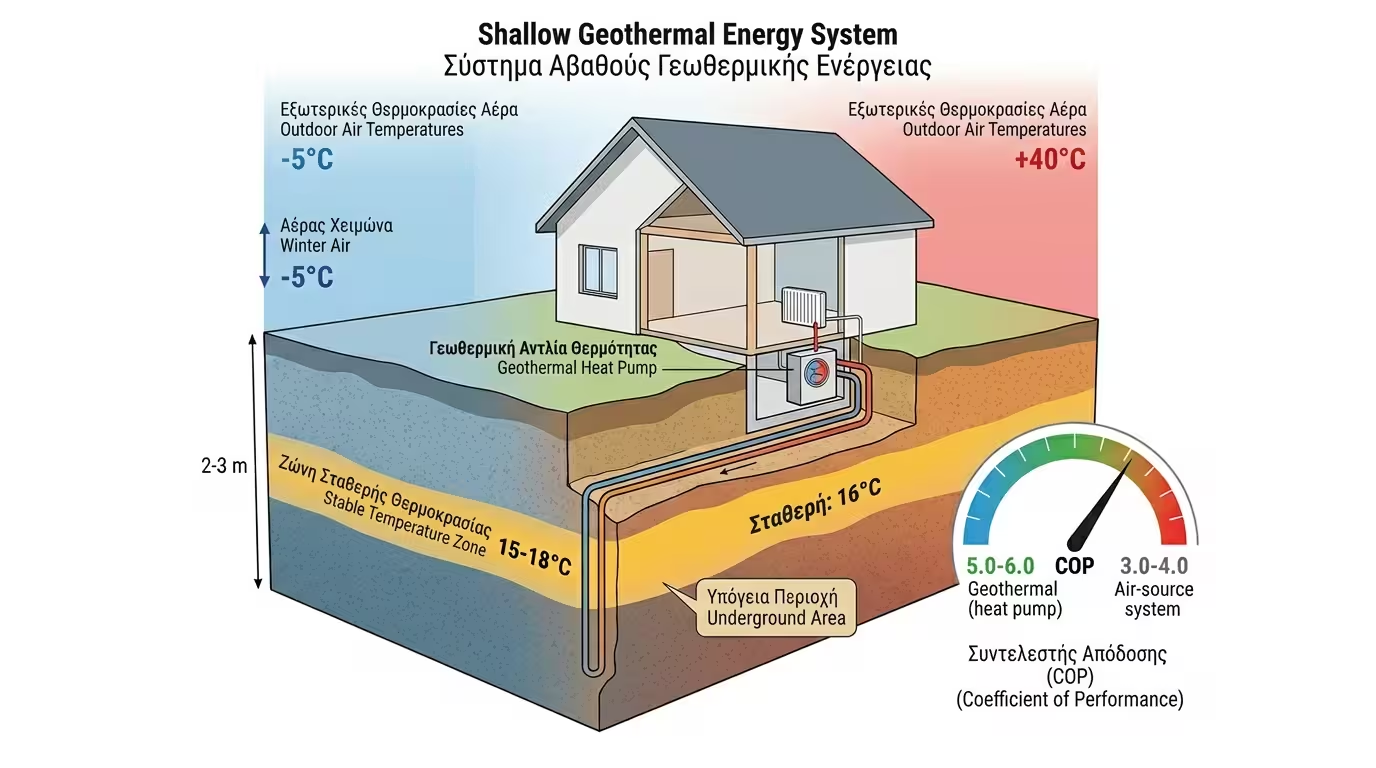
In homes and hotels, we use shallow geothermal energy. In Greece, if we dig just 2–3 metres below the surface, the ground temperature remains stable at 15°C – 18°C, winter and summer alike! A geothermal heat pump exploits this very stability.
🔄 How Does It Work?

In winter, it draws the 15°C from the ground and raises it to 35°C–55°C for underfloor heating or fan coils - an easy task for the compressor. In summer, it reverses the process and dumps the house's heat into the cool 15°C ground. The result: COP reaching 5.0 or even 6.0, stable regardless of the weather.

How do we "extract" this temperature from the ground? There are two main methods: Closed Loop (a heat exchanger buried in the soil) and Open Loop (pumping groundwater).

2. Closed-Loop Geothermal Systems

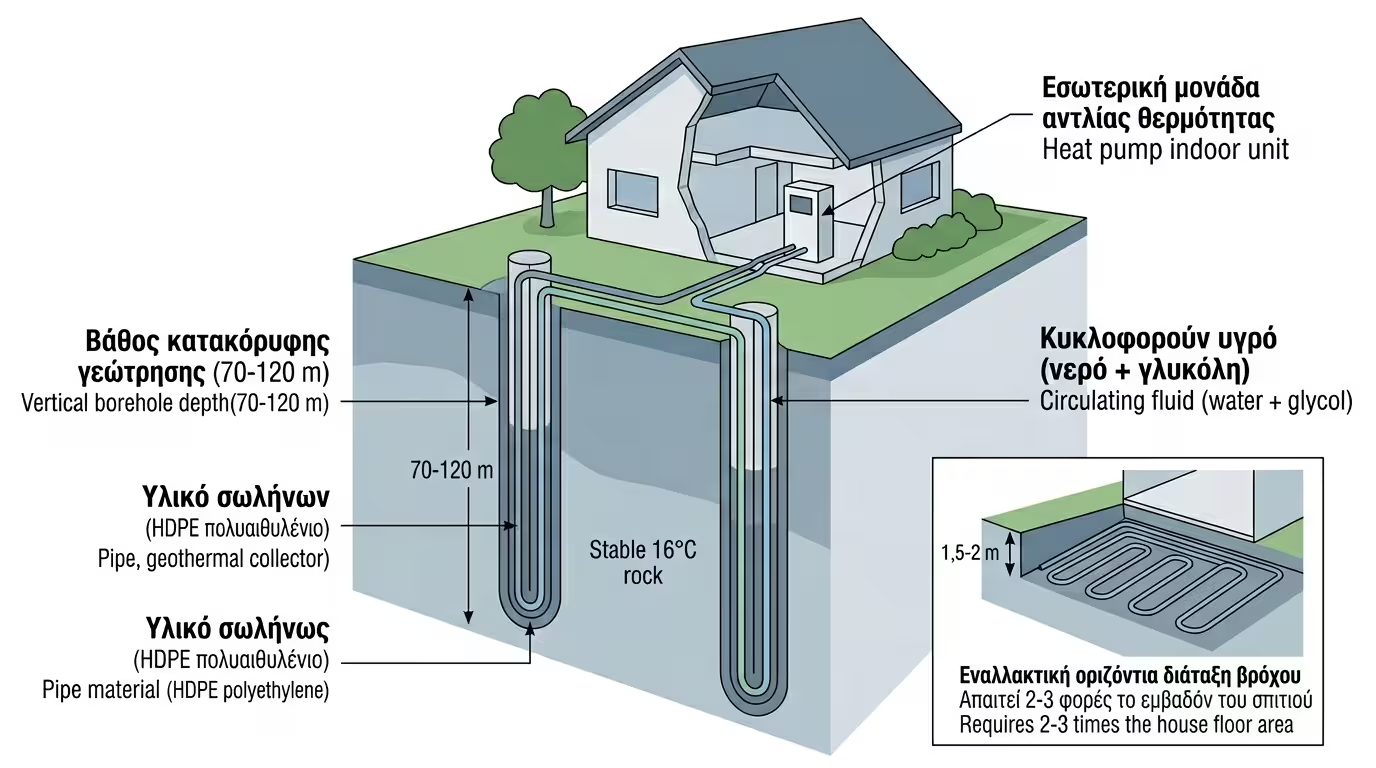
This is the most common and safest method for residential applications. A network of special plastic pipes (high-density polyethylene) is buried underground. Inside the pipes, a mixture of water and antifreeze (glycol) circulates. The fluid travels through the subsoil, absorbs the ground's temperature (15°C–18°C) and returns to the heat pump.

Closed loop geothermal - vertical boreholes

↔️ Horizontal Loop

Pipes are laid out in a serpentine pattern in trenches 1.5–2 metres deep. Advantage: Low construction cost (only needs a basic excavator). Disadvantage: Requires a very large plot (2–3 times the floor area of the house) and the ground above cannot be paved or planted with deep-rooted trees.

⬇️ Vertical Loop (Boreholes)

If you don't have a large plot, the solution is vertical boreholes 70–120 metres deep. The pipes (U-shaped ground heat exchangers) are inserted vertically. Advantage: Minimal footprint (fits even on a small front garden). Disadvantage: Drilling cost is significant (depends on depth and rock type).

3. Open-Loop Geothermal Systems

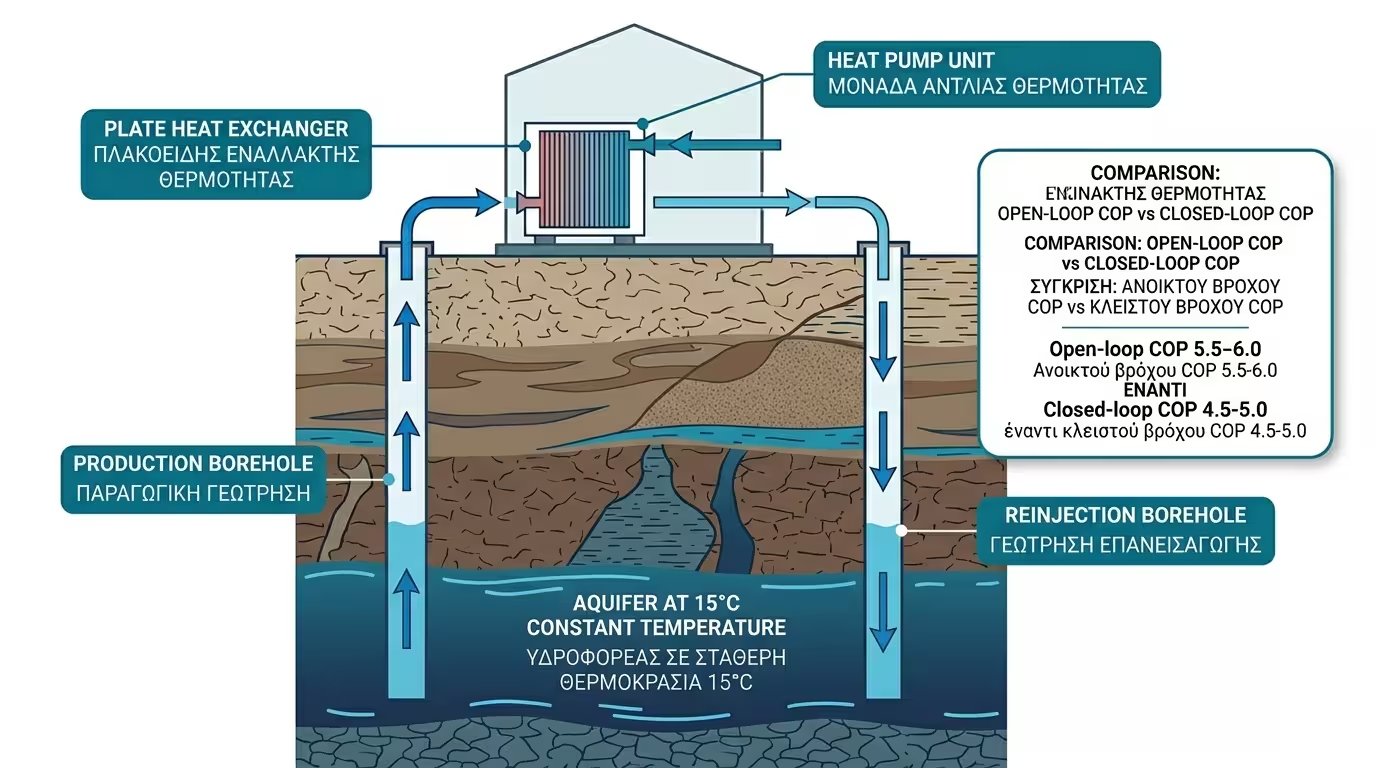
In this approach, no closed pipes are buried. Instead, we exploit the underground aquifer. If your site has abundant groundwater at a shallow depth, two wells are drilled: one "production" well to pump the water (~15°C) and one "reinjection" well to return it to the ground after the heat pump has extracted (or added) thermal energy.

Open loop geothermal - underground aquifers

✅ Advantages

It is the most efficient HVAC system on the planet. Water transfers heat incomparably better than dry soil, achieving even higher COP values. Drilling is often cheaper because very deep boreholes are not required.

⚠️ Disadvantages

Requires abundant, good-quality groundwater (without high mineral content that would clog the equipment). Additional permits and an environmental impact assessment are needed. Not every site is suitable - it depends on the local geology.

📋 Greek Borehole Legislation

Drilling is not something you can do on a whim. Vertical closed-loop and open-loop systems require: a Drilling Works License and a Water / Geothermal Resource Use Permit issued by the competent Water Directorate. Your engineer handles the environmental study. Horizontal loops (simple 2-metre trenches) are much easier to permit.

4. Cost and Real-World Performance: Is Geothermal Worth It?

Geothermal cost and ROI for large villas

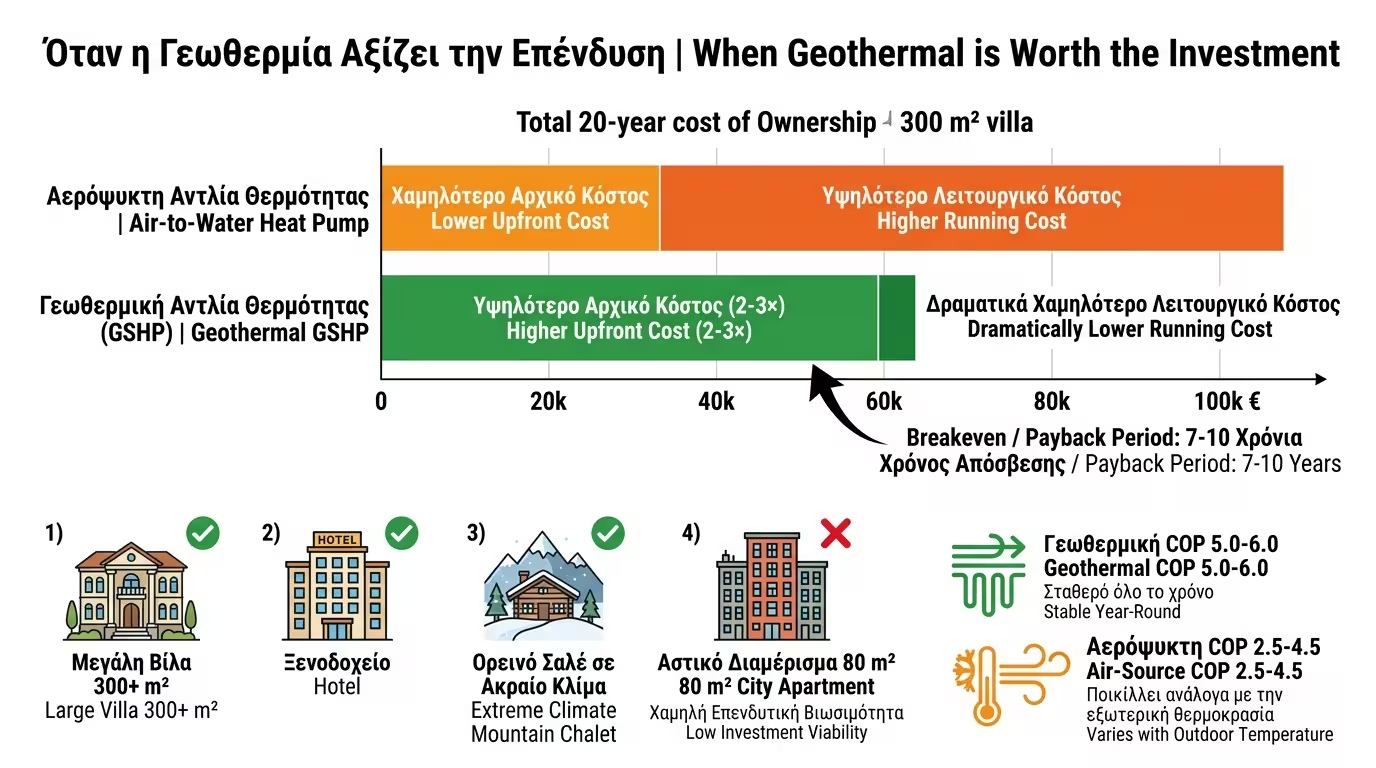
Let's be honest: a geothermal heat pump is not aimed at the average 80 m² apartment in Athens. The upfront investment (unit + boreholes) can be two to three times higher than an air-to-water pump. However, in specific scenarios, no other solution comes close.

🏠 Large Homes / Villas

If you own a detached house of 300+ m², your energy needs are enormous. The consumption difference, thanks to the exceptional COP (5.0–6.0), ensures rapid payback of the drilling investment.

🏨 Hotels & Commercial Buildings

It is the "Holy Grail" for the hotelier who wants virtually free cooling in summer and vast quantities of Domestic Hot Water (DHW) with minimal energy cost.

🏔️ Extreme Climates

If you are building a chalet at altitude, where outdoor air drops to -15°C, geothermal is the only guarantee that you will never run out of heating. The ground remains at 15°C regardless of external conditions.

5. Summary

📖 The Takeaway

The Geothermal Heat Pump is the top choice for large homes, hotels and properties in extreme climates. The constant subsoil temperature (15°C–18°C) guarantees a COP up to 6.0, stable performance regardless of the weather and minimal electricity consumption. Borehole costs pay for themselves quickly, especially in high-energy-demand buildings.

➡️ Next Step

Whether you choose geothermal or air-to-water, the "heart" of the machine remains the same: the compressor and the refrigerant. Technology has made enormous strides in this area. In the next article, we look under the hood: discover how Inverter Compressors save you money and why the new eco-friendly refrigerants (R32, R290) are changing the rules of safety and installation.

Related Articles

Preview