⚡ The Process
Electric current flows through the resistance, the resistance glows red-hot, heats the surrounding water, and a circulator pump sends that hot water to radiators or underfloor heating loops.
If you've been searching for heating solutions online, you've almost certainly seen a sponsored ad proclaiming: "Heat your home for pennies, no outdoor unit, with the revolutionary new ion boiler!" The promise is extremely tempting: a small appliance the size of a water heater that fits inside your home without taking up balcony space, no chimneys, no flue gases, just plug it in.
It sounds like the ultimate dream for any flat owner. But is it true? As engineers, we must say: There are no miracles in thermodynamics. Let's look at how they actually work, the hard truth about their consumption, and the very specific scenarios where they are genuinely the ideal choice.
The operating principle is the simplest there is: Joule effect. Inside a small tank sits a powerful electric resistance element (exactly like the one in your bathroom water heater, your kettle or your toaster).
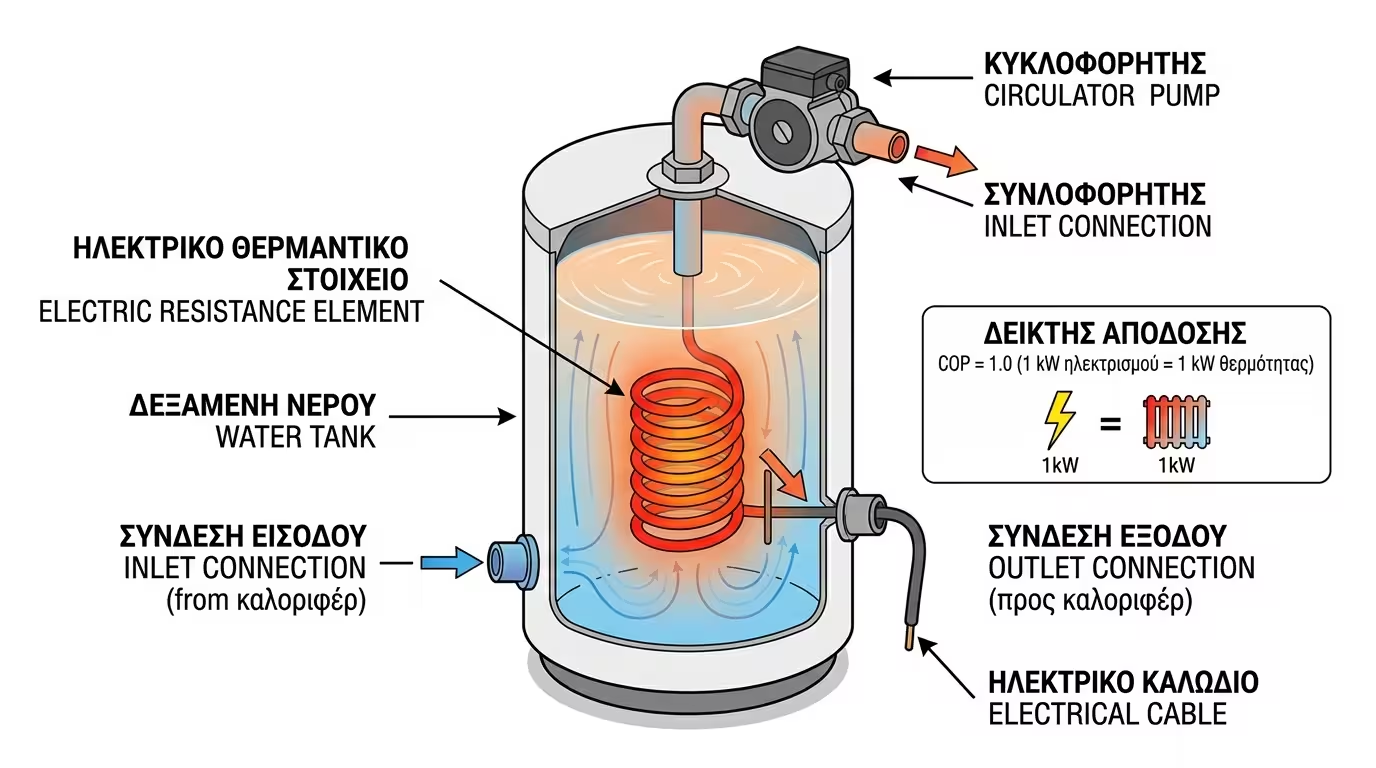
Electric current flows through the resistance, the resistance glows red-hot, heats the surrounding water, and a circulator pump sends that hot water to radiators or underfloor heating loops.
Efficiency is 100% (Coefficient of Performance - COP = 1.0). Every bit of electricity drawn from the meter is converted to heat. Nothing is lost to flue gases - because there simply aren't any. Sounds perfect - but it means 1 kW of electricity = 1 kW of heat, whereas a heat pump delivers 3-4 kW of heat for each 1 kW of electricity consumed.
This is where marketing went wild. Ion boilers are often sold as something completely different and "cutting-edge" compared to ordinary electric boilers. Instead of a metal resistance element that heats up, they use two electrodes (positive and negative). When current passes between them, the water's ions move at enormous speed (electrolysis) and the water heats almost instantly.
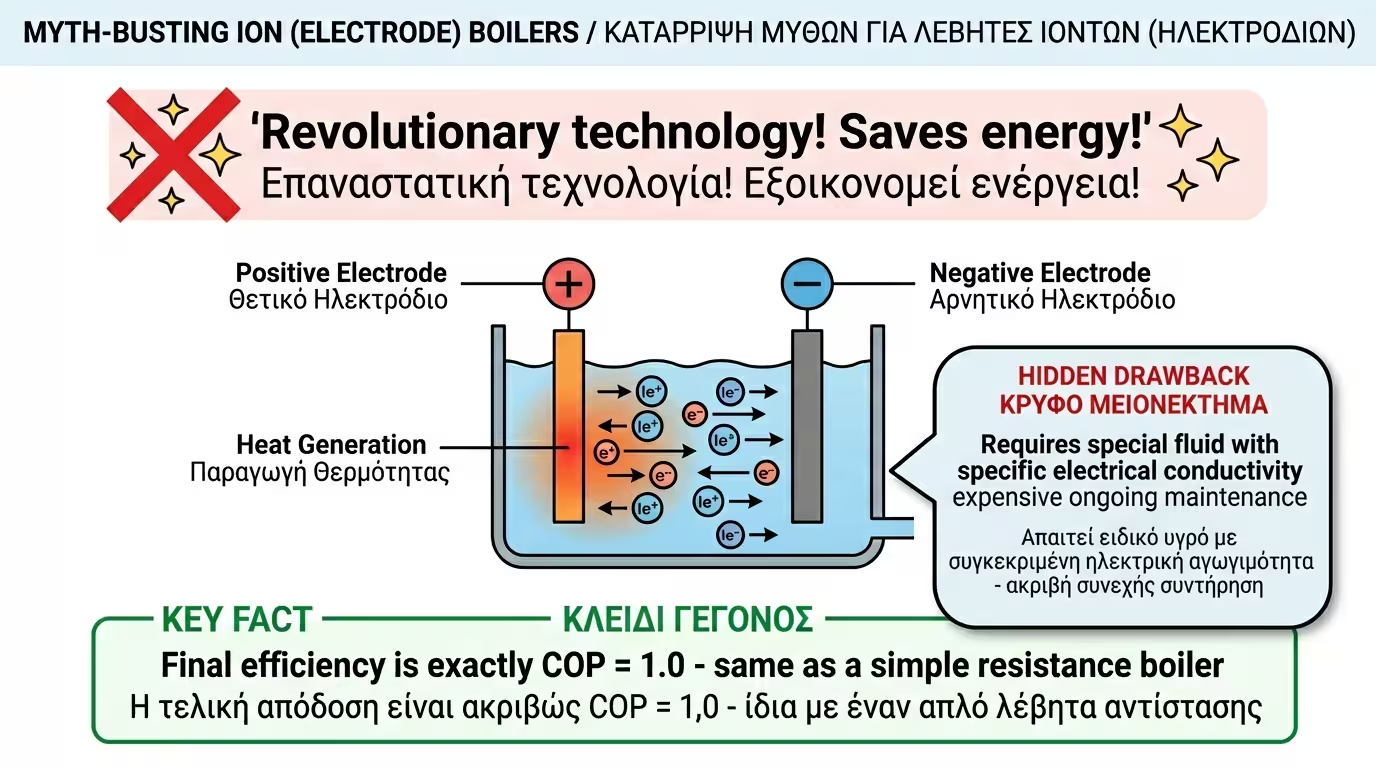
Yes, they heat the water faster than a classic resistance. However, the final energy efficiency is exactly the same: COP = 1.0. They cannot cheat physics. 1 kW of electricity will give you 1 kW of heat. Not half a Watt more.
For ion movement to work, the water must be neither too "clean" nor too "dirty". The ion boiler requires a special fluid with a specific electrical conductivity. If the fluid loses its properties (due to scale deposits), the machine stops performing. Continuous monitoring and chemical adjustment by a specialist technician is needed - dramatically increasing maintenance costs.
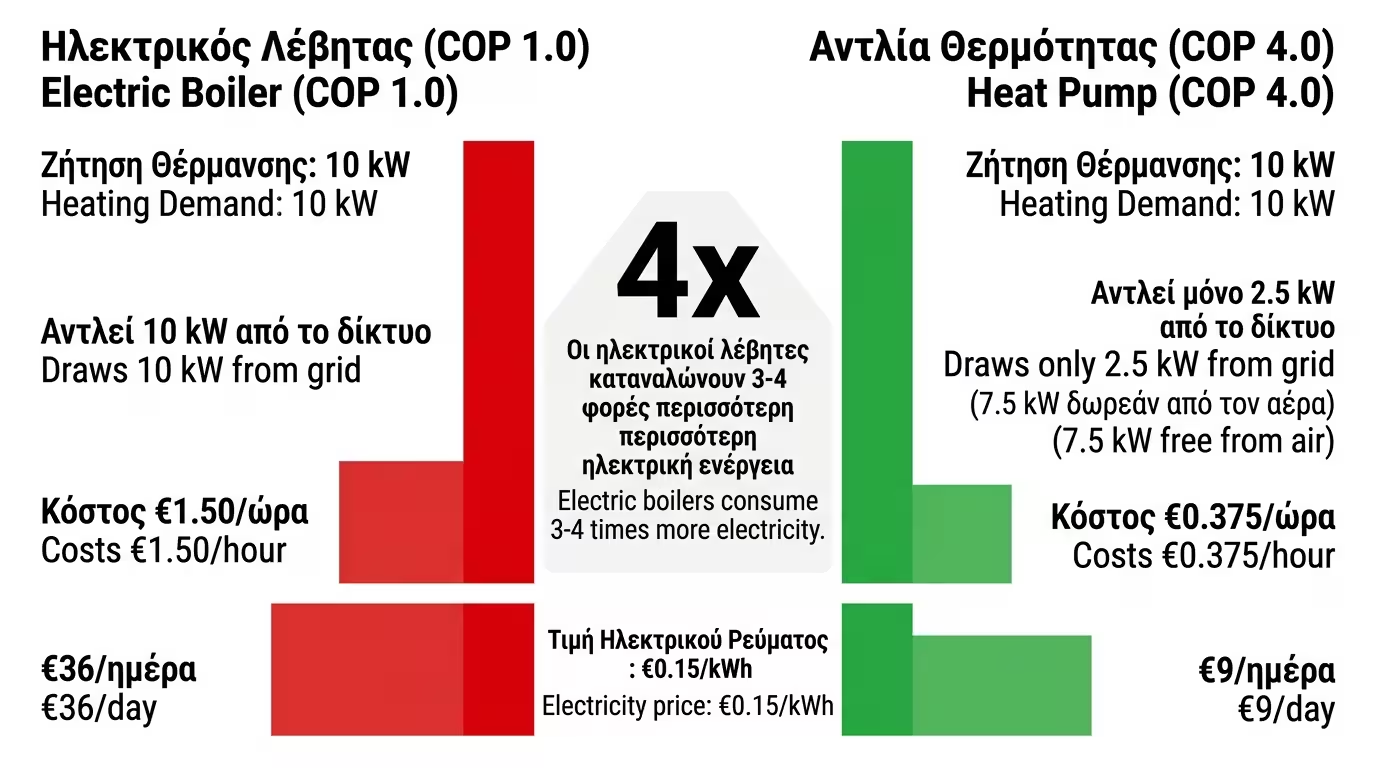
Let's compare the electric boiler (COP 1.0) with a heat pump (COP 4.0), for a typical apartment needing 10 kW of thermal output per hour to stay warm.
It will draw exactly 10 kW of electricity from the meter. At ~€0.15/kWh, that's €1.50 per hour or ~€36/day for 24-hour operation.
It draws 7.5 kW free from the outdoor air and "burns" only 2.5 kW of electricity. Cost: €0.375/hour or ~€9/day.
Electric boilers consume 3 to 4 times more electricity than heat pumps. If you run them all day in a large, poorly insulated house, the electricity bill will be, literally, devastating.
So are they completely useless? Far from it. Electric boilers are fantastic machines, provided they're used in the right application. They cost a quarter of a heat pump, are absolutely silent, need no annual service (unlike gas boilers) and almost never break down.
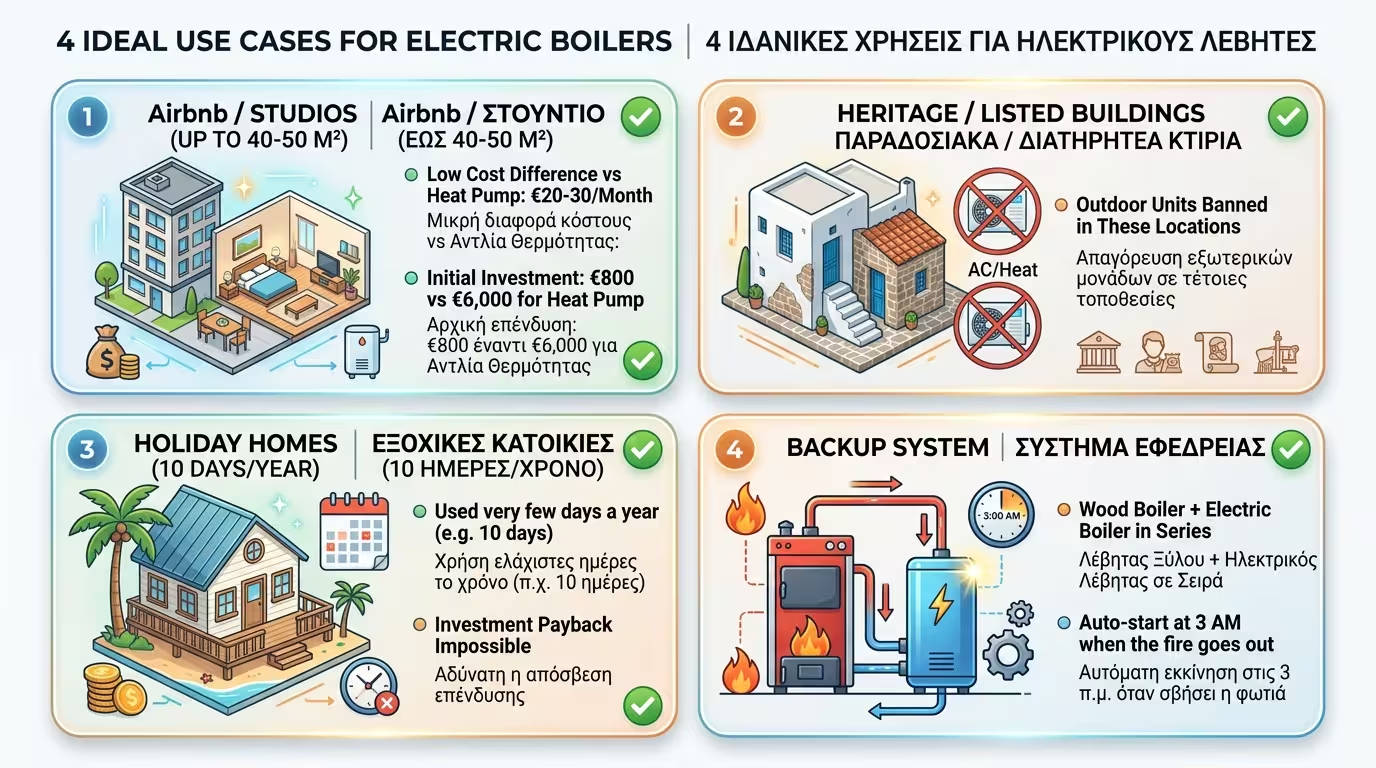
In such small spaces, absolute thermal losses are very low. The consumption difference vs a heat pump is just €20-30 per month. You'll never recoup the €6,000 cost of a heat pump - the €800 electric boiler is the smartest economic choice.
If you own a property in a traditional settlement (Pelion, Cyclades) or in a listed building in central Athens/Thessaloniki, planning authorities often strictly ban outdoor units on façades. The electric boiler hides in a bathroom cupboard with zero impact on the building's exterior.
If you visit your holiday home only at Christmas and 2-3 weekends, the huge investment in a heat pump is money wasted. The electric boiler is perfectly adequate.
Often installed in series with a wood boiler or energy fireplace. If the fire goes out at 3 AM, the electric boiler silently kicks in to keep the house warm until morning.
A 12 kW electric boiler draws enormous amperage. If your home has simple single-phase supply, the boiler together with the oven and water heater will keep tripping the breaker. Almost always requires a three-phase supply (No. 2 or No. 3 from DEDDIE).
You'll need new, heavy cabling (typically 5×4 mm² or 5×6 mm²) running directly from the electrical panel to the boiler location, plus upgraded breakers in the panel. Don't forget to verify all of this before purchasing the boiler.
Don't believe in "magical" solutions that defy the laws of physics. Ion boilers and standard electric boilers are excellent, reliable machines, but they consume enormous amounts of electricity. If your home is large, the heat pump remains the undisputed "king" of economy.
But what happens when you live in a building with central heating that never turns on, and you want to install your own boiler? In the final article of this category, we untangle the "Gordian knot": Apartment Heating Autonomy - what the law says and how to correctly disconnect from the central system.
Return to category.
Go to categoryReturn to the central guide.
Go to guide