
Solar Water Heaters: Open vs Closed Circuit - What to Choose and Why

If you climb onto any Greek apartment building roof, you'll see a "forest" of solar water heaters - the most successful energy investment Greeks have ever made. But when it's time to replace your old heater or buy your first one, the technical jargon can be confusing. The fundamental choice is between Open Circuit and Closed Circuit. The price difference is tempting, but the wrong choice can be fatal by the very first winter.

1. Open Circuit Solar Heater: Cheap but Risky

This is the oldest and simplest technology. Cold mains water - the exact same water you'll shower with - enters directly into the solar collectors (the "panels"). There it's heated by the sun, rises by natural convection into the tank (boiler) and flows down to your tap. It's the cheapest design, which is why it sells for less. It heats water slightly faster in summer since there's no intermediate heat exchanger - the water is heated directly by sunlight.

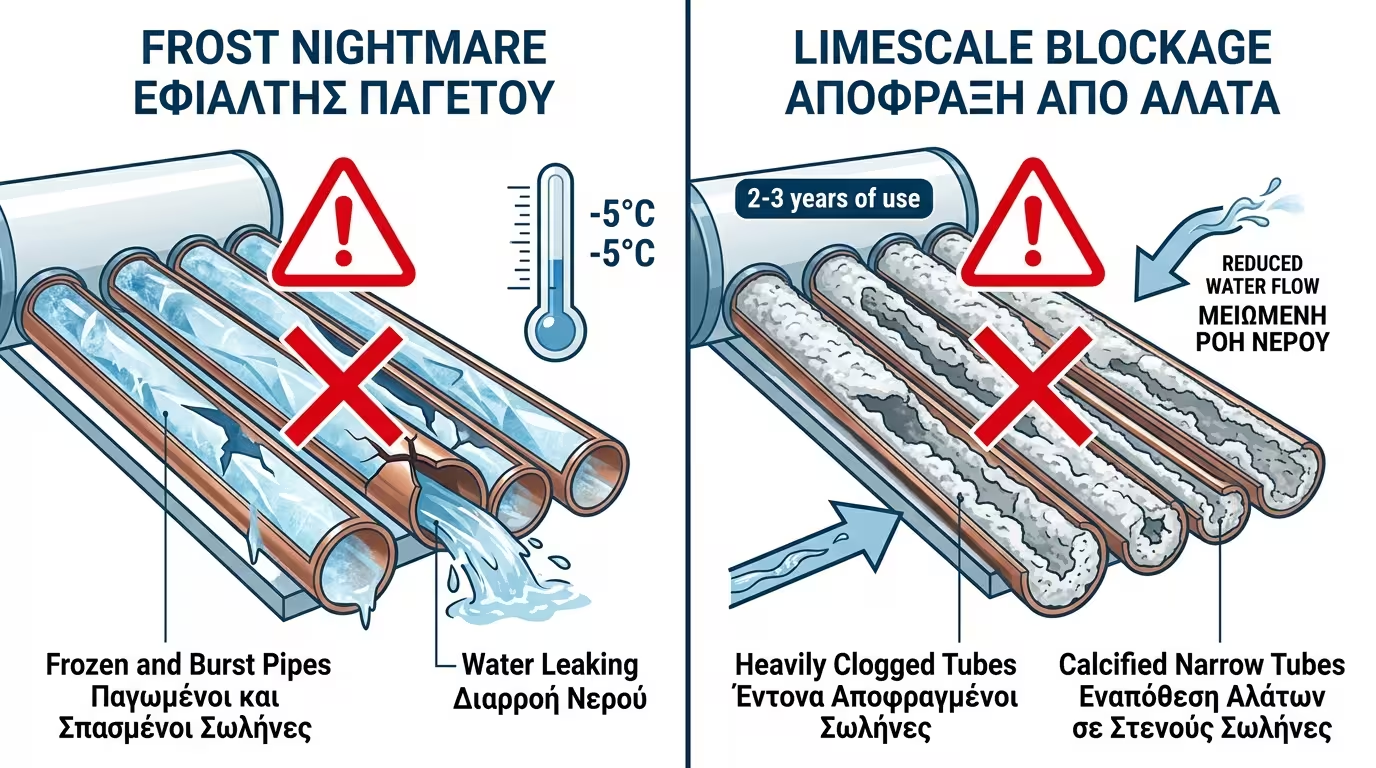
Open circuit - frost, burst pipes

❄️ The Frost Nightmare

In winter, if the rooftop temperature drops below 0°C, the water trapped inside the copper tubes of the collectors will freeze. As we know from physics, ice expands - the copper tubes split like paper. At the first thaw, your solar heater will leak everywhere and the collectors will be scrap. Even in mild climates, 2-3 frost nights are enough for total destruction.
🧱 Limescale (Hard Water)

In most areas of Greece, mains water contains a lot of minerals (hard water). As this water boils daily inside the collectors (reaching 80-90°C in summer), limescale solidifies in the narrow tubes just like the scale at the bottom of a kettle. Within 2-3 years, the collectors clog completely and the heater's output drops to zero. De-scaling is expensive, technically demanding, and often impossible, meaning the collectors must be replaced entirely at significant cost.

2. Closed Circuit Solar Heater: The Modern King

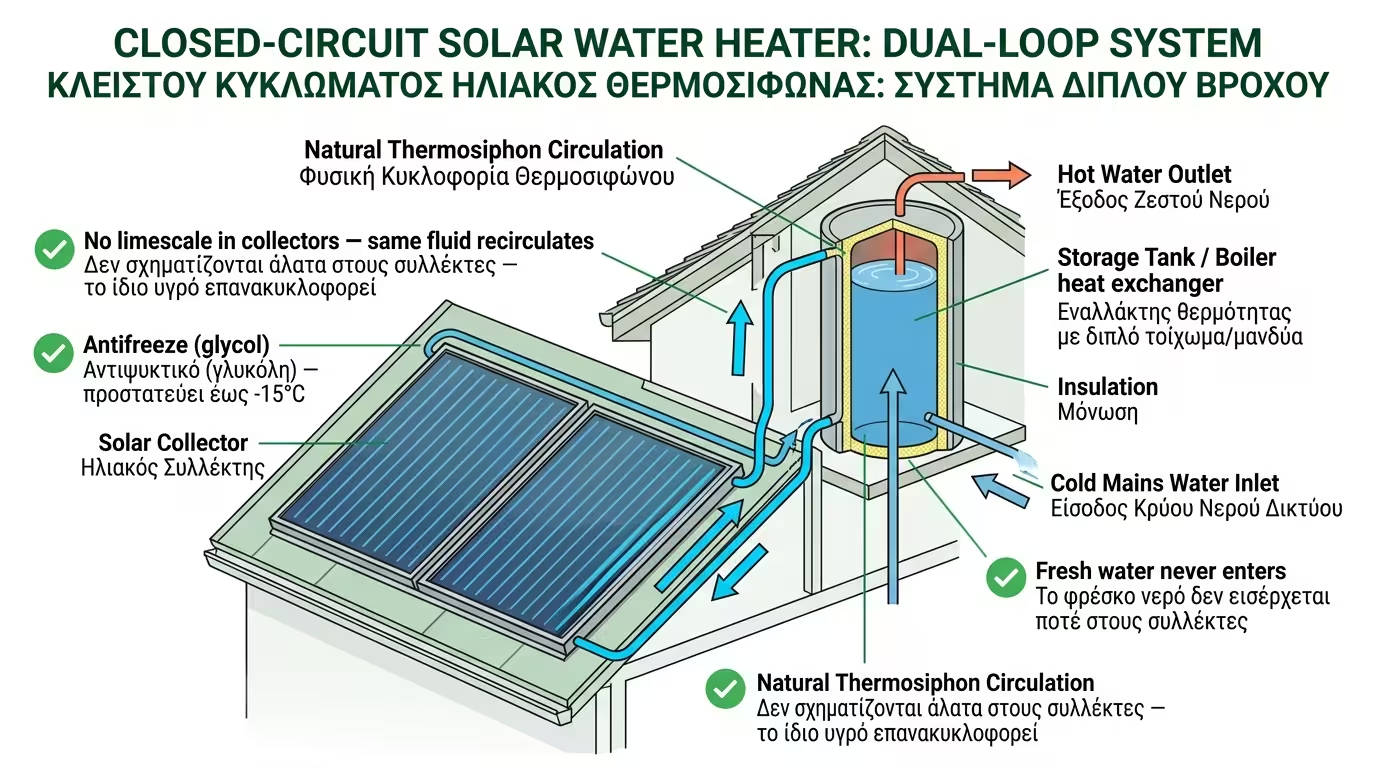
To solve the problems of frost and limescale, engineers created the Closed Circuit. The system is divided into two completely independent circuits that never mix: Inside the collectors (primary circuit) flows a special blend of deionised water and antifreeze (Propylene Glycol). Mains water enters directly into the tank (secondary circuit) without ever touching the collectors.

Closed circuit - antifreeze, heat exchanger

🔄 How the Water Gets Hot

The tank features a double wall (jacket/mantle). The hot antifreeze from the collectors rises and circulates through this outer jacket, "hugging" the inner vessel and transferring its heat without the two liquids ever coming into contact. Once cooled, the antifreeze flows back down to the collectors for a new cycle.

✅ The Advantages

Frost protection: even at -15°C the antifreeze won't freeze. Zero limescale: the same deionised fluid recirculates - no fresh mains water enters the collectors, so no new limescale deposits. The collectors remain spotless and efficient for 15-20 years. The anti-corrosion agents in the antifreeze also protect the system from internal rust.

🔧 Required Maintenance

The closed circuit isn't 100% "fit and forget." Extreme summer temperatures cause the antifreeze to slowly evaporate through the safety valve. A service every 2 years is required for a technician to top up the fluids, check the system pressure and inspect the anode rod that protects the tank from internal corrosion. If the fluid dries out, the heater will stop heating - don't skip this appointment.

3. Final Verdict: What Should I Buy?

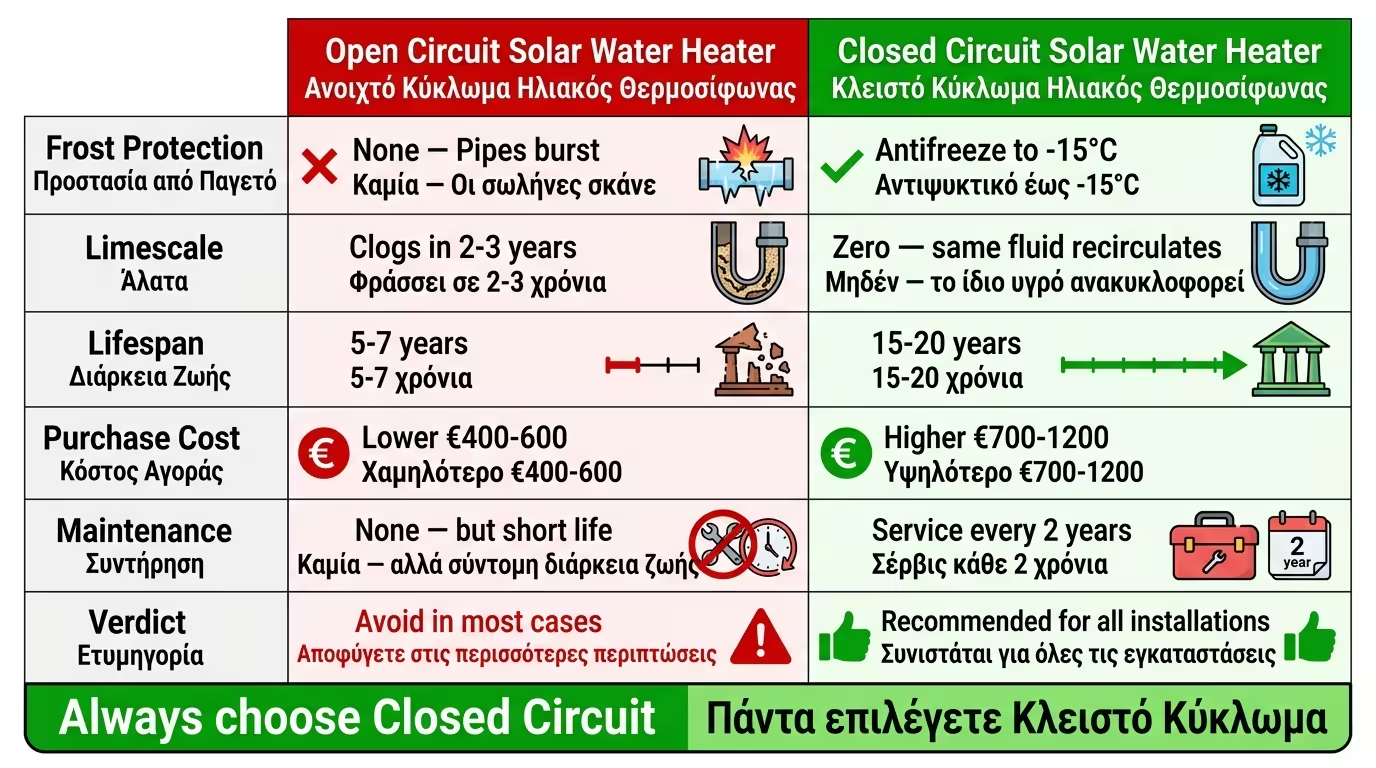
Open vs closed circuit - which to choose

In the modern era, the dilemma is practically non-existent. The closed circuit solar water heater is the ONLY sensible and safe choice for 99% of the Greek territory. An open-circuit model is justified only in extreme edge cases - e.g. a summer holiday home on an Aegean island where you want abundant hot water in summer and the system is fully drained in winter. For your permanent residence, the protection from frost and limescale is well worth the small price premium, paying for itself within a few years thanks to consistent performance.

➡️ Next Question

Now that we've settled the circuit question, the next thing your salesperson will ask is what kind of "glass" you want. In the next article we compare the two leading collector technologies: Flat-Plate Selective Collectors vs Vacuum Tube Collectors - which one delivers a scorching hot shower even on a cloudy December day?

Related Articles

Preview