🚗 The Car Analogy
Think of it like driving in traffic: you floor the accelerator, slam the brakes at the lights, then floor it again. The result? Enormous engine wear and enormous fuel consumption - or in our case, electricity.
Remember old air conditioners or refrigerators that made a loud "CLUNK" when they started, the lights dimmed for a second, and then the machine stopped completely after a while - only to restart the same noisy cycle?
That was the old On/Off technology. Today, if you install a modern heat pump on your balcony, you'll probably have to press your ear against it to know if it's running. Meanwhile, European regulations have radically changed the fluids circulating inside.
Let's open the hood and see how the Inverter compressor saves you money and why the new refrigerants R32 and R290 are changing the rules of the game.
The compressor is the heart of the heat pump. It is the motor that compresses the gas to raise its temperature. In older On/Off machines, the compressor always ran at 100% power. When the house reached 21°C, it shut off. When it cooled again, it restarted at full blast.
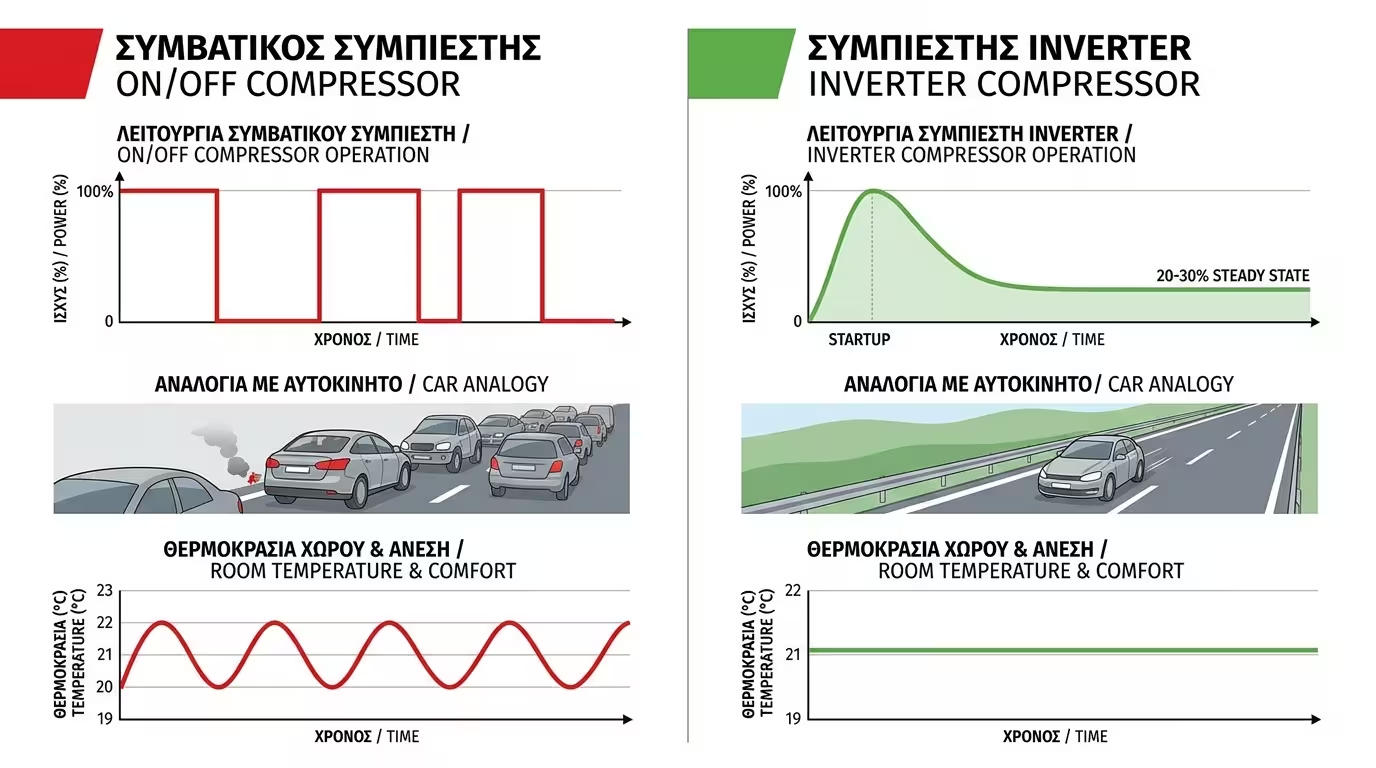
Think of it like driving in traffic: you floor the accelerator, slam the brakes at the lights, then floor it again. The result? Enormous engine wear and enormous fuel consumption - or in our case, electricity.
An Inverter compressor varies its speed smoothly according to demand. Once the house reaches 21°C, it drops to 20–30% and simply maintains the temperature - running almost silently and consuming very few watts. It's like cruising on the motorway at a steady speed.
Inverter technology is not a simple upgrade - it is a complete change of philosophy. Instead of violent starts and stops, you get smooth, continuous operation that works like cruise control.
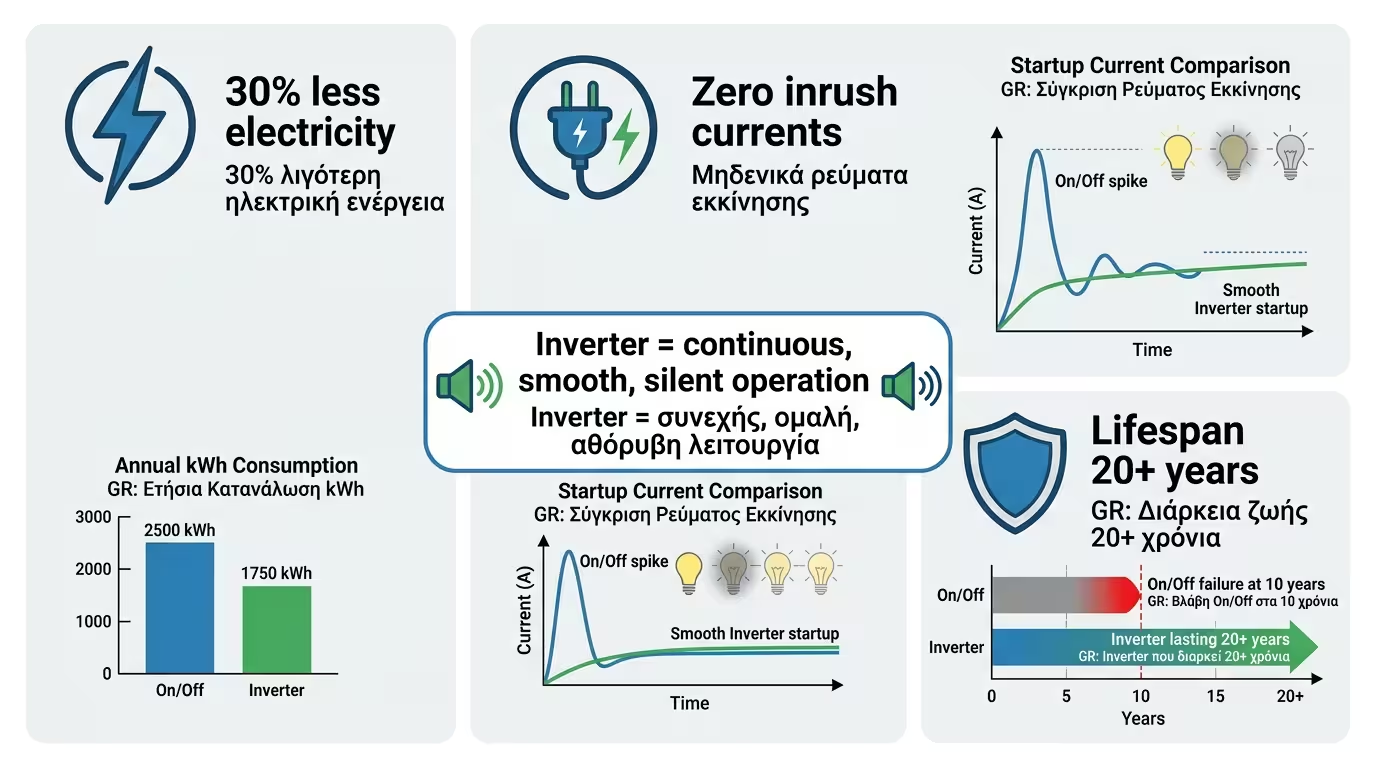
Reduces electricity consumption by up to 30% compared to old On/Off systems, thanks to steady low-speed operation throughout the day. Over the course of a full heating season, the savings add up to hundreds of euros.
No longer "crashes" the electrical panel. Startup is smooth, without the power spikes that used to damage light bulbs and electronic devices.
By avoiding constant On/Off cycling, mechanical parts wear far less. An Inverter unit lives many more years without breakdowns, often reaching a service life of 20 years or more with proper maintenance.
The refrigerant (traditionally called "Freon") is the medium that absorbs heat from outside and brings it in. Until recently, the "king" was R410A. But the EU, through the strict F-Gas regulation, is phasing it out. The reason? If 1 kg of R410A leaks, it causes the same damage as 2,088 kg of CO₂!
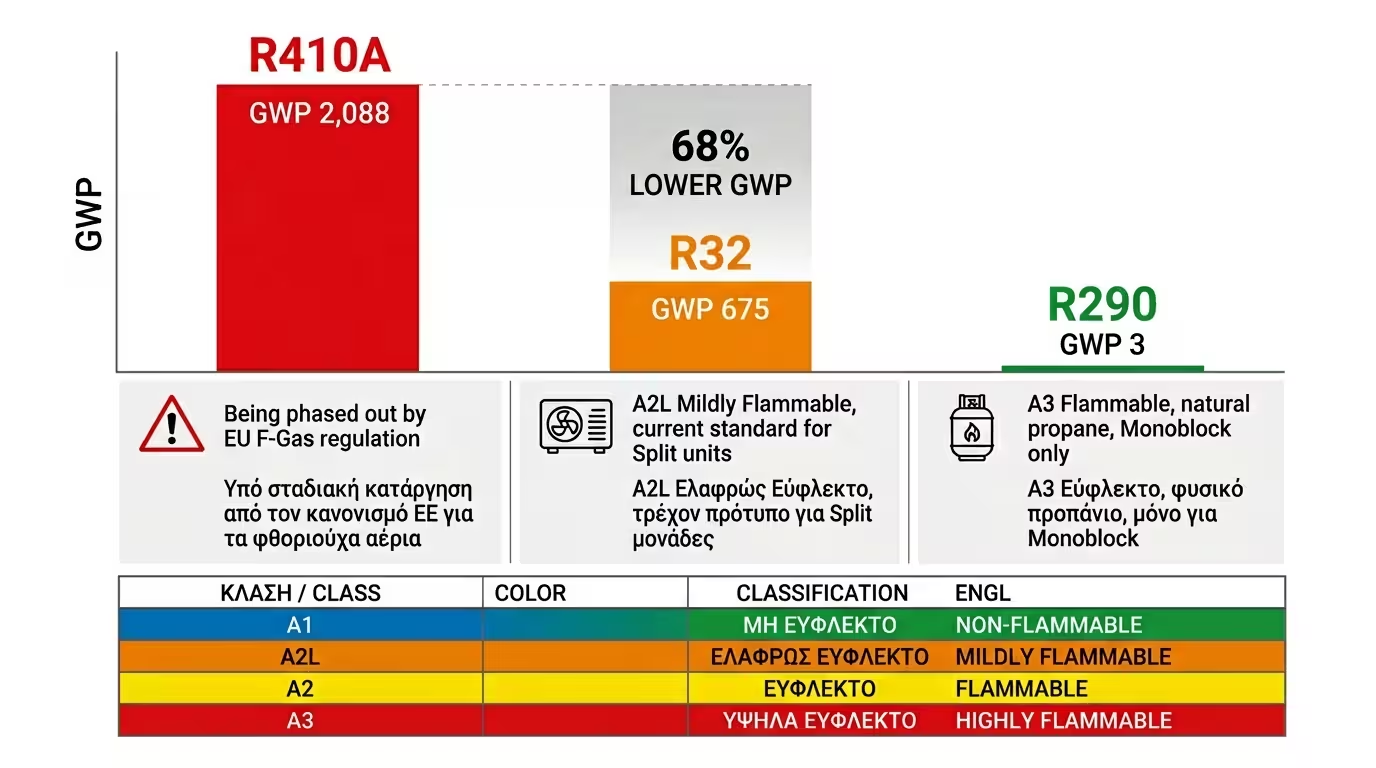
R32 (Difluoromethane) is today's standard in most residential air conditioners and Split heat pumps. It has a 68% lower GWP (only 675) than R410A and transfers heat more efficiently, so less refrigerant is needed.
Classified as A2L (Mildly Flammable). It does not ignite easily, but installers must hold a valid F-Gas certificate and use the correct tools, especially during brazing of copper pipes.
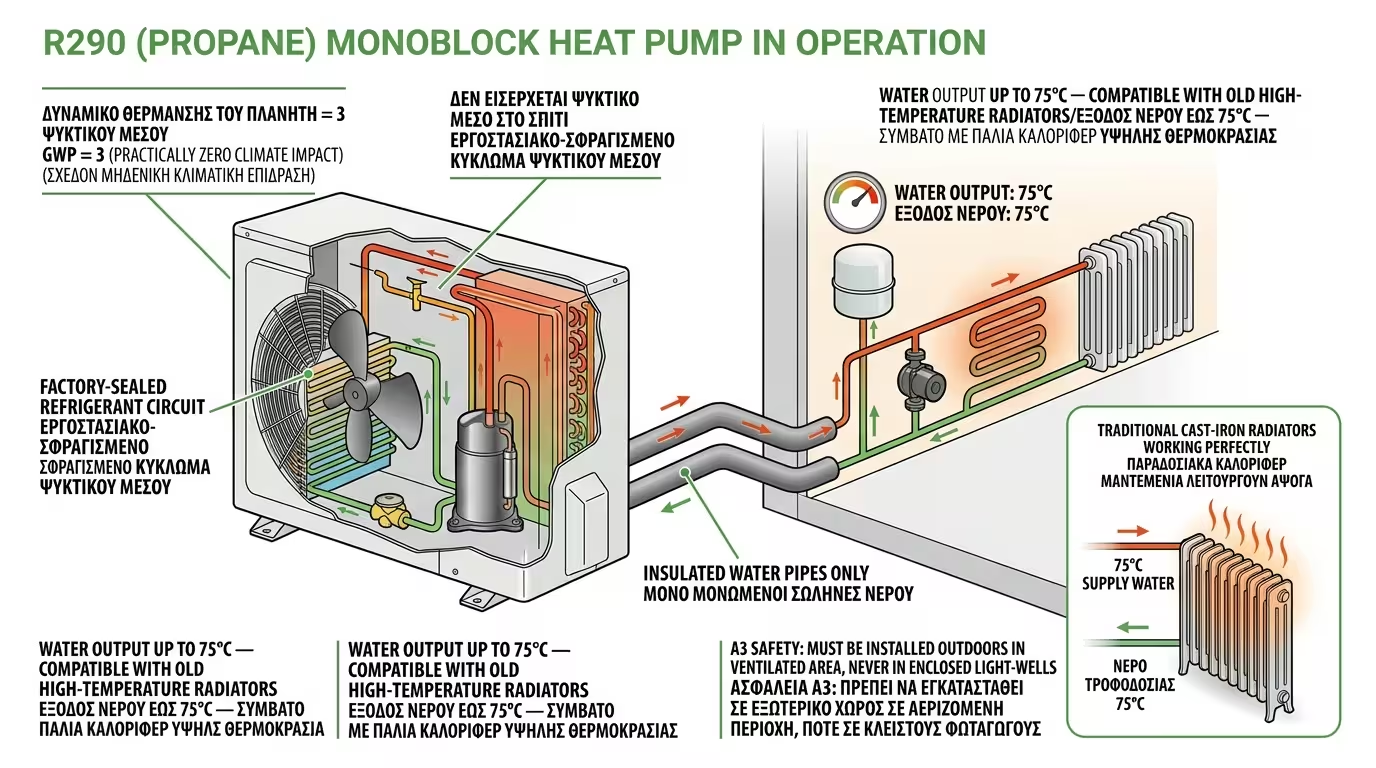
If you're looking for the ultimate machine to renovate an older house, look for a heat pump with R290. It is pure, natural propane - the same gas used in camping stoves.
R290 allows the heat pump to heat water up to 75°C, even in freezing weather! This means you can ditch the oil boiler and keep your old radiators that require hot water to perform.
R290's Global Warming Potential is just 3 - practically zero climate impact, compared to the 2,088 of the old R410A. It is the most eco-friendly option on the market today.
As an A3 (Highly Flammable) substance, the refrigerant circuit stays factory-sealed outdoors only. That's why R290 pumps are exclusively Monoblock: no refrigerant enters the house. If a leak ever occurs, the propane simply disperses harmlessly in the open air.
Installing R32 (Split) systems requires mandatory use of a Vacuum Pump before charging the refrigerant. If the technician doesn't pull a proper vacuum to remove moisture, your Inverter compressor will be destroyed within a few years.
Especially for R290 (Monoblock), the outdoor unit must not be placed in enclosed light-wells or next to drains, as a safety precaution against an unlikely leak.
Make sure your technician holds a valid F-Gas licence for handling fluorinated gases. It is a legal requirement and a prerequisite for the manufacturer's warranty.
The "heart" (Inverter) and the "blood" (R32/R290) of your heat pump are engineering marvels. But there's one final trap: how big should the machine be? In the next article, we explain Heat Pump Sizing and why oversizing destroys the compressor and inflates your bills.
Return to category.
Go to categoryReturn to the central guide.
Go to guide