Pellet Boilers vs Wood Boilers: Comparing Efficiency, Storage Space and Maintenance Costs

If you live in the Greek countryside, in a mountain village, or own a large detached house outside the urban network, natural gas is probably not an option. At the same time, if your home has poor insulation and old radiators, a heat pump might require a huge upfront investment. What is the solution? A return to the most traditional energy source - biomass - but with the engineering precision of the 21st century.

1. Wood Boilers: The Traditional, Affordable but Demanding Solution

The modern wood boiler is nothing like grandma's stove. It is a robust machine that connects to your radiators and heats the entire house. Here we analyse the advantages and disadvantages you need to know before deciding whether this type of boiler suits your needs and daily routine.

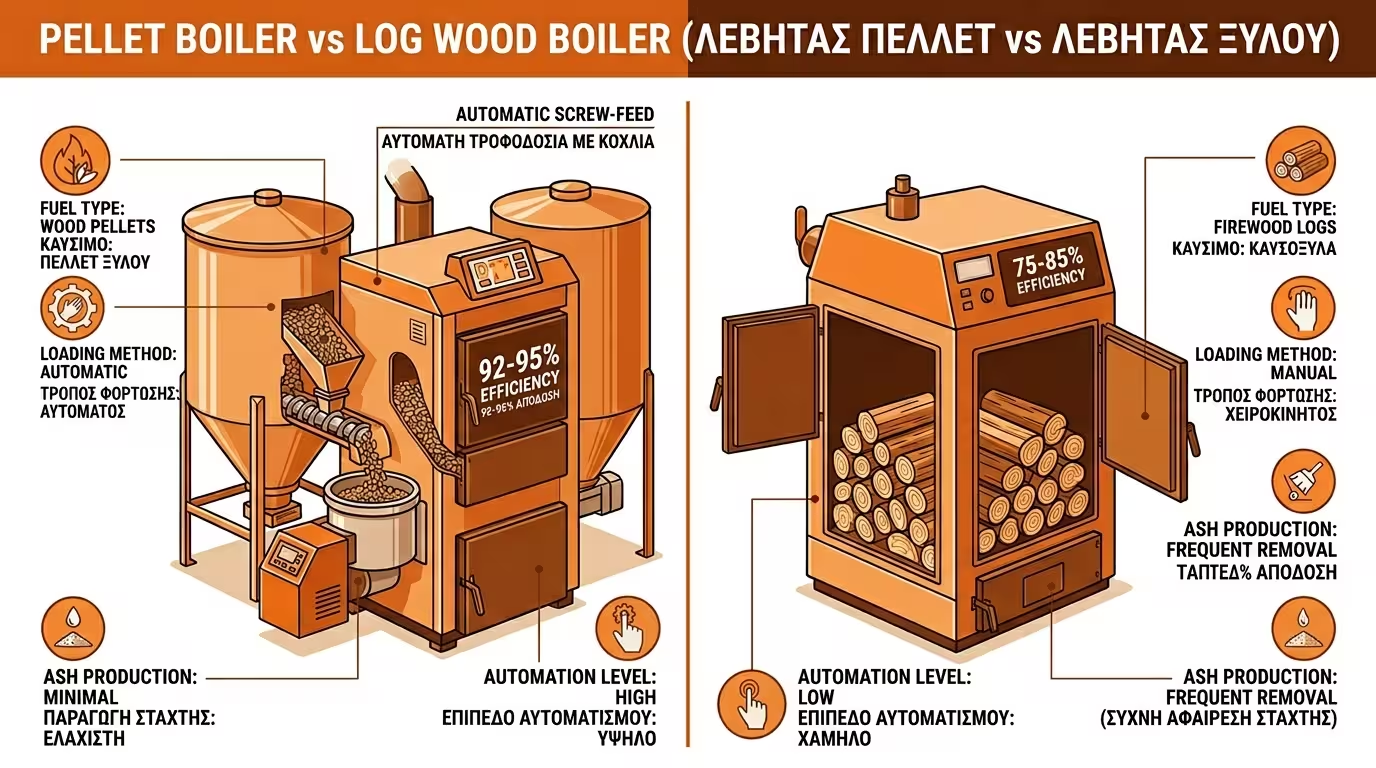
Pellet boiler vs wood boiler comparison - introduction

✅ The Cheapest Fuel

Firewood (olive, oak, beech) remains perhaps the cheapest source of thermal energy in Greece. If you have your own land or access to timber from pruning, your heating is practically free. Their simple construction means minimal electronic parts - ideal for areas with an unstable power grid.
⚠️ Manual Loading & Ash

Here, you are the stoker. You must fill the combustion chamber 2-3 times a day, even in the cold. If you're away for many hours, the house will freeze. Moreover, wood leaves a lot of ash - frequent (often daily) cleaning of the chamber and flue passages is required to maintain proper operation.

📦 Massive Storage Space

Buying firewood isn't enough - you must store it in a sheltered, well-ventilated area. You need several cubic metres to last a single winter. A wood boiler requires 5-10 m³ of firewood storage per season, depending on your home's size and insulation level.

2. Pellet Boilers: The "Autopilot" of Biomass

What is pellet? Small cylinders of compressed sawdust. The production process (high-pressure compression without chemical additives) removes almost all moisture, creating a fuel with concentrated thermal energy and moisture below 10%.

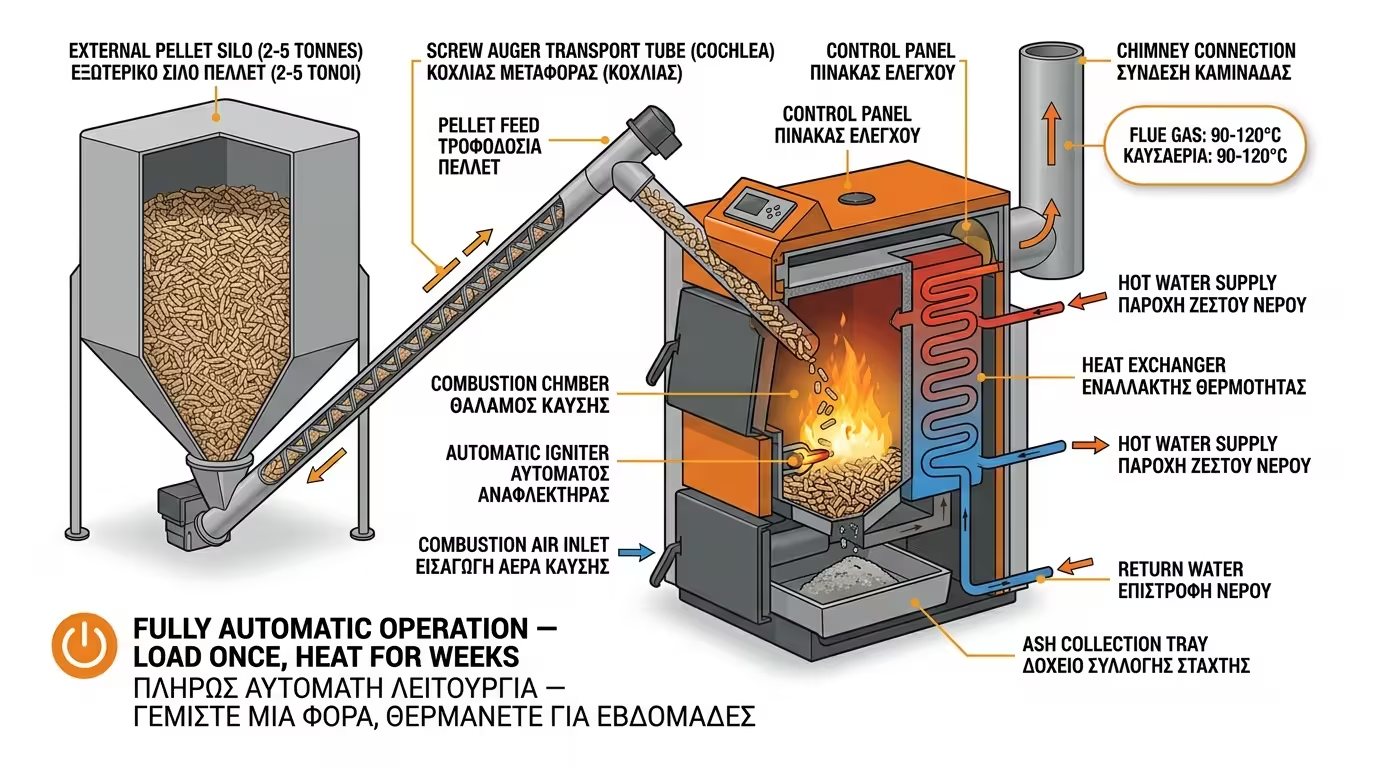
Pellet boiler with silo, automatic screw feeder

🤖 Total Autonomy

The pellet boiler features a storage silo and an electric auger. You empty 4-5 bags (15 kg each) into the silo and the machine feeds the fire on its own according to the house's needs. It can run continuously for days without any intervention. New models are controlled via Wi-Fi and thermostat.

🔥 High Efficiency >90%

Pellet has a consistent, certified quality (ENplus A1) and minimal moisture (<10%). This produces clean, perfect combustion that leaves minimal ash. You clean the boiler once a week or less - a dramatic difference compared to a wood boiler that demands daily attention.

💰 Cost & Power Dependency

Unlike free firewood, pellet is industrially produced. Its price has seen significant fluctuations (2022 energy crisis). Additionally, the boiler requires continuous power supply - auger, fan and control board all need electricity. In a power cut, you need a UPS backup.

3. The Big Trap: Wood Moisture

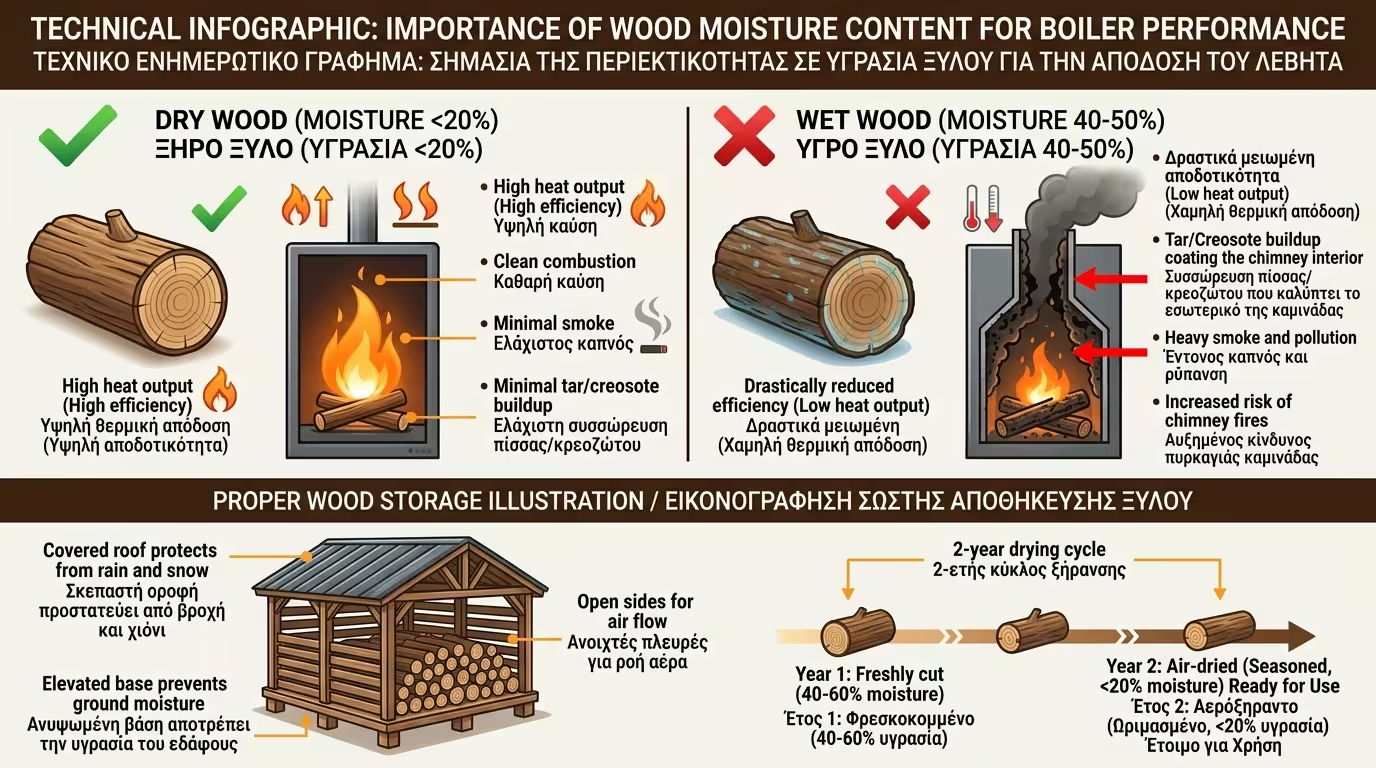
Wood moisture, creosote tar in boiler, firewood storage shed

If you decide to go with a traditional wood boiler, there is one physics rule you must never break: The wood must be dry - below 20% moisture content.

🧪 What Happens with Wet Wood

A freshly cut tree contains up to 50% water. If you throw "green" logs into the boiler, half the thermal energy will be wasted evaporating that water instead of heating your radiators. Burning wet wood creates tar (creosote) that sticks to the boiler walls and chimney, halving efficiency and creating a massive fire hazard.

🪵 The Golden Rule

Firewood should be bought in spring, stored in a sheltered, well-ventilated area, and burned only after 1 to 2 years of drying, so that its moisture drops below 20%. If you lack the space or organisation to manage this, pellet is the only way - buy 15 kg bags of perfectly dry fuel, ready for immediate use.

📏 Measuring Moisture

A wood moisture meter costs €15-30 and is an essential tool. Insert the probes into the log - if the reading shows above 20%, don't burn it. The ideal range is 12-18%, where energy efficiency and safety are maximised and creosote formation is virtually eliminated.

4. Final Verdict: What Should You Choose?

The decision comes down to three factors: access to cheap firewood, available storage space, and how much time you want to spend daily on the fire.

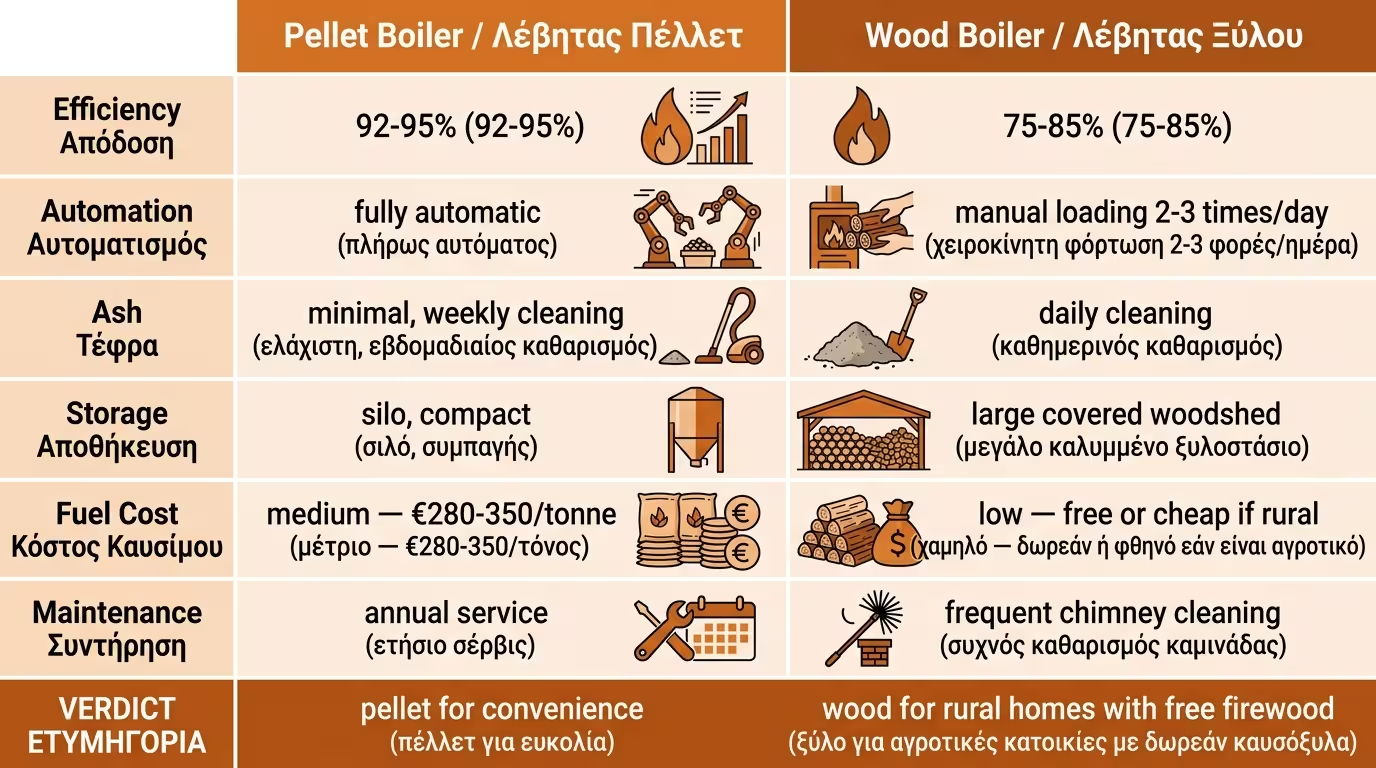
Pellet vs wood comparison table - which option fits

🪓 Choose a Wood Boiler if:

You live in an area with plentiful, cheap or free timber. You have protected space to store and dry firewood for 2 winters. You have the time and physical stamina for daily loading and ash cleaning. A pyrolysis wood boiler dramatically upgrades the experience and efficiency.

🏠 Choose a Pellet Boiler if:

You want the practicality you had with an oil boiler but at lower running cost. You're away from home for many hours and want automatic operation via thermostat. You don't have massive storage areas - a pallet of pellet bags takes up half the space of the equivalent firewood.

➡️ Next Step

If the scales tip towards wood thanks to its unbeatable price, there is a way to escape the constant cleaning and low efficiency: Pyrolysis Technology (Wood Gasification). How does a simple log achieve >90% efficiency with virtually no ash? Read on in the next article.

5. Summary & Key Takeaways

📖 Key Points

The wood boiler offers the cheapest fuel but demands daily manual care and massive storage space. The pellet boiler operates automatically, with efficiency rates above 90% and minimal ash, but depends on electricity and industrially produced fuel. In both cases, wood moisture below 20% is a non-negotiable rule.

📊 Quick Comparison

Fuel cost: Wood cheaper (€20-60/tonne), pellet pricier (€280-400/tonne) but with higher energy density. Efficiency: Wood 65-80%, pellet >90%. Autonomy: Wood manual (2-3 loads/day), pellet automatic (days without intervention). Storage: Wood 5-10 m³ shed, pellet 1-2 m² pallet.

Related Articles

Preview