
🏠 Saves Indoor Space
No indoor unit (Hydrobox) is needed. Ideal for small apartments in Athens or Thessaloniki that have no available utility room or boiler closet.
You have made the big decision. You did your research, saw the enormous savings, and decided to upgrade your home with a Heat Pump. You call the installer or engineer for a quote, and suddenly they ask: "Would you like a Monoblock or Split unit?"
If you felt a slight "freeze" hearing those terms, don't worry. It is the most common dilemma in the world of modern HVAC.
Both technologies do exactly the same job (produce hot or cold water with tremendous savings), but they differ fundamentally in how they are installed, how much space they require, and how they protect against frost. Let us analyse the pros and cons of each solution, so you can choose the one that perfectly suits your home.
The word says it all: Mono-block (One piece). It is a single unit placed exclusively outdoors (balcony, roof or garden). Inside this "box" you find everything: the compressor, the refrigerant (freon), and the hydraulic components (circulator pump and heat exchanger). This means the radiator water exits the house, travels to the Monoblock unit, gets heated, and returns inside.
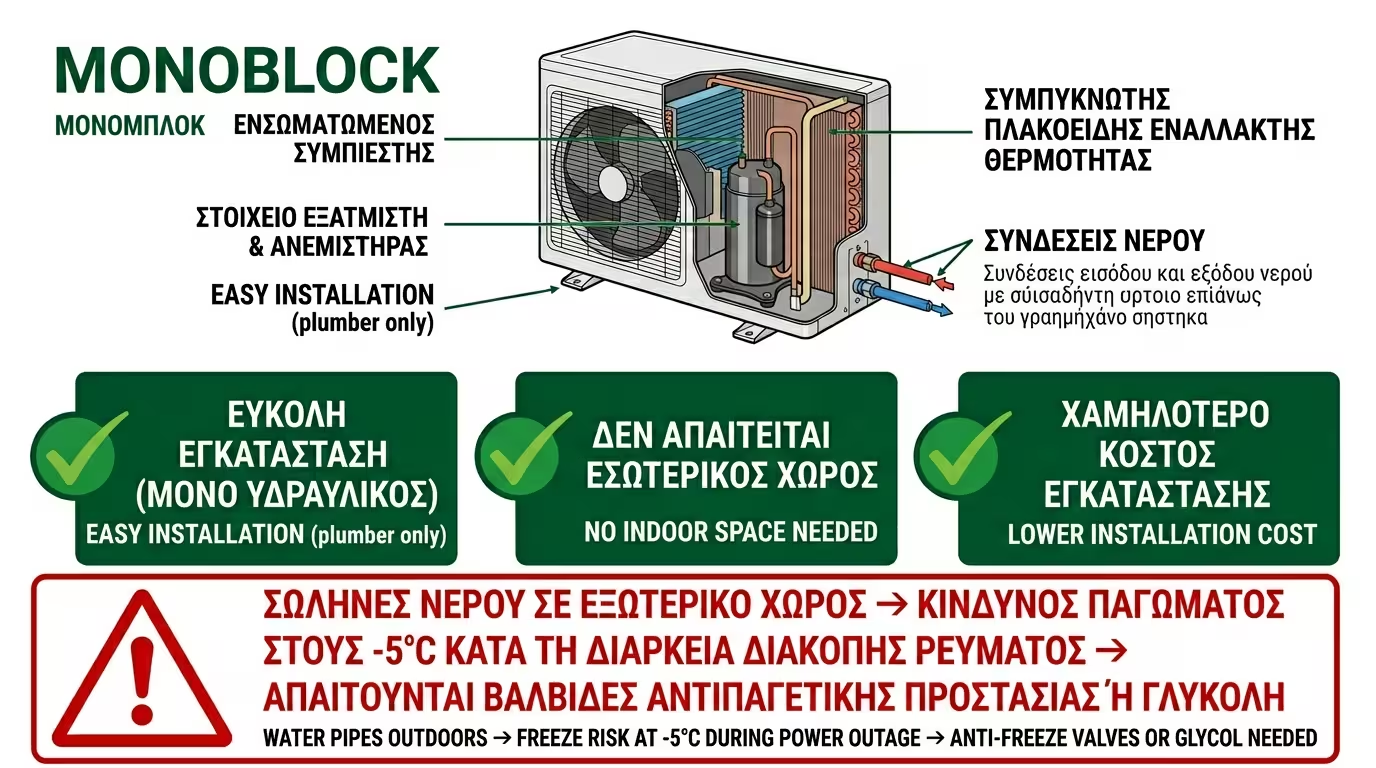
No indoor unit (Hydrobox) is needed. Ideal for small apartments in Athens or Thessaloniki that have no available utility room or boiler closet.
Because the entire refrigerant circuit is factory-sealed from the factory, no refrigerant piping is required. Installation can be carried out by a qualified plumber (simply connecting water pipes), cutting labour costs.
New-generation pumps use the highly efficient but flammable propane (R290). In a Monoblock design, because all the refrigerant stays outdoors, there is 100% safety.
Since the heating water circulates through outdoor pipes, what happens if the power is cut for hours in the winter at -5°C? The water will freeze, expand, and crack the unit's heat exchanger - damage costing thousands of euros. Solution: A competent installer will fit mandatory anti-freeze valves (which automatically drain the water if the temperature drops dangerously) or use anti-freeze fluid (glycol) in the circuit, which however slightly reduces system efficiency.
Just like wall-mounted air-conditioners, the Split system is divided into two parts: an outdoor unit (with the fan and compressor) and an indoor unit (the so-called Hydrobox), which looks like a wall-hung gas boiler. The key difference: the water never leaves the house. The outdoor unit sends the hot refrigerant via copper pipes to the indoor unit, where the heat exchange takes place.
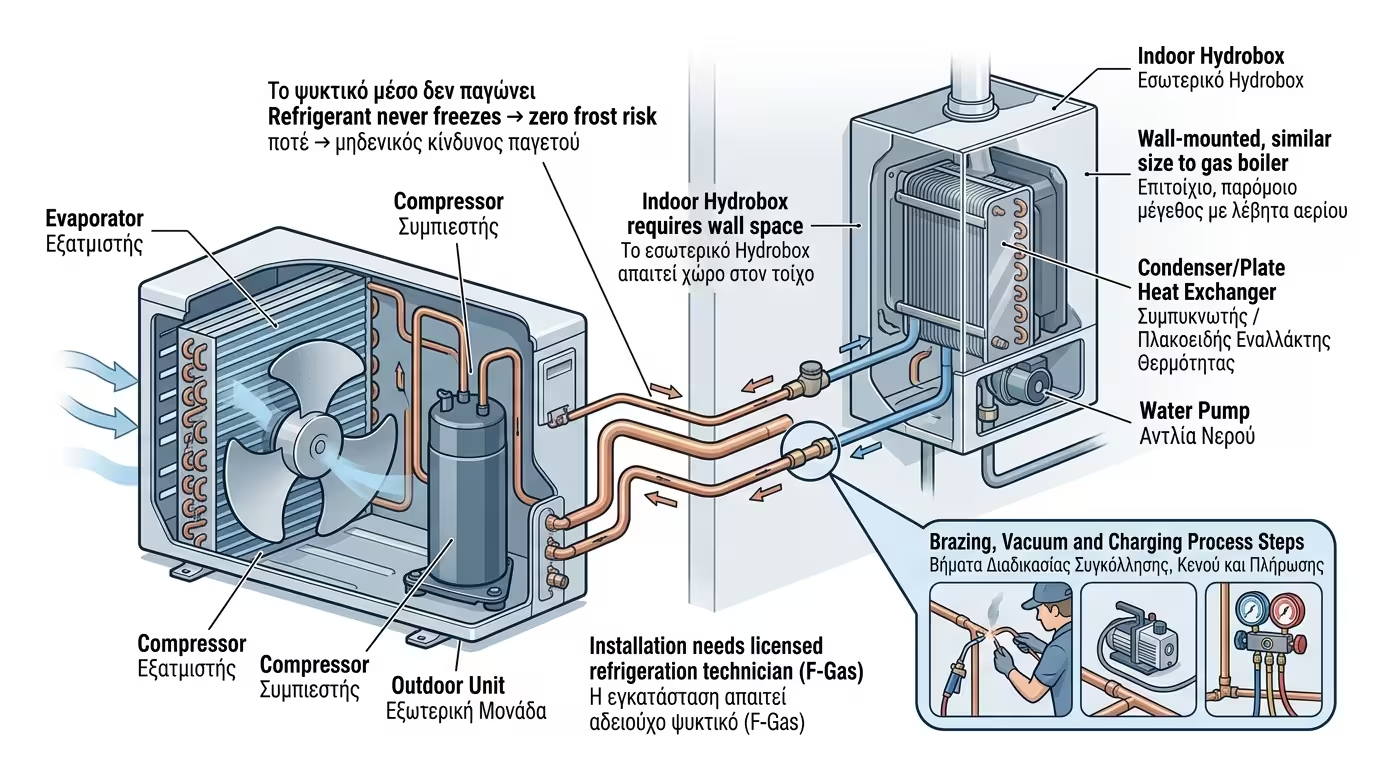
Even if the temperature drops to -15°C and the power is cut for days, there is absolutely no problem, since only refrigerant (which does not freeze) circulates outdoors - not water.
Because the hydraulic components (circulator, expansion vessel) are housed in the indoor unit, the outdoor machine is more compact in dimensions.
The ultimate choice for regions with harsh winters (e.g. Kozani, Florina, mountain villages).
Installation cannot be done by a plumber alone. A licensed refrigeration technician is required to braze copper pipes, perform a vacuum procedure, and charge the system with refrigerant (F-Gases). This significantly increases both time and installation cost.
You need to find an area in the hall, bathroom, or utility room to mount the Hydrobox, which is similar in size to a wall-hung gas boiler.
In terms of energy efficiency (COP), the top models perform equally well whether Monoblock or Split. The decision is based purely on the building's architecture and the local climate.
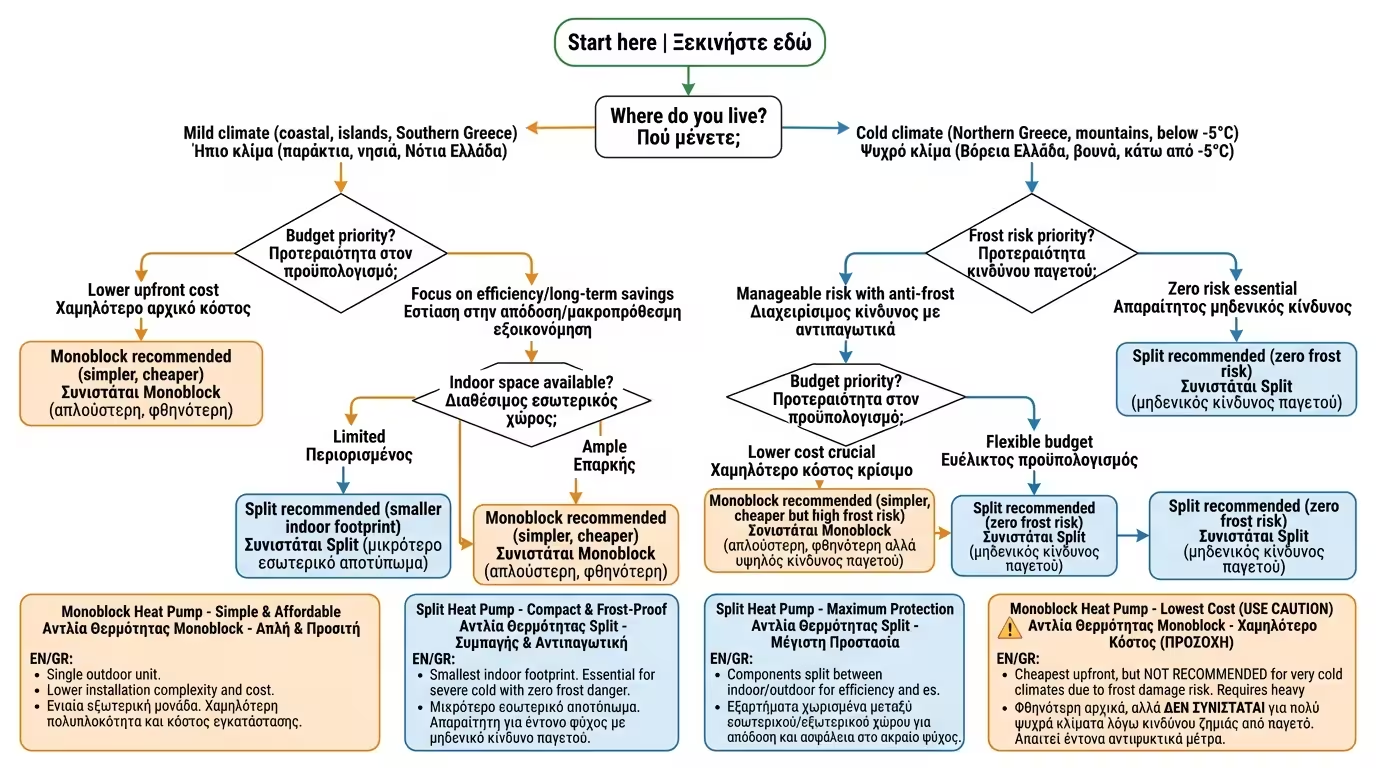
1. You are renovating a city apartment (Attica, islands, southern Greece) where hard frosts are rare. 2. You have no available indoor space for an indoor unit. 3. You want a faster and potentially cheaper installation. (Don't forget to insist on anti-freeze valves!)
1. You live in Northern Greece or a highland area where temperatures frequently fall below zero. 2. You have a utility room, storage or large bathroom for the Hydrobox. 3. You are building a new house, where copper pipes can easily be hidden inside the walls.
Whichever technology you choose, the machine must work flawlessly with the emitters you have (or plan to install) inside your home. How do you know if your heat pump can handle your old radiators? In our next article, we analyse one of the most critical technical terms you need to know: Low, Medium and High Temperature Heat Pumps.
Return to category.
Go to categoryReturn to the central guide.
Go to guide