Floor-Standing Boiler Room Cylinders (Dual & Triple Energy): How They Combine Your Boiler, Solar Panels and Electricity

When we think of a solar water heater, the image is familiar: one or two collector panels on the roof and, right above them, a large cylindrical tank storing the water. However, modern architecture and the need for greater energy efficiency have changed the rules. Many new homeowners don't want a bulky barrel ruining their roofline. The solution is a Forced Circulation System with a Floor-Standing Boiler Room Cylinder. Here, the collector panels sit flat and discreet on the roof, while the storage tank "moves" down to the boiler room or utility room, hidden from the weather.

1. How Does a Floor-Standing Cylinder Work? - The Heat Exchanger Coil

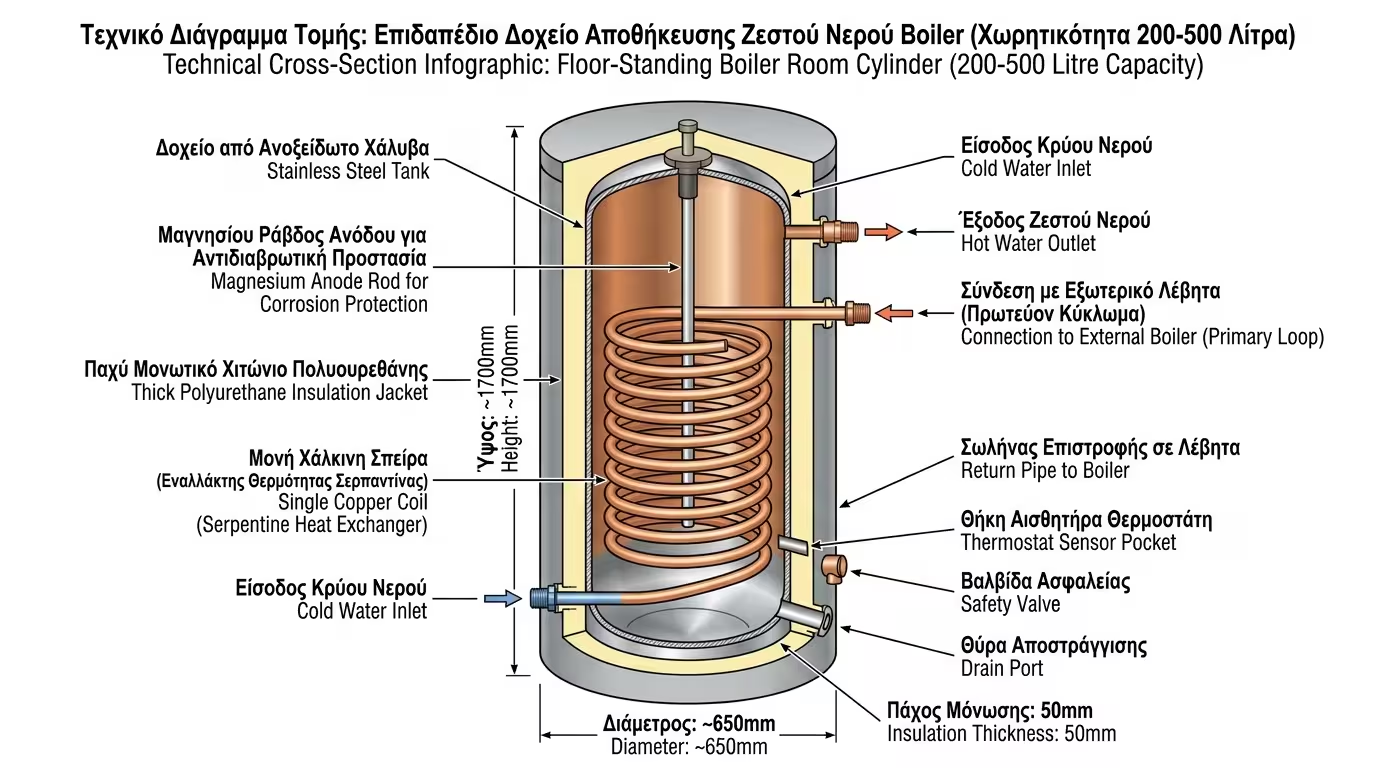
Inside a vertical floor-standing cylinder (which resembles a tall wardrobe), cold mains water enters from the bottom. To heat this water, the cylinder contains Heat Exchanger Coils - copper or stainless steel pipes wound in a spring shape. Hot water (e.g. from the boiler) flows inside the coil, heats the metal, and the metal in turn heats the surrounding domestic water. The two circuits never mix - this is critical for hygiene and safety reasons.

Boiler room cylinder with heat exchanger coil

🔄 The Heat Exchanger Principle

Think of the coil as a spring-shaped pipe submerged in cold water. The greater the contact surface (i.e. the longer the coil), the faster the entire tank heats up. That's why quality cylinders feature large-surface copper coils that ensure rapid heat transfer even in large 500-1000 litre tanks.
🧱 Polyurethane Insulation

Unlike rooftop barrels insulated with just a few centimetres of foam, floor-standing cylinders feature thick polyurethane insulation (80-100 mm) all around. This means minimal heat loss: the water stays hot for days on end without needing reheating, especially when the cylinder sits in an interior space at 15-18°C.

🛡️ Safety & Hygiene

Because the domestic water (bath, kitchen) never mixes with the boiler circuit water, all contamination risk is eliminated. Boiler room cylinders are made from stainless steel or enamelled steel, resistant to corrosion and limescale, with a sacrificial anode (magnesium or titanium) for additional protection.

2. Dual Energy Cylinders: The Classic Partner

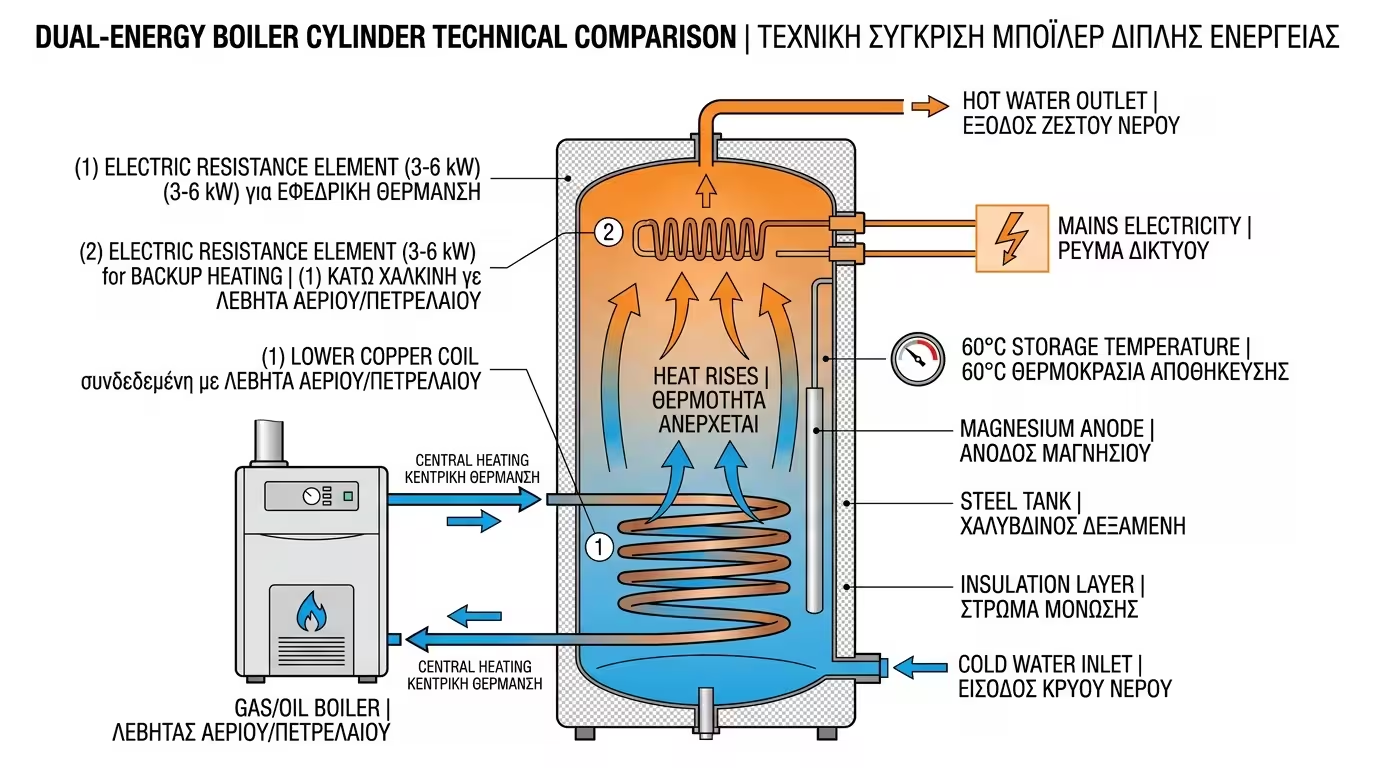
A "Dual Energy" cylinder gets its name because it can heat water in two different ways. First, via the boiler or heat pump: it has one (1) coil connected to the central heating system. Second, via electricity: when it's summer and the boiler is off, the built-in electric immersion heater works like a classic water heater. This dual energy source ensures you never run out of hot water.

Dual energy cylinder - boiler and electric immersion heater

✅ When It's the Right Choice

It's the ideal option if you don't have solar collectors on the roof - due to shading from taller buildings, planning restrictions, or simply not wanting solar panels. You heat via boiler/heat pump in winter, and use only the immersion heater in summer. The simple construction (just one coil) means a lower purchase cost.

⚡ The Immersion Heater as Backup

The electric immersion heater typically ranges from 2 to 4 kW. It's not the most economical option for daily use (it consumes as much as a classic water heater), but it ensures 100% autonomy during summer months. When combined with off-peak electricity tariffs, the running cost drops significantly.

3. Triple Energy Cylinders: The "Holy Grail" of Efficiency

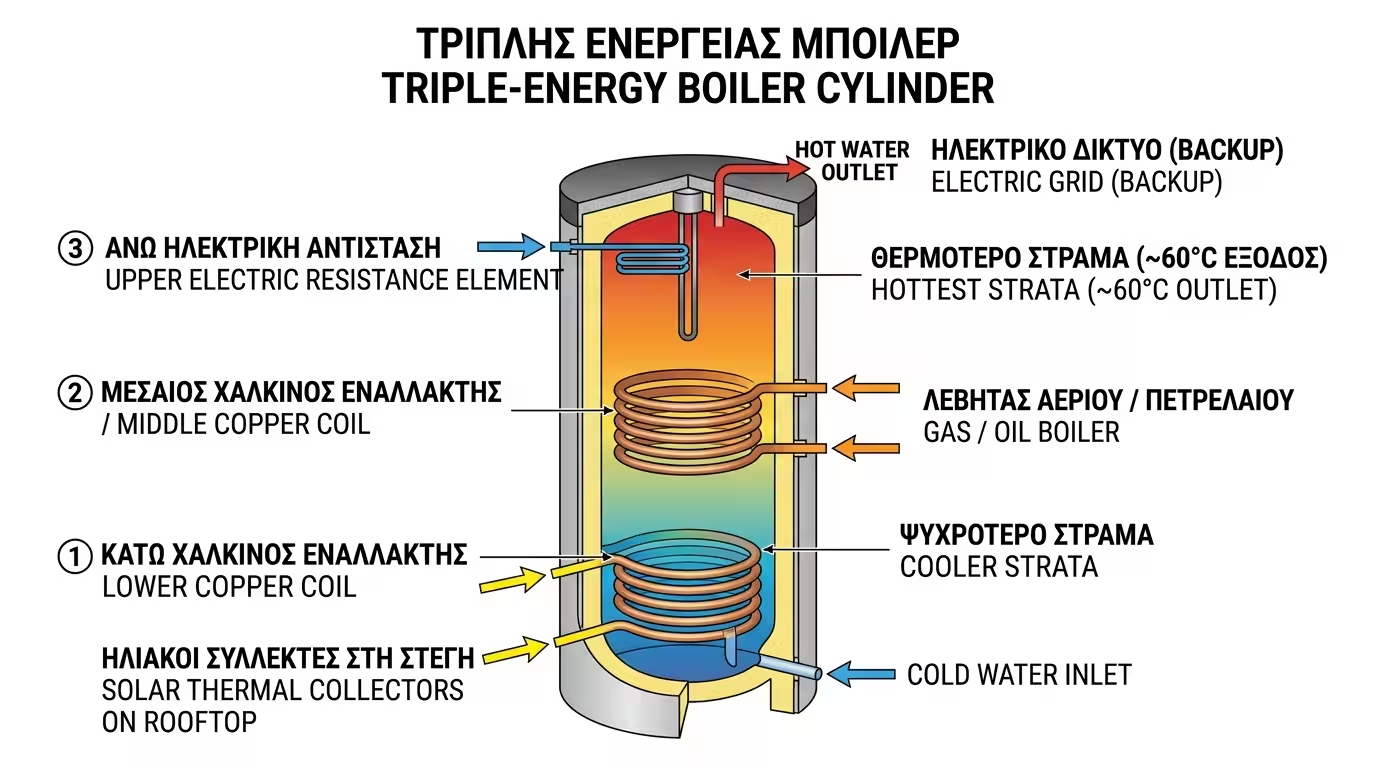
Here we enter the ultimate, fully integrated system. The "Triple Energy" cylinder heats water in three ways, featuring two (2) independent coils. The lower coil connects exclusively to the roof-mounted solar collectors - since cold water always sinks to the bottom, the solar energy handles the "hard work" of preheating the water from 15°C. The upper coil connects to the central boiler or heat pump, while the electric immersion heater remains as the last resort.

Triple energy cylinder - solar, boiler, electric heater

🤝 How They Work Together

Imagine a November day - cold but with some sun. The solar collectors heat the water via the lower coil to 35°C (instead of the 50°C you need). The controller "sees" the temperature, commands the boiler (via the upper coil) to run for just a few minutes to make up the difference. Result: the boiler never heats water from scratch - you save a massive amount of fuel.

☀️ Winter & Summer

In winter, the solar "preheats" and the boiler "tops up" - you pay for just a few units of fuel. On full-sunshine days (30°C+), the solar heats the water on its own to 55-65°C at zero cost. On the rare completely overcast days when the solar fails and the boiler is off, the electric immersion heater takes over as the last resort.

💰 The ROI Rule

The initial investment for a triple energy system (200-300 litre cylinder + 2 selective collectors + circulator + controller) ranges from €2,500-4,000. However, savings on oil/gas and electricity reach €400-600 annually. This means full payback in 5-7 years, while the system lifespan exceeds 20 years.

4. Why "Move" the Cylinder to the Basement?

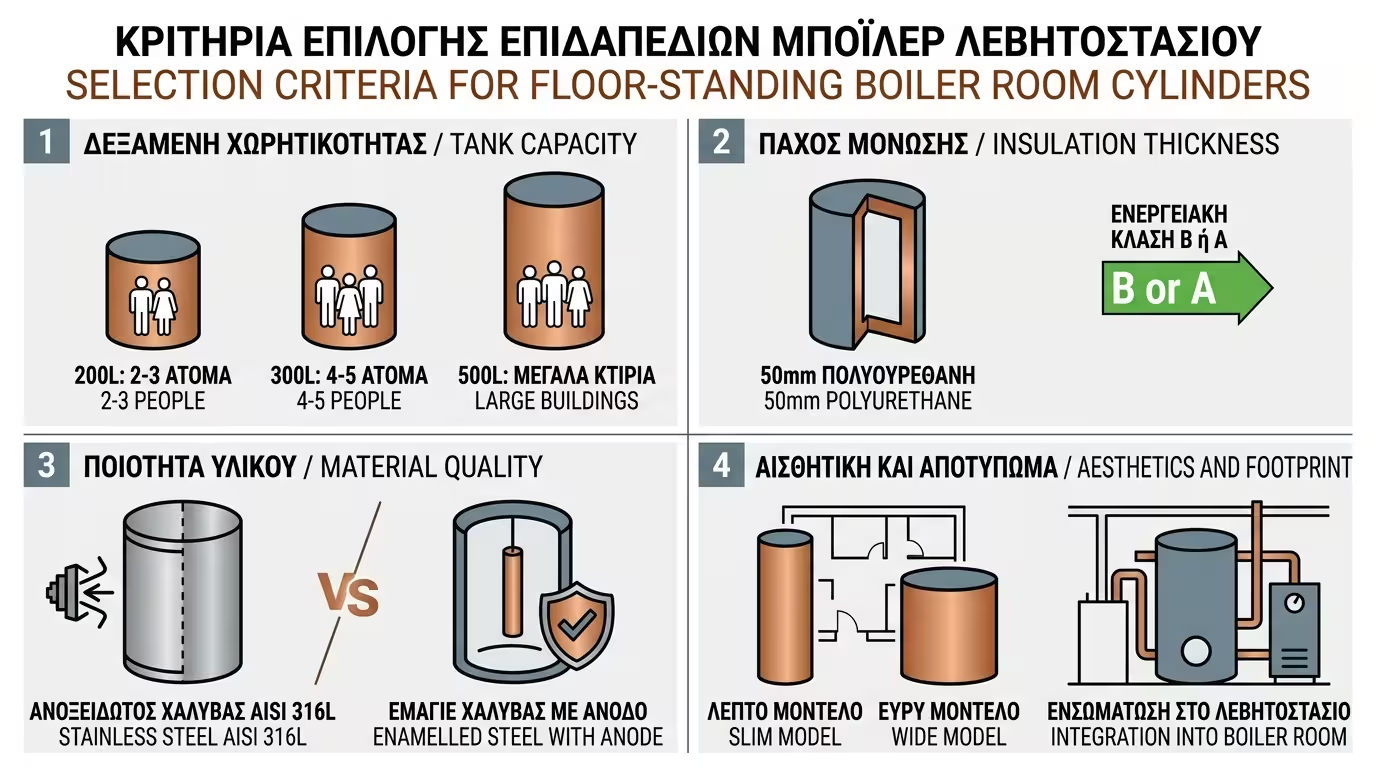
Floor-standing cylinder - insulation, capacity, roof aesthetics

Three advantages tip the scales in favour of a floor-standing cylinder. First, perfect thermal insulation: a rooftop barrel gets battered by -5°C north winds - a floor-standing cylinder sits in an enclosed space at 15°C, and the water stays hot for days. Second, unlimited capacity: a rooftop solar rarely exceeds 200-300 litres (the slab can't take the weight), while in the boiler room you can install 500, 800 or even 1,000 litres, serving large families or small hotels. Third, architectural harmony: your roofline stays clean - only the flat, discreet collector glass panels are visible, without the ugly horizontal barrel.

Related Articles

Preview